Plastic Antioxidant Powder
CN → US| HS Code | Tariff Rate | Origin | Destination | Doc |
|---|---|---|---|---|
| 3812396000 | 41.5% | CN | US | Official Doc |
| 3907995050 | 41.5% | CN | US | Official Doc |
| 3907992000 | 35.0% | CN | US | Official Doc |
| 3824992900 | 41.5% | CN | US | Official Doc |
| 3824994900 | 41.5% | CN | US | Official Doc |
Product Images
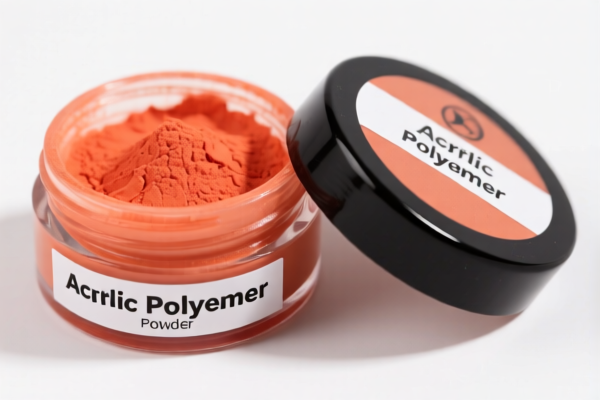

AI Analysis
🧪 Plastic Antioxidant Powder: The Hidden Guardian of Polymer Integrity
🌐 HS Code Reference & Customs Clearance Guide | 2026 Latest Tariff Analysis | Professional Compliance Strategy
📌 I. Product Definition & Classification: What is "Plastic Antioxidant Powder"?
Plastic Antioxidant Powder is a critical chemical additive used in the polymer industry. Its primary function is to prevent or delay the degradation of plastic materials (such as polyethylene, polypropylene, PET, etc.) caused by oxidation during processing and long-term use.
In international trade, this product is not classified as a raw plastic material itself, but rather as a chemical preparation/additive. The classification depends heavily on the specific chemical function and the final application.
⚠️ Key Distinction:
- If the product is explicitly an antioxidant for rubber or plastics → It falls under Chapter 38 (Miscellaneous Chemical Products).
- If the product is a specific polyester resin or a chemical intermediate without a clear "additive" function stated → It might be misclassified under Chapter 39 (Plastics and Articles Thereof).
📦 II. HS Code Classification Details (2026 Latest Tariff Authoritative Comparison)
Based on the input data, here are the 5 potential HS Codes with matching logic, tax rates, and legal interpretations.
| HS Code | Product Description | Matching Logic & Rationale | Total Tax Rate |
|---|---|---|---|
| 3812.39.60.00 | Rubber/Plastic Antioxidant Preparations | ✅ Best Match: The name explicitly includes "Plastic" (material) and "Antioxidant" (function). It perfectly aligns with "Antioxidant preparations for rubber or plastics" and "containing antioxidants." | 41.5% |
| 3907.99.50.50 | Other Polyesters | ⚠️ Secondary Match: Infers material as plastic-related chemicals (polyester/polyether range). Classified as "Other" non-specific chemical additives. No material conflict with "polyester"兜底 (catch-all) attribute. | 41.5% |
| 3907.99.20.00 | Polyester Copolymers | ⚠️ Alternative Match: "Plastic" attribute matches polyester class; "Composite" inferred as chemical synthesized polyester copolymer. No form conflict. | 35.0% |
| 3824.99.29.00 | Other Chemical Products/Preparations | ⚠️ Fallback Match: "Composite" product, chemical preparation form. Inferred as organic/modification substances in chemical industry. Fits "Other chemical products" with no material conflict. | 41.5% |
| 3824.99.49.00 | Other Chemical Products/Preparations | ⚠️ Fallback Match: Material inferred as plastic (hydrocarbon derivative) + "Composite" (chemical mixture). Fits chemical industrial preparation definition. | 41.5% |
🔍 Key Insight:
- 3812.39.60.00 is the most accurate and safest classification because it directly describes the function (Antioxidant) and application (Plastic).
- Classifications under 3907 (Chapter 39) are risky because they imply the product is a plastic material itself (polyester), not an additive. This can lead to customs disputes if the product is clearly a powder additive, not a resin pellet.
- Classifications under 3824 are broader "other chemical products" and may be subject to stricter scrutiny if the specific antioxidant function is not declared.
💰 III. 2026 Latest Tariff Rate Breakdown (Including Surtaxes & Policy Add-ons)
✅ Applicable Country: United States (US)
✅ Origin: China (CN)
✅ Effective Date: From November 10, 2025 (and subsequent imports)
🎯 1. 3812.39.60.00 —— Antioxidant Preparations for Rubber/Plastics (Recommended)
| Item | Content |
|---|---|
| Base Tariff | 6.5% (ad valorem) |
| Section 301 Surtax | +25% (USITC Footnote 9903.88.01) |
| IEEPA Surtax | +10% (For Chinese/HK products, effective Nov 10, 2025) |
| Total Tax Rate | 41.5% |
| Tax Calculation | CIF Value × 41.5% |
| De Minimis Exemption | ❌ Not Applicable (deny_de_minimis) |
| Legal Basis Path | IEEPA:9903.01.25 → IEEPA:9903.01.24 → USITC:3812.39.60.00 → FOOTNOTE:9903.88.01 |
📌 Explanation:
- 6.5% Base: Standard MFN tariff for Chapter 38.
- 25% Section 301: Additional tariff on Chinese chemical products under US Trade Act Section 301.
- 10% IEEPA: International Emergency Economic Powers Act surcharge targeting specific Chinese goods.
- Total 41.5%: This is a high-cost item. Importers must budget accordingly.
🎯 2. 3907.99.50.50 —— Other Polyesters
| Item | Content |
|---|---|
| Base Tariff | 6.5% |
| Section 301 Surtax | +25% |
| IEEPA Surtax | +10% |
| Total Tax Rate | 41.5% |
| Tax Calculation | CIF × 41.5% |
| De Minimis Exemption | ❌ Not Applicable |
| Legal Basis Path | IEEPA:9901.25 → IEEPA:9903.01.24 → USITC:3907.99.50.50 → FOOTNOTE:9903.88.01 |
📌 Note:
- Same high tariff rate as 3812.39.60.00.
- Risk: If Customs determines the product is an additive and not a polyester resin, this classification is wrong, leading to penalties.
🎯 3. 3907.99.20.00 —— Polyester Copolymers (Lower Tax Option?)
| Item | Content |
|---|---|
| Base Tariff | 0.0% |
| Section 301 Surtax | +25% |
| IEEPA Surtax | +10% |
| Total Tax Rate | 35.0% |
| Tax Calculation | CIF × 35.0% |
| De Minimis Exemption | ❌ Not Applicable |
| Legal Basis Path | IEEPA:9903.01.25 → USITC:3907.99.20.00 → FOOTNOTE:9903.88.01 |
📌 Caution:
- This is the lowest tax rate (35%) among the options.
- However, it requires the product to be legally classified as a polyester copolymer (a type of plastic/resin).
- If your product is a standard antioxidant powder (not a resin), misclassifying it here is illegal and carries high audit risk. Only use if the product is chemically a polyester copolymer with antioxidant properties built-in.
🎯 4. & 5. 3824.99.29.00 & 3824.99.49.00 —— Other Chemical Preparations
| Item | Content |
|---|---|
| Base Tariff | 6.5% |
| Section 301 Surtax | +25% |
| IEEPA Surtax | +10% |
| Total Tax Rate | 41.5% |
| Tax Calculation | CIF × 41.5% |
| De Minimis Exemption | ❌ Not Applicable |
📌 Note:
- Same high tax rate as 3812.39.60.00.
- These are "catch-all" codes for chemical products not specified elsewhere.
- Risk: Customs may reject this if a more specific code (like 3812 for antioxidants) exists. Using 3824 for an antioxidant is less defensible than using 3812.
🛠️ IV. Customs Clearance Practical Advice (Pitfall Avoidance Guide)
✅ 1. Required Documentation Checklist (Non-negotiable)
| Document | Mandatory? | Purpose |
|---|---|---|
| ✅ Product Specification Sheet | ✔️ | Must detail chemical composition, CAS number, concentration, and explicitly state "Antioxidant for Plastics". |
| ✅ Safety Data Sheet (SDS) | ✔️ | Proves chemical nature, handling requirements, and confirms no hazardous material violations. |
| ✅ Product Photos | ✔️ | Clear images of powder packaging, label, and CAS number. |
| ✅ Commercial Invoice | ✔️ | Must describe item as "Plastic Antioxidant Powder" with correct HS Code. |
| ✅ Certificate of Origin (CO) | ✔️ | Required for US origin determination and tariff application. |
| ✅ Third-Party Test Report | ✔️ | Optional but recommended: Confirms antioxidant performance (e.g., OIT test). |
✅ 2. Declaration Tips (Critical for Success)
🔥 "Declare Function, Not Just Material!"
| Scenario | Correct Declaration | Incorrect Declaration |
|---|---|---|
| Standard Antioxidant Powder | 3812.39.60.00 |
3907.99.50.50 (Misclassified as polyester) |
| Product Name on Invoice | "Plastic Antioxidant Powder, CAS No. XXX-XXX-X" | "Plastic Resin" or "Chemical Additive" (too vague) |
| HS Code Justification | "Antioxidant preparation for plastics" | "Other chemical product" |
📌 Key Advice:
- Do NOT declare as "Polyester" if it is an additive. This is a common customs error.
- Do NOT use "Generic Chemical" descriptions. Be specific: "Antioxidant for Polypropylene/Polyethylene".
✅ 3. Special Circumstances Handling
| Situation | Handling Advice |
|---|---|
| OEM/Private Label | Provide manufacturer details and brand authorization. Ensure the product matches the specification sheet exactly. |
| Mixed Shipment | If shipped with other plastics (e.g., PVC, PP), declare separately. Do not bundle antioxidant powder with plastic pellets under one HS Code. |
| Small Sample vs. Bulk | Both are subject to full tariffs. No de minimis exemption for chemical products from China. |
| Dispute with Customs | If Customs challenges 3812.39.60.00, provide technical data sheets proving it is an antioxidant, not a resin. |
🌍 V. Global Market Comparison (2026 Latest)
| Country/Region | Recommended HS Code | Tariff (China Origin) | Certification Requirements | Notes |
|---|---|---|---|---|
| 🇺🇸 USA | 3812.39.60.00 |
41.5% | SDS, MSDS, EPA Registration (if applicable) | High tariff due to Section 301 & IEEPA. |
| 🇨🇳 China | 3812.39.60.00 |
5-6.5% | CCC (if applicable), GB Standards | No surtaxes. Lower cost. |
| 🇪🇺 EU | 3812.39.60.00 |
6.5% | REACH Registration, SDS | No additional surtaxes. |
| 🇦🇺 Australia | 3812.39.60.00 |
5% | AICIS Registration | No surtaxes. |
| 🇯🇵 Japan | 3812.39.60.00 |
6-8% | JIS Standards | No surtaxes. |
📌 Conclusion:
- USA is the most expensive market due to layered surtaxes (Base 6.5% + 301 25% + IEEPA 10%).
- EU, China, and other markets have significantly lower costs.
- Strategy: If exporting to the US, ensure accurate classification to avoid penalties. Consider supply chain diversification (e.g., sourcing from Vietnam or Mexico) if tariffs are prohibitive.
📌 VI. Common Mistakes & Pitfall Guide (Lessons from the Field)
❌ Mistake 1: Declaring "Antioxidant Powder" as "Plastic Resin" (3907.99.50.50)
👉 Consequence: Customs audit, delay, and potential fines for misclassification. Even if tax rate is similar, the legal risk is high.
❌ Mistake 2: Using "Other Chemical Product" (3824.99.29.00) instead of "Antioxidant" (3812.39.60.00)
👉 Consequence: Customs may reject the classification as too vague. 3812 is more specific and defensible.
❌ Mistake 3: Ignoring the CAS Number
👉 Consequence: Customs cannot verify the product. Request for additional information, leading to delays.
✅ Correct Practice:
"Plastic Antioxidant Powder, Irganox 1010 Type, CAS No. 6683-19-8, for PP/PE Processing, Not for Food Contact"
🎯 VII. Conclusion: Precision in Classification Saves Costs!
🎯 Remember the Golden Rule:
🔹 "Function Dictates Code: Antioxidant → 3812, Not 3907."
🔹 "Taxes are High in US: 41.5% is the reality for chemical additives."
🔹 "Documentation is Key: SDS and Specs prevent audits."
📌 Pro Tip:
- For US imports, consider Applying for a Pre-Ruling from CBP if the product is new or complex.
- If possible, explore tariff engineering: Can the product be reformulated or packaged differently to qualify for a different code? (Consult a customs broker).
- Supplier Coordination: Ensure your supplier provides accurate HS Code and technical documents in English.
📣 Immediate Action:
📞 Contact a licensed customs broker
📄 Prepare SDS and Specification Sheet
🚀 Accurate declaration ensures smooth clearance and cost control!
✨ Professional Customs Clearance Starts with Accurate Classification!
💼 Every percent of tax matters—optimize your supply chain!
Customer Reviews
About HS Code Classification
The Harmonized System (HS) is an internationally standardized nomenclature developed by the World Customs Organization (WCO) to classify traded products. Over 200 countries use the HS system as the basis for customs tariffs, trade statistics, and import/export regulations.
Each HS code follows a hierarchical structure:
- Chapter (2 digits) — Broad category of goods (e.g., Chapter 84: Machinery and Mechanical Appliances)
- Heading (4 digits) — More specific grouping within the chapter
- Subheading (6 digits) — Internationally standardized breakdown, used by all WCO member countries
- National subdivisions (8-10 digits) — Country-specific extensions for further classification, such as US HTSUS 10-digit codes
Correct HS code classification is essential for smooth customs clearance, accurate duty payment, and compliance with trade regulations. Misclassification can lead to customs delays, overpayment of duties, or penalties.
When importing from CN to US, the applicable tariff rates may include:
- Most-Favored-Nation (MFN) rate — The standard duty rate applied to WTO members
- General rate — Applied to countries without trade agreements
- Trade remedy duties — Additional tariffs such as Section 301 (anti-dumping), Section 232 (national security), or countervailing duties
The information provided on this page is for reference purposes only. For official classification, please consult with your local customs authority or a licensed customs broker.