Plastic Aprons Oil Resistant
CN → US| HS Code | Tariff Rate | Origin | Destination | Doc |
|---|---|---|---|---|
| 6210207000 | 13.3% | CN | US | Official Doc |
| 6210203000 | 13.8% | CN | US | Official Doc |
| 3926209010 | 40.0% | CN | US | Official Doc |
Product Images
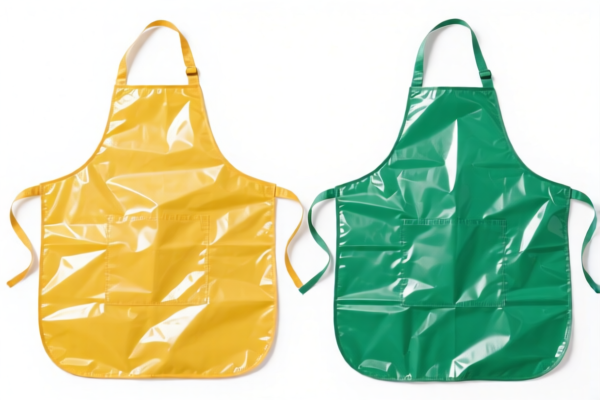
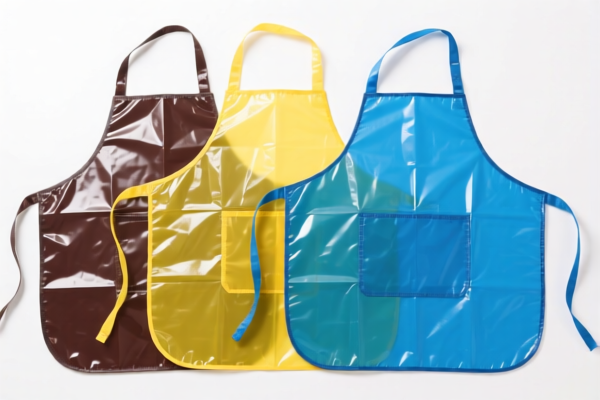
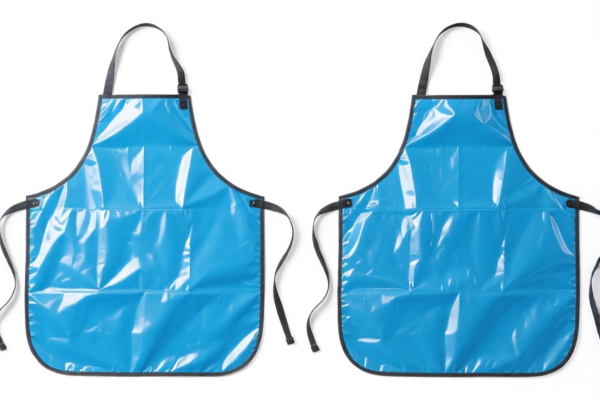
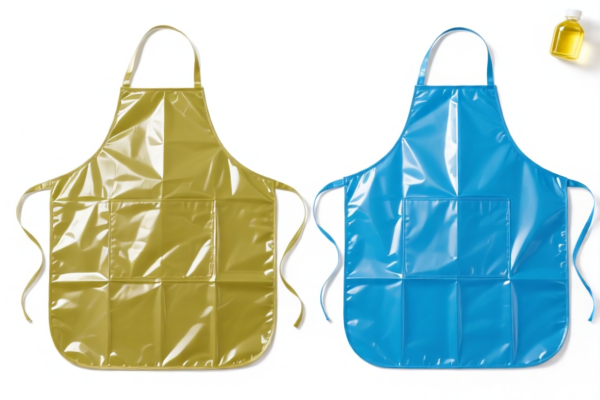
AI Analysis
🛡️ Plastic Aprons (Oil-Resistant) | Industrial & Commercial Protective Gear
🌐 HS Code Reference & Customs Clearance Guide | 2026 Latest Tariff Analysis | Professional Clearance Strategy
📌 I. Product Definition & Classification: Do You Really Understand "Plastic Aprons"?
Plastic aprons are essential personal protective equipment (PPE) used in kitchens, laboratories, and industrial settings to protect clothing from grease, oil, and chemical splashes. In international trade, their classification depends heavily on material composition, manufacturing process (impregnated, coated, covered, or laminated), and form.
Key Distinctions: * Textile-Based with Plastic Coating: If the base fabric is textile and only the surface is treated, it often falls under Chapter 62 (Articles of Apparel and Clothing Accessories, Not Knitted or Crocheted). * Pure Plastic Items: If the apron is made entirely of plastic materials (e.g., PVC, PE) without a textile base, it may be classified under Chapter 39 (Articles of Plastic).
⚠️ Critical Classification Point:
- If the apron is made of textile material that has been impregnated, coated, covered, or laminated with plastic/rubber → Classify under 6210.20.
- If the apron is made entirely of plastic (no textile backing) → Classify under 3926.20.
📦 II. HS Code Classification Details (2026 Latest Tariff Authority Comparison)
| HS Code | Product Description | Application Scenario | Material/Manufacturing Process | Total Tax Rate (CN→US) |
|---|---|---|---|---|
6210.20.70.00 |
Aprons and protective garments, of textiles, impregnated, coated, covered or laminated with rubber or plastics | Kitchen work, industrial cleaning, oil-resistant wear | Textile base + Plastic/Rubber coating | 13.3% |
6210.20.30.00 |
Aprons and protective garments, of textiles, impregnated, coated, covered or laminated with plastics | General-purpose oil-resistant aprons, food processing | Textile base + Plastic coating | 13.8% |
3926.20.90.10 |
Other articles of plastic, including clothing accessories | Pure plastic aprons (PVC/PE), no textile base | 100% Plastic material | 40.0% |
🔍 Key Reminder:
- Chapter 62 applies to textile-based aprons that are merely treated with plastic/rubber.
- Chapter 39 applies to pure plastic aprons. Misclassifying a pure plastic apron as a textile one can lead to severe penalties.
- The "122 Clause" (Section 301/Trade War Tariffs) and IEEPA tariffs apply significantly to the 3926 classification, whereas 6210 carries lower additional duties.
💰 III. 2026 Latest Tariff Rate Breakdown (Including Additional Taxes & Policy Surcharges)
✅ Applicable Country: United States (US)
✅ Origin: China (CN)
✅ Effective Time: Current rates as of 2026
🎯 1. 6210.20.70.00 —— Aprons of Textiles Impregnated/Coated with Rubber or Plastics
| Item | Content |
|---|---|
| Base Tariff | 3.3% |
| Additional Tariff (Section 301/122 Clause) | +10% |
| IEEPA Surcharge | 0% (Not applicable to this specific subheading under current data) |
| Total Effective Tax Rate | 13.3% |
| Tax Calculation | CIF Value × 13.3% |
| De Minimis Eligibility | ❌ No (Section 321 exemption usually does not apply to restricted textile/plastic goods from China) |
| Legal Basis Path | Base Tariff: 3.3% → 122 Clause Tariff: 10% |
📌 Explanation:
- This code is for textile-based aprons with a rubber or plastic coating.
- The total rate is relatively low compared to pure plastic goods.
- Crucial: Ensure the product description clearly states "Textile Base" and "Coated/Laminated" to justify this lower rate.
🎯 2. 6210.20.30.00 —— Aprons of Textiles Impregnated/Coated with Plastics
| Item | Content |
|---|---|
| Base Tariff | 3.8% |
| Additional Tariff (Section 301/122 Clause) | +10% |
| IEEPA Surcharge | 0% |
| Total Effective Tax Rate | 13.8% |
| Tax Calculation | CIF Value × 13.8% |
| De Minimis Eligibility | ❌ No |
| Legal Basis Path | Base Tariff: 3.8% → 122 Clause Tariff: 10% |
📌 Note:
- Similar to the above, but specifically for plastic-coated textiles (not rubber).
- The difference between6210.20.70.00(13.3%) and6210.20.30.00(13.8%) lies in the specific material type (Rubber vs. Plastic).
- Both are significantly cheaper than pure plastic aprons (3926).
🎯 3. 3926.20.90.10 —— Other Articles of Plastic (Pure Plastic Aprons)
| Item | Content |
|---|---|
| Base Tariff | 5.0% |
| Additional Tariff (Section 301/122 Clause) | +25% |
| IEEPA Surcharge | +10% |
| Total Effective Tax Rate | 40.0% |
| Tax Calculation | CIF Value × 40.0% |
| De Minimis Eligibility | ❌ No |
| Legal Basis Path | Base Tariff: 5.0% → Section 301: 25% → IEEPA: 10% |
📌 Warning:
- This high tax rate (40%) applies to pure plastic aprons (e.g., PVC clear aprons, non-woven plastic bags used as aprons).
- Avoid this classification if your product has a textile backing, even if thin.
- The combination of Base (5%) + Section 301 (25%) + IEEPA (10%) results in a heavy burden.
🛠️ IV. Customs Clearance Practical Advice (Real-World Pitfall Prevention)
✅ 1. Documentation Checklist (Must-Provide)
| Document | Required | Description |
|---|---|---|
| ✅ Product Specification Sheet | ✔️ | Must detail: Material Composition (e.g., "Polyester fabric coated with PVC"), Dimensions, Weight. |
| ✅ Material Safety Data Sheet (MSDS) | ✔️ | If chemicals are involved in manufacturing or use. |
| ✅ Product Photos | ✔️ | Clear images showing the textile backing (if any) and the coating surface. Close-up of seams and edges. |
| ✅ Commercial Invoice | ✔️ | Accurate description: "Oil-Resistant Apron, Textile Base, PVC Coated" vs. "Plastic Apron". |
| ✅ Packing List | ✔️ | Quantity, Gross/Net Weight, Country of Origin. |
✅ 2. Declaration Tips (Key Mantras)
🔥 "Textile Base? Code 62! Pure Plastic? Code 39! Be Precise!"
| Scenario | Correct Declaration | Wrong Practice | Consequence |
|---|---|---|---|
| Apron has fabric backing + plastic coating | 6210.20.70.00 or 6210.20.30.00 |
Declare as "Plastic Apron" → 3926.20.90.10 |
Tax jumps from 13.3% to 40% + Potential Penalty |
| Apron is 100% PVC/PE (no fabric) | 3926.20.90.10 |
Declare as "Textile Apron" | Customs Rejection + Re-inspection |
| Mix of Textile and Plastic in one shipment | Split Declaration | Mixed in one line item | Confusion + Delays |
✅ 3. Special Cases Handling
| Case | Handling Advice |
|---|---|
| Non-Woven Fabric Aprons | Check if non-woven is considered "textile" (usually yes). If coated, use 6210. |
| Disposal/Disposable Aprons | If made of polypropylene non-woven and coated, still 6210. |
| Custom OEM Brands | Provide brand authorization to avoid IP issues, but HS Code is based on material, not brand. |
| Import from Vietnam/Mexico | If sourced from non-China countries, Section 301/IEEPA tariffs may not apply, drastically reducing cost. |
🌍 V. Global Market Comparison (2026 Latest)
| Country/Region | Recommended HS Code | Tariff (China Origin) | Certification Requirements | Notes |
|---|---|---|---|---|
| 🇺🇸 USA | 6210.20.70.00 |
13.3% | CPC (Consumer Product Safety) for children's wear | Highest penalty for misclassification |
| 🇪🇺 EU | 6210.20 |
0-4% | CE Marking (if PPE), REACH Compliance | Lower tariffs, strict chemical standards |
| 🇨🇦 Canada | 6210.20 |
0-5% | CCPSA | Similar to US but lower war tariffs |
| 🇦🇺 Australia | 6210.20 |
5-10% | Standard Compliance | No Section 301 equivalent |
📌 Conclusion:
- USA is the most expensive market due to the 10-25% additional tariffs.
- Proper classification is critical: Choosing6210over3926saves ~26.7% in taxes.
📌 VI. Common Mistakes & Pitfall Guide (Blood-Learn Lessons)
❌ Mistake 1: Calling all plastic aprons "Plastic Aprons" and using 3926.20.90.10.
👉 Consequence: Paying 40% tax instead of 13.3%.
👉 Fix: Check if there is a textile backing. If yes, use 6210.
❌ Mistake 2: Mixing "Rubber-Coated" and "Plastic-Coated" textiles in one declaration without specifying.
👉 Consequence: Customs may choose the higher tax rate or request detailed breakdown.
👉 Fix: Clearly specify "Coated with PVC" or "Coated with Rubber" in the description.
❌ Mistake 3: Ignoring the "122 Clause" or Section 301.
👉 Consequence: Under-declaring taxes.
👉 Fix: Always include the 10-25% additional tariff in your cost calculation.
✅ Correct Practice:
"Oil-Resistant Apron, 100% Polyester Fabric Base, PVC Coated Surface, Industrial Grade, Model XYZ, China Origin"
🎯 VII. Conclusion: Professional Declaration Saves Money!
🎯 Remember the Mantra:
🔹 "Textile Base = 6210 (13.3%) | Pure Plastic = 3926 (40%) | Know Your Material!"
🔹 "HS Code Determines Your Profit Margin, A 26% Difference Can Make or Break Your Deal!"
📌 Pro Tip:
If your supply chain allows, consider sourcing from Vietnam or Thailand to potentially avoid Section 301/IEEPA tariffs, reducing the effective tax rate on
3926goods significantly. For6210goods, the savings are less dramatic but still present if eligible for FTZ benefits.
📣 Immediate Action:
📞 Consult with a licensed customs broker BEFORE shipment.
📸 Provide clear photos of the material cross-section to prove textile backing.
🚀 Accurate Classification = Lower Costs + Faster Clearance!
✨ Professional Clearance Starts with Precise Classification!
💼 Every Dollar Saved is Profit Gained!
Customer Reviews
About HS Code Classification
The Harmonized System (HS) is an internationally standardized nomenclature developed by the World Customs Organization (WCO) to classify traded products. Over 200 countries use the HS system as the basis for customs tariffs, trade statistics, and import/export regulations.
Each HS code follows a hierarchical structure:
- Chapter (2 digits) — Broad category of goods (e.g., Chapter 84: Machinery and Mechanical Appliances)
- Heading (4 digits) — More specific grouping within the chapter
- Subheading (6 digits) — Internationally standardized breakdown, used by all WCO member countries
- National subdivisions (8-10 digits) — Country-specific extensions for further classification, such as US HTSUS 10-digit codes
Correct HS code classification is essential for smooth customs clearance, accurate duty payment, and compliance with trade regulations. Misclassification can lead to customs delays, overpayment of duties, or penalties.
When importing from CN to US, the applicable tariff rates may include:
- Most-Favored-Nation (MFN) rate — The standard duty rate applied to WTO members
- General rate — Applied to countries without trade agreements
- Trade remedy duties — Additional tariffs such as Section 301 (anti-dumping), Section 232 (national security), or countervailing duties
The information provided on this page is for reference purposes only. For official classification, please consult with your local customs authority or a licensed customs broker.