Plastic Articles (HS 3926905500)
CN → US| HS Code | Tariff Rate | Origin | Destination | Doc |
|---|---|---|---|---|
| 3923900012 | 38.0% | CN | US | Official Doc |
| 3923900080 | 38.0% | CN | US | Official Doc |
| 3924905610 | 20.9% | CN | US | Official Doc |
| 3924905650 | 20.9% | CN | US | Official Doc |
| 3926908500 | 24.0% | CN | US | Official Doc |
Product Images
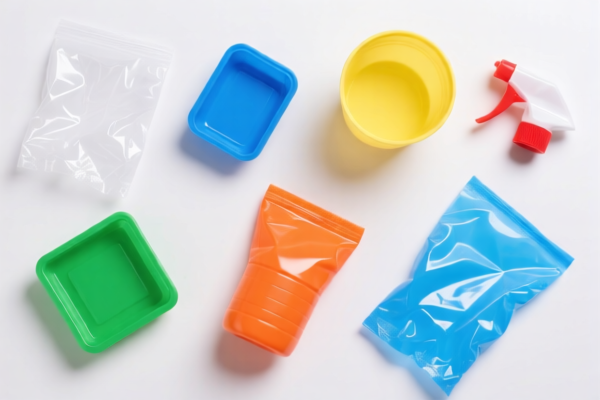
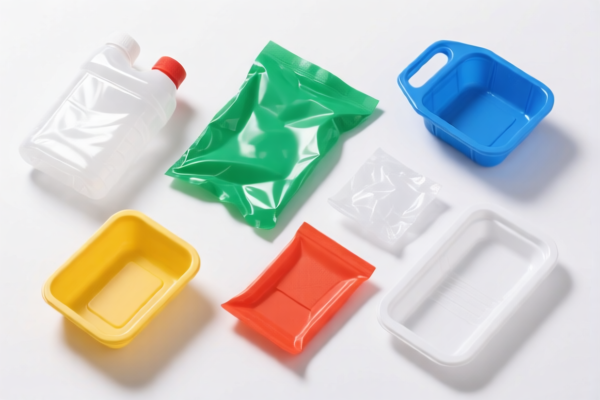
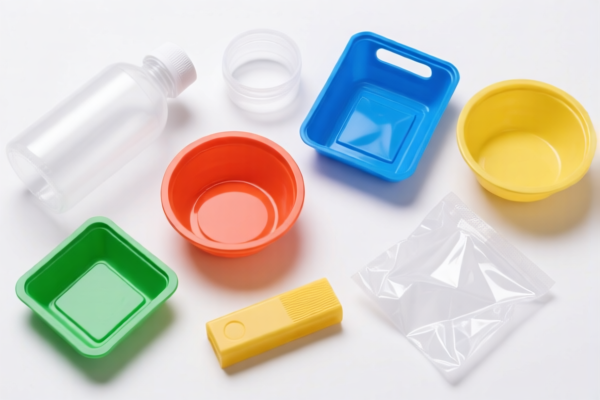
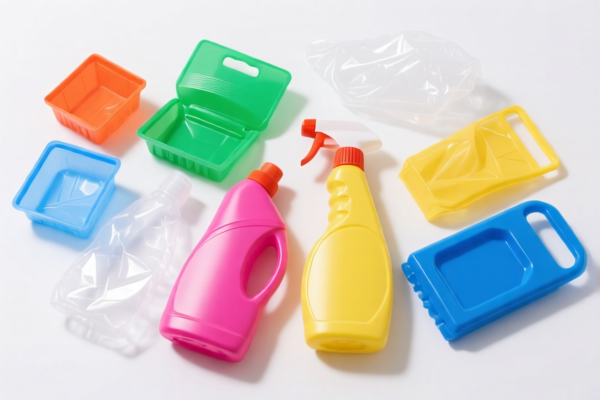
AI Analysis
🧱 Plastic Articles (Generic Plastic Products)
🌐 HS Code Reference & Customs Clearance Guide | 2026 Latest Tariff Analysis | Professional Clearance Strategy
📌 Part 1: Product Definition & Classification: What Are "Plastic Articles"?
Plastic articles, in the context of international trade and HS Code 3926, refer to finished goods made of plastics that are not specified elsewhere in Chapter 39 (Plastics and Articles Thereof). This is a "catch-all" category for plastic items that do not fit into specific sub-headings for tableware (3924), packaging (3923), or fittings (3926.10/3926.20).
In this specific dataset, we are dealing with Chinese-origin plastic goods being exported to the United States, subject to significant trade barriers.
⚠️ Key Distinction:
- If the item is packaging (boxes, bags, reels) → It falls under HS 3923.
- If the item is tableware/kitchenware (plates, cups, bowls) → It falls under HS 3924.
- If the item is other general plastic goods (furniture parts, fittings, accessories, toys, household items not covered above) → It falls under HS 3926.
📦 Part 2: HS Code Classification Details (2026 Latest Tariff Authority Comparison)
The provided data contains five (5) specific HS Codes derived from two main chapters (3923 and 3926). Here is the authoritative breakdown:
| HS Code | Product Description | Applicable Scenario | Total Tax Rate |
|---|---|---|---|
3923.90.00.12 |
Plastic articles, other plastic products | Packaging materials, plastic containers, non-specific packaging items | 38.0% |
3923.90.00.80 |
Other plastic products (Plastic Category) | General plastic packaging, wraps, bulk packaging components | 38.0% |
3924.90.56.10 |
Similar plastic articles (Consistent Material) | Kitchenware, tableware, plastic cutlery, food containers | 20.9% |
3924.90.56.50 |
Other plastic items (Consistent Usage) | Plastic bathroom accessories, specific kitchen gadgets | 20.9% |
3926.90.85.00 |
Other plastic articles (Plastic Material) | General plastic fittings, furniture parts, toys, decorative items | 24.0% |
🔍 Critical Reminder:
- Chapter 3923 items are primarily packaging. They face the highest tariff (38%) due to aggressive "Section 301" and "122 Clause" additions.
- Chapter 3924 items are tableware/kitchenware. They have a moderate tariff (20.9%).
- Chapter 3926 items are miscellaneous plastics. They have a lower-middle tariff (24.0%).
- Never misclassify packaging as "other plastic articles" to lower taxes; Customs will reclassify and penalize.
💰 Part 3: 2026 Latest Tariff Rate Breakdown (Including Surcharges & Policy Add-ons)
✅ Applicable Country: United States (US)
✅ Origin: China (CN)
✅ Effective Time: Current (2025-2026 Trade Framework)
🎯 1. 3923.90.00.12 & 3923.90.00.80 —— Plastic Packaging Articles (The "Packaging Trap")
| Item | Content |
|---|---|
| Base Duty Rate | 3.0% (Ad Valorem) |
| Retaliatory Tariff | +25.0% (Section 301 / USITC Footnote 9903.39.00 series) |
| "122 Clause" Tariff | +10.0% (Specific administrative add-on for certain Chinese plastic imports) |
| Total Tariff Rate | 38.0% |
| Tax Calculation | CIF Value × 38.0% |
| De Minimis Exemption | ❌ Not Eligible (deny_de_minimis applies to high-tariff Chinese goods) |
| Legal Path | Base:3923 → Sec301:25% → Clause122:10% |
📌 Explanation:
- These codes are for packaging. The 38% rate is punitive.
- "122 Clause": Refers to specific U.S. Customs and Border Protection (CBP) enforcement directives or additional duty calculations applied to certain plastic imports from China to combat unfair trade practices or specific material violations.
- High Risk: If you are shipping plastic bags, boxes, or wraps, budget for nearly 40% extra cost.
🎯 2. 3924.90.56.10 & 3924.90.56.50 —— Tableware & Kitchenware (The "Dining Category")
| Item | Content |
|---|---|
| Base Duty Rate | 3.4% (Ad Valorem) |
| Retaliatory Tariff | +7.5% (Section 301 List 4C / Reduced rate for some consumer goods) |
| "122 Clause" Tariff | +10.0% |
| Total Tariff Rate | 20.9% |
| Tax Calculation | CIF Value × 20.9% |
| De Minimis Exemption | ❌ Not Eligible |
| Legal Path | Base:3924 → Sec301:7.5% → Clause122:10% |
📌 Explanation:
- These codes cover plastic plates, cups, bowls, and kitchen utensils.
- The base rate is higher than packaging (3.4% vs 3.0%), but the retaliatory tariff is much lower (7.5% vs 25.0%).
- "122 Clause": Still applies (+10%), keeping the total at ~21%. This is a moderate cost center.
🎯 3. 3926.90.85.00 —— Other Plastic Articles (The "General Goods Category")
| Item | Content |
|---|---|
| Base Duty Rate | 6.5% (Ad Valorem) |
| Retaliatory Tariff | +7.5% (Section 301 List 4C) |
| "122 Clause" Tariff | +10.0% |
| Total Tariff Rate | 24.0% |
| Tax Calculation | CIF Value × 24.0% |
| De Minimis Exemption | ❌ Not Eligible |
| Legal Path | Base:3926 → Sec301:7.5% → Clause122:10% |
📌 Explanation:
- This code is a catch-all for plastic items not listed in 3923 (packaging) or 3924 (tableware). Examples: plastic hangers, plastic furniture parts, plastic toys (if not classified elsewhere), plastic fittings.
- The base rate is highest (6.5%), but the retaliatory tariff is only 7.5%.
- Optimization Tip: If your product can be classified as tableware (3924) or general goods (3926), it is cheaper than packaging (3923). Avoid classifying generic plastic goods as "packaging" if possible.
🛠️ Part 4: Customs Clearance Practical Advice (Battle-Proven Pitfall Guide)
✅ 1. Documentation Checklist (Non-negotiable)
| Document | Required | Purpose |
|---|---|---|
| ✅ Product Specification Sheet | ✔️ | Must detail material (e.g., PP, PE, PS), weight, dimensions. |
| ✅ Commercial Invoice | ✔️ | Must clearly state "Plastic [Item Name]", e.g., "Plastic Storage Containers," NOT just "Plastic Goods." |
| ✅ Packing List | ✔️ | Match invoice exactly. Include gross/net weight. |
| ✅ Country of Origin Certificate (CO) | ✔️ | Mandatory for proving Chinese origin to apply correct 301 tariffs. |
| ✅ Photos of Product | ✔️ | Show label, material, and use case (e.g., food contact vs. industrial). |
| ✅ FDA Food Contact Statement | (If 3924) | Required if items are for food use (tableware). |
✅ 2. Classification Strategy (Key Mantras)
🔥 “Know the Use: Pack vs. Plate vs. Part!”
| Scenario | Correct HS Code | Wrong Classification | Consequence |
|---|---|---|---|
| Plastic Box/Bag for Shipping | 3923.90.00.12/80 |
Misclassifying as 3926.90.85.00 |
Underpayment! CBP will assess 38% retroactively + penalties. |
| Plastic Plate/Cup | 3924.90.56.10/50 |
Misclassifying as 3926.90.85.00 |
Overpayment! You paid 24% instead of 20.9%. Waste of money. |
| Plastic Hanger/Furniture Part | 3926.90.85.00 |
Misclassifying as 3924 |
Misdeclaration! If not for food, it’s not tableware. Risk of seizure. |
| Plastic Toy | 3926.90.85.00 |
Misclassifying as 3923 |
Risk! Toys have specific codes; "other plastics" is safer if unsure, but check 9503. |
📌 Pro Tip:
- If your product is both packaging and a product (e.g., a plastic container sold with food), declare as Product (3924 or 3926) if the container is integral. If it’s just a shipping box, declare as 3923.
- "122 Clause" applies to all these codes. Do not try to avoid it by slight reclassification; CBP has clear criteria.
✅ 3. Special Situations
| Situation | Handling Advice |
|---|---|
| OEM Custom Plastic Parts | Provide detailed engineering drawings. Clarify if it’s a "part of a machine" (may fall under different chapter like 84 or 85) or a standalone plastic article (3926). |
| Food-Contact Items | Must comply with FDA 21 CFR. If lacking FDA compliance, clearance will be denied. |
| Mixed Containers | If a container has both packaging (3923) and tableware (3924), separate declarations are required. Do not lump them together. |
| Transshipment via Vietnam/Malaysia | High Risk! If origin is China, declaring Vietnam origin is fraud. CBP uses forensic tests to check plastic resin tags. |
🌍 Part 5: Global Market Comparison (2026 Snapshot)
| Country/Region | Recommended HS Code | Approx. Tariff (China Origin) | Remarks |
|---|---|---|---|
| 🇺🇸 USA | See Codes Above | 20.9% – 38.0% | Includes Section 301 + 122 Clause. High cost. |
| 🇨🇳 China (Import) | 3923/3924/3926 | 3.0% – 6.5% | No retaliatory tariffs. Low cost. |
| 🇪🇺 EU | 3926/3924 | 3.0% – 6.5% | No Section 301. No 122 Clause. |
| 🇬🇧 UK | 3926/3924 | 3.0% – 6.5% | Post-Brexit tariffs align with EU for many plastics. |
| 🇦🇺 Australia | 3926/3924 | 5.0% – 6.5% | Free Trade Agreement (CHAFTA) may apply if Chinese origin. |
📌 Conclusion:
- The US market is uniquely expensive for Chinese plastic goods due to the 38% top rate for packaging and 20-24% for general items.
- No other major market applies the "122 Clause" or 25% Section 301 tariffs to these items.
- Strategy: Consider supply chain diversification (Vietnam, Thailand, Mexico) if possible, but be aware of Rules of Origin audits.
📌 Part 6: Common Errors & Pitfall Guide (Lessons Learned)
❌ Error 1: Declaring "Plastic Bags" as "Other Plastic Articles (3926)"
👉 Consequence: CBP reclassifies to 3923. Tax jumps from 24% to 38%. You owe back taxes + interest.
❌ Error 2: Not declaring "122 Clause" impact in internal costing
👉 Consequence: Margin erosion. You priced at 24% but actual duty is 38%. Profit lost.
❌ Error 3: Mixing food-contact and non-food-contact plastics in one shipment without clear labeling
👉 Consequence: FDA holds shipment. Delays. Storage fees.
❌ Error 4: Using "Plastic Product" as the only description
👉 Consequence: CBP may request additional info, causing 7-14 day delays.
✅ Correct Description:
"Plastic Storage Containers, Polypropylene, Food Grade, Model XYZ, Made in China"
🎯 Part 7: Conclusion: Professional Classification Saves Millions!
🎯 Remember the Mantra:
🔹 “Packaging is 38%, Tableware is 21%, General is 24%.”
🔹 “Don’t mislabel packaging as general goods; CBP knows the difference.”
🔹 “Base Rate + 301 + 122 = Total Duty. Calculate accurately.”
📌 Tips:
- If your plastic articles are not for food contact and not packaging, try to classify under 3926.90.85.00 (24%) instead of 3923 (38%).
- For tableware (3924), ensure you have FDA documentation ready.
- Always apply for an Advance Ruling from US Customs if you are unsure about the classification of new products.
📣 Immediate Action:
📞 Consult a Licensed Customs Broker before shipping.
📄 Prepare FDA/Compliance Docs for tableware.
📦 Label Clearly: "Made in China," Material Type, Intended Use.
🚀 Optimize Your Landed Cost by accurate HS Code selection!
✨ Professional Clearance Starts with Precise Classification!
💼 Your Every Dollar is Worth Calculating!
Customer Reviews
About HS Code Classification
The Harmonized System (HS) is an internationally standardized nomenclature developed by the World Customs Organization (WCO) to classify traded products. Over 200 countries use the HS system as the basis for customs tariffs, trade statistics, and import/export regulations.
Each HS code follows a hierarchical structure:
- Chapter (2 digits) — Broad category of goods (e.g., Chapter 84: Machinery and Mechanical Appliances)
- Heading (4 digits) — More specific grouping within the chapter
- Subheading (6 digits) — Internationally standardized breakdown, used by all WCO member countries
- National subdivisions (8-10 digits) — Country-specific extensions for further classification, such as US HTSUS 10-digit codes
Correct HS code classification is essential for smooth customs clearance, accurate duty payment, and compliance with trade regulations. Misclassification can lead to customs delays, overpayment of duties, or penalties.
When importing from CN to US, the applicable tariff rates may include:
- Most-Favored-Nation (MFN) rate — The standard duty rate applied to WTO members
- General rate — Applied to countries without trade agreements
- Trade remedy duties — Additional tariffs such as Section 301 (anti-dumping), Section 232 (national security), or countervailing duties
The information provided on this page is for reference purposes only. For official classification, please consult with your local customs authority or a licensed customs broker.