Plastic Articles (HS 3926909930)
CN → US| HS Code | Tariff Rate | Origin | Destination | Doc |
|---|---|---|---|---|
| 3926909925 | 22.8% | CN | US | Official Doc |
| 3926909989 | 22.8% | CN | US | Official Doc |
| 3923900012 | 38.0% | CN | US | Official Doc |
| 3924905610 | 20.9% | CN | US | Official Doc |
| 3923900080 | 38.0% | CN | US | Official Doc |
| 3924905650 | 20.9% | CN | US | Official Doc |
Product Images

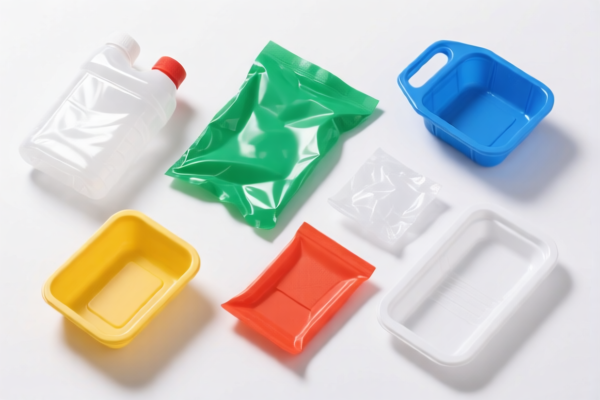


AI Analysis
🧱 Plastic Articles (General Purpose Plastic Products)
🌐 HS Code Reference & Customs Clearance Guide | 2026 Latest Tariff Analysis | Professional Clearance Strategy
📌 I. Product Definition: What Are "Plastic Articles"?
Plastic Articles refer to manufactured goods made primarily of plastic materials that do not fall into more specific categories (such as plastic pipes, bottles, plates, or furniture). They are often referred to as "Other articles of plastics."
In international trade, these items are typically diversified manufacturing components, household items, industrial parts, or consumer goods made from polymers like PE, PP, PVC, PS, ABS, etc.
⚠️ Key Distinction:
- If the item is a specific type like a pipe, tube, or hose → It may belong to HS 3917;
- If it is a plate, sheet, or film → It may belong to HS 3920/3921;
- If it is packaging goods (boxes, bags) → It may belong to HS 3923;
- If it is tableware/kitchenware → It may belong to HS 3924;
- If it does not fit the above specific categories → It falls under the residual category HS 3926.90.
📦 II. HS Code Classification Details (Based on Provided Data)
Based on the provided data, here are the specific HS codes, tax rates, and explanations for "Plastic Articles":
| HS Code | Summary of Classification | Total Tax Rate | Tax Breakdown |
|---|---|---|---|
| 3926.90.99.25 | Product name contains material 'plastic'. Consistent with coding requirements. 'Articles' covers the scope of plastic products. | 22.8% | Base: 5.3% Added: 7.5% Section 122: 10% |
| 3926.90.99.89 | Product name explicitly contains material 'plastic'. Form fits other articles under this code. No material or form conflict. | 22.8% | Base: 5.3% Added: 7.5% Section 122: 10% |
| 3923.90.00.12 | Product name contains material 'plastic'. Belongs to plastic products category. Material matches classification explanation. | 38.0% | Base: 3.0% Added: 25.0% Section 122: 10% |
| 3924.90.56.10 | Product name contains material 'plastic'. Consistent with reference code material attributes. Same category of plastic products. | 20.9% | Base: 3.4% Added: 7.5% Section 122: 10% |
| 3923.90.00.80 | Product name contains material 'plastic'. Classified as 'Other' in plastic products. Material consistent with HS Code. | 38.0% | Base: 3.0% Added: 25.0% Section 122: 10% |
🔍 Important Note:
- The general residual category for plastic articles is 3926.90.99 (Tax: 22.8%).
- However, if your plastic article can be specifically identified as packaging (3923) or tableware/kitchenware (3924), it must be classified under those more specific codes, which have higher additional tariffs (Total: 38.0% or 20.9%).
- Do not blindly use 3926 if the item fits 3923 or 3924 more accurately, as misclassification can lead to penalties.
💰 III. 2026 Latest Tariff Rate Details (Including Surcharges)
✅ Applicable Country: United States (US)
✅ Origin: China (CN)
✅ Effective Date: November 10, 2025 onwards (for subsequent imports)
🎯 1. 3926.90.99.25 / 3926.90.99.89 —— General Plastic Articles
| Item | Content |
|---|---|
| Base Tariff | 5.3% |
| Added Tariff (Section 301) | +7.5% |
| Section 122 Tariff | +10% |
| Total Tariff | 22.8% |
| Tax Calculation | CIF Value × 22.8% |
| De Minimis Exemption? | ❌ Not Applicable (Generally, Section 301 and Section 122 tariffs apply regardless of de minimis value for China-origin goods) |
| Legal Basis | HTSUS:3926.90.99.25/89 → Section 301: 7.5% → Section 122: 10% |
📌 Explanation:
- Base Tariff (5.3%): Standard MFN rate for other plastic articles.
- Added Tariff (7.5%): Under US Trade Law Section 301, specific goods from China are subject to additional duties.
- Section 122 Tariff (10%): Under the Trade Facilitation and Trade Enforcement Act, additional tariffs are applied to certain imports from China.
- Total 22.8% is a significant cost factor. Must be calculated into your landed cost.
🎯 2. 3923.90.00.12 / 3923.90.00.80 —— Plastic Packaging Articles (Other)
| Item | Content |
|---|---|
| Base Tariff | 3.0% |
| Added Tariff (Section 301) | +25.0% |
| Section 122 Tariff | +10% |
| Total Tariff | 38.0% |
| Tax Calculation | CIF Value × 38.0% |
| De Minimis Exemption? | ❌ Not Applicable |
| Legal Basis | HTSUS:3923.90.00.12/80 → Section 301: 25% → Section 122: 10% |
📌 Warning:
- If your "Plastic Article" is actually a box, bag, pallet, or bubble wrap used for packaging, it falls under HS 3923.
- The Section 301 tariff for HS 3923 is 25%, which is much higher than the 7.5% for general plastics.
- Total 38.0% makes packaging items very expensive to import.
🎯 3. 3924.90.56.10 —— Plastic Tableware/Kitchenware
| Item | Content |
|---|---|
| Base Tariff | 3.4% |
| Added Tariff (Section 301) | +7.5% |
| Section 122 Tariff | +10% |
| Total Tariff | 20.9% |
| Tax Calculation | CIF Value × 20.9% |
| De Minimis Exemption? | ❌ Not Applicable |
| Legal Basis | HTSUS:3924.90.56.10 → Section 301: 7.5% → Section 122: 10% |
📌 Note:
- If your plastic item is a plate, bowl, cup, spoon, or kitchen utensil, it falls under HS 3924.
- The Section 301 tariff for HS 3924 is 7.5% (same as general plastics).
- Total 20.9% is the lowest among the specific categories listed, making it slightly more favorable than packaging items.
🛠️ IV. Customs Clearance Practical Advice (Pitfall Avoidance Guide)
✅ 1. Preparation Checklist (Essential Documents)
| Document | Required | Description |
|---|---|---|
| ✅ Product Specification Sheet | ✔️ | Must clearly state material composition (e.g., "100% Polypropylene"), dimensions, and usage. |
| ✅ Product Photos | ✔️ | Clear images showing the item, including any labels, logos, or usage instructions. |
| ✅ Commercial Invoice | ✔️ | Must accurately describe the item. Avoid generic terms like "Plastic Goods" if possible; use "Plastic Storage Container" or "Plastic Spoon". |
| ✅ Packing List | ✔️ | Detail contents to avoid mismatch with invoice. |
| ✅ Origin Certificate | ❌ (Optional but recommended) | If applicable for other markets, but for US, origin is declared on entry summary. |
| ✅ Customs Entry Documentation | ✔️ | Include ISF (Importer Security Filing) filed 24 hours before loading. |
✅ 2. Declaration Tips (Key Mantra)
🔥 “Be Specific, Not Generic! Material Matters, Use Matters!”
| Scenario | Correct Declaration | Incorrect Practice |
|---|---|---|
| General Plastic Part (e.g., gear, clip) | 3926.90.99.25 - "Plastic Gear" |
"Plastic Part" → Risk of classification error |
| Plastic Bag/Box | 3923.90.00.12/80 - "Plastic Packaging Bag" |
"Plastic Article" → Might be wrongly classified as 3926 (22.8%) or 3923 (38.0%) depending on CBP view |
| Plastic Spoon/Plate | 3924.90.56.10 - "Plastic Tableware" |
"Plastic Kitchen Item" → Vague, may trigger higher scrutiny |
| Mixed Container | Separate line items for each type | Mixed "Plastic Articles" → Risk of audit and reclassification |
📌 Key Point:
- The CBP (US Customs and Border Protection) will look at the principal use and specificity of the item.
- If it is clearly tableware, do not declare it as general plastic articles to save tax; this is fraud and can lead to severe penalties.
- If it is packaging, declare it as such, even if the tax is higher (38.0%), because it is the correct legal classification.
✅ 3. Special Cases
| Scenario | Handling Advice |
|---|---|
| Composite Materials | If the item is 51% plastic, 49% metal, it may still be classified as plastic if plastic is the essential character. Provide material breakdown. |
| Sample Shipments | Even for samples, Section 301 and Section 122 tariffs apply. Do not assume de minimis exemption ($800) applies if the value exceeds $800 or if not qualifying under 321. |
| OEM Custom Parts | Provide design drawings or specifications to prove it is not a standard commercial item like tableware or packaging. |
| Used Plastic Items | Generally prohibited or restricted. Must be new and unused for most plastic article classifications. |
🌍 V. Global Market Comparison (2026 Latest)
| Country/Region | Recommended HS Code | Tariff Rate | Certification | Notes |
|---|---|---|---|---|
| 🇺🇸 USA | 3926.90.99.25 |
22.8% | None specific | High due to Section 301 & 122. Packaging (3923) is 38.0%. |
| 🇨🇳 China | 3926.90.99.00 |
5-8% | CCC (if applicable) | Lower base tariff, no Section 301/122. |
| 🇪🇺 EU | 3926.90.97 |
0-3% | CE (if applicable) | Generally low tariff, no major trade war surcharges for plastics. |
| 🇬🇧 UK | 3926.90.90 |
0-6% | UKCA | Post-Brexit, tariffs vary but generally low. |
| 🇯🇵 Japan | 3926.90.90 |
0-5% | PSE (if applicable) | Low tariffs, strict safety standards for tableware. |
📌 Conclusion:
- USA has the highest barriers for Chinese plastic goods due to Section 301 (7.5% or 25%) and Section 122 (10%).
- Packaging items (3923) are heavily taxed in the US (38.0%).
- Tableware (3924) and General Articles (3926) are moderately taxed (20.9% and 22.8% respectively).
📌 VI. Common Errors & Pitfalls (Lessons Learned)
❌ Error 1: Declaring a plastic box as "General Plastic Article" (3926) to avoid the 38.0% packaging tariff.
👉 Consequence: CBP may reclassify it as 3923, assess back taxes + penalties. Always be accurate.
❌ Error 2: Ignoring Section 122 Tariff.
👉 Consequence: Underpayment of 10%. CBP will issue a deficit notice.
❌ Error 3: Vague Description "Plastic Stuff".
👉 Consequence: Customs detention, inspection, and potential seizure. Describe exactly what it is.
❌ Error 4: Assuming De Minimis Applies.
👉 Consequence: For China-origin goods, Section 301/122 tariffs apply even for small shipments over $800 if not properly structured. For shipments under $800, they may still be subject to duties if not qualifying for 321. Check current 321 rules.
✅ Correct Approach:
"Plastic Injection Molded Bracket, Model X, Made of ABS, for Industrial Use"
HS Code:3926.90.99.25
Tariff: 22.8%
🎯 VII. Conclusion: Precise Classification, Efficient Clearance
🎯 Remember the Mantra:
🔹 "Be Specific: Tableware, Packaging, or General?"
🔹 "Tax Rates: 22.8% (General), 38.0% (Packaging), 20.9% (Tableware)"
🔹 "Section 122 is Always 10% for China"
📌 Pro Tip:
If you are importing large volumes, consider Advance Ruling from CBP to confirm the correct HS code and tariff application. This provides certainty and avoids surprise assessments.
📣 Immediate Action:
📞 Consult a Customs Broker to verify the specific HS code for your product.
📋 Prepare Detailed Product Descriptions to support your classification.
💰 Calculate Landed Cost including the 22.8%, 38.0%, or 20.9% tariff.
✨ Professional Clearance Starts with Accurate Classification!
💼 Every Cent Saved is a Cent Earned!
Customer Reviews
About HS Code Classification
The Harmonized System (HS) is an internationally standardized nomenclature developed by the World Customs Organization (WCO) to classify traded products. Over 200 countries use the HS system as the basis for customs tariffs, trade statistics, and import/export regulations.
Each HS code follows a hierarchical structure:
- Chapter (2 digits) — Broad category of goods (e.g., Chapter 84: Machinery and Mechanical Appliances)
- Heading (4 digits) — More specific grouping within the chapter
- Subheading (6 digits) — Internationally standardized breakdown, used by all WCO member countries
- National subdivisions (8-10 digits) — Country-specific extensions for further classification, such as US HTSUS 10-digit codes
Correct HS code classification is essential for smooth customs clearance, accurate duty payment, and compliance with trade regulations. Misclassification can lead to customs delays, overpayment of duties, or penalties.
When importing from CN to US, the applicable tariff rates may include:
- Most-Favored-Nation (MFN) rate — The standard duty rate applied to WTO members
- General rate — Applied to countries without trade agreements
- Trade remedy duties — Additional tariffs such as Section 301 (anti-dumping), Section 232 (national security), or countervailing duties
The information provided on this page is for reference purposes only. For official classification, please consult with your local customs authority or a licensed customs broker.