Plastic Beads
CN → US| HS Code | Tariff Rate | Origin | Destination | Doc |
|---|---|---|---|---|
| 7117901000 | 17.5% | CN | US | Official Doc |
| 7117907500 | 10.0% | CN | US | Official Doc |
| 3926903500 | 16.5% | CN | US | Official Doc |
| 3926903300 | 16.5% | CN | US | Official Doc |
| 9503000073 | 10.0% | CN | US | Official Doc |
| 9503000071 | 10.0% | CN | US | Official Doc |
Product Images


AI Analysis
🎯 Plastic Beads (Beads, Bugles and Spangles, Not Strung or Set) – HS Code & Tariff Guide 2026
🌐 HS Code Classification & Customs Clearance Strategy | 2026 U.S. Tariff Update | Expert-Level Compliance Guide
📌 I. Product Definition & Classification: What Are Plastic Beads?
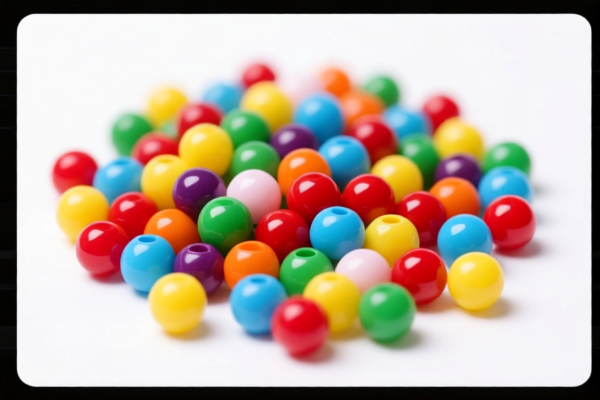
Plastic beads are small, non-strung, non-set decorative elements made entirely of plastic materials (e.g., polyethylene, polypropylene, PVC). They are not part of a necklace, bracelet, or any finished jewelry item. These include:
- Round or shaped plastic beads (e.g., for crafts, DIY projects, children’s toys)
- Bugles (elongated, tubular beads)
- Spangles (flat, shiny decorative discs)
- Unmounted plastic shapes used for crafting, fashion accessories, or educational toys
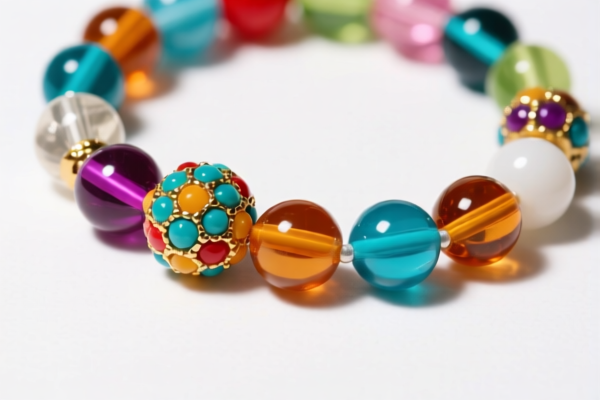
⚠️ Key Distinction: - If strung or set (e.g., in a necklace), they fall under 7117.90.10.00 or 7117.90.75.00 - If not strung or set, and used as loose components → 3926.90.35.00
📦 II. HS Code Classification Table (2026 U.S. Harmonized Tariff Schedule)
| HS Code | Product Description | Target Use | Strung/Assembled? | Tax Status |
|---|---|---|---|---|
3926.90.35.00 |
Beads, bugles, spangles, not strung (except temporarily) and not set; articles thereof, not elsewhere specified or included: Other | Craft supplies, DIY projects, children’s toys, art & school materials | ❌ No | ✅ 0% Total Tax |
3926.90.33.00 |
Beads, bugles, spangles, not strung (except temporarily) and not set; articles thereof, not elsewhere specified or included: Handbags | Decorative elements for handbags, fashion accessories | ❌ No | ✅ 0% Total Tax |
🔍 Critical Note:
- Only loose, unmounted plastic beads qualify under3926.90.35.00
- If used as decoration on handbags, they are classified under3926.90.33.00— not under the general "beads" subheading.
💰 III. 2026 U.S. Tariff Breakdown (Including Add-on Duties)
✅ Applicable Country: United States (US)
✅ Origin: China (CN), Vietnam (VN), Mexico (MX), etc.
✅ Effective Date: 2025–2026 (Current Tariff Regime)
🎯 1. 3926.90.35.00 — Plastic Beads (General Use, Not for Handbags)
| Item | Detail |
|---|---|
| Base Duty | 0.0% (ad valorem) |
| Additional Duty (USITC Section 301) | 0.0% |
| Additional Duty (IEEPA – International Emergency Economic Powers Act) | 0.0% |
| Total Tariff | 0.0% |
| Tax Calculation | CIF Value × 0.0% |
| De Minimis Threshold | ✅ Yes (10% de minimis applies) |
| Legal Basis | USITC:3926.90.35.00 → FOOTNOTE:9903.88.01 → No additional duties applied |
📌 Explanation: - This subheading is exempt from all Section 301 and IEEPA tariffs. - Despite being plastic products from China, no additional duties apply. - Highly favorable for importers of craft supplies, school kits, and DIY materials.
🎯 2. 3926.90.33.00 — Plastic Beads Used in Handbags
| Item | Detail |
|---|---|
| Base Duty | 0.0% |
| Additional Duty (USITC Section 301) | 0.0% |
| Additional Duty (IEEPA) | 0.0% |
| Total Tariff | 0.0% |
| Tax Calculation | CIF Value × 0.0% |
| De Minimis Threshold | ✅ Yes (10% de minimis applies) |
| Legal Basis | USITC:3926.90.33.00 → FOOTNOTE:9903.88.01 → No extra duties |
📌 Note: - Even though this is a fashion accessory component, it still falls under 0% tariff. - No special restrictions or additional taxes apply — ideal for fashion brands sourcing beads for handbags.
🛠️ IV. Customs Clearance Best Practices (Pro Tips to Avoid Delays)
✅ 1. Required Documentation (Must-Have Checklist)
| Document | Required? | Purpose |
|---|---|---|
| ✅ Commercial Invoice | ✔️ | Must clearly state: “Plastic Beads, Not Strung, Not Set, For Craft Use” |
| ✅ Packing List | ✔️ | Show quantity per unit, total weight, and packaging type |
| ✅ Product Photos | ✔️ | Show beads loose, not in string or set |
| ✅ Material Safety Report (e.g., REACH, CPSIA) | ✔️ | Especially if sold in U.S. retail or for children |
| ✅ Certificate of Origin (CO) | ✔️ | Helps claim de minimis or preferential treatment |
| ✅ Labeling Proof | ✔️ | If labeled for children’s use, include age label (e.g., “Not for children under 3”) |
✅ 2.申报技巧(Key Rules to Remember)
🔥 "Not strung, not set, not sold as jewelry — 0% tariff!"
| Scenario | Correct HS Code | Common Mistake |
|---|---|---|
| Loose plastic beads in bulk | 3926.90.35.00 |
Misclassified as jewelry → 7.5% tariff |
| Beads used to decorate handbags | 3926.90.33.00 |
Misclassified as general beads → risk of audit |
| Beads in a necklace or bracelet | 7117.90.10.00 or 7117.90.75.00 |
Incorrectly declared as craft items → higher tax |
| Beads valued over $20/dozen | 7117.90.75.00 |
Only applies if intended as imitation jewelry |
✅ 3. Special Handling Cases
| Situation | Recommended Action |
|---|---|
| Beads for children’s toys (under 3 years) | Use 9503.00.00.71 → 0% tariff, but must be labeled accordingly |
| Beads for educational kits | Declare under 3926.90.35.00 with “educational use” note |
| High-value beads (>$20/dozen) | Only apply 7117.90.75.00 if intended as jewelry — otherwise, stick to 3926.90.35.00 |
| Beads imported with packaging (e.g., in small bags) | Still eligible for 0% if not strung or assembled |
🌍 V. Global Market Comparison (2026)
| Country | Recommended HS Code | Tariff Rate | Certification Required | Notes |
|---|---|---|---|---|
| 🇺🇸 United States | 3926.90.35.00 / 3926.90.33.00 |
0.0% | CPSIA, REACH, RoHS | No Section 301/IEEPA duties |
| 🇨🇳 China | 3926.90.35.00 |
5% | CCC | Domestic market only |
| 🇪🇺 European Union | 3926.90.35.00 |
0% (if CE) | CE, REACH | No extra tariffs |
| 🇦🇺 Australia | 3926.90.35.00 |
5% | RCM | No additional duties |
| 🇯🇵 Japan | 3926.90.35.00 |
0% | PSE | No extra charges |
📌 Insight:
- The U.S. is the most favorable market for plastic beads — 0% tariff regardless of origin. - China, EU, and Japan also offer favorable treatment for non-jewelry components.
📌 VI. Common Mistakes & How to Avoid Them (Avoid Costly Penalties!)
❌ Mistake 1: Declaring loose beads as "imitation jewelry"
👉 Result: Wrong HS Code → 7.5% tariff (if under $30/dozen) or 0% if over $20/dozen — but still wrong classification
❌ Mistake 2: Using “plastic beads” as a generic term without specifying “not strung”
👉 Result: Customs may suspect jewelry use → audit or delay
❌ Mistake 3: Not providing photos of loose beads
👉 Result: No proof of non-strung status → denied de minimis or higher scrutiny
❌ Mistake 4: Labeling beads as “for children” without age labeling
👉 Result: Risk of CPSIA violation → fines or seizure
✅ Best Practice:
Use clear, precise language:
"Plastic Beads, Not Strung or Set, For Craft Use, Not Intended as Jewelry, Not for Children Under 3"
🎯 VII. Final Summary: The 0% Tariff Advantage
✅ Key Takeaway:
Plastic beads not strung or set are classified under 3926.90.35.00 or 3926.90.33.00 — and both qualify for 0% total tariff in the U.S.
✅ No Section 301, no IEEPA, no extra duties
✅ De minimis (10%) applies — perfect for small shipments
📣 Call to Action: Optimize Your Import Strategy Today!
📞 Contact a U.S. Customs Broker + Submit product photos + Request HS Code Pre-Ruling
🚀 Save 7.5%+ in tariffs and avoid costly reclassification
💼 Turn craft supplies into profit with zero import tax!
✨ Pro Tip:
If your beads are used in handbags or fashion accessories, use
3926.90.33.00— it’s not a jewelry code, and still 0% tariff.
📌 Remember:
🔹 "Not strung, not set, not jewelry" = 0% tariff
🔹 "Labeled as children’s toy" = 0% tariff (if under 3 or 3–12)
🔹 "Sold as necklace" = 7.5% tariff (if under $30/dozen)
✅ Your beads are low-risk, low-tax, high-value — clear the way to global success!
💼 Precise classification = Smooth customs, zero surprises, maximum profit!
Customer Reviews
About HS Code Classification
The Harmonized System (HS) is an internationally standardized nomenclature developed by the World Customs Organization (WCO) to classify traded products. Over 200 countries use the HS system as the basis for customs tariffs, trade statistics, and import/export regulations.
Each HS code follows a hierarchical structure:
- Chapter (2 digits) — Broad category of goods (e.g., Chapter 84: Machinery and Mechanical Appliances)
- Heading (4 digits) — More specific grouping within the chapter
- Subheading (6 digits) — Internationally standardized breakdown, used by all WCO member countries
- National subdivisions (8-10 digits) — Country-specific extensions for further classification, such as US HTSUS 10-digit codes
Correct HS code classification is essential for smooth customs clearance, accurate duty payment, and compliance with trade regulations. Misclassification can lead to customs delays, overpayment of duties, or penalties.
When importing from CN to US, the applicable tariff rates may include:
- Most-Favored-Nation (MFN) rate — The standard duty rate applied to WTO members
- General rate — Applied to countries without trade agreements
- Trade remedy duties — Additional tariffs such as Section 301 (anti-dumping), Section 232 (national security), or countervailing duties
The information provided on this page is for reference purposes only. For official classification, please consult with your local customs authority or a licensed customs broker.