Plastic Bill Folder
CN → US| HS Code | Tariff Rate | Origin | Destination | Doc |
|---|---|---|---|---|
| 3926100000 | 15.3% | CN | US | Official Doc |
| 3926909989 | 22.8% | CN | US | Official Doc |
| 4820300040 | 35.0% | CN | US | Official Doc |
| 4820300020 | 35.0% | CN | US | Official Doc |
| 3923900080 | 38.0% | CN | US | Official Doc |
| 3923500000 | 40.3% | CN | US | Official Doc |
Product Images
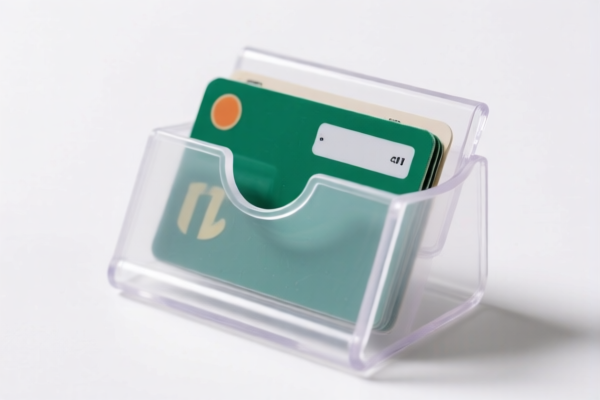
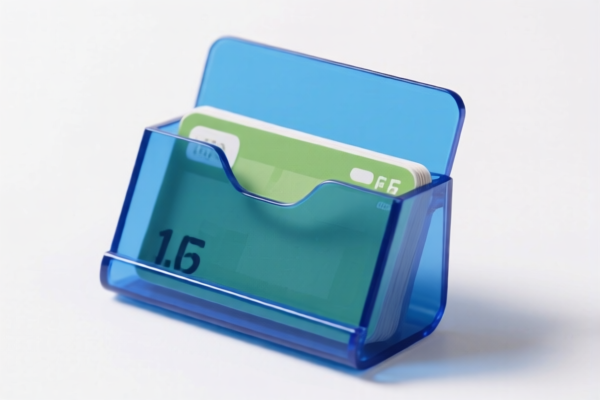

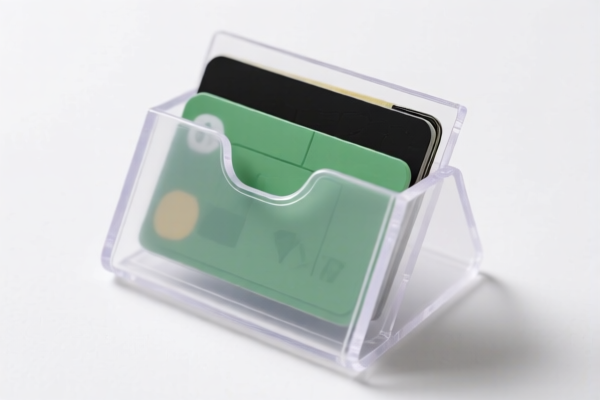
AI Analysis
📂 Plastic Bill Folder (Plastic File Holders/Budget Envelopes)
🌐 HS Code Reference & Customs Clearance Guide | 2026 Latest Tariff Analysis | Professional Customs Strategy
📌 1. Product Definition & Classification: Do You Really Understand the "Plastic Bill Folder"?
A Plastic Bill Folder is typically a flat, pocketed document holder made primarily of plastic materials (such as PP, PVC, or PE), used for organizing bills, invoices, receipts, or school documents. It may consist of a single layer of plastic, a paper/cardboard core with a plastic outer coating, or a fully plastic structural design.
In international trade, its classification depends heavily on material composition, structural integrity, and primary function. Misclassification can lead to significant tariff discrepancies due to the steep "Section 301" and "Section 122" tariffs applicable to Chinese-origin goods entering the US.
⚠️ Key Distinction Point:
- If it is purely plastic and used for office/school organization → Likely 3926.10.00.00 (Lowest Tax).
- If it has a paper/cardboard core with plastic exterior → Likely 4820.30.00 (High Tax).
- If it is considered a general plastic container/package rather than a specific stationery item → Likely 3923.50.00.00 or 3926.90.99.89 (Highest Tax).
📦 2. HS Code Classification Details (2026 Latest Tariff Authority Mapping)
| HS Code | Product Description | Applicable Scenario | Primary Material | Total Tax Rate |
|---|---|---|---|---|
3926.10.00.00 |
Plastic articles, office or school supplies (e.g., bill folders, document organizers) | Pure plastic bill folders, school budget envelopes | ✅ 100% Plastic | 15.3% |
3926.90.99.89 |
Other plastic articles not specified elsewhere | General plastic organizers, miscellaneous plastic office accessories | ✅ 100% Plastic | 22.8% |
4820.30.00.40 |
Plastic-surfaced paper/cardboard composites, file covers & document holders | Paper core with plastic lamination/coating, composite file folders | ✅ Paper Core + Plastic Surface | 35.0% |
4820.30.00.20 |
Plastic-surfaced paper/cardboard structure, file/loose-leaf binders | Composite binders/folders where paper is the core structural element | ✅ Paper Core + Plastic Surface | 35.0% |
3923.90.00.80 |
Plastic articles for transport/packaging, other | Plastic bills used primarily for shipping/packaging purposes, not office use | ✅ 100% Plastic (Packaging) | 38.0% |
3923.50.00.00 |
Plastic articles for closing, sealing, or packaging (e.g., clips/seals) | Plastic clips, sealable pouches, or "clip-type" packaging items | ✅ 100% Plastic (Packaging/Sealing) | 40.3% |
🔍 Key Reminder:
- "Office/Stationery" status is crucial. If the product is marketed as a bill organizer or document folder for office/school use, it leans toward 3926.10.00.00.
- If the product is packaging (e.g., a zip-lock plastic bag for documents) or clips/seals, it falls under 3923, triggering higher tariffs.
- Composite materials (paper + plastic) are treated as Paper Products (Chapter 48), not Plastic (Chapter 39), resulting in a flat 35% rate.
💰 3. 2026 Latest Tariff Rate Breakdown (Including Additional Taxes & Policy Surcharges)
✅ Applicable Country: United States (US)
✅ Country of Origin: China (CN)
✅ Effective Date: Current (Includes ongoing Section 301 & Section 122 duties)
🎯 1. 3926.10.00.00 — Plastic Office/School Supplies (BEST OPTION)
| Item | Content |
|---|---|
| Base Tariff | 5.3% (Ad Valorem) |
| Section 301 Tariff | 0.0% (Note: Specific subheadings for some stationery items may have varying treatments, but per data: 0.0%) |
| Section 122 Tariff | 10.0% |
| Total Tariff | 15.3% |
| Tax Calculation | CIF Value × 15.3% |
| De Minimis Eligibility | ❌ No (Deny de minimis for Section 301/122 goods from China) |
| Legal Basis Path | HTS:3926.10.00.00 → Section 301: Footnote 9903.88.01 (0%) → Section 122: IEEPA:9903.01.25 |
📌 Explanation:
- This is the most favorable classification for pure plastic bill folders.
- Section 301 (25%) is NOT applied to this specific subheading in the provided data (0.0%), which is a critical advantage.
- Section 122 (10%) applies, bringing the total to 15.3%.
- Strategy: Ensure the product is clearly defined as "office/school supplies" and not "packaging" or "clips."
🎯 2. 3926.90.99.89 — Other Plastic Articles
| Item | Content |
|---|---|
| Base Tariff | 5.3% |
| Section 301 Tariff | 7.5% |
| Section 122 Tariff | 10.0% |
| Total Tariff | 22.8% |
| Tax Calculation | CIF Value × 22.8% |
| De Minimis Eligibility | ❌ No |
| Legal Basis Path | HTS:3926.90.99.89 → Section 301: Footnote 9903.88.01 (7.5%) → Section 122 |
📌 Note:
- If the bill folder is considered a "miscellaneous plastic article" (not specifically "office/school supplies"), the Section 301 tariff increases to 7.5%.
- Total tax rises to 22.8%.
🎯 3. 4820.30.00.40 / 4820.30.00.20 — Plastic-Surfaced Paper/Cardboard Composites
| Item | Content |
|---|---|
| Base Tariff | 0.0% |
| Section 301 Tariff | 25.0% |
| Section 122 Tariff | 10.0% |
| Total Tariff | 35.0% |
| Tax Calculation | CIF Value × 35.0% |
| De Minimis Eligibility | ❌ No |
| Legal Basis Path | HTS:4820.30.00.40/20 → Section 301: Footnote 9903.88.01 (25%) → Section 122 |
📌 Warning:
- If your bill folder has a paper or cardboard core (even if covered in plastic), it is classified as a paper product.
- Base duty is 0%, but Section 301 is 25%, leading to a 35% total.
- Avoid this unless the product is structurally paper-based.
🎯 4. 3923.90.00.80 — Plastic Articles for Transport/Packaging
| Item | Content |
|---|---|
| Base Tariff | 3.0% |
| Section 301 Tariff | 25.0% |
| Section 122 Tariff | 10.0% |
| Total Tariff | 38.0% |
| Tax Calculation | CIF Value × 38.0% |
| De Minimis Eligibility | ❌ No |
| Legal Basis Path | HTS:3923.90.00.80 → Section 301 (25%) → Section 122 |
📌 Risk:
- If CBP determines the item is packaging rather than a reusable office supply, this higher rate applies.
🎯 5. 3923.50.00.00 — Plastic Articles for Closing/Sealing (Clips)
| Item | Content |
|---|---|
| Base Tariff | 5.3% |
| Section 301 Tariff | 25.0% |
| Section 122 Tariff | 10.0% |
| Total Tariff | 40.3% |
| Tax Calculation | CIF Value × 40.3% |
| De Minimis Eligibility | ❌ No |
| Legal Basis Path | HTS:3923.50.00.00 → Section 301 (25%) → Section 122 |
📌 Highest Risk:
- If the product is deemed a plastic clip or seal (e.g., a snap-on cover), it falls here.
- 40.3% is the maximum tax rate in the provided data.
- Critical: Ensure the product is described as a "folder" or "holder", not a "clip" or "seal."
🛠️ 4. Customs Clearance Practical Advice (Battle-Tested Pitfall Avoidance)
✅ 1. Required Documentation Checklist
| Document | Must Provide | Purpose |
|---|---|---|
| ✅ Product Specification Sheet | ✔️ | Detail material (100% plastic vs. composite), dimensions, weight |
| ✅ Product Photos | ✔️ | Show front/back, structure, and any clips/seals. Must look like a folder, not a bag/clip. |
| ✅ Commercial Invoice | ✔️ | Description: "Plastic Bill Folder for Office Use, Model XYZ" |
| ✅ Material Composition Statement | ✔️ | Confirm no paper/cardboard core if claiming 3926.10.00.00 |
| ✅ Packaging List | ✔️ | Indicate if items are individually packed or bulk |
✅ 2. Declaration Strategy (Key Mnemonic)
🔥 "Pure Plastic = 15.3%, Paper Core = 35%, Packaging/Clip = 40%+!"
| Scenario | Correct Declaration | Incorrect Declaration | Resulting Tax |
|---|---|---|---|
| 100% Plastic Folder | 3926.10.00.00 ("Plastic Office Supply") |
"Plastic Document Holder" (vague) | 15.3% ✅ |
| 100% Plastic Folder | 3926.10.00.00 |
"Plastic Clip/Seal" | 40.3% ❌ |
| Paper Core + Plastic | 4820.30.00.40 |
"Plastic Folder" (misleading) | 35.0% ❗ |
| Packaging Pouch | 3923.90.00.80 |
"Office Folder" | 38.0% ❌ |
| Clip-Top Folder | 3923.50.00.00 (if clip is primary) |
"Folder" | 40.3% ❌ |
✅ 3. Special Cases Handling
| Situation | Handling Advice |
|---|---|
| Mixed Materials | If plastic coating is >50% by weight, argue for Chapter 39. If paper core is structural, accept Chapter 48. |
| OEM Custom Orders | Provide design drawings to prove it is a reusable folder, not disposable packaging. |
| Sample Shipments | Even samples are subject to tariffs. Label clearly as "Plastic Office Supplies." |
| Section 122 Exemptions | Check if the specific HS code qualifies for any future exemptions (currently none shown). |
🌍 5. Global Market Comparison (2026 Latest)
| Country/Region | Recommended HS Code | Tariff (China Origin) | Notes |
|---|---|---|---|
| 🇺🇸 United States | 3926.10.00.00 |
15.3% | Best option. Avoid 3923 (40.3%). |
| 🇨🇳 China | 3926.10.00.00 |
5.3% | Base import duty only. |
| 🇪🇺 European Union | 3926.10.00.00 |
6.4% | No Section 301/122. |
| 🇬🇧 United Kingdom | 3926.10.00.00 |
6.4% | Post-Brexit tariff. |
| 🇨🇦 Canada | 3926.10.00.00 |
0%~5.5% | CUSMA benefits may apply. |
📌 Conclusion:
- The US market is the most challenging due to additional tariffs.
- Classification accuracy is paramount to save 25%+ in duties.
- Pure plastic office supplies are the safest bet for lowest tax.
📌 6. Common Errors & Pitfalls (Blood-Teaching Lessons)
❌ Error 1: Declaring a paper-core folder as "Plastic"
👉 Consequence: CBP reclassifies to 4820.30.00 → 35% tax + penalties.
❌ Error 2: Declaring a plastic clip/seal as a "Folder"
👉 Consequence: CBP reclassifies to 3923.50.00 → 40.3% tax.
❌ Error 3: Using vague terms like "Document Bag"
👉 Consequence: CBP may classify as "Packaging" (3923.90.00) → 38% tax.
❌ Error 4: Assuming "Office Supplies" automatically means low tax
👉 Consequence: If it's a "clip" or "seal," it's not "office supply" in the specific HTS sense → 40.3%.
✅ Correct Approach:
"Plastic Bill Folder, 100% PP Material, Reusable, for Office Document Organization, No Paper Core, Model XYZ"
🎯 7. Conclusion: Professional Classification Saves Money!
🎯 Remember the Mnemonic:
🔹 "Pure Plastic Folder = 15.3%, Paper Core = 35%, Clip/Seal = 40.3%!"
🔹 "Office Use vs. Packaging: Choose 3926, not 3923!"
🔹 "No Paper Core, No Problem: Stick to 100% Plastic for Lowest Duty!"
📌 Pro Tip:
If your product is 100% plastic but has metal clips, ensure the plastic is the principal material. If metal clips dominate, it may shift classification.
Apply for an Advance Ruling (CBP Form 5106) if unsure.
📣 Immediate Action:
📞 Contact your customs broker with clear photos and material specs.
🚀 Declare as "Plastic Office Supplies" under3926.10.00.00if applicable.
💼 Minimize duty: Every 1% counts!
✨ Professional Customs Clearance Starts with Precise Classification!
💼 Your Bottom Line Depends on the First Line of Your Invoice!
Customer Reviews
About HS Code Classification
The Harmonized System (HS) is an internationally standardized nomenclature developed by the World Customs Organization (WCO) to classify traded products. Over 200 countries use the HS system as the basis for customs tariffs, trade statistics, and import/export regulations.
Each HS code follows a hierarchical structure:
- Chapter (2 digits) — Broad category of goods (e.g., Chapter 84: Machinery and Mechanical Appliances)
- Heading (4 digits) — More specific grouping within the chapter
- Subheading (6 digits) — Internationally standardized breakdown, used by all WCO member countries
- National subdivisions (8-10 digits) — Country-specific extensions for further classification, such as US HTSUS 10-digit codes
Correct HS code classification is essential for smooth customs clearance, accurate duty payment, and compliance with trade regulations. Misclassification can lead to customs delays, overpayment of duties, or penalties.
When importing from CN to US, the applicable tariff rates may include:
- Most-Favored-Nation (MFN) rate — The standard duty rate applied to WTO members
- General rate — Applied to countries without trade agreements
- Trade remedy duties — Additional tariffs such as Section 301 (anti-dumping), Section 232 (national security), or countervailing duties
The information provided on this page is for reference purposes only. For official classification, please consult with your local customs authority or a licensed customs broker.