Plastic Bill Holder
CN → US| HS Code | Tariff Rate | Origin | Destination | Doc |
|---|---|---|---|---|
| 3923109000 | 38.0% | CN | US | Official Doc |
| 3923900080 | 38.0% | CN | US | Official Doc |
| 4820300040 | 35.0% | CN | US | Official Doc |
| 4820104000 | 10.0% | CN | US | Official Doc |
| 3926100000 | 15.3% | CN | US | Official Doc |
| 3926908700 | 40.3% | CN | US | Official Doc |
Product Images
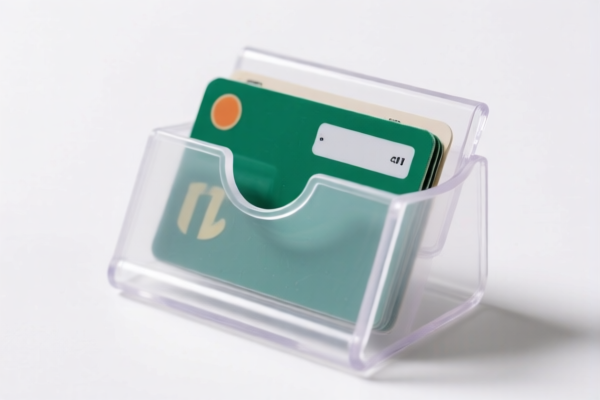
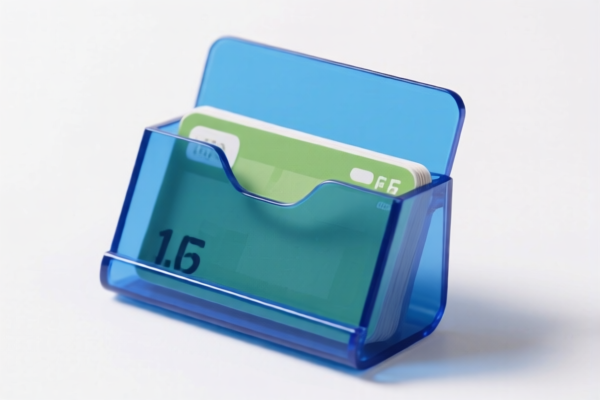

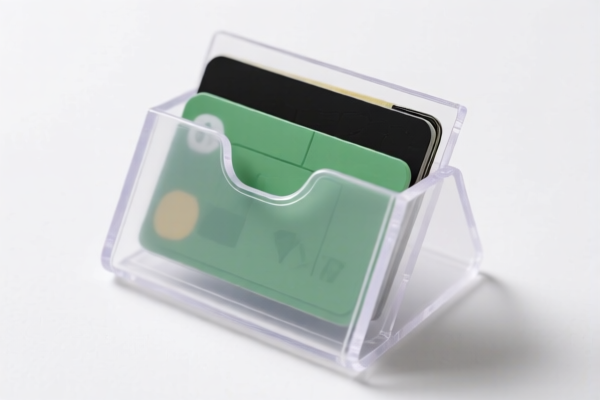
AI Analysis
💳 Plastic Bill Holder (Documents & Stationery)
🌐 HS Code Reference & Customs Clearance Guide | 2026 Latest Tariff Analysis | Professional-Level Strategy
📌 I. Product Definition & Classification: Do You Really Understand a "Plastic Bill Holder"?
A Plastic Bill Holder is a common office or household supply used to organize, display, or store bills, receipts, invoices, or documents. In international trade, its classification depends entirely on the material and the specific type of product:
- Paper-based Holders: Made of paper or paperboard (e.g., plastic-coated paper pads, paper binders).
- Classification: Headings 4820.
- Pure Plastic Holders: Made entirely of plastic (e.g., acrylic, PVC, polycarbonate sleeves or frames).
- Classification: Heading 3926 (Other articles of plastics).
⚠️ Key Distinction:
- If the product is paper-based (even if it has a plastic coating or plastic parts like rings), it generally falls under 4820.
- If the product is purely plastic (e.g., a clear PVC sleeve, acrylic stand, or plastic binder frame), it falls under 3926.
- Packaging materials (boxes/cases used to ship the holders) are classified differently under 3923.
📦 II. HS Code Classification Details (2026 Latest Tariff Authority Comparison)
| HS Code | Product Description | Applicable Scenario | Material |
|---|---|---|---|
4820.30.00.40 |
Binders (other than book covers), folders, and file covers, of paper or paperboard | Paper folders, plastic-coated paper binders, stationery binders | Paper/Paperboard |
4820.10.40.00 |
Registers, account books, notebooks, and similar articles of stationery, of paper or paperboard | Plastic-covered notebooks, paper-based bill pads, receipt books | Paper/Paperboard |
3926.10.00.00 |
Other articles of plastics: Office or school supplies | Plastic file organizers, plastic bill holders, plastic document wallets | Plastic |
3926.90.87.00 |
Other articles of plastics: Flexible plastic document binders with tabs, rolled or flat | PVC bill sleeves, plastic document bags with tabs | Plastic |
3923.10.90.00 |
Boxes, cases, crates, and similar articles of plastics: Other | Plastic boxes used for packaging the bill holders | Plastic (Packaging) |
3923.90.00.80 |
Other articles for the conveyance or packing of goods: Other | Plastic bags, pouches, or other packaging materials | Plastic (Packaging) |
🔍 Key Reminder:
- Do not confuse the product with its packaging!
- The Bill Holder itself goes to 4820 (if paper-based) or 3926 (if plastic).
- The Plastic Box/Bag containing the product goes to 3923.
- Misclassification leads to significant tariff discrepancies (see below).
💰 III. 2026 Latest Tariff Rate Breakdown (Including Additional Duties & Policy Surcharges)
✅ Applicable Country: United States (US)
✅ Country of Origin: China (CN)
✅ Effective Date: 2025/2026 Import Period
🎯 1. 4820.30.00.40 & 4820.10.40.00 —— Paper-Based Bill Holders / Binders
| Item | Content |
|---|---|
| Base Tariff Rate | 0% (ad valorem) |
| Section 301 Additional Tariff | +25% (China-origin goods) |
| Total Tariff Rate | 25.0% |
| Tax Calculation | CIF Value × 25% |
| De Minimis Exemption | ❌ Not Eligible (For entries >$800, standard duty applies; for <800, Section 301 may still apply depending on enforcement) |
| Legal Basis | USITC HTSUS 4820.30.00.40 / 4820.10.40.00 + Section 301 Footnote |
📌 Explanation:
- Paper-based stationery items are subject to a 25% additional tariff under Section 301.
- Although the base rate is 0%, the 25% surcharge makes the effective cost high.
🎯 2. 3926.10.00.00 —— Plastic Office Supplies (Pure Plastic Bill Holders)
| Item | Content |
|---|---|
| Base Tariff Rate | 0% (ad valorem) |
| Section 301 Additional Tariff | +0% (Exempt from Section 301 list) |
| Total Tariff Rate | 0.0% |
| Tax Calculation | CIF Value × 0% |
| De Minimis Exemption | ✅ Eligible (If value <$800, often duty-free under Section 321) |
| Legal Basis | USITC HTSUS 3926.10.00.00 |
📌 Advantage:
- Pure plastic office supplies are exempt from Section 301 additional duties.
- This is a major cost-saving opportunity for plastic-only products.
🎯 3. 3926.90.87.00 —— Flexible Plastic Document Binders
| Item | Content |
|---|---|
| Base Tariff Rate | 0% (ad valorem) |
| Section 301 Additional Tariff | +0% (Exempt from Section 301 list) |
| Total Tariff Rate | 0.0% |
| Tax Calculation | CIF Value × 0% |
| Legal Basis | USITC HTSUS 3926.90.87.00 |
📌 Note:
- PVC sleeves, plastic bill folders, and flexible plastic binders are duty-free.
🎯 4. 3923.10.90.00 & 3923.90.00.80 —— Plastic Packaging/Boxes
⚠️ Critical Warning: If you incorrectly declare plastic boxes as the product instead of the bill holder, you face higher tariffs.
| Item | Content |
|---|---|
| Base Tariff Rate | 3.0% (ad valorem) |
| Section 301 Additional Tariff | +25% (China-origin goods) |
| Total Tariff Rate | 28.0% |
| Tax Calculation | CIF Value × 28% |
| Legal Basis | USITC HTSUS 3923.10.90.00 / 3923.90.00.80 |
📌 Risk:
- Declaring packaging items as the main product to avoid classification issues is fraud.
- However, if you mistakenly classify the product as packaging, you pay 28% instead of 0% (for plastic products) or 25% (for paper products).
🛠️ IV. Customs Clearance Practical Advice (Battle-Tested Pitfall Guide)
✅ 1. Document Preparation Checklist (Non-negotiable)
| Document | Must Provide | Description |
|---|---|---|
| ✅ Product Specifications | ✔️ | Clearly state material (Plastic vs. Paper), dimensions, and usage. |
| ✅ Product Photos | ✔️ | Show the item from multiple angles, highlighting the material (e.g., clear plastic vs. paper). |
| ✅ Commercial Invoice | ✔️ | Accurately describe the item: "Plastic Bill Holder" or "Paper Folder," NOT "Plastic Box." |
| ✅ Packing List | ✔️ | Separate the product from the packaging in description and value if necessary. |
| ✅ Material Declaration | ✔️ | Explicitly state: "Made of 100% Plastic" or "Made of Paper with Plastic Coating." |
✅ 2. Classification Strategy (Key Mantra)
🔥 "Plastic = 0%, Paper = 25%, Packaging = 28%!"
| Scenario | Correct HS Code | Tariff | Error Consequence |
|---|---|---|---|
| Pure Plastic Bill Holder | 3926.10.00.00 |
0% | Misclassified as Paper → 25% Surcharge |
| Plastic Bill Sleeve | 3926.90.87.00 |
0% | Misclassified as Packaging → 28% Surcharge |
| Paper Bill Holder | 4820.30.00.40 |
25% | Correctly classified. No optimization possible. |
| Plastic Box for Bill Holder | 3923.10.90.00 |
28% | Incorrect as main product. Only for packaging. |
📌 Pro Tip:
- If your product is plastic, emphasize "Plastic Office Supply" in the invoice.
- If your product is paper, accept the 25% tariff.
- Never declare a plastic bill holder as a "Plastic Box" to save costs (it's fraud and 28% is still high).
- Never declare a plastic bill holder as "Paper" (it will be rejected for material mismatch).
✅ 3. Special Circumstances Handling
| Situation | Handling Advice |
|---|---|
| Mixed Material (Plastic + Paper) | If the essential character is paper (e.g., paper pad with plastic cover), use 4820. If the essential character is plastic (e.g., plastic frame holding paper), use 3926. |
| OEM Custom Products | Provide design drawings to prove the material composition. |
| De Minimis (<$800) | For plastic items (3926), they are likely duty-free under Section 321. For paper items (4820), Section 301 duties may still apply depending on CBP enforcement. |
| Packaging Included | Ensure the invoice clearly separates the value of the product and the packaging, if required by customs for accurate valuation. |
🌍 V. Global Market Comparison (2026 Latest)
| Country/Region | Recommended HS Code | Tariff (China Origin) | Certification | Note |
|---|---|---|---|---|
| 🇺🇸 USA | 3926.10.00.00 (Plastic) |
0% | None | Plastic office supplies are exempt from Section 301. |
| 🇺🇸 USA | 4820.10.40.00 (Paper) |
25% | None | Paper-based stationery is NOT exempt. |
| 🇪🇺 EU | 3926.10.00 (Plastic) |
~6-8% | CE (if applicable) | No Section 301 equivalent. |
| 🇨🇳 China | 3926.10.00 (Plastic) |
6-8% | None | Import duty. |
📌 Conclusion:
- USA is the most critical market due to Section 301 tariffs.
- Plastic products (3926) have a clear advantage over Paper products (4820) in the US market (0% vs. 25%).
- Optimize your supply chain by sourcing or manufacturing plastic-only bill holders if targeting the US.
📌 VI. Common Errors & Pitfall Guide (Lessons Learned)
❌ Error 1: Declaring a Plastic Bill Holder as a "Plastic Box" (3923) to avoid scrutiny.
👉 Consequence: If discovered, it’s customs fraud. If accepted by mistake, you pay 28% instead of 0%.
❌ Error 2: Declaring a Paper Bill Holder as a "Plastic Office Supply" (3926).
👉 Consequence: Customs will reject the shipment for material mismatch. Delay, return, or redeclaration.
❌ Error 3: Not specifying the material in the invoice.
👉 Consequence: Customs may assume the higher-tariff classification (Paper/301) by default.
❌ Error 4: Ignoring the difference between the Product and its Packaging.
👉 Consequence: Overpaying tariffs on packaging items that should be declared separately or exempt.
✅ Correct Approach:
"Plastic Document Holder, 9x11 inches, Clear PVC, for Office Use, Model XYZ"
🎯 VII. Conclusion: Precision Classification, Cost Savings!
🎯 Remember the Mantra:
🔹 "Plastic = 0%, Paper = 25%, Box = 28%!"
🔹 "Check the Material, Check the Function, Check the Tax!"
🔹 "Don't Mix Product and Packaging, Don't Mix Plastic and Paper!"
📌 Pro Tip:
If you are exporting plastic bill holders to the US, you are in a highly competitive position with 0% duty. Ensure your invoice and product description explicitly state "Plastic" to qualify for 3926.
📣 Immediate Action:
📞 Verify the material composition of your product.
📝 Update your commercial invoice to clearly state "Plastic" or "Paper."
🚀 Maximize your profit margin by using the 0% tariff for plastic products!
✨ Professional Customs Clearance Starts with Accurate Classification!
💼 Every Percentage Point Counts in International Trade!
Customer Reviews
About HS Code Classification
The Harmonized System (HS) is an internationally standardized nomenclature developed by the World Customs Organization (WCO) to classify traded products. Over 200 countries use the HS system as the basis for customs tariffs, trade statistics, and import/export regulations.
Each HS code follows a hierarchical structure:
- Chapter (2 digits) — Broad category of goods (e.g., Chapter 84: Machinery and Mechanical Appliances)
- Heading (4 digits) — More specific grouping within the chapter
- Subheading (6 digits) — Internationally standardized breakdown, used by all WCO member countries
- National subdivisions (8-10 digits) — Country-specific extensions for further classification, such as US HTSUS 10-digit codes
Correct HS code classification is essential for smooth customs clearance, accurate duty payment, and compliance with trade regulations. Misclassification can lead to customs delays, overpayment of duties, or penalties.
When importing from CN to US, the applicable tariff rates may include:
- Most-Favored-Nation (MFN) rate — The standard duty rate applied to WTO members
- General rate — Applied to countries without trade agreements
- Trade remedy duties — Additional tariffs such as Section 301 (anti-dumping), Section 232 (national security), or countervailing duties
The information provided on this page is for reference purposes only. For official classification, please consult with your local customs authority or a licensed customs broker.