Plastic Blind Slats
CN → US| HS Code | Tariff Rate | Origin | Destination | Doc |
|---|---|---|---|---|
| 3926909989 | 22.8% | CN | US | Official Doc |
| 3926909987 | 22.8% | CN | US | Official Doc |
| 3920991000 | 41.0% | CN | US | Official Doc |
| 3920995000 | 40.8% | CN | US | Official Doc |
| 5903102090 | 35.0% | CN | US | Official Doc |
Product Images
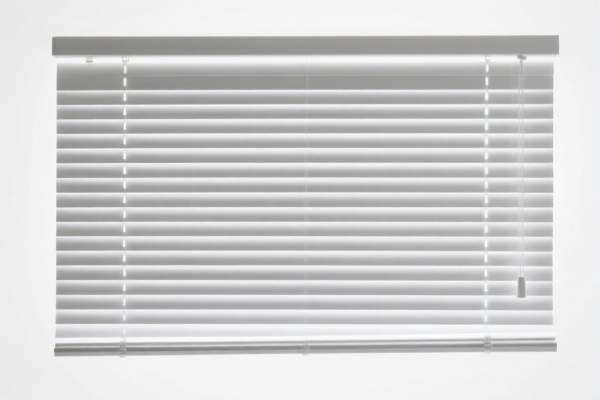
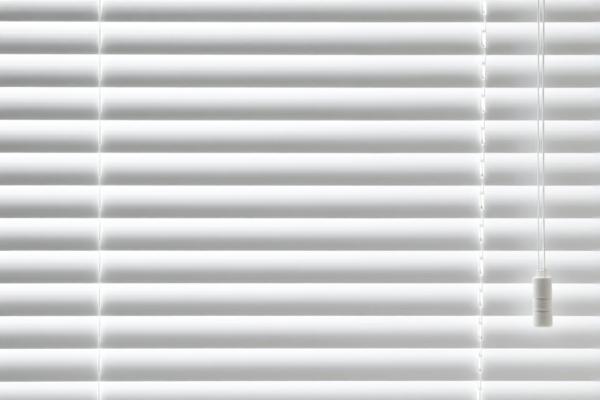

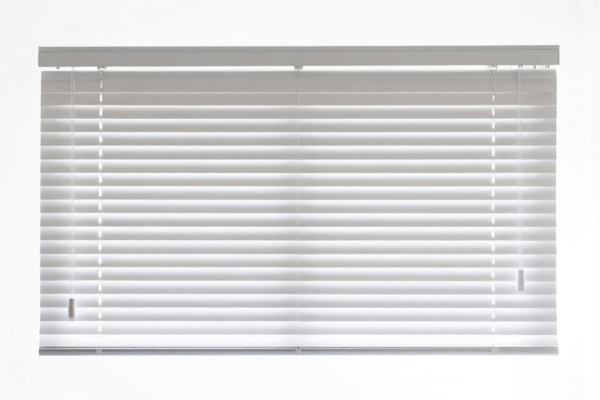
AI Analysis
🪟 Plastic Blind Slats (Shutter Blades)
🌐 HS Code Reference & Customs Clearance Guide | 2026 Tariff Analysis | Professional Strategy
📌 One Product, Five Classifications: Why "Plastic" Is Not Enough
Plastic blind slats are ubiquitous window treatments, but in international trade, they are not a single commodity. Their classification depends entirely on their physical form (finished good vs. raw material) and composition (pure plastic vs. coated fabric). Misclassification can lead to massive tariff differences (from 22.8% to 41.0%) and severe customs delays.
⚠️ Critical Distinction:
- Is it a finished product ready to hang? → Look at Chapter 39 (Plastics) or 59 (Textiles).
- Is it a sheet/strip needing assembly? → Look at Chapter 39 (Plastic Sheets).
- Is it fabric with plastic coating? → Look at Chapter 59 (Impregnated Textiles).
📦 HS Code Classification Matrix (Based on Provided Data)
| HS Code | Product Description | Key Characteristic | Total Tariff Rate |
|---|---|---|---|
| 3926.90.99.89 | Plastic Blinds, Final Product | Catch-all for finished plastic blinds | 22.8% |
| 3926.90.99.87 | Plastic Blinds, Specific Form | Specific application of plastic blinds | 22.8% |
| 3920.99.10.00 | Plastic Slats, Plate/Strip Form | Extended form (sheets/films/foils/strips) | 41.0% |
| 3920.99.50.00 | Plastic Slats, Sheet Form | Categorized as sheets, films, or strips | 40.8% |
| 5903.10.20.90 | Plastic-Coated Fabric Blinds | Textile base + Plastic coating/impregnation | 35.0% |
🔍 Key Insight:
- The 22.8% rate applies to finished or semi-finished plastic blinds (Chapters 39/99).
- The ~41% rate applies if the goods are classified as raw plastic sheets/strips (Chapter 39/20).
- The 35% rate applies if the blinds are made of fabric coated with plastic (Chapter 59).
💰 Detailed Tariff Breakdown (2026 Rates)
✅ Applicable Country: United States (US)
✅ Origin: China (CN)
✅ Note: All rates include Base Duty, Additional (Section 301), and 122 Clause Tariffs.
🎯 1. 3926.90.99.89 & 3926.90.99.87 — Finished Plastic Blinds
Best for: Ready-to-hang blinds, finished slats, or specific plastic blind components.
| Item | Detail |
|---|---|
| Base Tariff | 5.3% |
| Additional Tariff (301) | 7.5% |
| 122 Clause Tariff | 10.0% |
| Total Effective Rate | 22.8% |
| Legal Basis | Chapter 39 (Plastics), Heading 3926 (Other articles of plastics) |
📌 Explanation:
This is the most favorable rate for finished plastic blinds.
- Base (5.3%): Standard MFN rate for "Other plastic articles."
- Additional (7.5%): Section 301 tariffs on specific plastic goods.
- 122 Clause (10%): Specific countermeasures against Chinese imports.
- Why use this? If your slats are pre-cut, pre-assembled, or clearly identifiable as "blinds," this is the correct classification.
🎯 2. 3920.99.10.00 — Plastic Sheets/Strips (Extended Form)
Best for: Long rolls of plastic slats, raw strips, or unfinished forms.
| Item | Detail |
|---|---|
| Base Tariff | 6.0% |
| Additional Tariff (301) | 25.0% |
| 122 Clause Tariff | 10.0% |
| Total Effective Rate | 41.0% |
| Legal Basis | Chapter 39, Heading 3920 (Other plates, sheets, film, foil, and strip) |
📌 Explanation:
This is a high-risk classification for blinds.
- Customs may classify loose, uncut, or roll-formed plastic slats as "plastic strips" rather than "finished blinds."
- The 25% Additional Tariff is the highest tier for plastic articles.
- Avoid this if your product is clearly a finished good. Only use if you are exporting raw plastic strips for further manufacturing.
🎯 3. 3920.99.50.00 — Plastic Sheets/Foils
Best for: Flat plastic sheets used in blind manufacturing.
| Item | Detail |
|---|---|
| Base Tariff | 5.8% |
| Additional Tariff (301) | 25.0% |
| 122 Clause Tariff | 10.0% |
| Total Effective Rate | 40.8% |
| Legal Basis | Chapter 39, Heading 3920 |
📌 Explanation:
Similar to3920.99.10.00, this applies to sheet-like plastic products.
- Total: 40.8%.
- Risk: High. If you ship flat plastic sheets that will be cut into slats later, this code applies. If you ship assembled blinds, it does not.
🎯 4. 5903.10.20.90 — Plastic-Coated Textile Blinds
Best for: Blinds made of fabric (polyester, cotton, etc.) with a PVC/PE coating or lamination.
| Item | Detail |
|---|---|
| Base Tariff | 0.0% |
| Additional Tariff (301) | 25.0% |
| 122 Clause Tariff | 10.0% |
| Total Effective Rate | 35.0% |
| Legal Basis | Chapter 59 (Impregnated, coated, covered, or laminated textile fabrics) |
📌 Explanation:
This is a mid-tier rate but requires careful material verification.
- Base (0.0%): Zero base duty for many coated textiles.
- Additional (25%): High Section 301 rate for coated textiles.
- 122 Clause (10%): Still applies.
- Key Point: If the substrate is textile (fabric), even if coated heavily with plastic, it may fall under Chapter 59, not Chapter 39. This can be cheaper than the 41% plastic sheet rate.
🛠️ Customs Clearance Practical Advice (Avoiding Pitfalls)
✅ 1. Preparation Checklist (Mandatory)
| Document | Required? | Purpose |
|---|---|---|
| Product Photos | ✔️ | Show slats, hinges, cords, and final assembled blind. |
| Material Specification | ✔️ | Crucial: Specify if PVC (pure plastic) or Fabric+PVC (coated). |
| Bill of Materials (BOM) | ✔️ | Confirm % of plastic vs. textile. |
| Commercial Invoice | ✔️ | Clearly state "Plastic Blind Slats" or "Curtain Blinds." |
| Packing List | ✔️ | List dimensions, weight, and quantity. |
| HS Code Pre-ruling | ✔️ | Highly Recommended for first-time shipments. |
✅ 2. Classification Strategy: How to Choose?
| Scenario | Recommended HS Code | Total Tax | Why? |
|---|---|---|---|
| Finished Blinds (assembled, ready to hang) | 3926.90.99.89 / .87 |
22.8% | Best rate for "articles" not "materials." |
| Raw Plastic Strips/Rolls (unprocessed) | 3920.99.10.00 |
41.0% | Only if no assembly/hardware is included. |
| Fabric Blinds with Plastic Coating | 5903.10.20.90 |
35.0% | If base material is textile, not pure plastic. |
| Mixed Materials (Plastic slats + Fabric valance) | 3926.90.99.89 |
22.8% | Primary function dictates classification. |
🔥 Golden Rule:
"Finished Goods < Raw Materials in Tariff Risk."
Always try to classify as 3926 (Finished Plastic Article) if possible, to avoid the 25% Additional Tariff on plastic sheets (3920).
✅ 3. Common Errors & Penalties
❌ Error 1: Classifying finished blinds as 3920 (Plastic Sheets).
👉 Consequence: Tariff jumps from 22.8% to 41.0% → 18.2% extra cost.
👉 Fix: Provide photos showing finished blinds with cords/hardware.
❌ Error 2: Calling fabric blinds "Plastic Blinds."
👉 Consequence: Customs may reclassify to 3926 (22.8%) or 5903 (35.0%) based on inspection.
👉 Fix: Clearly state "Polyester Fabric with PVC Coating" on invoice.
❌ Error 3: Ignoring the 122 Clause (10%).
👉 Consequence: All listed rates include this. If you omit it, your calculation will be wrong by 10%.
👉 Fix: Always calculate Base + Additional + 10%.
🌍 Global Market Comparison (2026)
| Region | Best HS Code | Total Rate (China Origin) | Notes |
|---|---|---|---|
| 🇺🇸 USA | 3926.90.99.89 |
22.8% | Includes 122 Clause & 301 Tariffs. |
| 🇺🇸 USA | 3920.99.10.00 |
41.0% | Avoid if possible. High risk. |
| 🇨🇳 China (Import) | 3926.90.99 |
~5-10% | Low base duty, no 301/122 clauses. |
| 🇪🇺 EU | 3926.90.99 |
~0-6.5% | No 122 Clause. Check ETS/Carbon taxes. |
| 🇯🇵 Japan | 3926.90.99 |
~5% | Stable rates, no major trade wars. |
📌 Conclusion:
- The US market is the most complex due to 122 Clause and Section 301 tariffs.
- Plastic sheets (3920) are significantly more expensive than finished blinds (3926).
- Fabric-coated blinds (5903) offer a middle ground if you are using textile substrates.
📌 Final Recommendation: Action Plan
- Verify Material: Is it 100% PVC/Plastic, or Fabric+Plastic?
- 100% Plastic → Aim for
3926.90.99.89(22.8%). - Fabric+Plastic → Aim for
5903.10.20.90(35.0%). - Verify Form: Are they finished blinds or raw strips?
- Finished →
3926. - Raw →
3920(41% tax, high risk). - Documentation: Ensure your invoice clearly describes the product as "Plastic Window Blinds" or "Plastic Shutter Slats" to support the
3926classification. - Pre-Ruling: For large shipments, apply for a CBP Ruling to confirm the HS code and avoid post-entry audits.
✨ Professional Tip:
"Don't let 18% difference eat your margin. A finished blind is not a plastic sheet!"
By correctly classifying as3926.90.99.89, you save 18.2% vs. the raw material classification. That’s profit in your pocket.
📞 Next Step:
Contact your freight forwarder with photos and material specs to confirm the
3926classification before booking.
Customer Reviews
About HS Code Classification
The Harmonized System (HS) is an internationally standardized nomenclature developed by the World Customs Organization (WCO) to classify traded products. Over 200 countries use the HS system as the basis for customs tariffs, trade statistics, and import/export regulations.
Each HS code follows a hierarchical structure:
- Chapter (2 digits) — Broad category of goods (e.g., Chapter 84: Machinery and Mechanical Appliances)
- Heading (4 digits) — More specific grouping within the chapter
- Subheading (6 digits) — Internationally standardized breakdown, used by all WCO member countries
- National subdivisions (8-10 digits) — Country-specific extensions for further classification, such as US HTSUS 10-digit codes
Correct HS code classification is essential for smooth customs clearance, accurate duty payment, and compliance with trade regulations. Misclassification can lead to customs delays, overpayment of duties, or penalties.
When importing from CN to US, the applicable tariff rates may include:
- Most-Favored-Nation (MFN) rate — The standard duty rate applied to WTO members
- General rate — Applied to countries without trade agreements
- Trade remedy duties — Additional tariffs such as Section 301 (anti-dumping), Section 232 (national security), or countervailing duties
The information provided on this page is for reference purposes only. For official classification, please consult with your local customs authority or a licensed customs broker.