Plastic Blinds
CN → US| HS Code | Tariff Rate | Origin | Destination | Doc |
|---|---|---|---|---|
| 3916200020 | 40.8% | CN | US | Official Doc |
| 3925305000 | 22.8% | CN | US | Official Doc |
| 3925301000 | 20.8% | CN | US | Official Doc |
| 3926305000 | 22.8% | CN | US | Official Doc |
| 3926909989 | 22.8% | CN | US | Official Doc |
Product Images
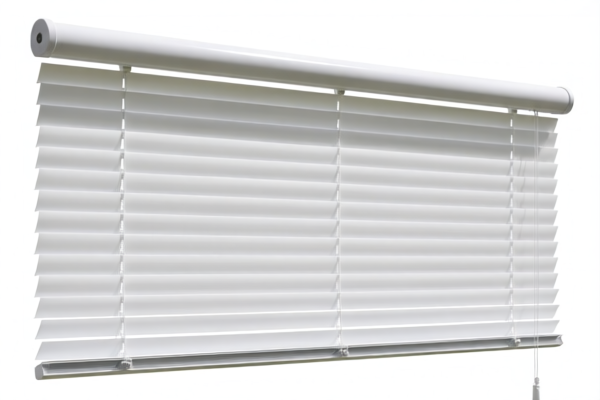


AI Analysis
🪟 Plastic Exterior Window Blinds (Plastic Blinds)
🌐 HS Code Reference & Customs Clearance Guide | 2026 Latest Tariff Analysis | Professional Strategy for Chinese Origin Goods
📌 Part 1: Product Definition & Classification: Do You Really Know "Plastic Blinds"?
Plastic exterior window blinds are architectural accessories used for shading, ventilation, and privacy. In international trade, the classification depends heavily on material structure, installation method, and specific design features. For goods originating from China and exported to the United States, tariff rates vary significantly based on whether they are classified as "Vinyl Profiles," "Building Attachments," or "Other Plastic Articles."
⚠️ Key Distinction Point:
- If the product consists primarily of Vinyl Chloride Polymer Profiles used to form the blind structure → Classified under 3916.20.00.20.
- If the product is a complete Venetian Blind Assembly made of plastic slats and components → Classified under 3925 or 3926.
- Critical Note: The "122-Clause" (Section 301) and "IEEPA" tariffs drastically increase costs for Chinese-origin goods.
📦 Part 2: HS Code Classification Details (2026 Latest Tariff Authority Comparison)
| HS Code | Product Description | Application Scenario | Total Tax Rate (China Origin to US) |
|---|---|---|---|
3916.20.00.20 |
Plastic Profiles (Vinyl Chloride Polymers) | Blinds made from extruded vinyl profiles; defined as "profiles for windows." | 40.8% |
3925.30.50.00 |
Other Plastic Building Accessories (Blinds) | Plastic exterior window blinds classified as building attachments. | 22.8% |
3925.30.10.00 |
Plastic Venetian Blinds | Plastic blinds matching the exact definition of "Venetian Blinds" in Explanatory Notes. | 20.8% |
3926.30.50.00 |
Articles for Office/Work (Window Connectors) | Blinds considered as window connectors or parts; fits "Other Plastic Articles." | 22.8% |
3926.90.99.89 |
Other Plastic Articles | Residual classification for plastic blinds not fitting other specific categories. | 22.8% |
🔍 Priority Recommendation:
- Best Case Scenario: Aim for3925.30.10.00(20.8%) if the product is clearly identifiable as "Venetian Blinds" per HS Explanatory Notes.
- Risk Case: If customs argues it is a "Profile" rather than a finished blind, it may be reclassified to3916.20.00.20(40.8%).
- Standard Case: Most other plastic blinds fall into the 22.8% bracket (3925.30.50.00,3926.30.50.00, or3926.90.99.89).
💰 Part 3: 2026 Latest Tariff Rate Breakdown (Including Surcharges & Policy Add-ons)
✅ Applicable Country: United States (US)
✅ Origin: China (CN)
✅ Effective Time: Current regulations (Section 301 + IEEPA)
🎯 1. 3916.20.00.20 —— Plastic Profiles (High Risk/High Tax)
| Item | Content |
|---|---|
| Base Duty Rate | 5.8% (Ad valorem) |
| Section 301 Surcharge | +25.0% (Trade Act of 1974, Section 301) |
| Section 122 Clause Tariff | +10.0% (Specific provision for certain plastic profiles) |
| Total Tax Rate | 40.8% |
| Tax Calculation | CIF Value × 40.8% |
| De Minimis Exemption | ❌ Not Applicable (Deny De Minimis) |
| Legal Basis Path | HTSUS:3916.20.00.20 → Footnote: 301 (25%) → Footnote: 122 (10%) |
📌 Explanation:
- This classification treats the blinds as "Vinyl Chloride Polymer Profiles."
- It attracts the highest tax burden (40.8%) due to the combination of base duty, Section 301, and the specific 122-Clause tariff.
- Avoid this classification if a more specific "Blind" classification is available.
🎯 2. 3925.30.50.00 / 3926.30.50.00 / 3926.90.99.89 —— Standard Plastic Blinds (Medium Tax)
| Item | Content |
|---|---|
| Base Duty Rate | 5.3% (Ad valorem) |
| Section 301 Surcharge | +7.5% (Reduced Section 301 rate for some plastic articles) |
| Section 122 Clause Tariff | +10.0% |
| Total Tax Rate | 22.8% |
| Tax Calculation | CIF Value × 22.8% |
| De Minimis Exemption | ❌ Not Applicable (Deny De Minimis) |
| Legal Basis Path | HTSUS:3925.30.50.00 / 3926.30.50.00 → Footnote: 301 (7.5%) → Footnote: 122 (10%) |
📌 Explanation:
- These codes cover plastic blinds as "Building Accessories" or "Other Plastic Articles."
- The Section 301 rate is lower (7.5%) compared to profiles, but the 122-Clause tariff (10%) still applies.
- This is the common classification for general plastic exterior blinds.
🎯 3. 3925.30.10.00 —— Plastic Venetian Blinds (Best Case/Lowest Tax)
| Item | Content |
|---|---|
| Base Duty Rate | 3.3% (Ad valorem) |
| Section 301 Surcharge | +7.5% |
| Section 122 Clause Tariff | +10.0% |
| Total Tax Rate | 20.8% |
| Tax Calculation | CIF Value × 20.8% |
| De Minimis Exemption | ❌ Not Applicable (Deny De Minimis) |
| Legal Basis Path | HTSUS:3925.30.10.00 → Footnote: 301 (7.5%) → Footnote: 122 (10%) |
📌 Explanation:
- This is the most favorable classification for plastic exterior window blinds.
- It requires the product to strictly match the definition of "Venetian Blinds" in the Harmonized System Explanatory Notes.
- Savings: Compared to the profile classification (3916), this saves 20 percentage points in tariffs!
🛠️ Part 4: Customs Clearance Practical Advice (Pitfall Avoidance Guide)
✅ 1. Required Documentation Checklist
| Document | Mandatory? | Description |
|---|---|---|
| ✅ Product Specification Sheet | ✔️ | Must detail material (PVC/Plastic), structure (slats, cords, ladders), and dimensions. |
| ✅ High-Resolution Photos | ✔️ | Show the blind installed, close-up of slats, and mechanism. Prove it is a "finished blind." |
| ✅ Commercial Invoice | ✔️ | Clearly state "Plastic Exterior Window Blinds" or "Venetian Blinds." Avoid vague terms like "Plastic Parts." |
| ✅ Packing List | ✔️ | List items per carton. Ensure no disassembly for customs purposes. |
| ✅ Certificate of Origin (CO) | ✔️ | Crucial for proving Chinese origin to apply correct tariffs. |
✅ 2. Declaration Strategy (Key Mantras)
🔥 "Describe as Finished Blind, Not Profile! Specificity Lowers Tax!"
| Scenario | Correct Declaration | Incorrect Action |
|---|---|---|
| Finished Venetian Blind | 3925.30.10.00 (Plastic Venetian Blinds) |
Describing as "Plastic Slats" or "Profiles" → Triggers 3916 (40.8%) |
| Generic Plastic Blind | 3925.30.50.00 (Other Plastic Building Accessories) |
Using vague terms like "Decorative Plastic Item" → May trigger 3926.90 (22.8%) or audit |
| Blind with Metal Parts | Still 3925 or 3926 (Plastic is essential character) |
Over-emphasizing metal components → Risk of misclassification |
| Kit vs. Assembled | Declare as "Assembled Blind" | Declaring as "Kit" with multiple HS codes → Higher administrative cost and potential errors |
✅ 3. Special Handling for "122-Clause" Tariffs
📌 What is the 122-Clause Tariff?
This refers to specific additional duties applied to certain Chinese plastic products. It applies to all plastic blinds in the provided data (3916,3925,3926).
- Impact: Adds 10% to the duty rate regardless of the base HS code.
- Mitigation: Cannot be avoided. Focus on selecting the HS code with the lowest Base + Section 301 rates to minimize the total burden.
🌍 Part 5: Global Market Comparison (2026 Update)
| Country/Region | Recommended HS Code | Approx. Tax Rate (China) | Key Requirements |
|---|---|---|---|
| 🇺🇸 USA | 3925.30.10.00 |
20.8% | Section 301 + 122-Clause apply. Strict documentation needed. |
| 🇨🇳 China | 3925.30.10.00 |
5.0% - 10% | Standard import duty. No Section 301. |
| 🇪🇺 EU | 3925.30 |
~3% - 6% | CE marking may be required for building safety. No Section 301. |
| 🇬🇧 UK | 3925.30 |
~3% - 6% | Post-Brexit tariffs. No Section 301. |
📌 Conclusion:
- The USA is the most challenging market due to the叠加 (stacking) of Base, Section 301, and 122-Clause tariffs.
- China, EU, and UK offer significantly lower tariff burdens.
- For US exports, accurate HS classification is the single most important cost-saving measure.
📌 Part 6: Common Mistakes & Pitfalls (Lessons Learned)
❌ Mistake 1: Declaring "Plastic Blinds" as "Plastic Profiles" (3916)
👉 Consequence: Tax jumps from 20.8% to 40.8%.
👉 Fix: Provide evidence that the product is a finished blind assembly, not raw profiles.
❌ Mistake 2: Ignoring the "122-Clause"
👉 Consequence: Underestimating landed cost by 10%.
👉 Fix: Always include the +10% 122-Clause tariff in cost calculations for US-bound plastic blinds.
❌ Mistake 3: Vague Product Description
👉 Consequence: Customs delays, audits, and potential reclassification to higher-duty codes.
👉 Fix: Use precise terms: "Exterior Plastic Venetian Blinds, PVC Material."
✅ Correct Approach:
"Plastic Exterior Window Blinds (Venetian Style), PVC Material, Finished Assembly, Model XYZ, Designed for Residential Use."
🎯 Part 7: Conclusion: Precision Classification Saves Money!
🎯 Remember This Mantra:
🔹 "Venetian Blinds = 20.8% (Best)"
🔹 "Other Plastic Blinds = 22.8% (Standard)"
🔹 "Plastic Profiles = 40.8% (Avoid!)"
🔹 "122-Clause +10% Applies to All!"
📌 Pro Tip:
- If you have the flexibility in product design, ensure the blinds meet the Explanatory Notes definition for "Venetian Blinds" to qualify for 3925.30.10.00.
- Always file a Pre-裁定 (Advance Ruling) with US Customs if you are unsure about the classification. It provides legal certainty and prevents post-clearance audits.
📣 Call to Action:
📞 Consult a licensed customs broker.
📄 Prepare detailed product specs and photos.
🚀 Optimize your HS Code today to save up to 20% in tariffs!
✨ Professional Clearance Starts with Precise Classification!
💼 Every percentage point saved is pure profit!
Customer Reviews
About HS Code Classification
The Harmonized System (HS) is an internationally standardized nomenclature developed by the World Customs Organization (WCO) to classify traded products. Over 200 countries use the HS system as the basis for customs tariffs, trade statistics, and import/export regulations.
Each HS code follows a hierarchical structure:
- Chapter (2 digits) — Broad category of goods (e.g., Chapter 84: Machinery and Mechanical Appliances)
- Heading (4 digits) — More specific grouping within the chapter
- Subheading (6 digits) — Internationally standardized breakdown, used by all WCO member countries
- National subdivisions (8-10 digits) — Country-specific extensions for further classification, such as US HTSUS 10-digit codes
Correct HS code classification is essential for smooth customs clearance, accurate duty payment, and compliance with trade regulations. Misclassification can lead to customs delays, overpayment of duties, or penalties.
When importing from CN to US, the applicable tariff rates may include:
- Most-Favored-Nation (MFN) rate — The standard duty rate applied to WTO members
- General rate — Applied to countries without trade agreements
- Trade remedy duties — Additional tariffs such as Section 301 (anti-dumping), Section 232 (national security), or countervailing duties
The information provided on this page is for reference purposes only. For official classification, please consult with your local customs authority or a licensed customs broker.