Plastic Blinds Bracket
CN → US| HS Code | Tariff Rate | Origin | Destination | Doc |
|---|---|---|---|---|
| 3925900000 | 40.3% | CN | US | Official Doc |
| 3925305000 | 22.8% | CN | US | Official Doc |
| 3925301000 | 20.8% | CN | US | Official Doc |
| 3926305000 | 22.8% | CN | US | Official Doc |
| 3926909989 | 22.8% | CN | US | Official Doc |
Product Images
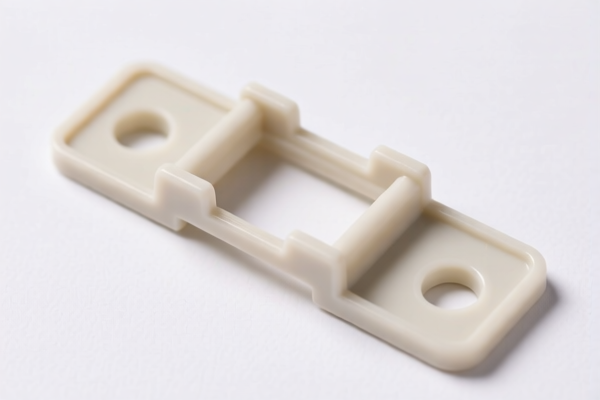
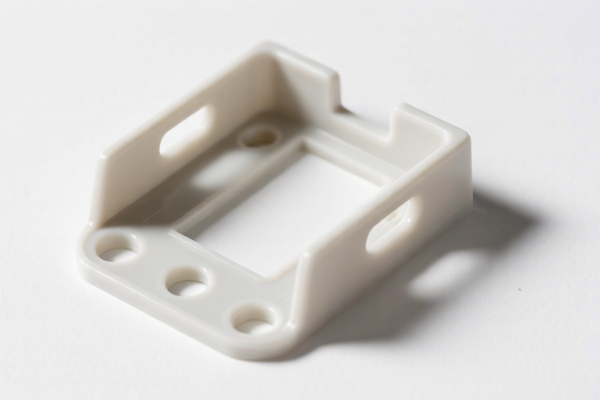
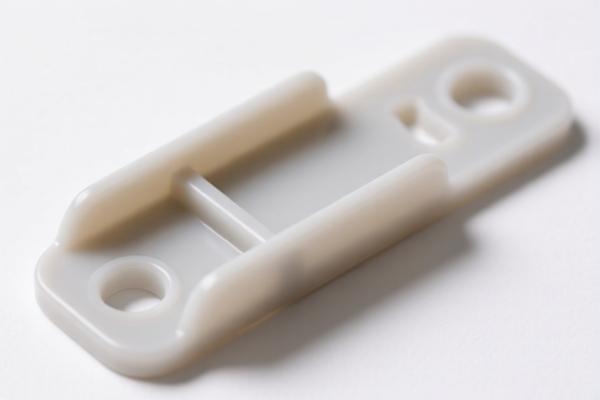
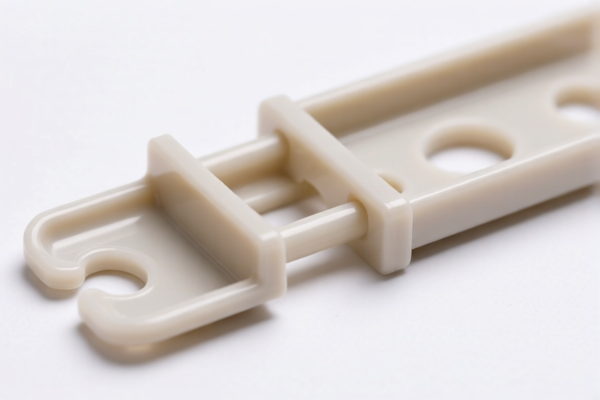
AI Analysis
🪟 Plastic Blinds Bracket (塑料百叶窗支架)
🌐 HS Code Reference & Customs Clearance Guide | 2026 Latest Tariff Analysis | Professional-Level Strategy
📌 I. Product Definition & Classification: Are You Sure It’s Just a “Bracket”?
Plastic blinds brackets are critical hardware components in the building materials sector. They serve as the structural support for venetian blinds, vertical blinds, or Roman shades. However, in international trade, their classification depends heavily on material composition, function, and specific form.
In the provided dataset, these items fall under Chapter 39 (Plastics and Articles Thereof), specifically within headings 3925 (Builders' ware of plastics) and 3926 (Other articles of plastics). The key distinction lies in whether the item is classified as a specific "blinds" accessory (Heading 3925.30) or a more general "building component" or "miscellaneous plastic article" (Heading 3925.90 or 3926).
⚠️ Critical Distinction:
- If the item is specifically identified as "Blinds" or "Venetian Blinds" accessories, it may fall under 3925.30.
- If it is a generic support bracket or connector not exclusively defined as a blind, it may fall under 3925.90 (Other builders' ware) or 3926.90 (Other plastic articles).
- Note: The dataset shows two different tax profiles for similar "blind" descriptions, indicating that subheading nuances (e.g., specific type of blind or manufacturing process) significantly impact the duty rate.
📦 II. HS Code Classification Details (2026 Latest Tariff Authority对照)
Based on the provided data, here are the specific HS Codes and their associated tax structures for Plastic Blinds Brackets/Components:
| HS Code | Product Description | Tax Detail Breakdown | Total Tax Rate |
|---|---|---|---|
| 3925.90.00.00 | Plastic Brackets (Other Building Components) | Base: 5.3% + Section 301: 25.0% + Section 122: 10% | 40.3% |
| 3925.30.50.00 | Plastic Blinds (Venetian/Vertical) | Base: 5.3% + Section 301: 7.5% + Section 122: 10% | 22.8% |
| 3925.30.10.00 | Plastic Blinds (Specific Type/Standard) | Base: 3.3% + Section 301: 7.5% + Section 122: 10% | 20.8% |
| 3926.30.50.00 | Other Plastic Articles (Window Connectors/Fittings) | Base: 5.3% + Section 301: 7.5% + Section 122: 10% | 22.8% |
| 3926.90.99.89 | Other Plastic Articles (Miscellaneous) | Base: 5.3% + Section 301: 7.5% + Section 122: 10% | 22.8% |
🔍 Key Insight:
- 3925.30 (Blinds) generally attracts lower Section 301 tariffs (7.5%) compared to 3925.90 (Other Builders' Ware) which attracts 25%.
- However, 3925.90 also has a 10% Section 122 tariff, leading to a 40.3% total burden.
- 3926 codes apply if the bracket is considered a "fitting" rather than a "builder's ware" or "blind."
💰 III. 2026 Latest Tariff Rate Analysis (Detailed Breakdown)
✅ Applicable Country: USA (US)
✅ Origin: China (CN)
✅ Effective Time: 2025/2026 (Current Policy)
🎯 1. 3925.90.00.00 — Plastic Brackets (Other Building Components)
This applies if the bracket is viewed as a general building component rather than a specific blind part.
| Item | Content |
|---|---|
| Base Duty Rate | 5.3% |
| Section 301 Surcharge | +25.0% (High Impact!) |
| Section 122 Surcharge | +10.0% |
| Total Effective Rate | 40.3% |
| Tax Calculation | CIF Value × 40.3% |
| De Minimis Exemption? | ❌ No (Denied) |
| Legal Path | Base Tariff → Section 301 (Footnote 1) → Section 122 |
📌 Explanation:
- The 25% Section 301 tariff is the dominant cost driver here.
- Section 122 (often related to national security or specific trade remedy actions) adds another 10%.
- This is the highest cost option in the dataset. Avoid this classification if possible by proving the item is specifically a "blind" component.
🎯 2. 3925.30.50.00 — Plastic Blinds (Venetian/Vertical)
Best case for "Blind" classification with higher base tariff.
| Item | Content |
|---|---|
| Base Duty Rate | 5.3% |
| Section 301 Surcharge | +7.5% (Moderate) |
| Section 122 Surcharge | +10.0% |
| Total Effective Rate | 22.8% |
| Tax Calculation | CIF Value × 22.8% |
| De Minimis Exemption? | ❌ No |
| Legal Path | Base Tariff → Section 301 (Footnote 2) → Section 122 |
📌 Explanation:
- Even though it is classified as "Blinds," the 7.5% Section 301 still applies.
- Savings: Compared to 3925.90.00.00, you save 17.5% on the total duty (40.3% - 22.8%).
🎯 3. 3925.30.10.00 — Plastic Blinds (Specific Type)
Lowest tariff option in the dataset, likely for specific standard blinds.
| Item | Content |
|---|---|
| Base Duty Rate | 3.3% (Lower Base!) |
| Section 301 Surcharge | +7.5% |
| Section 122 Surcharge | +10.0% |
| Total Effective Rate | 20.8% |
| Tax Calculation | CIF Value × 20.8% |
| De Minimis Exemption? | ❌ No |
| Legal Path | Base Tariff → Section 301 (Footnote 2) → Section 122 |
📌 Explanation:
- This is the most cost-effective classification.
- The 3.3% base rate (vs 5.3%) and the same 7.5% Section 301 result in the lowest total burden.
- Challenge: You must prove the product fits the specific description of subheading 3925.30.10 (e.g., specific type of venetian blind component).
🎯 4. 3926.30.50.00 & 3926.90.99.89 — Other Plastic Articles
Alternative classification if the item is not strictly a "blind" or "builder's ware."
| Item | Content |
|---|---|
| Base Duty Rate | 5.3% |
| Section 301 Surcharge | +7.5% |
| Section 122 Surcharge | +10.0% |
| Total Effective Rate | 22.8% |
| Tax Calculation | CIF Value × 22.8% |
| De Minimis Exemption? | ❌ No |
📌 Explanation:
- 3926.30 is for "Fittings and Furniture Fittings," which might apply if the bracket is a window connector.
- 3926.90 is a catch-all for other plastic articles.
- Both carry the same 22.8% rate as the 3925.30.50.00 category.
🛠️ IV. Customs Clearance Practical Advice (Real-World Pitfall Avoidance)
✅ 1. Document Checklist (Non-Negotiable)
| Document | Required | Description |
|---|---|---|
| ✅ Product Specification Sheet | ✔️ | Detail material (PVC/ABS/etc.), dimensions, and load capacity. |
| ✅ Product Photos | ✔️ | Clear images showing how it attaches to blinds/windows. |
| ✅ Commercial Invoice | ✔️ | Describe as "Plastic Bracket for Blinds" or "Plastic Blind Hardware". Avoid vague terms like "Plastic Part." |
| ✅ Packing List | ✔️ | Ensure quantity and weight match invoice. |
| ✅ Origin Certificate | ✔️ | Essential for proving Chinese origin and applying correct Section 301 rates. |
✅ 2. Classification Strategy (Key Tip)
🔥 "Clarify Function, Avoid 'Other', Prove Specificity!"
| Scenario | Correct Approach | Wrong Approach |
|---|---|---|
| Generic Bracket | Use 3925.90.00.00 (40.3%) if it’s a general building support. | Mislabeling as "Blind" to get 22.8% → Audit Risk. |
| Specific Blind Part | Use 3925.30.10.00 (20.8%) if it’s exclusively for blinds. | Using 3926.90.99.89 (22.8%) unnecessarily if 3925.30.10 fits. |
| Window Connector | Use 3926.30.50.00 (22.8%) if it’s a general window fitting. | Classifying as 3925.90 (40.3%) without justification. |
📌 Strategic Advice:
- Try to qualify for 3925.30.10.00 (20.8%). This requires strong documentation that the bracket is specifically designed and used for blinds.
- Avoid 3925.90.00.00 (40.3%) unless the bracket is a large, structural building component not exclusive to blinds.
- 3926 codes (22.8%) are a safe middle ground if the product is ambiguous but not a general building part.
✅ 3. Special Circumstances
| Situation | Handling Advice |
|---|---|
| OEM Custom Parts | Provide client design specs. If specs say "For [Brand] Blinds," use 3925.30. |
| Mixed Shipments | If brackets are shipped with blinds, consider declaring them together under the blind code (3925.30) to avoid separate high-duty classification. |
| Section 122 Impact | Note that 10% Section 122 applies to ALL codes in the dataset. No code avoids this. Focus on minimizing Base + Section 301. |
🌍 V. Global Market Comparison (2026 Latest)
| Country/Region | Recommended HS Code | Tariff (Approx.) | Notes |
|---|---|---|---|
| 🇺🇸 USA | 3925.30.10.00 |
20.8% | Lowest rate in dataset. |
| 🇺🇸 USA | 3925.90.00.00 |
40.3% | Highest rate. Avoid if possible. |
| 🇨🇳 China | 3925.30.10.00 |
~5-10% | Lower import duties, no Section 301. |
| 🇪🇺 EU | 3925.30.10.00 |
~4-6% | No Section 301. |
| 🇬🇧 UK | 3925.30.10.00 |
~4-6% | Post-Brexit tariffs apply. |
📌 Conclusion:
- USA is the most challenging market due to Section 301 and Section 122.
- China/EU/UK have significantly lower tariffs for the same products.
- Strategy: If selling to the US, optimize classification to 3925.30.10.00 or 3926.30.50.00 to save 17.5% vs 3925.90.
📌 VI. Common Mistakes & Pitfall Guide (Lessons Learned)
❌ Mistake 1: Declaring "Plastic Parts" generically
👉 Consequence: Customs may assign 3926.90.99.89 or 3925.90.00.00 arbitrarily. If assigned 3925.90, you pay 40.3%.
✅ Fix: Always specify "Blinds Bracket" or "Window Hardware" with detailed descriptions.
❌ Mistake 2: Ignoring Section 122
👉 Consequence: All items in the dataset incur 10% Section 122. Failing to account for this leads to budget overruns.
✅ Fix: Budget for 10% fixed surcharge on top of Base + Section 301.
❌ Mistake 3: Assuming "Blinds" = Low Duty
👉 Consequence: Not all "blinds" get 20.8%. 3925.30.50.00 is 22.8%. Only 3925.30.10.00 is 20.8%.
✅ Fix: Verify the exact subheading based on product type (e.g., Venetian vs. Vertical).
🎯 VII. Conclusion: Professional Classification for Cost Savings
🎯 Key Takeaway:
🔹 "For Plastic Blinds Brackets, aim for 3925.30.10.00 (20.8%) to minimize tax."
🔹 "Avoid 3925.90.00.00 (40.3%) unless the product is a generic building component."
🔹 "Section 122 (10%) is unavoidable; focus on lowering Base + Section 301."
📌 Pro Tip:
If your plastic blinds bracket can be classified under 3925.30.10.00, ensure your commercial invoice and product packaging clearly state "Plastic Bracket for Venetian Blinds" and provide photos showing its specific use. This supports the lower 20.8% rate and avoids customs disputes.
📣 Action Plan:
📞 Contact Customs Broker: Confirm HS Code pre-classification.
📄 Prepare Documentation: Specs, Photos, Invoice with precise description.
💰 Calculate Landed Cost: Include 20.8% (best case) or 40.3% (worst case) in your pricing model.
✨ Accurate Classification = Lower Costs = Higher Profits!
💼 Don’t let misclassification cost you 17.5% in duties!
Customer Reviews
About HS Code Classification
The Harmonized System (HS) is an internationally standardized nomenclature developed by the World Customs Organization (WCO) to classify traded products. Over 200 countries use the HS system as the basis for customs tariffs, trade statistics, and import/export regulations.
Each HS code follows a hierarchical structure:
- Chapter (2 digits) — Broad category of goods (e.g., Chapter 84: Machinery and Mechanical Appliances)
- Heading (4 digits) — More specific grouping within the chapter
- Subheading (6 digits) — Internationally standardized breakdown, used by all WCO member countries
- National subdivisions (8-10 digits) — Country-specific extensions for further classification, such as US HTSUS 10-digit codes
Correct HS code classification is essential for smooth customs clearance, accurate duty payment, and compliance with trade regulations. Misclassification can lead to customs delays, overpayment of duties, or penalties.
When importing from CN to US, the applicable tariff rates may include:
- Most-Favored-Nation (MFN) rate — The standard duty rate applied to WTO members
- General rate — Applied to countries without trade agreements
- Trade remedy duties — Additional tariffs such as Section 301 (anti-dumping), Section 232 (national security), or countervailing duties
The information provided on this page is for reference purposes only. For official classification, please consult with your local customs authority or a licensed customs broker.