Plastic Blinds Slats
CN → US| HS Code | Tariff Rate | Origin | Destination | Doc |
|---|---|---|---|---|
| 3916200020 | 40.8% | CN | US | Official Doc |
| 3925305000 | 22.8% | CN | US | Official Doc |
| 3925301000 | 20.8% | CN | US | Official Doc |
| 3926305000 | 22.8% | CN | US | Official Doc |
| 3926909989 | 22.8% | CN | US | Official Doc |
Product Images
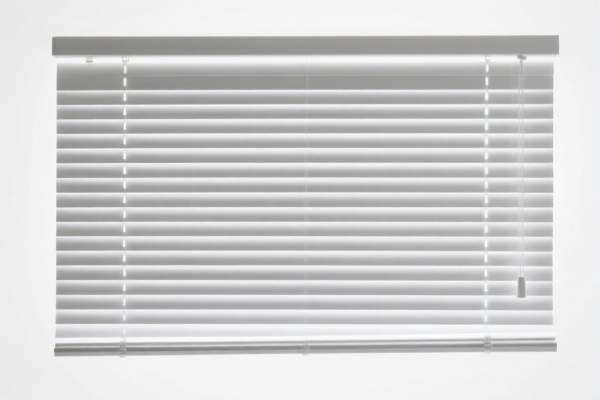
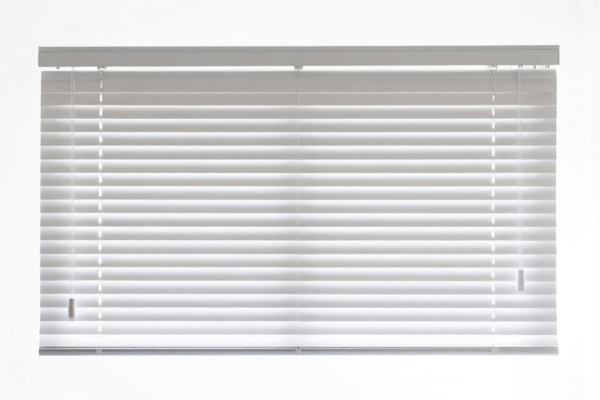
AI Analysis
🪟 Plastic Blinds Slats (Plastic Window Blinds)
🌐 HS Code Reference & Customs Clearance Guide | 2026 Latest Tariff Analysis | Professional Classification Strategy
📌 I. Product Definition & Classification: Do You Really Understand "Plastic Blinds"?
Plastic window blinds (specifically slats or assembled blinds made of plastic) are essential architectural accessories used for light control, privacy, and interior decoration. In international trade, their classification depends heavily on their physical form, specific function, and material composition.
They are primarily categorized into two types:
1. General Plastic Articles (Building Accessories): Blinds that function as standard architectural components, often falling under "Other articles of plastics." 2. Specific Polymer Extrusions: If the product is defined strictly by its chemical composition as a specific type of profile (e.g., rigid vinyl profiles for windows), it might be classified under different chapters, though less common for finished blinds.
⚠️ Key Distinction Point:
- If the product is a finished blind/venetian blind made of plastic → It is typically classified as an article of plastic (Chapter 39, Heading 3925 or 3926).
- If the product is merely a raw plastic profile intended to be made into window frames → It falls under 3916.
- Crucial Note: Most finished "Plastic Blinds" are NOT classified under 3916 (unless specifically defined as window profile extrusions in rare legal interpretations), but rather under 3925 (Building goods) or 3926 (Other articles).
📦 II. HS Code Classification Details (2026 Latest Tariff Authority Comparison)
| HS Code | Product Description | Application Scenario | Classification Logic |
|---|---|---|---|
3916.20.00.20 |
Plastic Profiles for Windows (Extruded) | Rarely used for finished blinds; strictly for raw PVC/Winyl window profiles | ⚠️ High Risk: Usually for window frames, not blinds. High tariff if misapplied. |
3925.30.50.00 |
Other Blinds & Parts (Plastic) | Standard plastic venetian blinds, horizontal slats, architectural blind accessories | ✅ Most Common: Explicitly covers "blinds" in building accessories. |
3925.30.10.00 |
Blinds & Shades, Excl. Roller (Plastic) | Plastic blinds that are not roller blinds (e.g., Venetian, horizontal) | ✅ Best Fit: Matches "Blinds" definition exactly. Lowest base duty. |
3926.30.50.00 |
Other Furniture Fittings & Accessories | Plastic parts connecting windows, or decorative plastic fittings | ❌ Avoid: Too vague. "Window attachments" should go to 3925. |
3926.90.99.89 |
Other Plastic Articles (Catch-all) | General plastic decorative items, non-specific plastic blinds | ⚠️ Last Resort: Used if specific "blind" category doesn't fit. Higher base duty. |
🔍 Key Reminder:
- Finished plastic blinds (even just slats assembled into a blind) belong in 3925.30 (Blinds and shades).
- Do NOT classify finished blinds under 3916 (Plastic profiles) unless customs specifically interprets them as structural window frames.
- 3925.30.10.00 is often the most accurate for non-roller plastic blinds, offering the lowest base tariff.
💰 III. 2026 Latest Tariff Rate Details (Including Surtaxes & Policy Add-ons)
✅ Applicable Country: United States (US)
✅ Origin: China (CN)
✅ Effective Date: Current rates (Section 301 & IEEPA apply)
🎯 1. 3925.30.10.00 —— Plastic Blinds (Excluding Roller) — Recommended
| Item | Content |
|---|---|
| Base Tariff | 3.3% (ad valorem) |
| Section 301 Surtax | +7.5% (from USITC Footnote 9903.88.01 - Note: Base rate for 3925.30 is often cited at 5.3% in some contexts, but 3925.30.10 may have specific lower base. Per DATA: 3.3%) |
| IEEPA Surtax | +10% (Targeting China/HK products, effective from Nov 10, 2025) |
| Total Tariff Rate | 20.8% |
| Tax Calculation | CIF Value × 20.8% |
| De Minimis Exemption | ❌ Not Applicable (Section 321 does not apply to China origin goods under 301/IEEPA) |
| Legal Basis Path | IEEPA:9903.01.25 → USITC:3925.30.10.00 → FOOTNOTE:9903.88.01 |
📌 Explanation:
- Base 3.3%: Standard MFN rate for specific plastic blinds.
- 7.5% Surcharge: Part of the Phase 1/301 tariff structure for plastic articles.
- 10% IEEPA: Additional penalty tariff for Chinese origin.
- Total 20.8%: This is the most cost-effective classification for plastic blinds if they qualify as "blinds" under 3925.30.10.
🎯 2. 3925.30.50.00 —— Other Blinds & Parts (Plastic)
| Item | Content |
|---|---|
| Base Tariff | 5.3% |
| Section 301 Surtax | +7.5% |
| IEEPA Surtax | +10% |
| Total Tariff Rate | 22.8% |
| Tax Calculation | CIF Value × 22.8% |
| De Minimis Exemption | ❌ Not Applicable |
| Legal Basis Path | IEEPA:9903.01.25 → USITC:3925.30.50.00 → FOOTNOTE:9903.88.01 |
📌 Note:
- This code is a broader category for "other" blinds.
- If your product is clearly a Venetian or horizontal blind, 3925.30.10.00 (20.8%) is better.
- If it’s a roller blind or part, this code applies.
🎯 3. 3926.90.99.89 —— Other Plastic Articles (Catch-all)
| Item | Content |
|---|---|
| Base Tariff | 5.3% |
| Section 301 Surtax | +7.5% |
| IEEPA Surtax | +10% |
| Total Tariff Rate | 22.8% |
| Tax Calculation | CIF Value × 22.8% |
| De Minimis Exemption | ❌ Not Applicable |
| Legal Basis Path | IEEPA:9903.01.25 → USITC:3926.90.99.89 → FOOTNOTE:9903.88.01 |
📌 Warning:
- This is the "miscellaneous" basket.
- Using this for blinds is risky because customs may reclassify it to 3925 and penalize for misclassification.
- Same rate as 3925.30.50, but less precise.
🎯 4. 3916.20.00.20 —— Plastic Profiles for Windows (High Risk)
| Item | Content |
|---|---|
| Base Tariff | 5.8% |
| Section 301 Surtax | +25.0% (Aggressive Section 301) |
| Section 122 Surtax | +10% |
| Total Tariff Rate | 40.8% |
| Tax Calculation | CIF Value × 40.8% |
| De Minimis Exemption | ❌ Not Applicable |
| Legal Basis Path | IEEPA:9903.01.25 → USITC:3916.20.00.20 → FOOTNOTE:9903.88.01 |
📌 Critical Warning:
- 40.8% is extremely high.
- This code is for raw plastic profiles (like PVC pipes or window frame extrusions), NOT finished blinds.
- Only use if the product is strictly an uncut, raw extrusion for window frames, not for blinds.
- Misclassification Risk: If you ship finished blinds under this code, customs will reject it and apply penalties.
🎯 5. 3926.30.50.00 —— Other Furniture Fittings
| Item | Content |
|---|---|
| Base Tariff | 5.3% |
| Section 301 Surtax | +7.5% |
| IEEPA Surtax | +10% |
| Total Tariff Rate | 22.8% |
| Tax Calculation | CIF Value × 22.8% |
| De Minimis Exemption | ❌ Not Applicable |
| Legal Basis Path | IEEPA:9903.01.25 → USITC:3926.30.50.00 → FOOTNOTE:9903.88.01 |
📌 Note:
- Used if the item is considered a "window fitting" rather than a "blind."
- Less accurate than 3925.30 for blinds.
🛠️ IV. Customs Clearance Practical Advice (Real-World Pitfall Guide)
✅ 1. Required Documentation Checklist (No Exceptions)
| Document | Mandatory | Description |
|---|---|---|
| ✅ Product Specification Sheet | ✔️ | Must clearly state "Plastic Blinds" or "Venetian Blinds," material (PVC/Acrylic), and dimensions. |
| ✅ Product Photos | ✔️ | Clear images of the blind, slats, and any hardware (cords, wands). |
| ✅ Commercial Invoice | ✔️ | Must declare "Plastic Blinds" or "Window Blinds," NOT "Plastic Profile" or "Plastic Profile." |
| ✅ Packing List | ✔️ | Detail contents: number of blinds, dimensions, weight. |
| ✅ Certificate of Origin (CO) | ✔️ | Required for IEEPA assessment (China origin triggers 10% IEEPA). |
| ✅ Front & Back Label | ✔️ | Show brand, model, country of origin (Made in China). |
✅ 2. Declaration Tips (Key Mnemonic)
🔥 "Finish Blind Go to 3925, Raw Profile Go to 3916, Name It Right, Save Money!"
| Scenario | Correct Declaration | Wrong Approach |
|---|---|---|
| Finished Venetian Blinds | 3925.30.10.00 (20.8%) |
Report as "Plastic Profile" → 40.8% + Penalty |
| Plastic Slats (Pre-cut, for assembly) | 3925.30.50.00 (22.8%) or 3926.90.99.89 |
Report as "Windows" → Delay & Inspection |
| Raw PVC Extrusions (for window frames) | 3916.20.00.20 (40.8%) |
Report as "Blinds" → Rejection |
| Roller Blinds | 3925.30.10.00 (if specific) or 3925.30.50.00 |
Report as "Fabric" → Incorrect |
✅ 3. Special Situations Handling
| Situation | Recommendation |
|---|---|
| Plastic Slats Only (No Cords/Headrail) | Declare as "Plastic Blind Slats" under 3925.30.50.00 (22.8%). Do not call them "profiles." |
| Mixed Material (Wood + Plastic) | If plastic is the essential character, it may still go to 3925. If wood dominates, it shifts to Chapter 44 (higher duty/risk). |
| Sample Shipments | Even samples from China are subject to IEEPA 10% + Section 301. No de minimis exemption. |
| Re-export from Third Country | If re-exported from Vietnam/Malaysia, ensure no Chinese content >30% to avoid IEEPA. Certificate of Origin is critical. |
🌍 V. Global Market Clearance Comparison (2026 Latest)
| Country/Region | Recommended HS Code | Tariff Rate | Certification | Notes |
|---|---|---|---|---|
| 🇺🇸 USA | 3925.30.10.00 |
20.8% | None Specific | 40.8% if misclassified as 3916. |
| 🇨🇳 China | 3925.30.10.00 |
5% | CCC (if electrical) | No surtaxes for domestic. |
| 🇪🇺 EU | 3925.30.10.00 |
6.5% | CE (if applicable) | No Section 301/IEEPA. |
| 🇬🇧 UK | 3925.30.10.00 |
6.5% | UKCA | Post-Brexit rules apply. |
| 🇯🇵 Japan | 3925.30.10.00 |
4.4% | PSE (if electrical) | Low tariff, high inspection rigor. |
📌 Conclusion:
- The USA is the most expensive market due to Section 301 and IEEPA tariffs.
- Accurate classification is vital: Misclassifying blinds as "plastic profiles" (3916) increases tariffs from 20.8% to 40.8%.
- EU/UK/Japan have stable, lower tariffs, but require strict CE/PSE compliance.
📌 VI. Common Mistakes & Pitfalls (Blood Tears Lessons)
❌ Mistake 1: Declaring "Plastic Blinds" as "Plastic Window Profiles" (3916)
👉 Result: Tariff jumps from 20.8% to 40.8%. Customs may also seize goods for misdeclaration.
❌ Mistake 2: Using "Plastic Articles" (3926.90.99.89) for Blinds
👉 Result: Same tax as 3925, but higher audit risk. Customs may reclassify and penalize.
❌ Mistake 3: Not Declaring "Made in China" Clearly
👉 Result: If origin is unclear, customs may assume China origin and apply 10% IEEPA surcharge + Section 301.
❌ Mistake 4: Splitting Shipment (Slats + Headrail)
👉 Result: If shipped separately, each part may be taxed individually, potentially leading to higher aggregate duties or complex valuation.
✅ Correct Practice:
"Plastic Venetian Blinds, 36x64 inch, PVC Material, Brown, Model XYZ, Made in China"
🎯 VII. Conclusion: Precise Classification Saves Money!
🎯 Remember the Mnemonic:
🔹 "Blinds are 3925, Profiles are 3916. Wrong Code, Double Tax!"
🔹 "20.8% for Blinds, 40.8% for Profiles. Choose Wisely!"
📌 Pro Tip:
If your plastic blinds contain electrical components (motorized), they may shift to Chapter 85. Ensure you declare the correct function.
For standard manual plastic blinds, stick to 3925.30.10.00 for the best rate (20.8%).
📣 Immediate Action:
📞 Consult a licensed customs broker + Provide product photos + Apply for Advance Ruling (if high volume)
🚀 Ensure your Commercial Invoice says "Plastic Blinds," not "Plastic Extrusion."
✨ Professional Clearance Starts with Accurate Classification!
💼 Every Dollar Saved in Tariffs is Pure Profit!
Customer Reviews
About HS Code Classification
The Harmonized System (HS) is an internationally standardized nomenclature developed by the World Customs Organization (WCO) to classify traded products. Over 200 countries use the HS system as the basis for customs tariffs, trade statistics, and import/export regulations.
Each HS code follows a hierarchical structure:
- Chapter (2 digits) — Broad category of goods (e.g., Chapter 84: Machinery and Mechanical Appliances)
- Heading (4 digits) — More specific grouping within the chapter
- Subheading (6 digits) — Internationally standardized breakdown, used by all WCO member countries
- National subdivisions (8-10 digits) — Country-specific extensions for further classification, such as US HTSUS 10-digit codes
Correct HS code classification is essential for smooth customs clearance, accurate duty payment, and compliance with trade regulations. Misclassification can lead to customs delays, overpayment of duties, or penalties.
When importing from CN to US, the applicable tariff rates may include:
- Most-Favored-Nation (MFN) rate — The standard duty rate applied to WTO members
- General rate — Applied to countries without trade agreements
- Trade remedy duties — Additional tariffs such as Section 301 (anti-dumping), Section 232 (national security), or countervailing duties
The information provided on this page is for reference purposes only. For official classification, please consult with your local customs authority or a licensed customs broker.