Plastic Bowl
CN → US| HS Code | Tariff Rate | Origin | Destination | Doc |
|---|---|---|---|---|
| 3926901000 | 20.9% | CN | US | Official Doc |
| 3924102000 | 24.0% | CN | US | Official Doc |
| 3926904000 | 12.8% | CN | US | Official Doc |
| 3924104000 | 13.4% | CN | US | Official Doc |
| 3924905650 | 20.9% | CN | US | Official Doc |
Product Images
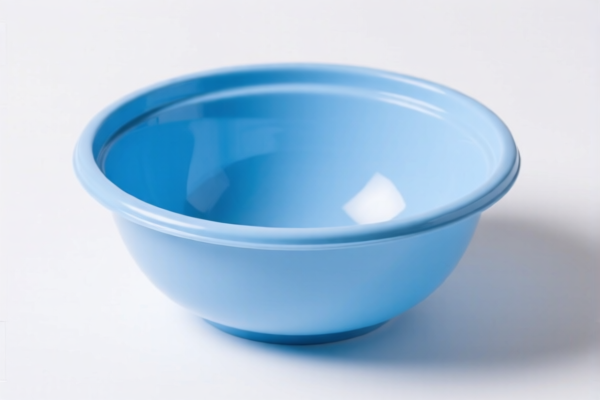
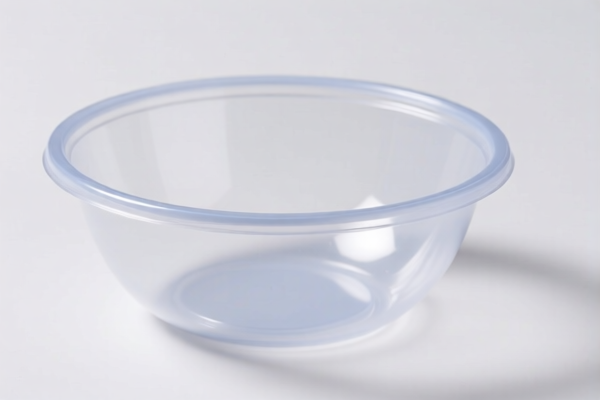
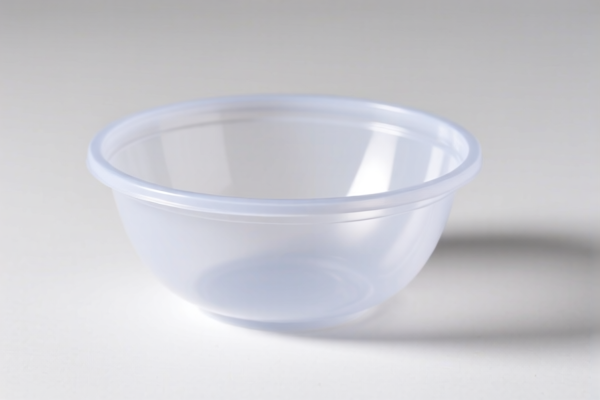
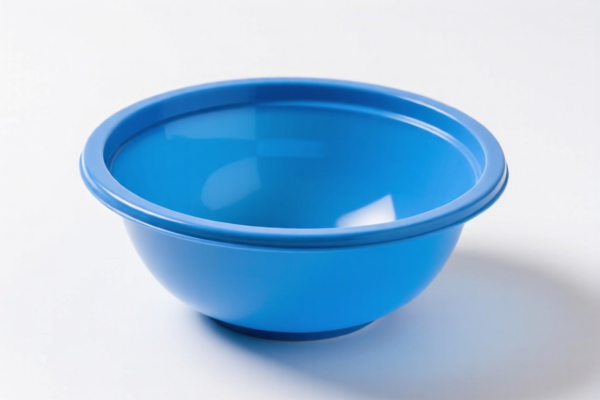
AI Analysis
🥣 Plastic Bowl: HS Code Classification & Customs Clearance Strategy (2026)
🌐 HS Code Reference & Clearance Guide | 2026 Latest Tariff Analysis | Professional-Level Entry Strategy
📌 I. Product Definition & Classification: Do You Really Understand "Plastic Bowls"?
Plastic bowls are ubiquitous in daily life, ranging from children's feeding bowls and pet feeders to household storage containers and candy bowls. In international trade, they are primarily classified under Chapter 39 (Plastics and Articles Thereof). The key to accurate classification lies in usage (tableware vs. other containers) and material composition.
⚠️ Key Distinction Points:
- If primarily for tableware/food service (eating, serving), look at Heading 3924.
- If primarily for other household/industrial use (storage, pet feeding, candy dishes not strictly "tableware" in some interpretations), look at Heading 3926.
- Material: All items in this dataset are Plastic.
📦 II. HS Code Classification Details (2026 Latest Tariff Authority Comparison)
Based on the provided data, here are the 5 possible HS Codes for "Plastic Bowls," categorized by their specific function and corresponding tax rates.
| HS Code | Product Description | Use Case | Total Tax Rate | Tax Breakdown |
|---|---|---|---|---|
| 3926.90.10.00 | Plastic Candy Bowl (Container) | Candy dish, general container | 20.9% | Base: 3.4% + Sec. 301: 7.5% + Section 122: 10% |
| 3924.10.20.00 | Plastic Candy Bowl (Tableware) | Sugar bowl, tableware use | 24.0% | Base: 6.5% + Sec. 301: 7.5% + Section 122: 10% |
| 3926.90.40.00 | Plastic Candy Bowl (Other Plastic Goods) | General "other" plastic item | 12.8% | Base: 2.8% + Sec. 301: 0.0% + Section 122: 10% |
| 3924.90.56.50 | Plastic Pet Bowl (Household) | Pet feeder, household utensil | 13.4% | Base: 3.4% + Sec. 301: 0.0% + Section 122: 10% |
| 3924.10.40.00 | Plastic Pet Bowl/Tableware | Tableware, pet bowl | 13.4% | Base: 3.4% + Sec. 301: 0.0% + Section 122: 10% |
🔍 Important Note:
- 3924 generally covers "Tableware, kitchenware, other household articles and hygiene or toilet articles, of plastics."
- 3926 covers "Other articles of plastics."
- The tax difference is significant: Section 122 (10%) applies to all categories above, while the Section 301 (7.5%) surcharge applies only to specific sub-headings (like 3926.90.10 and 3924.10.20).
💰 III. 2026 Latest Tariff Rate Details (Including Surcharges & Policy Add-ons)
✅ Applicable Country: United States (US)
✅ Origin: China (CN)
✅ Effective Time: Current rates apply as per 2026 tariff data provided.
🎯 1. 3926.90.10.00 —— Plastic Candy Bowl (Container Class)
| Item | Content |
|---|---|
| Base Tariff | 3.4% |
| Section 301 Surcharge | +7.5% |
| Section 122 Tariff | +10% |
| Total Tariff | 20.9% |
| Tax Calculation | CIF Value × 20.9% |
| De Minimis Exemption | ❌ Not Eligible (Due to Section 122/301 applicability) |
| Legal Basis Path | Section 122: 10% → Section 301: 7.5% → USITC: 3926.90.10.00 |
📌 Explanation:
- This code treats the bowl as a container under "Other articles of plastics."
- It bears the Section 301 penalty (7.5%) but benefits from a lower base tariff (3.4%).
🎯 2. 3924.10.20.00 —— Plastic Candy Bowl (Tableware/Sugar Bowl)
| Item | Content |
|---|---|
| Base Tariff | 6.5% |
| Section 301 Surcharge | +7.5% |
| Section 122 Tariff | +10% |
| Total Tariff | 24.0% |
| Tax Calculation | CIF Value × 24.0% |
| De Minimis Exemption | ❌ Not Eligible |
| Legal Basis Path | Section 122: 10% → Section 301: 7.5% → USITC: 3924.10.20.00 |
📌 Note:
- This is the highest tax rate (24.0%) in the dataset.
- Classified under Tableware (3924) with a higher base rate (6.5%).
- Risk: High cost implication. Avoid if a cheaper alternative code applies.
🎯 3. 3926.90.40.00 —— Plastic Candy Bowl (Other Plastic Goods)
| Item | Content |
|---|---|
| Base Tariff | 2.8% |
| Section 301 Surcharge | +0.0% |
| Section 122 Tariff | +10% |
| Total Tariff | 12.8% |
| Tax Calculation | CIF Value × 12.8% |
| De Minimis Exemption | ❌ Not Eligible (Section 122 still applies) |
| Legal Basis Path | Section 122: 10% → USITC: 3926.90.40.00 |
📌 Optimization Tip:
- This is the lowest tax rate (12.8%) for a "Candy Bowl" description.
- It avoids the Section 301 surcharge entirely.
- Strategy: If the product can be legitimately described as "Other plastic articles" rather than strict tableware, this code saves 11.2% compared to the most expensive option.
🎯 4. 3924.90.56.50 —— Plastic Pet Bowl (Household/Utensil)
| Item | Content |
|---|---|
| Base Tariff | 3.4% |
| Section 301 Surcharge | +0.0% |
| Section 122 Tariff | +10% |
| Total Tariff | 13.4% |
| Tax Calculation | CIF Value × 13.4% |
| De Minimis Exemption | ❌ Not Eligible |
| Legal Basis Path | Section 122: 10% → USITC: 3924.90.56.50 |
📌 Note:
- For Pet Bowls, this code is often more accurate than general tableware.
- Lower base rate (3.4%) and no Section 301 surcharge.
🎯 5. 3924.10.40.00 —— Plastic Pet Bowl/Tableware
| Item | Content |
|---|---|
| Base Tariff | 3.4% |
| Section 301 Surcharge | +0.0% |
| Section 122 Tariff | +10% |
| Total Tariff | 13.4% |
| Tax Calculation | CIF Value × 13.4% |
| De Minimis Exemption | ❌ Not Eligible |
| Legal Basis Path | Section 122: 10% → USITC: 3924.10.40.00 |
📌 Note:
- Same total tax as above (13.4%).
- Classified explicitly under Tableware (3924) but with a lower base rate for this specific sub-category.
🛠️ IV. Customs Clearance Practical Advice (Avoid Pitfalls)
✅ 1. Preparation Checklist (Non-negotiable)
| Document | Required | Description |
|---|---|---|
| ✅ Product Specifications | ✔️ | Material (e.g., PP, PE), Capacity, Dimensions |
| ✅ Usage Description | ✔️ | Clearly state: "Candy Bowl," "Pet Feeder," or "Tableware" |
| ✅ Product Photos | ✔️ | Front, back, and bottom view. Show texture/shape. |
| ✅ Commercial Invoice | ✔️ | Must match the HS Code description exactly. |
| ✅ Packing List | ✔️ | Weight and dimensions. |
| ✅ FCC/RoHS Certificates | ✔️ | If applicable (though plastic bowls usually exempt, proof helps). |
✅ 2. Declaration Tips (Key Mantras)
🔥 "Match Usage, Avoid 301, Check Section 122!"
| Scenario | Correct HS Code | Wrong Practice |
|---|---|---|
| Candy Bowl (General) | 3926.90.40.00 (12.8%) |
Declaring as 3924.10.20.00 (24.0%) → Pay 11.2% more! |
| Pet Bowl | 3924.90.56.50 or 3924.10.40.00 (13.4%) |
Declaring as generic "Plastic Container" without detail → Audit Risk |
| Tableware (Sugar Bowl) | 3924.10.20.00 (24.0%) |
Trying to declare as "Other" to save tax → Customs Rejection |
⚠️ Critical Reminder:
- Section 122 Tariff (10%) applies to ALL plastic household articles from China in this dataset. You cannot avoid this tax.
- The goal is to minimize the Base Tariff and avoid Section 301 (7.5%) where possible.
- Best Strategy: Use3926.90.40.00for candy bowls (12.8%) if functionally defensible as "other plastic goods." Use Pet Bowl codes (13.4%) for pet items.
✅ 3. Special Cases
| Situation | Handling Advice |
|---|---|
| Mixed Contents | If selling Candy Bowl + Spoon, declare as a set. Main component determines HS Code. |
| Material Change | If not plastic (e.g., ceramic), this data does not apply. Must re-classify under Chapter 69. |
| De Minimis (Section 321) | ❌ Not Eligible. Even for small parcels, Section 122 and 301 tariffs apply. Value < $800 does not exempt you. |
🌍 V. Global Market Comparison (2026 Latest)
| Country/Region | Recommended HS Code | Tariff | Certification | Note |
|---|---|---|---|---|
| 🇺🇸 USA | 3926.90.40.00 |
12.8% | None | Best rate for Candy Bowls. |
| 🇺🇸 USA | 3924.10.20.00 |
24.0% | None | Highest rate. Avoid if possible. |
| 🇨🇳 China | 3926.90.40.00 |
~2-5% | CCC (if applicable) | No Section 122/301. |
| 🇪🇺 EU | 3924.10.00 |
~3-5% | LFGB, FDA (for food contact) | No Section 122/301. |
📌 Conclusion:
- USA is the most complex market due to Section 122 and Section 301.
- Optimization: For Candy Bowls,3926.90.40.00(12.8%) is the most cost-effective option in the US.
- For Pet Bowls,3924.90.56.50(13.4%) is competitive.
📌 VI. Common Mistakes & Pitfalls (Blood Lessons)
❌ Mistake 1: Declaring a "Candy Bowl" as 3924.10.20.00 when it could be 3926.90.40.00.
👉 Consequence: Pay 24% instead of 12.8% → Profit Margin Halved!
❌ Mistake 2: Assuming De Minimis ($800) exempts Section 122 tax.
👉 Consequence: Customs seizure or retroactive billing of 10% Section 122 tax.
❌ Mistake 3: Using "Plastic Container" for a Pet Bowl.
👉 Consequence: Ambiguous declaration → Delayed clearance, additional scrutiny.
✅ Correct Practice:
"Plastic Pet Feeder Bowl, PP Material, 500ml, For Dog/Cat" → Use
3924.90.56.50
"Plastic Candy Dish, Clear PP, Decorative" → Use3926.90.40.00
🎯 VII. Conclusion: Precision Classification, Cost Control!
🎯 Remember the Mantra:
🔹 "Candy Bowl: Go 3926.90.40 (12.8%)"
🔹 "Pet Bowl: Go 3924.90.56 (13.4%)"
🔹 "Tableware: Check 3924.10.20 (24.0%)"
🔹 "Section 122 is Always On (10%)"
📌 Pro Tip:
- Always confirm the primary use with your client.
- If the bowl is marketed as "Pet Feeder," use Pet codes.
- If marketed as "Candy Dish," use
3926.90.40.00to save 11.2%.- Apply for Advance Ruling if volume is high to lock in the tariff rate.
📣 Take Action Now:
📞 Contact Customs Broker + Provide Product Photos + Select
3926.90.40.00for Candy Bowls
🚀 Clear Customs Smoothly, Maximize Profits!
✨ Professional Clearance Starts with Accurate Classification!
💼 Every Percent Saved is Pure Profit!
Customer Reviews
About HS Code Classification
The Harmonized System (HS) is an internationally standardized nomenclature developed by the World Customs Organization (WCO) to classify traded products. Over 200 countries use the HS system as the basis for customs tariffs, trade statistics, and import/export regulations.
Each HS code follows a hierarchical structure:
- Chapter (2 digits) — Broad category of goods (e.g., Chapter 84: Machinery and Mechanical Appliances)
- Heading (4 digits) — More specific grouping within the chapter
- Subheading (6 digits) — Internationally standardized breakdown, used by all WCO member countries
- National subdivisions (8-10 digits) — Country-specific extensions for further classification, such as US HTSUS 10-digit codes
Correct HS code classification is essential for smooth customs clearance, accurate duty payment, and compliance with trade regulations. Misclassification can lead to customs delays, overpayment of duties, or penalties.
When importing from CN to US, the applicable tariff rates may include:
- Most-Favored-Nation (MFN) rate — The standard duty rate applied to WTO members
- General rate — Applied to countries without trade agreements
- Trade remedy duties — Additional tariffs such as Section 301 (anti-dumping), Section 232 (national security), or countervailing duties
The information provided on this page is for reference purposes only. For official classification, please consult with your local customs authority or a licensed customs broker.