Plastic Brake Line Fittings
CN → US| HS Code | Tariff Rate | Origin | Destination | Doc |
|---|---|---|---|---|
| 7307290090 | 90.0% | CN | US | Official Doc |
| 7307995045 | 89.3% | CN | US | Official Doc |
| 7412200015 | 88.0% | CN | US | Official Doc |
| 7412200085 | 88.0% | CN | US | Official Doc |
| 8708998180 | 37.5% | CN | US | Official Doc |
Product Images
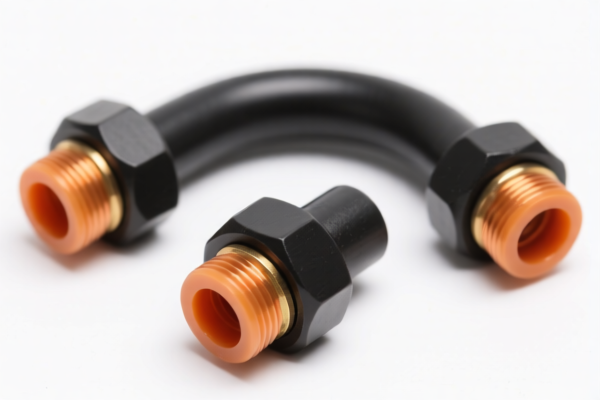
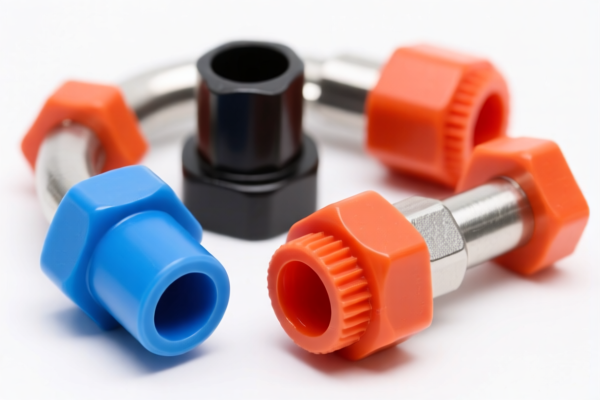
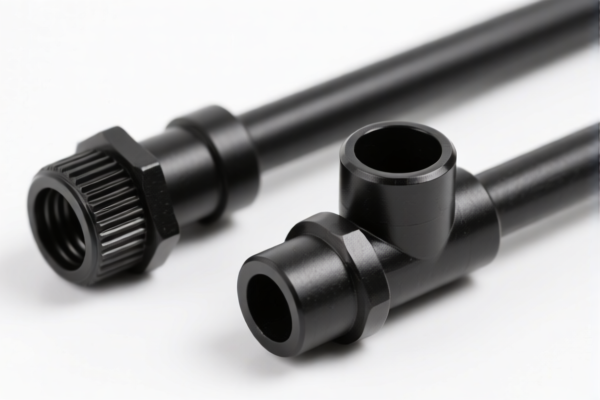
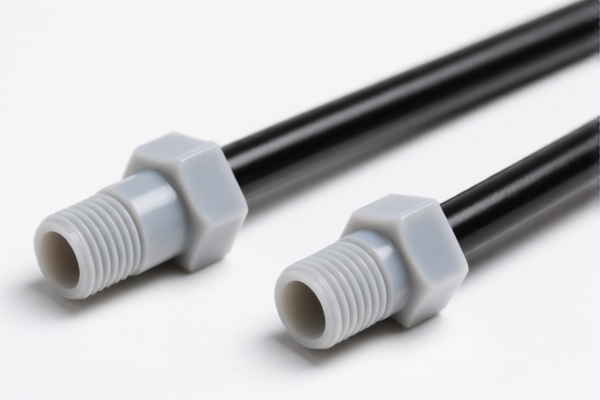
AI Analysis
🚗 Brake Line Fittings (Plastic & Alloy Variants)
🌐 HS Code Reference & Customs Clearance Guide | 2026 Latest Tariff Analysis | Professional Compliance Strategy
📌 Part 1: Product Definition & Classification – Do You Know Your "Brake Fittings"?
Brake Line Fittings are critical components in automotive braking systems, responsible for connecting brake hoses and steel lines to ensure hydraulic pressure transmission. In international trade, these are not a single commodity but are strictly classified based on material composition and function.
⚠️ Key Distinction:
- Steel/Iron/Aluminum Fittings: Considered under Chapter 73 (Iron/Steel) or Chapter 74 (Copper). - Copper/Brass Fittings: Considered under Chapter 74 (Copper). - General Auto Parts: If the material is unspecified or it's a broader assembly, it may fall under Chapter 87 (Vehicles).
📦 Part 2: HS Code Classification Details (2026 Latest Tariff Authority对照)
Based on the provided data, here are the specific HS Codes for brake fittings, categorized by material:
| HS Code | Product Description | Material | Application Context |
|---|---|---|---|
7307.29.00.90 |
Metal Tube Fittings, for Automotive Brake Systems | Steel/Metal (Unspecified) | Standard steel fittings for brake lines |
7307.99.50.45 |
Tube Fittings of Iron or Non-Alloy Steel | Iron / Non-Alloy Steel | Heavy-duty steel fittings |
7412.20.00.15 |
Tube Fittings of Copper Alloys | Copper Alloy (e.g., Brass) | High-corrosion-resistant fittings |
7412.20.00.85 |
Other Tube Fittings of Copper Alloys | Other Copper Alloys | Specialized copper alloy fittings |
8708.99.81.80 |
Auto Parts: Brake Tube Fittings | Material Unspecified | General brake fittings without specific material classification |
🔍 Critical Note:
- Do NOT mix materials in a single shipment if declaring different HS codes, as this triggers customs audits.
- "Plastic" fittings are NOT listed in the provided data. If your product is purely plastic, it may not fit these codes precisely; however, metal fittings (steel/copper) are the primary focus here.
- Chapter 87 vs. Chapter 73/74: If the fitting is a specific auto part,8708applies. If it's a generic tube fitting used in auto but not exclusively defined as an "auto part" in the specific tariff line, Chapters 73/74 apply.
💰 Part 3: 2026 Latest Tariff Rate Breakdown (Including Surtaxes & Policy Add-ons)
✅ Applicable Country: United States (US)
✅ Origin: China (CN)
✅ Effective Date: From 2025 onwards (based on current tariff structure)
🎯 1. 7307.29.00.90 – Metal Tube Fittings (Steel/Metal)
| Item | Detail |
|---|---|
| Base Tariff | 5.0% |
| Additional Tariff (Section 301) | 25.0% |
| Section 122 Tariff (Steel/Aluminum/Copper) | 50.0% |
| Total Tax Rate | 80.0% |
| Tax Calculation | CIF Value × 80.0% |
| Legal Basis | Base Tariff + Section 301 + Section 122 |
📌 Explanation:
- 80% Total Rate: This is an extremely high tariff. It includes the standard 5% base, 25% Section 301, and a specific 50% surcharge under Section 122 for steel/aluminum/copper products.
- Compliance Alert: Ensure the product is indeed classified as "Steel/Metal" under this code. Misclassification can lead to severe penalties.
🎯 2. 7307.99.50.45 – Iron or Non-Alloy Steel Fittings
| Item | Detail |
|---|---|
| Base Tariff | 4.3% |
| Additional Tariff (Section 301) | 25.0% |
| Section 122 Tariff (Steel/Aluminum/Copper) | 50.0% |
| Total Tax Rate | 79.3% |
| Tax Calculation | CIF Value × 79.3% |
| Legal Basis | Base Tariff + Section 301 + Section 122 |
📌 Note:
- Slightly lower than the general steel code due to a lower base rate (4.3% vs 5.0%).
- Still subject to the 50% Section 122 surcharge because it is iron/steel.
🎯 3. 7412.20.00.15 & 7412.20.00.85 – Copper Alloy Fittings
| Item | Detail |
|---|---|
| Base Tariff | 3.0% |
| Additional Tariff (Section 301) | 25.0% |
| Section 122 Tariff (Steel/Aluminum/Copper) | 50.0% |
| Total Tax Rate | 78.0% |
| Tax Calculation | CIF Value × 78.0% |
| Legal Basis | Base Tariff + Section 301 + Section 122 |
📌 Note:
- Copper fittings are also subject to the 50% Section 122 surcharge.
- Total rate is 78.0%, making them the most "cost-effective" among the high-tariff options, but still very expensive.
🎯 4. 8708.99.81.80 – Auto Parts: Brake Tube Fittings (Material Unspecified)
| Item | Detail |
|---|---|
| Base Tariff | 2.5% |
| Additional Tariff (Section 301) | 25.0% |
| Section 122 Tariff | Not Applicable |
| Total Tax Rate | 27.5% |
| Tax Calculation | CIF Value × 27.5% |
| Legal Basis | Base Tariff + Section 301 |
📌 Strategic Advantage:
- This is the MOST FAVORABLE tariff option at 27.5%.
- Why? It is classified under Chapter 87 (Auto Parts), NOT Chapter 73/74. Therefore, it avoids the 50% Section 122 surcharge applicable to steel/iron/copper.
- Condition: The product must be declared as a specific "Auto Part" (Brake Tube Fitting) without emphasizing its material as "Steel" or "Copper" in a way that triggers Chapter 73/74 classification.
- Warning: If customs determines the item is purely a generic tube fitting and not an "auto part," they may reclassify it to Chapter 73/74, imposing the 78-80% rate.
🛠️ Part 4: Customs Clearance Practical Advice (Real-World Pitfall Guide)
✅ 1. Preparation Checklist (Non-negotiable)
| Document | Required? | Notes |
|---|---|---|
| ✅ Product Specification Sheet | ✔️ | Must specify dimensions, pressure rating, and material |
| ✅ Material Declaration Form | ✔️ | Explicitly state: "Made of Steel," "Brass," or "General Auto Part" |
| ✅ Product Photos (Clear Label) | ✔️ | Show markings, model number, and any material stamps |
| ✅ Commercial Invoice | ✔️ | Use precise description: "Automotive Brake Fitting, Steel, Model XYZ" |
| ✅ Packing List | ✔️ | Match invoice exactly |
| ✅ Certificate of Origin (CO) | ✔️ | For China-origin goods |
✅ 2. Classification Strategy (Key Tactics)
🔥 "Chapter 87 is King, Chapter 73/74 is Costly!"
| Scenario | Recommended HS Code | Reason |
|---|---|---|
| Explicitly Metal Fitting | 7307.29.00.90 or 7412.20.00.15 |
Accurate material classification, but high tariff (78-80%) |
| General Auto Part | 8708.99.81.80 |
Lowest tariff (27.5%). Use if product is clearly an auto-specific part. |
| Mixed Material Shipment | Split Declaration | Do NOT mix steel and copper in one HS code line |
📌 Critical Warning:
- Do NOT declare a steel fitting as8708.99.81.80if it can be clearly identified as a generic steel tube fitting. Customs may audit and impose penalties.
- Do NOT ignore Section 122. If your product is steel/iron/copper, expect the 50% surcharge unless classified under Chapter 87.
✅ 3. Special Cases
| Situation | Handling Advice |
|---|---|
| Plastic Fittings | Not covered in provided data. Likely falls under Chapter 39 (Plastics). Tariff may be lower. Consult specific HS for plastic brake parts. |
| OEM Parts | Provide customer PO and design drawings to support "Auto Part" classification under 8708 |
| Mixed Shipments | Separate steel, copper, and other materials into different line items |
| Unknown Material | Use 8708.99.81.80 cautiously; be prepared to provide material tests if challenged |
🌍 Part 5: Global Market Comparison (2026)
| Country/Region | Recommended HS Code | Tariff (China Origin) | Key Requirements | Notes |
|---|---|---|---|---|
| 🇺🇸 USA | 8708.99.81.80 |
27.5% | IEEPA 301/122 | Avoid 73/74 codes due to 78-80% rates |
| 🇨🇳 China | 7307.29.00.90 |
5% (Import) | CCC (if applicable) | Lower tariffs for import into China |
| 🇪🇺 EU | 7307.29.00 |
1.7% | CE/RoHS | No Section 122 equivalent |
| 🇯🇵 Japan | 7307.29.00 |
3.0% | PSE/JIS | Moderate tariffs |
📌 Conclusion:
- USA is the most challenging market due to Section 301 and Section 122.
- Strategy: Aim for8708.99.81.80if possible to save 50-52.5% in tariffs.
- Risk: Misclassification can lead to audits, delays, and back-taxes.
📌 Part 6: Common Errors & Pitfalls (Lessons Learned)
❌ Error 1: Declaring Steel Fittings as 8708.99.81.80 without justification
👉 Consequence: Customs reclassifies to 7307.29.00.90 → Pay 80% instead of 27.5% + penalties.
❌ Error 2: Ignoring Section 122 for Copper/Steel
👉 Consequence: Underpaying 50% tariff → Severe penalties and bond claims.
❌ Error 3: Mixing Materials in One Line Item
👉 Consequence: Customs rejects shipment → Delays and demurrage fees.
❌ Error 4: Using Vague Descriptions ("Auto Fittings")
👉 Consequence: Ambiguity leads to conservative classification → Higher tariff.
✅ Correct Approach:
"Automotive Brake Line Fitting, Steel, for Model XYZ Vehicle, Certified to SAE J1403 Standards"
🎯 Part 7: Conclusion – Professional Classification Saves Millions!
🎯 Key Takeaway:
🔹 "Material Matters: Steel/Copper = 78-80% | Auto Part = 27.5%"
🔹 "Chapter 87 is Your Best Friend, Chapter 73/74 is Your Enemy"
🔹 "Always Declare Material Accurately, But Strategically Classify as Auto Part if Possible"
📌 Pro Tip:
- Request Pre-Ruling: Apply for an Advance Ruling from US Customs and Border Protection (CBP) to confirm
8708.99.81.80eligibility.- Documentation: Keep material test reports ready to prove if the product is an "Auto Part" vs. "Generic Tube Fitting."
📣 Immediate Action:
📞 Contact your customs broker with product specs + material declaration.
🚀 Optimize Tariff: Aim for 27.5%, Avoid 80%.
✨ Precision Classification is Profitability!
💼 Every Percent Saved is Pure Profit!
Customer Reviews
About HS Code Classification
The Harmonized System (HS) is an internationally standardized nomenclature developed by the World Customs Organization (WCO) to classify traded products. Over 200 countries use the HS system as the basis for customs tariffs, trade statistics, and import/export regulations.
Each HS code follows a hierarchical structure:
- Chapter (2 digits) — Broad category of goods (e.g., Chapter 84: Machinery and Mechanical Appliances)
- Heading (4 digits) — More specific grouping within the chapter
- Subheading (6 digits) — Internationally standardized breakdown, used by all WCO member countries
- National subdivisions (8-10 digits) — Country-specific extensions for further classification, such as US HTSUS 10-digit codes
Correct HS code classification is essential for smooth customs clearance, accurate duty payment, and compliance with trade regulations. Misclassification can lead to customs delays, overpayment of duties, or penalties.
When importing from CN to US, the applicable tariff rates may include:
- Most-Favored-Nation (MFN) rate — The standard duty rate applied to WTO members
- General rate — Applied to countries without trade agreements
- Trade remedy duties — Additional tariffs such as Section 301 (anti-dumping), Section 232 (national security), or countervailing duties
The information provided on this page is for reference purposes only. For official classification, please consult with your local customs authority or a licensed customs broker.