Plastic Brake System Parts
CN → US| HS Code | Tariff Rate | Origin | Destination | Doc |
|---|---|---|---|---|
| 3926909600 | 35.0% | CN | US | Official Doc |
| 3926909989 | 22.8% | CN | US | Official Doc |
| 8487900080 | 88.9% | CN | US | Official Doc |
| 8487900040 | 38.9% | CN | US | Official Doc |
| 8708998105 | 37.5% | CN | US | Official Doc |
| 8708998180 | 37.5% | CN | US | Official Doc |
Product Images
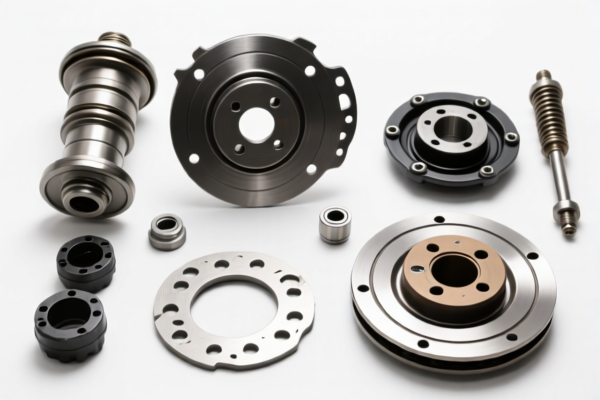
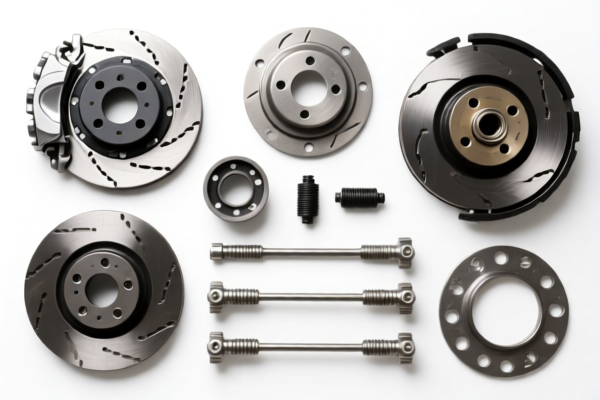
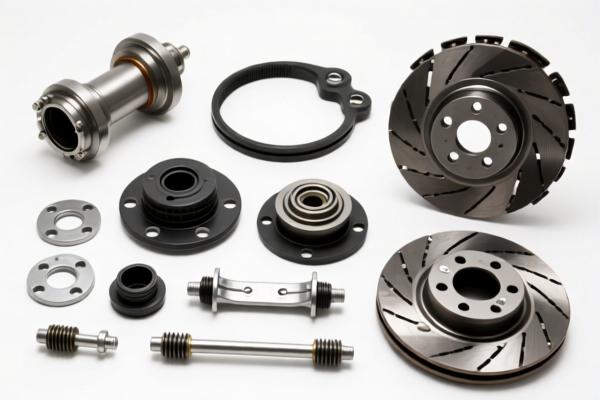
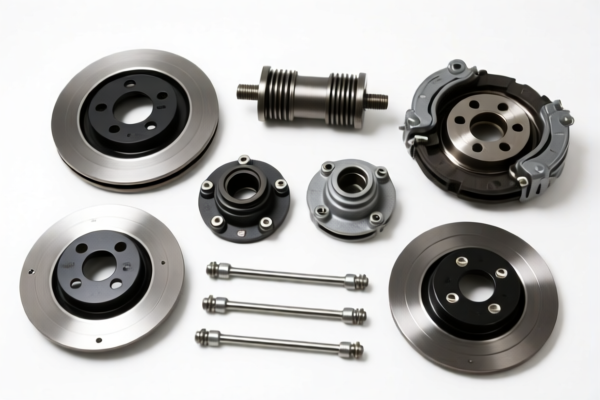
AI Analysis
🚙 Plastic Brake System Parts
🌐 HS Code Reference & Customs Clearance Guide | 2026 Latest Tariff Analysis | Professional Compliance Strategy
📌 I. Product Definition & Classification: Do You Truly Understand "Plastic Brake System Parts"?
Plastic brake system components are critical safety parts in modern vehicles, particularly for braking hoses, cable casings, and related accessories. In international trade, these products are not classified as a single entity but are differentiated based on their material composition, electrical features, and specific application within the vehicle.
Plastic Brake Hoses with Fittings: Rigid or semi-rigid plastic tubes with attached metal/c Plastic fittings, primarily used in hydraulic braking systems. Plastic Cable/Inner Wire Casings: Protective outer sheaths for mechanical brake cables (e.g., for caliper and cantilever brakes). General Machinery Parts: Non-electrical, non-specific plastic components that do not fit other precise headings.
⚠️ Key Distinction Points:
- If the part is a brake hose of plastics with attached fittings, it falls under motor vehicle parts.
- If the part is a casing for bicycle derailleur cables or brake inner wires, it falls under general plastic articles.
- If the part is a general machinery component (e.g., oil seals, generic brackets) without electrical features, it may fall under Chapter 84.
📦 II. HS Code Classification Details (2026 Latest Tariff Authority Comparison)
| HS Code | Product Description | Applicable Scenario | Key Identifier |
|---|---|---|---|
8708.99.81.05 |
Brake hoses of plastics, with attached fittings | Hydraulic brake lines in cars/trucks, plastic tube + metal connectors | ✅ Vehicle Part |
8708.99.81.80 |
Other parts and accessories of motor vehicles | Generic plastic brake components not specified elsewhere (e.g., brackets, covers) | ✅ Vehicle Part |
3926.90.96.00 |
Casing for bicycle derailleur cables; and casing for cable/inner wire for caliper/cantilever brakes | Outer sheath for mechanical bike brake cables, whether cut to length | ❌ General Plastic Article |
3926.90.99.89 |
Other articles of plastics (Headings 3901-3914) | Generic plastic parts not specified elsewhere (e.g., standard casings, non-vehicle specific) | ❌ General Plastic Article |
8487.90.00.80 |
Other machinery parts, not containing electrical features | Generic non-electrical machinery parts (e.g., general structural components) | ❌ Machinery Part |
8487.90.00.40 |
Oil seals (Other than chapter 40) | Plastic or composite oil seals used in machinery | ❌ Machinery Part |
🔍 Important Reminder:
- "Brake Hoses" are strictly classified under Chapter 87 (Motor Vehicles) if they have attached fittings and are for motor vehicles.
- "Cable Casings" for bicycles are classified under Chapter 39 (Plastics), regardless of their use in brakes.
- Do not confuse "brake hoses" with "oil seals" or generic "machinery parts."
💰 III. 2026 Latest Tariff Rate Details (Including Surtaxes & Policy Add-ons)
✅ Applicable Country: United States (US)
✅ Origin: China (CN)
✅ Effective Date: Current 2026 Tariff Schedule
🎯 1. 8708.99.81.05 —— Brake Hoses of Plastics, with Attached Fittings
| Item | Content |
|---|---|
| Base Duty Rate | 2.5% (Ad Valorem) |
| Section 301 Surtax | +25.0% |
| Total Tax Rate | 27.5% |
| Tax Calculation | CIF Value × 27.5% |
| De Minimis Exemption | ❌ Not Eligible (Subject to high tariffs) |
| Legal Basis | USITC:8708.99.81.05 → Section 301 Footnote |
📌 Explanation:
- Brake hoses for motor vehicles are considered "auto parts."
- The 25% Section 301 surtax applies to most Chinese-origin auto parts.
- Total cost impact: High. Proper classification is crucial to avoid misclassification penalties.
🎯 2. 8708.99.81.80 —— Other Motor Vehicle Parts & Accessories
| Item | Content |
|---|---|
| Base Duty Rate | 2.5% (Ad Valorem) |
| Section 301 Surtax | +25.0% |
| Total Tax Rate | 27.5% |
| Tax Calculation | CIF Value × 27.5% |
| De Minimis Exemption | ❌ Not Eligible |
| Legal Basis | USITC:8708.99.81.80 → Section 301 Footnote |
📌 Note:
- This code captures generic plastic brake components that do not have attached fittings or are not specifically "brake hoses."
- Same tariff burden as brake hoses.
🎯 3. 3926.90.96.00 —— Casing for Bicycle Brake/Derailleur Cables
| Item | Content |
|---|---|
| Base Duty Rate | 0.0% |
| Section 301 Surtax | 0.0% |
| Total Tax Rate | 0.0% |
| Tax Calculation | CIF Value × 0% |
| De Minimis Exemption | ✅ Eligible (If under $800) |
| Legal Basis | USITC:3926.90.96.00 → Excluded from Surtax |
📌 Critical Advantage:
- If your product is strictly a casing for bicycle brake cables (plastic sheath only), it enjoys 0% duty.
- Do NOT misclassify this as a motor vehicle part. Provide clear description: "Plastic casing for bicycle brake cable."
🎯 4. 3926.90.99.89 —— Other Plastic Articles
| Item | Content |
|---|---|
| Base Duty Rate | 5.3% |
| Section 301 Surtax | +7.5% |
| Total Tax Rate | 12.8% |
| Tax Calculation | CIF Value × 12.8% |
| De Minimis Exemption | ❌ Not Eligible |
| Legal Basis | USITC:3926.90.99.89 → Section 301 Footnote |
📌 Note:
- Applies to generic plastic parts not specifically mentioned elsewhere (e.g., unbranded, non-vehicle-specific plastic components).
- Lower than auto parts but higher than bicycle casings.
🎯 5. 8487.90.00.80 —— Other Machinery Parts (Non-Electrical)
| Item | Content |
|---|---|
| Base Duty Rate | 3.9% |
| Section 301 Surtax | +25.0% |
| Steel/Aluminum/Copper Surtax | +50.0% (If applicable) |
| Total Tax Rate | 78.9% |
| Tax Calculation | CIF Value × 78.9% |
| De Minimis Exemption | ❌ Not Eligible |
| Legal Basis | USITC:8487.90.00.80 → Section 301 & Steel/Aluminum Footnotes |
📌 Warning:
- If the plastic part is classified as a machinery part (e.g., part of an industrial machine, not a vehicle), the tariff is extremely high.
- Avoid this classification for automotive brake parts unless they are genuinely for industrial machinery.
🎯 6. 8487.90.00.40 —— Oil Seals
| Item | Content |
|---|---|
| Base Duty Rate | 3.9% |
| Section 301 Surtax | +25.0% |
| Total Tax Rate | 28.9% |
| Tax Calculation | CIF Value × 28.9% |
| De Minimis Exemption | ❌ Not Eligible |
| Legal Basis | USITC:8487.90.00.40 → Section 301 Footnote |
📌 Note:
- If the plastic component is an oil seal (even if made of plastic/composite), it falls here.
- Not applicable to brake hoses or cable casings.
🛠️ IV. Customs Clearance Practical Advice (Real-World Pitfall Avoidance)
✅ 1. Required Documentation Checklist (Non-Negotiable)
| Document | Mandatory? | Description |
|---|---|---|
| ✅ Product Specification Sheet | ✔️ | Must detail material (e.g., Nylon, PVC), dimensions, and intended use (Bicycle vs. Car). |
| ✅ Product Photos | ✔️ | Clear images showing fittings, casings, or seals. Distinguish between "hose with fittings" vs. "simple casing." |
| ✅ Commercial Invoice | ✔️ | Must explicitly state "Brake Hose for Motor Vehicle" or "Casing for Bicycle Cable" to guide classification. |
| ✅ Packing List | ✔️ | Ensure no mixed classifications in one shipment. |
| ✅ Origin Certificate | ✔️ | Required for surtax determination. |
✅ 2. Declaration Strategy (Key Mantra)
🔥 "Specify Use, Define Shape, Avoid Generic Terms!"
| Scenario | Correct Declaration | Wrong Declaration | Consequence |
|---|---|---|---|
| Car Brake Hose | "Plastic Brake Hose, with Attached Fittings, for Motor Vehicle" | "Plastic Tube" or "Hydraulic Line" | Risk of 8487 (78.9%) or 8708 (27.5%) dispute |
| Bicycle Cable Casing | "Plastic Casing for Bicycle Brake Cable" | "Brake System Part" or "Hose" | Risk of 8708 (27.5%) → Waste of 0% benefit |
| Generic Plastic Bracket | "Plastic Part for Machine, Not Electrical" | "Brake Part" | Risk of 8487 (78.9%) if misidentified as machinery |
| Oil Seal | "Oil Seal, Plastic/Composite" | "Brake Gasket" | Risk of misclassification |
✅ 3. Special Cases Handling
| Situation | Handling Advice |
|---|---|
| Mixed Shipment (Bike + Car Parts) | Separate lines in invoice. Do not lump under one HS Code. Bike parts (0%) can save costs if properly separated. |
| Plastic Hose WITHOUT Fittings | May still be classified under 8708.99.81.80 (27.5%) if deemed a vehicle part. Provide evidence if it's for bicycles. |
| Plastic Part with Electrical Components | NOT COVERED IN THIS DATA. If it has coils/contacts, it moves to Chapter 85. This guide only covers non-electrical parts. |
| Steel/Aluminum Fittings on Plastic Hose | Still classified under 8708.99.81.05 (27.5%). The +50% steel surtax typically applies to pure steel/aluminum products, not composite parts, but verify with customs broker. |
🌍 V. Global Market Comparison (2026 Latest)
| Country/Region | Recommended HS Code | Tariff (China Origin) | Key Certification | Notes |
|---|---|---|---|---|
| 🇺🇸 USA | 8708.99.81.05 / 3926.90.96.00 |
27.5% (Car) / 0% (Bike) | No specific certification required for parts | High tariff difference between Car vs. Bike parts |
| 🇪🇺 EU | 8708.99 (General) |
4.5% (Most) | ECE R6/R13 (if certified) | No Section 301 surtax |
| 🇨🇳 China | 8708.99 / 3926.90 |
0% - 6% | CCC (if for certain vehicles) | Import duty low |
| 🇯🇵 Japan | 8708.99 |
0% - 5% | JIS Standards | Low tariff |
📌 Conclusion:
- USA is the most critical market for classification precision.
- Bicycle casings (0%) vs. Car parts (27.5%) is a massive cost driver.
- Ensure your supplier and logistics partner know the end-use of the product.
📌 VI. Common Errors & Pitfalls (Blood & Tears Lessons)
❌ Error 1: Declaring "Brake Hoses" as "Plastic Tubing" (3926.90.99.89)
👉 Consequence: Customs may reclassify as 8708.99.81.05 (27.5%) + penalties.
👉 Fix: Clearly state "for motor vehicle" and "with fittings."
❌ Error 2: Declaring "Bicycle Brake Casing" as "Motor Vehicle Part" (8708)
👉 Consequence: Pay 27.5% instead of 0%.
👉 Fix: Explicitly state "For Bicycle Use Only" on invoice.
❌ Error 3: Using generic "Machinery Parts" (8487) for Automotive Parts
👉 Consequence: Risk of 78.9% tariff if steel/aluminum components are involved or if deemed general machinery.
👉 Fix: Use Chapter 87 for auto parts.
❌ Error 4: Mixing Electrical Components
👉 Consequence: This data does not cover parts with electrical connectors.
👉 Fix: If your plastic part has wiring/connectors, it is NOT covered here. Contact us for Chapter 85 guidance.
🎯 VII. Conclusion: Precision Classification Saves Money!
🎯 Remember the Mantra:
🔹 "Bike Casing = 0% (3926.90.96.00)"
🔹 "Car Brake Hose = 27.5% (8708.99.81.05)"
🔹 "Generic Plastic Part = 12.8% (3926.90.99.89)"
🔹 "Avoid 8487 (78.9%) unless it's pure industrial machinery!"
📌 Pro Tip:
If your product is exported to the USA, ensure your Commercial Invoice explicitly states the end-use (e.g., "For Bicycle" or "For Motor Vehicle"). This is your primary defense against customs misclassification.
Apply for Advance Ruling if unsure about complex composite parts.
📣 Act Now:
📞 Contact your customs broker with the exact product photos and specifications.
🚀 Verify HS Code before shipment to avoid 27.5% vs 0% surprises!
✨ Professional Clearance Starts with Accurate Classification!
💼 Your Cost Savings Depend on Precision!
Customer Reviews
About HS Code Classification
The Harmonized System (HS) is an internationally standardized nomenclature developed by the World Customs Organization (WCO) to classify traded products. Over 200 countries use the HS system as the basis for customs tariffs, trade statistics, and import/export regulations.
Each HS code follows a hierarchical structure:
- Chapter (2 digits) — Broad category of goods (e.g., Chapter 84: Machinery and Mechanical Appliances)
- Heading (4 digits) — More specific grouping within the chapter
- Subheading (6 digits) — Internationally standardized breakdown, used by all WCO member countries
- National subdivisions (8-10 digits) — Country-specific extensions for further classification, such as US HTSUS 10-digit codes
Correct HS code classification is essential for smooth customs clearance, accurate duty payment, and compliance with trade regulations. Misclassification can lead to customs delays, overpayment of duties, or penalties.
When importing from CN to US, the applicable tariff rates may include:
- Most-Favored-Nation (MFN) rate — The standard duty rate applied to WTO members
- General rate — Applied to countries without trade agreements
- Trade remedy duties — Additional tariffs such as Section 301 (anti-dumping), Section 232 (national security), or countervailing duties
The information provided on this page is for reference purposes only. For official classification, please consult with your local customs authority or a licensed customs broker.