Plastic Buckets 22.7 Liters and Above
CN → US| HS Code | Tariff Rate | Origin | Destination | Doc |
|---|---|---|---|---|
| 3924104000 | 13.4% | CN | US | Official Doc |
| 3923900080 | 38.0% | CN | US | Official Doc |
| 3923900016 | 38.0% | CN | US | Official Doc |
| 3924905650 | 20.9% | CN | US | Official Doc |
| 3926901000 | 20.9% | CN | US | Official Doc |
Product Images
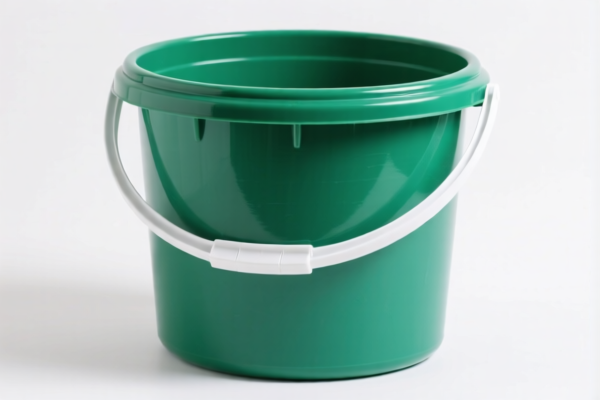
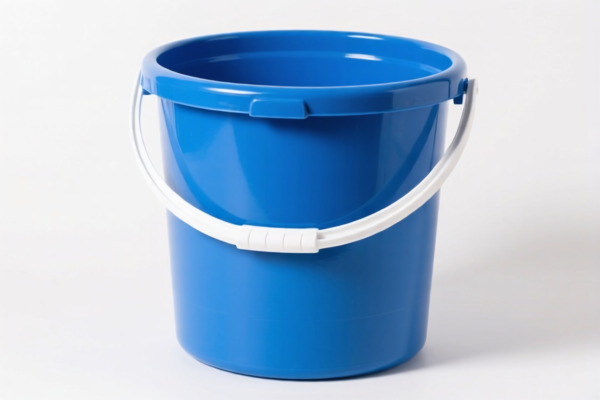
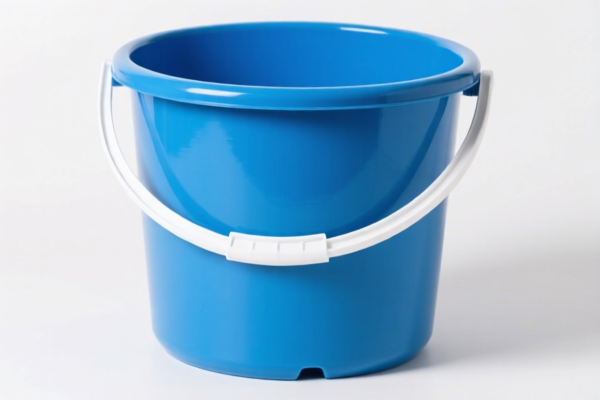
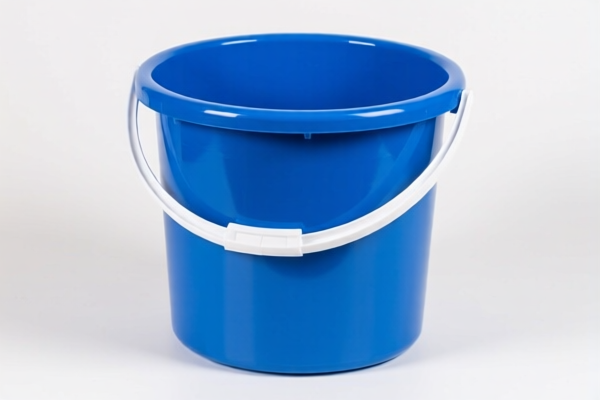
AI Analysis
🪣 Plastic Buckets (22.7 Liters and Above)
🌐 HS Code Reference & Customs Clearance Guide | 2026 Latest Tariff Analysis | Professional-Level Strategy
📌 I. Product Definition & Classification: Do You Truly Understand "Plastic Buckets"?
"Plastic Buckets with a capacity of 22.7 liters and above" are rigid containers primarily used for industrial storage, logistics, chemical transport, or large-scale household utility. In international trade, their classification hinges critically on material composition, capacity constraints, and intended use.
The key distinction lies in whether they are classified as general household articles (Tableware/Kitchenware) or specific transport/packaging goods. The 22.7-liter threshold is a pivotal boundary in customs interpretations, often triggering specific sub-headings for large-capacity containers.
⚠️ Key Distinction Points:
- If used as transport packaging/logistics tools with capacity ≥ 22.7L → Often falls under Chapter 39.23 (Articles for the conveyance or packing of goods).
- If used as general household/utility items without specific logistics features → May fall under 3924.90 (Other household articles) or 3926.90 (Other plastics articles).
- Capacity is King: Buckets < 22.7L are more likely to be viewed as household items; ≥ 22.7L pushes them towards industrial/logistics classifications.
📦 II. HS Code Classification Details (2026 Latest Tariff Authority Match)
Based on the provided data, here are the precise HS Codes and their corresponding rationales for "Plastic Buckets 22.7 Liters and Above":
| HS Code | Product Description | Applicable Scenario | Capacity/Material Constraint |
|---|---|---|---|
3923.90.00.16 |
Plastic Containers, Transport/Packing Use, Cylindrical Shape, Capacity ≥ 22.7L | Industrial logistics, bulk storage, chemical transport | ✅ Exact Match: Matches material, use, and ≥ 22.7L constraint perfectly. |
3923.90.00.80 |
Other Plastic Articles for Conveyance/Packing of Goods | General logistics packaging, non-standard large containers | ✅ Broad Category: "Other" category under packing articles. |
3924.90.56.50 |
Plastic Household Articles: Cylindrical Containers | Large-scale household cleaning, gardening, utility use | ✅ Household Use: Fits "household articles" but may be challenged if strictly industrial. |
3926.90.10.00 |
Plastic Buckets/Transport Bars | General utility buckets, non-specific industrial use | ✅ Specific Category: Explicitly mentions "buckets" in some interpretations. |
3924.10.40.00 |
Plastic Tableware/Kitchenware: "Other" Category | Misclassification Risk: Small household containers | ❌ Low Suitability: Generally for smaller kitchenware, but included as a potential "Other" fallback. |
🔍 Critical Note:
-3923.90.00.16is the most precise fit for "Plastic Buckets 22.7 Liters and Above" because it explicitly accounts for material, shape (cylindrical/container), use (transport/packing), and the specific capacity limit (22.7L+).
- Using3924(Household) or3926(Other) for large industrial buckets may lead to customs disputes if the primary use is clearly logistical.
💰 III. 2026 Latest Tariff Rate Breakdown (Including Surcharges & Policy Add-ons)
✅ Applicable Country: United States (US)
✅ Country of Origin: China (CN)
✅ Effective Date: From November 10, 2025 (for subsequent imports)
🎯 1. 3923.90.00.16 —— Plastic Containers, Transport/Packing, ≥ 22.7L (Best Fit)
| Item | Content |
|---|---|
| Base Tariff | 3.0% (ad valorem) |
| Section 301 Surcharge | +25.0% (Added Duty) |
| Section 122 Surcharge | +10.0% (Specific to China) |
| Total Tariff | 38.0% |
| Tax Calculation | CIF Value × 38.0% |
| De Minimis Exemption | ❌ Not Eligible (deny_de_minimis) |
| Legal Basis Path | Base: 3.0% → Section 301: +25.0% → Section 122: +10.0% |
📌 Explanation:
- This is the most targeted code for large plastic buckets.
- The 38% total rate is high due to the combination of base tariffs and aggressive US trade policies (Section 301 + 122).
- Must provide proof of capacity (≥ 22.7L) and transport/packing usage to justify this code.
🎯 2. 3923.90.00.80 —— Other Plastic Packing Articles (Broad Category)
| Item | Content |
|---|---|
| Base Tariff | 3.0% |
| Section 301 Surcharge | +25.0% |
| Section 122 Surcharge | +10.0% |
| Total Tariff | 38.0% |
| Tax Calculation | CIF Value × 38.0% |
| De Minimis Exemption | ❌ Not Eligible |
| Legal Basis Path | Base: 3.0% → Section 301: +25.0% → Section 122: +10.0% |
📌 Note:
- Same tariff as3923.90.00.16.
- Use this if the bucket does not strictly meet the "cylindrical/22.7L" definition of.16but is still clearly for packing/transport.
🎯 3. 3924.90.56.50 & 3926.90.10.00 —— Household/Other Plastic Articles (Alternative Routes)
| Item | Content |
|---|---|
| Base Tariff | 3.4% |
| Section 301 Surcharge | +7.5% |
| Section 122 Surcharge | +10.0% |
| Total Tariff | 20.9% |
| Tax Calculation | CIF Value × 20.9% |
| De Minimis Exemption | ❌ Not Eligible |
| Legal Basis Path | Base: 3.4% → Section 301: +7.5% → Section 122: +10.0% |
📌 Warning:
- These codes offer a lower rate (20.9%) but carry high classification risk.
- Customs may reclassify large industrial buckets as "Household Articles" (3924) or "Other" (3926) only if you can prove non-industrial, domestic use.
- Do not use these if the product is clearly for industrial logistics, or you face severe penalties for misclassification.
🎯 4. 3924.10.40.00 —— "Other" Plastic Tableware/Kitchenware (Least Likely)
| Item | Content |
|---|---|
| Base Tariff | 3.4% |
| Section 301 Surcharge | 0.0% |
| Section 122 Surcharge | +10.0% |
| Total Tariff | 13.4% |
| Tax Calculation | CIF Value × 13.4% |
| De Minimis Exemption | ❌ Not Eligible |
| Legal Basis Path | Base: 3.4% → Section 122: +10.0% |
📌 Caution:
- This is the lowest rate but the most inappropriate for 22.7L+ buckets.
- Plastic buckets of this size are not typically considered "tableware" or "kitchenware" in the traditional sense.
- Using this code invites immediate customs scrutiny and potential audit.
🛠️ IV. Customs Clearance Practical Advice (Pitfall Avoidance Guide)
✅ 1. Documentation Checklist (Non-Negotiable)
| Document | Required? | Notes |
|---|---|---|
| ✅ Product Specifications | ✔️ | Must clearly state capacity (≥ 22.7L) and material (Plastic). |
| ✅ Technical Drawing/Photo | ✔️ | Show cylindrical shape, handle, and stacking features (if any). |
| ✅ Commercial Invoice | ✔️ | Description must be precise: e.g., "Industrial Plastic Bucket, 5 Gallon (18.9L) or 6 Gallon (22.7L), HDPE, For Transport". |
| ✅ Usage Statement | ✔️ | Explicitly state: "Used for industrial storage/logistics" OR "Household utility use". Do not say "General Purpose". |
| ✅ Packing List | ✔️ | Detail quantity and weight per unit. |
✅ 2. Declaration Strategy (Key Mantra)
🔥 "Capacity Determines Category, Use Dictates Tax!"
| Scenario | Recommended HS Code | Risk Level |
|---|---|---|
| Industrial/Logistics Use, ≥ 22.7L | 3923.90.00.16 |
🟢 Low (Best Fit) |
| Industrial/Logistics Use, < 22.7L | 3923.90.00.80 |
🟡 Medium (Check local rules) |
| Household Use, Any Size | 3924.90.56.50 |
🟡 Medium (Need proof of household use) |
| Misclassified as Tableware | 3924.10.40.00 |
🔴 High (Will be challenged) |
✅ 3. Special Cases & Mitigation
| Scenario | Handling Advice |
|---|---|
| Customs Questions Capacity | Provide calibrated volume test reports or manufacturer specs proving ≥ 22.7L. |
| Mixed Shipment (Small & Large Buckets) | Separate Declarations. Do not bundle < 22.7L with ≥ 22.7L. Use different HS codes. |
| OEM for Industrial Clients | Include a Letter of Authorization from the buyer stating the buckets are for industrial logistics. |
| New Product Launch | Apply for an Advance Ruling (Pre-Ruling) from US Customs (CBP) to lock in the HS Code. |
🌍 V. Global Market Clearance Comparison (2026 Latest)
| Country/Region | Recommended HS Code | Tariff Rate (China Origin) | Certification | Notes |
|---|---|---|---|---|
| 🇺🇸 USA | 3923.90.00.16 |
38.0% | None | High tariff due to Section 301 & 122. |
| 🇨🇳 China | 3923.90.00.16 |
~3.0% (Import Tariff) | CCC (if applicable) | Low duty, but check for anti-dumping if applicable. |
| 🇪🇺 EU | 3923.21.00 (Example) |
0-6.5% (Varies) | REACH | Different classification system; often "Plastic Bags/Sacks" or "Other Containers". |
| 🇬🇧 UK | 3923.21.00 |
0-6.5% | UKCA | Post-Brexit rules similar to EU but independent. |
| 🇯🇵 Japan | 3923.21.00 |
3.1% | None | Moderate tariff, no surcharges. |
📌 Conclusion:
- The US market is the most expensive for plastic buckets due to 38% total tariffs.
- Strategic Tip: If exporting to the US, ensure your supply chain cost structure accounts for this 38%. Consider pricing strategies or market diversification to EU/Asia where tariffs are lower.
📌 VI. Common Errors & Pitfalls (Lessons Learned)
❌ Error 1: Declaring 22.7L+ industrial buckets as "Household Items" (3924) to save on tariffs.
👉 Consequence: Customs will reject it, demand reclassification, and impose penalties. Rate changes from 20.9% to 38% + fines.
❌ Error 2: Not specifying capacity in the commercial invoice.
👉 Consequence: Customs assumes the lowest capacity, may misclassify under 3924, and then audit you for underpayment.
❌ Error 3: Using vague descriptions like "Plastic Container".
👉 Consequence: Delays in clearance, requests for additional documentation, potential inspection.
✅ Correct Practice:
"Plastic HDPE Bucket, 6 Gallon (22.7 Liters), Cylindrical, For Industrial Storage, Model XYZ, Made in China"
🎯 VII. Conclusion: Precision Classification, Cost Control!
🎯 Remember the Mantra:
🔹 "Capacity ≥ 22.7L + Transport Use =
3923.90.00.16(38% Tax)"
🔹 "Household Use =3924(20.9% Tax), But Risky for Large Buckets"
🔹 "Do Not Use Tableware Code for Industrial Buckets – It's a Trap!"
📌 Pro Tip:
If your plastic buckets are made in Vietnam, Thailand, or Mexico, you may qualify for lower or zero Section 301 tariffs.
Consider supply chain optimization to shift production if the 38% US tariff significantly impacts your margin.
📣 Immediate Action:
📞 Contact a Professional Customs Broker + Provide Product Photos + Apply for Advance Ruling
🚀 Ensure Smooth Customs Clearance, Optimize Costs, and Maximize Profit!
✨ Professional Clearance Starts with Accurate Classification!
💼 Every Penny Saved is a Penny Earned!
Customer Reviews
About HS Code Classification
The Harmonized System (HS) is an internationally standardized nomenclature developed by the World Customs Organization (WCO) to classify traded products. Over 200 countries use the HS system as the basis for customs tariffs, trade statistics, and import/export regulations.
Each HS code follows a hierarchical structure:
- Chapter (2 digits) — Broad category of goods (e.g., Chapter 84: Machinery and Mechanical Appliances)
- Heading (4 digits) — More specific grouping within the chapter
- Subheading (6 digits) — Internationally standardized breakdown, used by all WCO member countries
- National subdivisions (8-10 digits) — Country-specific extensions for further classification, such as US HTSUS 10-digit codes
Correct HS code classification is essential for smooth customs clearance, accurate duty payment, and compliance with trade regulations. Misclassification can lead to customs delays, overpayment of duties, or penalties.
When importing from CN to US, the applicable tariff rates may include:
- Most-Favored-Nation (MFN) rate — The standard duty rate applied to WTO members
- General rate — Applied to countries without trade agreements
- Trade remedy duties — Additional tariffs such as Section 301 (anti-dumping), Section 232 (national security), or countervailing duties
The information provided on this page is for reference purposes only. For official classification, please consult with your local customs authority or a licensed customs broker.