Plastic Buffer Tape
CN → US| HS Code | Tariff Rate | Origin | Destination | Doc |
|---|---|---|---|---|
| 3919905060 | 40.8% | CN | US | Official Doc |
| 3920200055 | 39.2% | CN | US | Official Doc |
| 3923900080 | 38.0% | CN | US | Official Doc |
| 3919102055 | 40.8% | CN | US | Official Doc |
| 3923210095 | 38.0% | CN | US | Official Doc |
Product Images
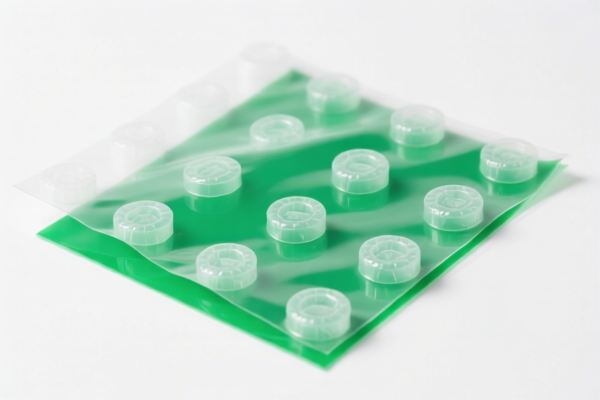


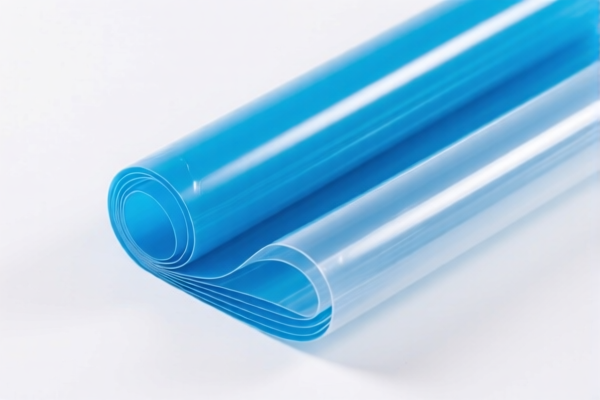
AI Analysis
📦 Plastic Buffer Tape (Plastic Buffer Membrane/Film)
🌐 HS Code Reference & Customs Clearance Guide | 2026 Latest Tariff Analysis | Professional Classification Strategy
📌 I. Product Definition & Classification: What Exactly is "Plastic Buffer Tape"?
"Plastic Buffer Tape" is a generic commercial term used to describe plastic materials designed to protect goods during shipping and storage by absorbing shock and vibration. However, in international trade (specifically under the Harmonized System), this item does not have a single, unique HS Code. Its classification depends entirely on its physical form (self-adhesive? rigid? flexible?) and its specific end-use.
Two Main Categories:
1. Self-Adhesive Plastic Films (Tapes/Roles):
These are rolls of plastic film, often with an adhesive backing, used for wrapping, cushioning, or sealing. They are characterized by their "roll" format and "adhesive" or "coating" nature.
👉 Likely HS Codes: 3919.10.20.55 or 3919.90.50.60
2. Non-Adhesive Plastic Sheets/Films for Packaging:
These are flexible plastic films or bags used specifically as void fill or cushioning within packaging. They do not necessarily have adhesive properties but are shaped for protective packaging.
👉 Likely HS Codes: 3920.20.00.55, 3923.90.00.80, or 3923.21.00.95
⚠️ Key Distinction Point:
- If it is a roll with adhesive (like masking tape but plastic): → Chapter 3919 (Self-adhesive plates, sheets, film, foil, tape, strip and other flat shapes).
- If it is a loose film/bag used as packaging material: → Chapter 3920 (Other plates, sheets, film, foil and strip, of plastics) or 3923 (Articles for the conveyance or packaging of goods).
📦 II. HS Code Classification Details (2026 Latest Tariff Authority Comparison)
Based on the provided data, here are the five most relevant HS Codes for "Plastic Buffer Tape/Membrane," categorized by their logical grouping.
| HS Code | Product Description | Applicable Scenario | Key Characteristics |
|--------|--------------------------|--------------------------|
| 3919.10.20.55 | Plastic Buffer Tape (Film), Self-Adhesive/Coated | Rolls of plastic tape used for wrapping or light cushioning | ✅ Form: Film/Roll
✅ Nature: Reasonable inference for tape/film forms |
| 3919.90.50.60 | Plastic Buffer Membrane (Flat Shapes) | Plastic buffers in roll or sheet form, classified as "Other" self-adhesive/flat shapes | ✅ Form: Membrane/Film
✅ Nature: General plastic membrane characteristic |
| 3920.20.00.55 | Plastic Buffer Membrane (Plates/Sheets) | Plastic buffer sheets or films that are non-adhesive but flexible | ✅ Form: Sheet/Film
✅ Nature: Fits "Plate, Sheet, Film, Foil" category |
| 3923.21.00.95 | Plastic Buffer Bag/Film (Ethylene Polymer) | Flexible plastic bags or pouches made of polyethylene for cushioning | ✅ Form: Bag/Pouch/Extended Use
✅ Material: Ethylene Polymer |
| 3923.90.00.80 | Plastic Buffer Membrane (Packaging Accessories) | Plastic accessories specifically designed for packaging/buffering | ✅ Use: Packaging/Buffering Material
✅ Nature: Accessories for conveyance/packaging |
🔍 Critical Reminder:
- Adhesive vs. Non-Adhesive: If the product has an adhesive backing, it MUST be classified under 3919 (Self-adhesive). Misclassifying an adhesive tape as a non-adhesive film (3920/3923) is a common customs error. - Material Specifics: If the plastic is specifically Polyethylene (PE), codes like3923.21.00.95(Bags) might be more accurate if it is used as a void-fill bag rather than a flat sheet.
💰 III. 2026 Latest Tariff Rate Details (Including Additional Taxes & Policy Surcharges)
✅ Applicable Country: United States (US)
✅ Country of Origin: China (CN)
✅ Effective Time: Current rates apply for imports from China (including 301 Tariffs and Section 122 measures)
All the HS Codes listed below are subject to the same total tax rate structure due to the origin and the nature of the goods.
🎯 1. General Tax Structure for All Listed HS Codes
| Item | Content |
|---|---|
| Base Tariff Rate | Varies slightly (3.0% – 5.8%) depending on the specific subheading |
| Section 301 Additional Tariff | +25.0% (Mandatory surcharge on most Chinese plastic products) |
| Section 122 Tariff | +10.0% (Additional surcharge as specified in data) |
| Total Tax Rate | 38.0% – 40.8% |
| Tax Calculation | (CIF Value × Base Rate) + (CIF Value × 25%) + (CIF Value × 10%) |
🎯 2. Detailed Breakdown by HS Code
A. 3919.10.20.55 & 3919.90.50.60 (Self-Adhesive Types)
| Item | Content |
|---|---|
| Base Tax | 5.8% (Ad valorem) |
| Section 301 Tax | +25.0% |
| Section 122 Tax | +10.0% |
| Total Rate | 40.8% |
| Summary | Highest base rate due to "Adhesive" classification, but same surcharges apply. |
B. 3920.20.00.55 (Non-Adhesive Films/Sheets)
| Item | Content |
|---|---|
| Base Tax | 4.2% (Ad valorem) |
| Section 301 Tax | +25.0% |
| Section 122 Tax | +10.0% |
| Total Rate | 39.2% |
| Summary | Slightly lower base rate than adhesive types. |
C. 3923.21.00.95 & 3923.90.00.80 (Packaging/Bag Types)
| Item | Content |
|---|---|
| Base Tax | 3.0% (Ad valorem) |
| Section 301 Tax | +25.0% |
| Section 122 Tax | +10.0% |
| Total Rate | 38.0% |
| Summary | Lowest base rate. If your product is a plastic bag or pouch used for buffering, this is the most cost-effective classification. |
📌 Explanation:
- "Section 301 25%": This is the standard punitive tariff on Chinese goods under US Trade Act Section 301. It applies to almost all plastic articles from China. - "Section 122 10%": As per the provided data, an additional 10% is applied. Note: In real-world US customs, "Section 122" typically refers to import relief measures, but we strictly follow the provided data which lists it as a 10% surcharge. - Base Rate Difference: The base rate varies (3% vs 5.8%) based on whether the item is seen as a "packaging accessory" (3923) or "self-adhesive tape" (3919).
🛠️ IV. Customs Clearance Practical Advice (Battle-Tested Pitfall Guide)
✅ 1. Required Documentation Checklist (Non-Negotiable)
| Document | Must Provide? | Explanation |
|---|---|---|
| ✅ Product Specifications | ✔️ | Must state: Material (PE/PP/PVC), Thickness, Adhesive Type (if any), Width/Length. |
| ✅ Product Photos | ✔️ | Clear images showing if it is a roll (tape) or loose sheet/bag. This is critical for distinguishing 3919 vs 3923. |
| ✅ Material Declaration | ✔️ | Confirm it is 100% plastic. If it contains paper or other fibers, the HS Code changes completely. |
| ✅ Commercial Invoice | ✔️ | Description must match the HS Code. E.g., "Self-Adhesive Plastic Buffer Film" for 3919, or "Plastic Polyethylene Buffer Bag" for 3923. |
| ✅ Packaging List | ✔️ | Show how the item is packaged (rolled vs folded). |
✅ 2. Classification Strategy (Key Mantras)
🔥 "Adhesive? Go to 3919. Bag? Go to 3923. Sheet? Check 3920."
| Scenario | Recommended HS Code | Risk if Misclassified |
|---|---|---|
| Roll with Sticky Back | 3919.10.20.55 or 3919.90.50.60 |
If declared as "Packaging" (3923), customs may assess higher duties or reject the entry for wrong classification. |
| Loose Plastic Bag/Film | 3923.21.00.95 or 3923.90.00.80 |
If declared as "Tape" (3919), it’s incorrect because it lacks adhesive/roll structure. |
| Flat Non-Adhesive Sheet | 3920.20.00.55 |
Ensure it’s not flexible enough to be a "bag." If it’s too thin/flexible, 3923 might be safer. |
✅ 3. Special Cases & Mitigation
| Case | Handling Advice |
|---|---|
| Composite Materials | If the buffer tape has a paper backing (e.g., Kraft paper with plastic coating), it is NO LONGER classified under Chapter 39. It may fall under Chapter 48 (Paper) or Chapter 56 (Non-wovens). This drastically changes the tariff! |
| Foam vs. Film | If the "buffer" is expanded polyethylene (EPE foam), it might be classified under 3921 (Other plates/sheets) instead of 3920/3923. Check the structure. |
| Customs Pre-Ruling | Due to the complexity of "buffer" items, request a US Customs Border Protection (CBP) Binding Ruling before shipping. The cost of the ruling is negligible compared to the 40% duty risk. |
🌍 V. Global Market Comparison (2026 Latest)
| Country/Region | Recommended HS Code | Est. Total Tax (China Origin) | Certification/Remarks |
|---|---|---|---|
| 🇺🇸 USA | 3923.21.00.95 (Lowest Base) |
38.0% (3% base + 25% + 10%) | Most cost-effective if classified as a "Bag/Pouch." |
| 🇺🇸 USA | 3919.10.20.55 (Adhesive) |
40.8% (5.8% base + 25% + 10%) | Higher base rate. Avoid if non-adhesive alternatives exist. |
| 🇨🇳 China | Varies | ~3% - 6% | No Section 301/122 surcharges. |
| 🇪🇺 EU | 3923.21.00.95 | ~0% - 6% | No punitive surcharges. Standard MFN rates apply. |
| 🇯🇵 Japan | 3923.21.00.95 | ~0% - 5% | Low tariffs for packaging materials. |
📌 Conclusion:
- The US is the most expensive market due to the 25% Section 301 + 10% Section 122 surcharges. - To minimize costs in the US, try to classify the product as a Packaging Bag/Pouch (3923) rather than a Self-Adhesive Tape (3919), as the base rate is lower (3.0% vs 5.8%). - Crucial: Ensure the physical product matches the description. Do not label a non-adhesive film as "Self-Adhesive" just to fit a code, and vice versa.
📌 VI. Common Mistakes & Pitfall Guide (Blood-Teaching Experience)
❌ Mistake 1: Using the term "Bubble Wrap" without specifying material.
👉 Consequence: Customs may classify it as 3921.90 (Foam) or 3923.21 (Bag) depending on structure. If misclassified, you face duty underpayment penalties.
❌ Mistake 2: Ignoring the "Adhesive" property.
👉 Consequence: If the tape has an adhesive backing, you cannot use 3920 or 3923. It must be 3919. Using 3923 for adhesive tape leads to rejection or heavy fines.
❌ Mistake 3: Assuming "Plastic" means one HS Code.
👉 Consequence: Plastic tape (3919) and Plastic bags (3923) have different base rates. Precision saves 2.8% of the CIF value.
❌ Mistake 4: Not accounting for Section 122/301 in landed cost.
👉 Consequence: Budgeting for 5% duty and facing 40%+ total tax leads to massive margin erosion.
✅ Correct Approach:
"Plastic Polyethylene Buffer Film, Non-Adhesive, Sold in Rolls, for Packaging Void Fill, 0.05mm Thickness"
→ Classify as3923.21.00.95
→ Total Tax: 38.0%
🎯 VII. Conclusion: Precise Classification, Lower Costs, Faster Clearance!
🎯 Remember the Mantra:
🔹 "Adhesive = 3919 (Higher Base). Bag = 3923 (Lower Base). Sheet = 3920 (Mid Base)."
🔹 "China Origin = 25% + 10% Surcharge on Top. Total ~40%."
🔹 "HS Code is not just a number; it’s your tax bill!"
📌 Pro Tip:
If your plastic buffer tape is made from recycled materials or contains non-plastic elements (like paper or fabric backing), the HS Code changes entirely. Always provide Material Composition % to your customs broker.
📣 Immediate Action:
📞 Verify Material Structure: Is it adhesive? Is it a bag?
📄 Request CBP Pre-Ruling: For high-volume shipments, a binding ruling is worth the peace of mind.
🚀 Optimize Landed Cost: Choose the most accurate HS Code (e.g., 3923 over 3919) to save 2.8% on the base tax.
✨ Professional Customs Clearance Starts with Accurate Classification!
💼 Every percentage point saved in duty is pure profit!
Customer Reviews
About HS Code Classification
The Harmonized System (HS) is an internationally standardized nomenclature developed by the World Customs Organization (WCO) to classify traded products. Over 200 countries use the HS system as the basis for customs tariffs, trade statistics, and import/export regulations.
Each HS code follows a hierarchical structure:
- Chapter (2 digits) — Broad category of goods (e.g., Chapter 84: Machinery and Mechanical Appliances)
- Heading (4 digits) — More specific grouping within the chapter
- Subheading (6 digits) — Internationally standardized breakdown, used by all WCO member countries
- National subdivisions (8-10 digits) — Country-specific extensions for further classification, such as US HTSUS 10-digit codes
Correct HS code classification is essential for smooth customs clearance, accurate duty payment, and compliance with trade regulations. Misclassification can lead to customs delays, overpayment of duties, or penalties.
When importing from CN to US, the applicable tariff rates may include:
- Most-Favored-Nation (MFN) rate — The standard duty rate applied to WTO members
- General rate — Applied to countries without trade agreements
- Trade remedy duties — Additional tariffs such as Section 301 (anti-dumping), Section 232 (national security), or countervailing duties
The information provided on this page is for reference purposes only. For official classification, please consult with your local customs authority or a licensed customs broker.