Plastic Car Storage Box
CN → US| HS Code | Tariff Rate | Origin | Destination | Doc |
|---|---|---|---|---|
| 3924905650 | 20.9% | CN | US | Official Doc |
| 3923900080 | 38.0% | CN | US | Official Doc |
| 3923109000 | 38.0% | CN | US | Official Doc |
| 3924104000 | 13.4% | CN | US | Official Doc |
| 3926901000 | 20.9% | CN | US | Official Doc |
Product Images
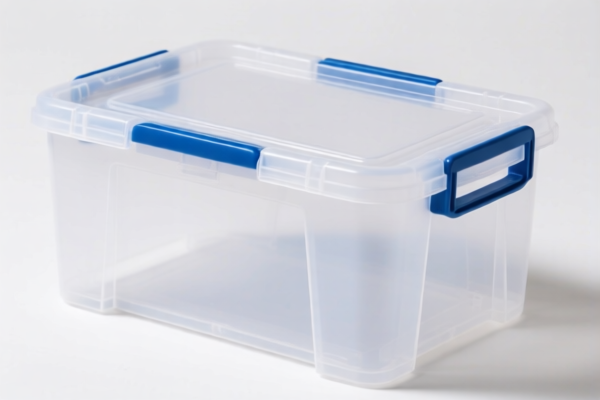
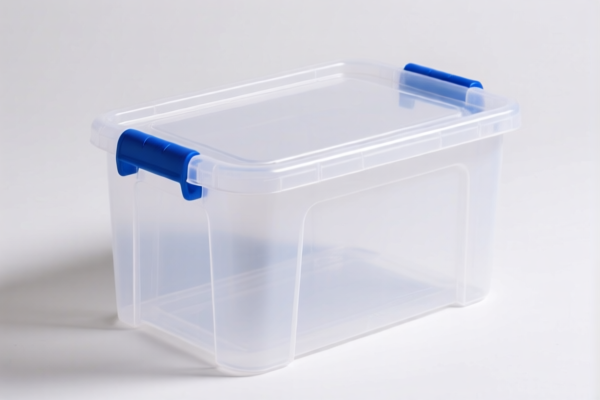
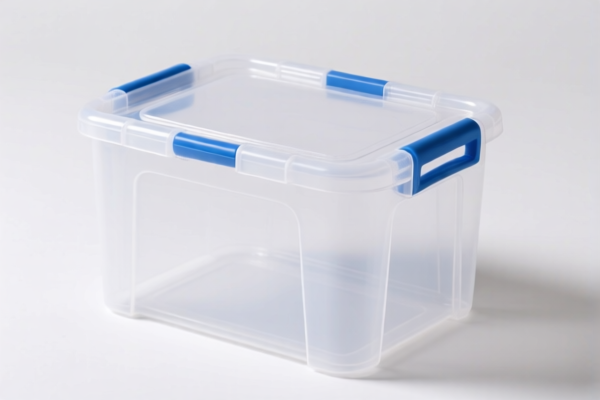
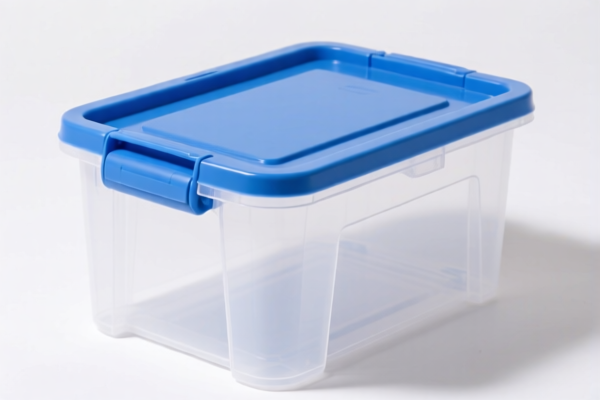
AI Analysis
🚗 Plastic Car Storage Box (Automotive Organizers)
🌐 HS Code Reference & Customs Clearance Guide | 2026 Latest Tariff Analysis | Professional Entry Strategies
📌 I. Product Definition & Classification: What Exactly Is a "Plastic Car Storage Box"?
A "Plastic Car Storage Box" in international trade is a broad category that can fall into different Harmonized System (HS) chapters depending on its primary function and design intent.
Two Main Categories: 1. Household/General Storage Boxes: Plastic containers designed for organizing items, which can be used in a car but are primarily classified as general household or industrial storage. These often carry lower tariff burdens unless specifically targeted by Section 301. 2. Vehicle-Specific Accessories: Plastic containers specifically designed, shaped, or marketed for automotive use (e.g., glove box inserts, seat gap organizers, trunk organizers). These may fall under automotive accessories or general plastic articles.
⚠️ Key Distinction Point:
- If the box is a generic container (e.g., a simple rectangular bin) primarily intended for household or general transport storage, it may be classified under Chapter 39 (Plastics and Articles Thereof) as household or transport packaging. - If it is specifically for automotive use, customs authorities may scrutinize whether it fits Chapter 87 (Vehicles) or remains in Chapter 39 if it’s considered an "other plastic article." - Critical Note: Under current US trade policies (Section 301 & 122), plastic household/transport items face significant additional tariffs. Automotive-specific plastic parts may face different rates depending on specific subheadings.
📦 II. HS Code Classification Details (2026 Latest Tariff Authority Cross-Reference)
Based on the provided data, here are the relevant HS codes for plastic storage/packaging items. Note that "Car Storage Box" is not a single HS code but depends on the specific design and primary use declared.
| HS Code | Product Description | Applicable Scenario | Tax Rate (Total) | Tax Breakdown |
|---|---|---|---|---|
3924.90.56.50 |
Plastic household goods, for storage/organization | Generic plastic bins, organizers, shelving units (often used in home/garage, sometimes car) | 20.9% | Base: 3.4% + Add'l: 7.5% + Section 122: 10% |
3923.90.00.80 |
Plastic containers for packaging/storage | Plastic boxes, totes, bulk containers for goods | 38.0% | Base: 3.0% + Add'l: 25.0% + Section 122: 10% |
3923.10.90.00 |
Plastic boxes, cases, crates for transport/packaging | Shipping containers, large plastic crates for logistics | 38.0% | Base: 3.0% + Add'l: 25.0% + Section 122: 10% |
3924.10.40.00 |
Other plastic household articles | Kitchenware, bathroom items, small household organizers | 13.4% | Base: 3.4% + Add'l: 0.0% + Section 122: 10% |
3926.90.10.00 |
Other plastic articles, including storage containers | General plastic manufactured articles, including specific container types | 20.9% | Base: 3.4% + Add'l: 7.5% + Section 122: 10% |
🔍 Important Clarification:
-3924(Household Goods): Typically includes items used in homes, kitchens, or general organization. If a "car storage box" is marketed as a general organizer (e.g., "trunk organizer for home use"), it may fall here. -3923(Packaging/Transport): Includes boxes and containers for shipping goods. If the "car storage box" is used to transport cargo (not for passenger comfort), it may fall here. -3926(Other Plastic Articles): A catch-all for plastic goods not specified elsewhere. Some automotive-specific plastic organizers may be classified here if not explicitly for "household" use. - ⚠️ No Automotive-Specific HS Code Provided: The provided data does not include HS codes from Chapter 87 (e.g.,8708for vehicle parts). If your product is explicitly an "automotive accessory," you may need to verify if it fits under8708.99or similar, but based strictly on the provided data, the classification is limited to Plastic Household/Packaging Items.
💰 III. 2026 Latest Tariff Rate Detailed Breakdown (US Import from China)
✅ Applicable Country: United States (US)
✅ Origin: China (CN)
✅ Effective Date: 2025/2026 (Current Trade Policy)
🎯 1. 3924.90.56.50 & 3926.90.10.00 —— Plastic Household/Storage Items
Total Tax Rate: 20.9%
| Item | Content |
|---|---|
| Base Tariff | 3.4% (ad valorem) |
| Additional Tariff (Section 301) | 7.5% (for certain plastic household articles) |
| Section 122 Tariff | 10% (on select plastic imports) |
| Total Effective Rate | 20.9% |
| Tax Calculation | CIF Value × 20.9% |
| De Minimis Eligibility | ❌ No (Section 301 and Section 122 tariffs generally apply regardless of value) |
| Legal Basis | USITC Tariff Schedule → Section 301 Footnotes → Section 122 Authorities |
📌 Explanation:
- These items are considered "general plastic storage/household goods." - The 7.5% Section 301 duty is applied because these fall under specific exclusion lists or non-excluded categories for plastic household items. - The 10% Section 122 duty is a recent addition targeting specific plastic imports.
🎯 2. 3923.90.00.80 & 3923.10.90.00 —— Plastic Packaging/Transport Containers
Total Tax Rate: 38.0%
| Item | Content |
|---|---|
| Base Tariff | 3.0% (ad valorem) |
| Additional Tariff (Section 301) | 25.0% (high rate for packaging materials) |
| Section 122 Tariff | 10% |
| Total Effective Rate | 38.0% |
| Tax Calculation | CIF Value × 38.0% |
| De Minimis Eligibility | ❌ No |
| Legal Basis | USITC Tariff Schedule → Section 301 Footnotes (List 4) → Section 122 Authorities |
📌 Explanation:
- These items are classified as "packaging or transport containers." - They face the highest additional tariff (25%) under Section 301 because they are considered industrial/commercial packaging materials. - High Risk: Misclassifying a "car storage box" as a packaging item could result in this higher rate.
🎯 3. 3924.10.40.00 —— Other Plastic Household Articles
Total Tax Rate: 13.4%
| Item | Content |
|---|---|
| Base Tariff | 3.4% (ad valorem) |
| Additional Tariff (Section 301) | 0.0% (exempt or lower rate for certain household goods) |
| Section 122 Tariff | 10% |
| Total Effective Rate | 13.4% |
| Tax Calculation | CIF Value × 13.4% |
| De Minimis Eligibility | ❌ No (Section 122 still applies) |
| Legal Basis | USITC Tariff Schedule → Section 122 Authorities |
📌 Explanation:
- This is the most favorable rate in the provided data. - It applies to specific "other plastic household articles" not listed under the higher-tariff household storage categories. - Strategy: If your "car storage box" can be classified as a general household item (not packaging), this code may offer savings.
🛠️ IV. Customs Clearance Practical Advice (Pitfall Avoidance Guide)
✅ 1. Document Preparation Checklist (All Required)
| Document | Required | Notes |
|---|---|---|
| ✅ Product Specifications | ✔️ | Include dimensions, capacity, material (PP, ABS, etc.), and intended use. |
| ✅ Product Photos | ✔️ | Clear images showing the box, any branding, and interior/exterior. |
| ✅ Commercial Invoice | ✔️ | Clearly state "Plastic Storage Box for Automotive/General Use" and HS Code. |
| ✅ Packing List | ✔️ | Specify quantity, gross/net weight, and packaging type. |
| ✅ Usage Declaration | ✔️ | Explicitly state if the item is for automotive or household/general use. |
✅ 2. Classification Strategy (Key Tips)
🔥 "Use Determines Code, Description Must Match!"
| Scenario | Recommended HS Code | Why? |
|---|---|---|
| Generic plastic bin (used in home, garage, or car) | 3924.90.56.50 |
Fits "household goods" definition. Lower tax (20.9%) than packaging. |
| Shipping crate (for transporting goods) | 3923.10.90.00 |
Fits "transport packaging." Higher tax (38.0%). Avoid if possible. |
| Specific car organizer (seat gap, trunk mat) | 3926.90.10.00 or 3924.90.56.50 |
If not household, 3926 is safer. If marketed as general organizer, 3924 may apply. |
| Small plastic accessory | 3924.10.40.00 |
Only if it fits "other household articles" and not storage/packaging. Lowest tax (13.4%). |
📌 Critical Warning:
- Do NOT misclassify a "car storage box" as "automotive part" (Chapter 87) if it’s primarily a plastic container, as this may trigger audits for incorrect classification. - Do NOT label it as "packaging" if it’s for product organization, as this incurs the highest tax (38.0%).
✅ 3. Special Cases & Handling
| Situation | Advice |
|---|---|
| OEM Custom Boxes | Provide design files to prove it’s a specific article, not generic packaging. |
| Multi-Purpose Use | Declare primary use. If primarily for home, use 3924. If for shipping, use 3923. |
| Section 301 Exclusions | Check if your specific HS code is excluded. Currently, most plastic storage items are not excluded. |
| Section 122 Tariff | Applies to all plastic imports listed. No exemption for de minimis. |
🌍 V. Global Market Comparison (2026)
| Country/Region | Recommended HS Code | Tariff (China Origin) | Notes |
|---|---|---|---|
| 🇺🇸 USA | 3924.90.56.50 |
20.9% | High additional tariffs. Section 122 applies. |
| 🇺🇸 USA | 3923.90.00.80 |
38.0% | Avoid if possible. High Section 301 rate. |
| 🇨🇳 China | 3924.90.56.50 |
5-10% | Lower import duties. No Section 301. |
| 🇪🇺 EU | 3924.90.90 |
0-6.5% | No Section 301. Check EORI and VAT. |
| 🇬🇧 UK | 3924.90.90 |
0-6.5% | Similar to EU. Post-Brexit rules apply. |
| 🇨🇦 Canada | 3924.90.90 |
0-5% | No Section 301. CUSMA benefits may apply. |
📌 Conclusion:
- USA is the highest-cost market due to Section 301 and Section 122 tariffs. - EU/UK/Canada have significantly lower tariffs. Consider diversifying exports if US margins are squeezed by 20-38% taxes.
📌 VI. Common Mistakes & Pitfalls (Lessons Learned)
❌ Mistake 1: Classifying a "car trunk organizer" as "automotive part" (Chapter 87)
👉 Result: Customs may reclassify to Chapter 39, leading to 20-38% duties + penalties.
❌ Mistake 2: Labeling it as "packaging" to confuse customs
👉 Result: Higher tax rate (38.0%) instead of 20.9%. Audits and delays.
❌ Mistake 3: Assuming de minimis applies
👉 Result: No exemption for Section 301/122 tariffs. Even $100 shipments are taxed.
❌ Mistake 4: Using vague descriptions like "Plastic Box"
👉 Result: Customs assigns worst-case HS code. Always specify "Household Storage" or "Transport Container."
✅ Correct Approach:
"Plastic Storage Organizer for General Use, Model XYZ, PP Material, Designed for Home/Car Trunk"
🎯 VII. Conclusion: Accurate Classification Saves Money
🎯 Remember:
🔹 "Household Storage: 20.9% | Packaging: 38.0% | Other Household: 13.4%"
🔹 "Car Box is Likely Household/General, Not Packaging. Choose Wisely!"
🔹 "Section 122 & 301 Tariffs are Non-Negotiable. Plan Your Pricing!"
📌 Pro Tip:
If your product is exclusively for automotive use and not marketed as household goods, consult a customs broker to explore if it fits under Chapter 87 (though not in provided data). Otherwise, 3924.90.56.50 (20.9%) is likely the most balanced and defensible classification for a "Plastic Car Storage Box."
📣 Take Action Now:
📞 Contact a Licensed Customs Broker for an Advance Ruling.
📄 Ensure Your Invoice Clearly States Primary Use.
🚀 Optimize Your Supply Chain to absorb or mitigate 20-38% tariffs.
✨ Precision in Classification, Profit in Clearance!
💼 Every Percentage Point Counts in International Trade!
Customer Reviews
About HS Code Classification
The Harmonized System (HS) is an internationally standardized nomenclature developed by the World Customs Organization (WCO) to classify traded products. Over 200 countries use the HS system as the basis for customs tariffs, trade statistics, and import/export regulations.
Each HS code follows a hierarchical structure:
- Chapter (2 digits) — Broad category of goods (e.g., Chapter 84: Machinery and Mechanical Appliances)
- Heading (4 digits) — More specific grouping within the chapter
- Subheading (6 digits) — Internationally standardized breakdown, used by all WCO member countries
- National subdivisions (8-10 digits) — Country-specific extensions for further classification, such as US HTSUS 10-digit codes
Correct HS code classification is essential for smooth customs clearance, accurate duty payment, and compliance with trade regulations. Misclassification can lead to customs delays, overpayment of duties, or penalties.
When importing from CN to US, the applicable tariff rates may include:
- Most-Favored-Nation (MFN) rate — The standard duty rate applied to WTO members
- General rate — Applied to countries without trade agreements
- Trade remedy duties — Additional tariffs such as Section 301 (anti-dumping), Section 232 (national security), or countervailing duties
The information provided on this page is for reference purposes only. For official classification, please consult with your local customs authority or a licensed customs broker.