Plastic Card Fasteners
CN → US| HS Code | Tariff Rate | Origin | Destination | Doc |
|---|---|---|---|---|
| 3917400080 | 40.3% | CN | US | Official Doc |
| 3917400095 | 40.3% | CN | US | Official Doc |
| 3926908500 | 24.0% | CN | US | Official Doc |
| 3926909989 | 22.8% | CN | US | Official Doc |
Product Images

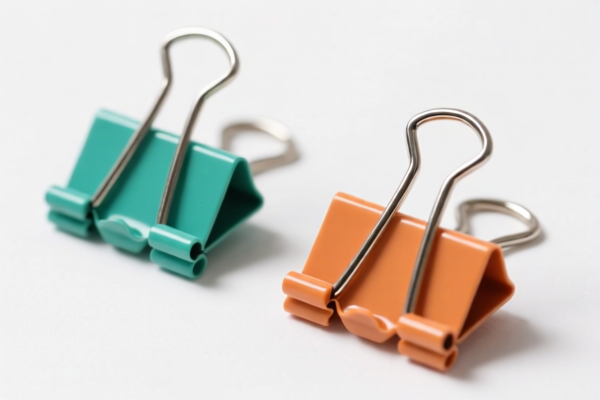
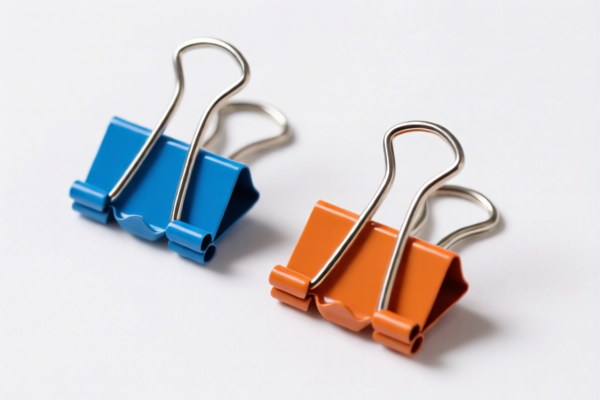
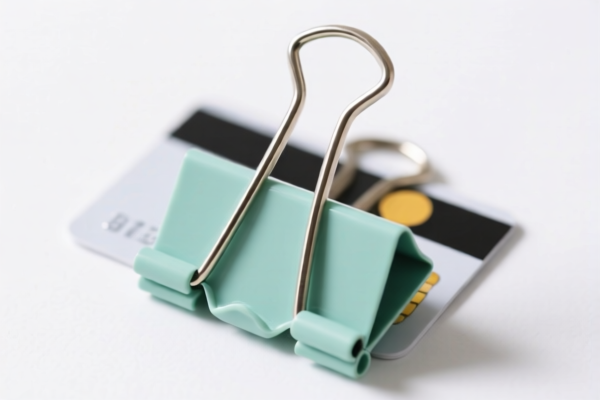
AI Analysis
🃏 Plastic Card Fasteners (塑料卡扣/紧固件)
🌐 HS Code Reference & Customs Clearance Guide | 2026 Latest Tariff Analysis | Professional Customs Strategy
📌 I. Product Definition & Classification: What Are "Plastic Card Fasteners"?
In international trade, "Plastic Card Fasteners" typically refer to plastic components used to secure, connect, or mount plastic piping systems or general plastic assemblies. The term "Card" in "Card Fastener" can be ambiguous; however, based on the provided data, these items are broadly categorized into two main functional groups: 1. Pipe Fittings (管道附件): Components like couplings, elbows, or connectors used in plumbing or industrial piping. 2. General Plastic Accessories (配件/制品): Clamps, clips, or other fastening devices not specifically for pipes.
⚠️ Critical Distinction:
- If the fastener is specifically designed for piping systems (tubing/pipes), it falls under Heading 3917.
- If it is a general-purpose plastic clamp, clip, or fastener (not for pipes), it falls under Heading 3926 (Other articles of plastic).
📦 II. HS Code Classification Details (2026 Latest Tariff Authority)
Based on the provided dataset, the following HS Codes are applicable to Plastic Card Fasteners. Note the significant tariff differences based on specific application and form.
| HS Code | Product Description | Application/Scenario | Key Determinant |
|---|---|---|---|
3917.40.00.80 |
Plastic Fittings for Pipes | Pipe joints, couplings, elbows for plastic pipes | Pipe-specific |
3917.40.00.95 |
Other Plastic Pipe Fittings | Accessories for pipes not elsewhere specified | Pipe-specific |
3926.90.85.00 |
Plastic Fasteners (Clip Type) | Clip-style fasteners, clamps, ties | Clip/Clamp Form |
3926.90.99.89 |
Other Plastic Articles | General plastic fasteners, miscellaneous parts | General/Other |
🔍 Key Insight:
- Heading 3917 is reserved for "Tubes, Pipes and Hoses... and Fittings Therefor." If your fastener connects pipes, you must use 3917 codes.
- Heading 3926 covers "Other articles of plastic." If the item is a simple clip, clamp, or fastener not attached to a pipe system, use 3926 codes.
- Misclassification leads to massive tariff discrepancies (e.g., 40.3% vs. 24.0%).
💰 III. 2026 Latest Tariff Rate Breakdown (US Imports from China)
✅ Applicable Country: United States (US)
✅ Origin: China (CN)
✅ Effective Date: Current rates apply (including Section 301 and 122 tariffs)
🎯 1. HS Code 3917.40.00.80 & 3917.40.00.95 —— Plastic Pipe Fittings
These two codes share the same tariff structure in the provided data. They are subject to the highest tariff burden among the listed options.
| Item | Details |
|---|---|
| Basic Duty | 5.3% |
| Section 301 Surcharge | +25.0% (Trade Remedy Duties) |
| Section 122 Surcharge | +10.0% (Temporary duty under 19 U.S.C. § 1673) |
| Total Tariff Rate | 40.3% |
| Tax Calculation | CIF Value × 40.3% |
| De Minimis Exemption | ❌ Not Eligible (Denied) |
| Legal Basis Path | Base Tariff + Section 301 (Footnote 9903.88.01) + Section 122 |
📌 Explanation:
- 40.3% is a heavy penalty rate. This applies if the fastener is explicitly identified as a "pipe fitting" (附件/配件 for pipes).
- Section 301 (25%) is the standard trade war tariff on Chinese plastics.
- Section 122 (10%) is an additional temporary duty often applied to specific categories to protect domestic industry.
- Warning: Even small differences in description (e.g., "pipe fitting" vs. "general clip") can change the total tax by over 16%.
🎯 2. HS Code 3926.90.85.00 —— Plastic Fasteners (Clip-Type)
This code is for plastic fasteners that are clip-style and do not fall under the "pipe fitting" category.
| Item | Details |
|---|---|
| Basic Duty | 6.5% |
| Section 301 Surcharge | +7.5% (Reduced Section 301 Rate) |
| Section 122 Surcharge | +10.0% |
| Total Tariff Rate | 24.0% |
| Tax Calculation | CIF Value × 24.0% |
| De Minimis Exemption | ❌ Not Eligible (Denied) |
| Legal Basis Path | Base Tariff + Section 301 (Excluded Items) + Section 122 |
📌 Explanation:
- 24.0% is significantly lower than the 40.3% for pipe fittings.
- The Section 301 rate is only 7.5% instead of 25%. This suggests this specific sub-category may have received some relief or is classified differently under USITC exclusions/footnotes.
- Strategy: If the product is a simple clip or clamp, ensure it is not described as a "pipe fitting" to leverage this lower rate.
🎯 3. HS Code 3926.90.99.89 —— Other Plastic Articles (General Fasteners)
This is a "catch-all" code for plastic fasteners that are neither pipe fittings nor clip-specific.
| Item | Details |
|---|---|
| Basic Duty | 5.3% |
| Section 301 Surcharge | +7.5% (Same as above) |
| Section 122 Surcharge | +10.0% |
| Total Tariff Rate | 22.8% |
| Tax Calculation | CIF Value × 22.8% |
| De Minimis Exemption | ❌ Not Eligible (Denied) |
| Legal Basis Path | Base Tariff + Section 301 (Excluded Items) + Section 122 |
📌 Explanation:
- 22.8% is the lowest total tax rate in the dataset.
- It shares the same 7.5% Section 301 rate as the clip-type fasteners.
- Caution: Ensure the product description does not trigger "pipe fitting" classification. If customs determines the item is used for pipes, they may reclassify it to 3917, increasing the tax by 17.5%.
🛠️ IV. Customs Clearance Practical Advice (Avoiding Pitfalls)
✅ 1. Documentation Checklist (Essential for Clearance)
| Document | Required | Purpose |
|---|---|---|
| ✅ Product Specification Sheet | ✔️ | Clearly define material (Plastic), form (Clip, Clip, Fitting), and intended use. |
| ✅ Product Photos | ✔️ | Show the item alone and in context (e.g., attached to a pipe vs. attached to a cable). |
| ✅ Commercial Invoice | ✔️ | Use precise terminology. Avoid "Pipe Fitting" if using 3926 codes. |
| ✅ Packing List | ✔️ | Ensure no misleading packaging that implies pipe assembly. |
| ✅ Labeling | ✔️ | Labels should match the declared HS code description. |
✅ 2. Declaration Strategy (Crucial Keywords)
🔥 "Form Defines Form, Use Defines Code, Tax Saves Half!"
| Scenario | Recommended Description | HS Code | Total Tax | Risk |
|---|---|---|---|---|
| Item is a simple clip/clamp | "Plastic Cable Tie" or "Plastic Clip" | 3926.90.85.00 |
24.0% | Low if correctly described |
| General plastic fastener | "Plastic Fastener Clip, Not for Pipes" | 3926.90.99.89 |
22.8% | Medium (Customs may argue it's a pipe part) |
| Item connects plastic pipes | "Plastic Pipe Coupling" | 3917.40.00.80 |
40.3% | High (If misdeclared as 3926) |
| Other pipe accessory | "Plastic Pipe Adapter" | 3917.40.00.95 |
40.3% | High |
⚠️ Critical Warning:
- Do NOT declare pipe fittings as "General Fasteners" to save tax. US Customs (CBP) frequently audits plastic imports from China. If the item is physically a pipe fitting, you must use 3917 codes.
- Do NOT declare simple clips as "Pipe Fittings" unless they are specifically designed for pipes. You will pay 17.5% more unnecessarily.
✅ 3. Special Handling Tips
| Situation | Advice |
|---|---|
| Mixed Shipments | Separate pipe fittings and general clips in different packages or clearly label them. Do not mix in one invoice line if possible. |
| OEM/White Label | Ensure your supplier's catalog matches your declared use. If the catalog shows "pipe installation," CBP may reclassify. |
| Section 122 Impact | The 10% Section 122 tariff is temporary but currently active. Factor this into your cost calculation. |
| De Minimis (Section 321) | ❌ No Exemption. All these codes have deny_de_minimis. You must file formal entry (Type 01/08). |
🌍 V. Global Market Comparison (2026)
| Country/Region | Recommended HS Code | Base Tariff | US Tariffs (China Origin) | Notes |
|---|---|---|---|---|
| 🇺🇸 USA | 3917 / 3926 |
5.3% - 6.5% | +22.8% to +40.3% | High Barrier. Section 301 + 122 apply. |
| 🇨🇳 China | 3917 / 3926 |
5.3% - 6.5% | 0% | No surcharges. |
| 🇪🇺 EU | 3917 / 3926 |
6.5% | 0% | No Section 301/122 equivalent. |
| 🇬🇧 UK | 3917 / 3926 |
6.5% | 0% | Post-Brexit tariff aligns with EU. |
| 🇯🇵 Japan | 3917 / 3926 |
6.0% | 0% | CPTPP benefits may apply if originating from member states. |
📌 Conclusion:
- The US is the most expensive market due to Section 301 and 122 tariffs.
- 22.8% is the "Golden Rate" for general plastic fasteners.
- 40.3% is the "Penalty Rate" for pipe fittings.
📌 VI. Common Errors & Pitfalls (Lessons Learned)
❌ Error 1: Calling a pipe coupling a "Plastic Clip" to get the 24.0% rate.
👉 Consequence: CBP reclassification → 40.3% + Penalties + Audit Risk.
❌ Error 2: Assuming "Fastener" automatically means 3926.
👉 Consequence: If it's for pipes, it must be 3917. Misdeclaration leads to duty evasion charges.
❌ Error 3: Ignoring Section 122 (10%).
👉 Consequence: Underestimating landed cost by 10% → Profit Margin Erosion.
❌ Error 4: Claiming De Minimis for small shipments.
👉 Consequence: Seizure or Forced Export. These codes are explicitly excluded from Section 321.
✅ Correct Practice:
"Plastic Cable Tie, Non-Insulated, 10 Inch, for General Use" →
3926.90.99.89(22.8%)
"Plastic Pipe Connector, PVC, 1/2 Inch" →3917.40.00.80(40.3%)
🎯 VII. Conclusion: Precise Classification, Maximize Profit
🎯 Key Takeaway:
🔹 "Pipe Fittings Pay 40%, General Clips Pay 22%."
🔹 "Description is Destiny: One Word Can Change Tax by 17%."
📌 Action Plan:
1. Audit Your Product: Is it for pipes? If yes, prepare for 40.3%. If no, aim for 3926 codes.
2. Refine Descriptions: Use "Clip," "Cable Tie," or "Fastener" for 3926. Use "Fitting," "Coupling," "Adapter" for 3917.
3. Calculate Landed Cost: Include 10% Section 122 + 7.5% or 25% Section 301 + 5-6.5% Base.
4. Consult Customs Broker: For borderline items, request a Binding Ruling from CBP to avoid future disputes.
📣 Immediate Action:
📞 Review Your Bill of Lading: Ensure "Plastic Card Fasteners" are described accurately.
📉 Cost Optimization: If possible, redesign non-pipe fasteners to clearly fall under3926.90.99.89(22.8%).
🚀 Clearance Success: Accurate HS Code + Detailed Description = Smooth Customs + Higher Profit.
✨ Professional Customs Clearance Starts with Precise Classification!
💼 Every Percentage Point Saved is Pure Profit!
Customer Reviews
About HS Code Classification
The Harmonized System (HS) is an internationally standardized nomenclature developed by the World Customs Organization (WCO) to classify traded products. Over 200 countries use the HS system as the basis for customs tariffs, trade statistics, and import/export regulations.
Each HS code follows a hierarchical structure:
- Chapter (2 digits) — Broad category of goods (e.g., Chapter 84: Machinery and Mechanical Appliances)
- Heading (4 digits) — More specific grouping within the chapter
- Subheading (6 digits) — Internationally standardized breakdown, used by all WCO member countries
- National subdivisions (8-10 digits) — Country-specific extensions for further classification, such as US HTSUS 10-digit codes
Correct HS code classification is essential for smooth customs clearance, accurate duty payment, and compliance with trade regulations. Misclassification can lead to customs delays, overpayment of duties, or penalties.
When importing from CN to US, the applicable tariff rates may include:
- Most-Favored-Nation (MFN) rate — The standard duty rate applied to WTO members
- General rate — Applied to countries without trade agreements
- Trade remedy duties — Additional tariffs such as Section 301 (anti-dumping), Section 232 (national security), or countervailing duties
The information provided on this page is for reference purposes only. For official classification, please consult with your local customs authority or a licensed customs broker.