Plastic Card Holder
CN → US| HS Code | Tariff Rate | Origin | Destination | Doc |
|---|---|---|---|---|
| 3926909989 | 22.8% | CN | US | Official Doc |
| 4202313000 | 38.7% | CN | US | Official Doc |
| 4205006000 | 39.9% | CN | US | Official Doc |
| 4202399000 | 55.0% | CN | US | Official Doc |
| 4205008000 | 35.0% | CN | US | Official Doc |
Product Images

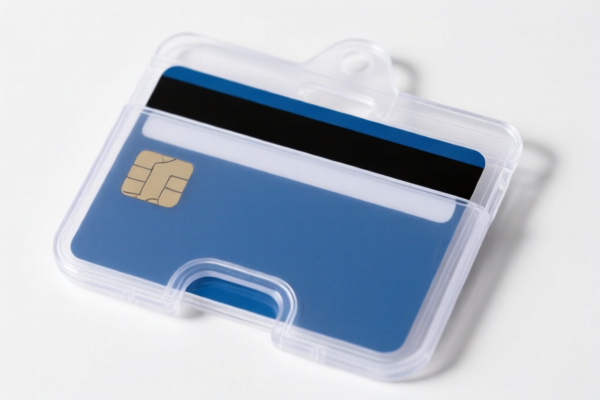
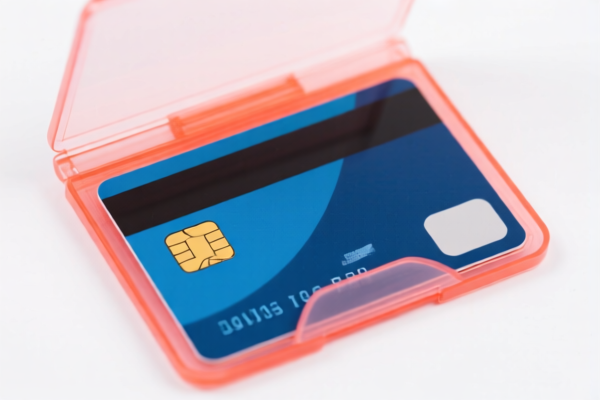

AI Analysis
🎴 Plastic Card Holder (Credit/ID/Access Card Cases)
🌐 HS Code Reference & Customs Clearance Guide | 2024-2025 Latest Tariff Analysis | Professional Clearance Strategy
📌 I. Product Definition & Classification: Do You Really Know "Card Holders"?
A Plastic Card Holder is a protective accessory designed to store and safeguard credit cards, ID cards, access badges, SIM cards, or membership passes. It is typically made from synthetic materials (PVC, TPU, ABS, PET) or combinations with leather/synthetic leather.
In international trade, the classification depends heavily on Material Composition and Functional Logic:
- Category A: Plastic/Rubber Protective Articles: Purely plastic/rubber items designed for general protection.
- Category B: Articles of Leather/Synthetic Leather: Items where leather/synthetic leather is the dominant structural component, even if plastic is used for reinforcement.
- Category C: General Containers/Case Logic: Items classified under "other" categories if they fit specific "suitcase/bag" or "tool" logic.
⚠️ Critical Distinction:
- If the item is 100% plastic/rubber and serves a generic protective function → Chapter 39.
- If it is a specific "kit" or "tool accessory" logic → Chapter 42 (Leather/Travel Goods).
- If it mimics a leather case but is made of synthetic materials → Chapter 42 (Other Leather Goods).
📦 II. HS Code Classification Details (Based on Provided Data)
| HS Code | Product Description | Material Logic | Total Tax (US Import) | Tax Detail Breakdown |
|---|---|---|---|---|
3926.90.99.89 |
Plastic/Rubber Protective Articles Generic plastic cases, sleeves, or wallets. |
Purely Plastic or Rubber based. Category: "Other articles of plastics". |
22.8% | Base: 5.3% + Section 232/301: 7.5% + 122 Clause: 10% |
4202.31.30.00 |
Plastic/Leather Protection Kits (Component Logic) Classified as a "set" or "kit" based on parts logic. |
Mix of materials treated as a "kit". Category: "Cases and containers" logic. |
38.7% | Base: 3.7% + Section 232/301: 25.0% + 122 Clause: 10% |
4205.00.60.00 |
Other Leather/Synthetic Leather Articles Inferred as leather/synthetic based on usage. |
Inferred Leather or Synthetic Leather. Category: "Other articles of leather". |
39.9% | Base: 4.9% + Section 232/301: 25.0% + 122 Clause: 10% |
4202.39.90.00 |
Plastic/Leather Protective Cases (General) Small containers/cases for carrying/protecting items. |
Inferred Plastic or Leather. Category: "Small containers for travel/protection". |
55.0% | Base: 20.0% + Section 232/301: 25.0% + 122 Clause: 10% |
4205.00.80.00 |
Other Leather/Synthetic Leather Goods Dedicated to leather or synthetic leather products. |
Leather or Synthetic Leather dominant. Category: "Other articles of leather". |
35.0% | Base: 0.0% + Section 232/301: 25.0% + 122 Clause: 10% |
🔍 Key Insight:
-3926.90.99.89is the most cost-effective option (22.8%) if the product is 100% plastic/rubber.
-4202.39.90.00carries the highest risk/cost (55.0%) due to the high base tariff (20%) triggered by "container" logic.
-4205.00.80.00offers a low base rate (0%) but still suffers from the 35% total due to Section 301/122 clauses.
💰 III. 2024-2025 Tariff Rate Deep Dive (US Import from China)
✅ Applicable Market: United States (US)
✅ Origin: China (CN)
✅ Effective Period: Current Trade War Measures (Section 301 & Section 232)
🎯 1. 3926.90.99.89 – The "Plastic" Winner (Lowest Cost)
- Description: Generic plastic card holders, wallets, sleeves.
- Total Tax: 22.8%
- Breakdown:
- Base Duty (MFN): 5.3%
- Section 301 / 232 Tariff: +7.5% (Additional duty on Chinese goods)
- Section 122 Clause: +10% (Specific对华 punitive tariff)
- Legal Path:
HTSUS 3926.90.99→301 Action: 3926.90.99→122 Clause. - Strategy: Best Choice! If your product is purely plastic (PVC, TPU, PET), argue for this classification to save ~30% compared to leather-like codes.
🎯 2. 4205.00.80.00 – The "Leather Look" Low-Base Option
- Description: Synthetic leather or composite leather card holders.
- Total Tax: 35.0%
- Breakdown:
- Base Duty (MFN): 0.0% (Duty-free base!)
- Section 301 / 232 Tariff: +25.0%
- Section 122 Clause: +10%
- Legal Path:
HTSUS 4205.00→301 Action: 4205.00→122 Clause. - Strategy: Good if the product has a "leather texture" but is made of synthetic materials. The 0% base helps, but the 25% Section 301 tax kills the advantage.
🎯 3. 4202.31.30.00 & 4205.00.60.00 – The "Kit" & "Component" Traps
- Description: Cases sold as a "kit" with tools, or specific component parts.
- Total Tax: 38.7% - 39.9%
- Breakdown:
- Base: ~3.7% - 4.9%
- Section 301: +25.0%
- Section 122: +10%
- Risk: High risk of misclassification if the item is just a simple card holder. Customs may reject "kit" logic for a simple wallet.
🎯 4. 4202.39.90.00 – The "Container" Nightmare (Highest Cost)
- Description: "Other containers" or "Small cases" with high base tariff.
- Total Tax: 55.0%
- Breakdown:
- Base Duty (MFN): 20.0% (Extremely high!)
- Section 301: +25.0%
- Section 122: +10%
- Risk: AVOID AT ALL COSTS! Unless your card holder is a complex "travel kit" or "protective case" with multiple compartments and rigid structure, do not use this code. A simple card sleeve is rarely "20% Base" taxable.
🛠️ IV. Customs Clearance Practical Advice (Pitfall Avoidance)
✅ 1. Material Declaration is King
- Do: Clearly state "100% Plastic" or "Synthetic Leather" in the Commercial Invoice and Packing List.
- Don't: Use vague terms like "PU" or "Synthetic" without specifying the percentage.
- Why: If the customs officer suspects the item is "Leather" but the invoice says "Plastic," they may force the higher
4202.39.90.00(55%) classification.
✅ 2. The "Kit" Trap
- Scenario: You sell a card holder with a small knife or cleaning cloth.
- Risk: It might be reclassified as a "Kit" under
4202.31.30.00(38.7%) or4202.39.90.00(55%) due to "GATT Explanatory Notes on Sets." - Solution: Ship separately if possible. If sold as a set, ensure the base tariff of the kit is favorable. If it's just a card holder, do not label it a "Kit" in the HS Code section.
✅ 3. The "Base Rate" War
- Comparison:
3926.90.99.89= 5.3% Base + 17.5% Add-ons = 22.8% Total.4202.39.90.00= 20.0% Base + 35.0% Add-ons = 55.0% Total.
- Strategy: If your product is 99% plastic, insist on
3926.90.99.89. The 15% base difference translates to a 32% total tax difference (22.8% vs 55.0%)!
📌 V. Proactive Clearance Strategy Checklist
| Step | Action Item | Why it Matters |
|---|---|---|
| 1 | Define Material | Is it 100% plastic? Then 3926.90.99.89 is your best bet (22.8%). |
| 2 | Check "Leather" Content | If >50% is synthetic leather, 4205.00.80.00 (35%) is safer than 4202.39.90.00 (55%). |
| 3 | Avoid "Container" Logic | Do not describe the item as a "case" or "container" unless it's a hard-shell travel kit. Simple sleeves = 3926. |
| 4 | Invoice Wording | Use "Plastic Card Sleeve" or "Plastic Card Wallet". Avoid "Protective Kit" or "Tool Case". |
| 5 | Pre-Arrival Ruling | For large volumes, apply for a Binding Tariff Information (BTI) or Advance Ruling to lock in the 22.8% rate. |
🌍 VI. Global Market Comparison (China Export to US)
| Market | Recommended HS Code | Est. Total Tax | Strategy Note |
|---|---|---|---|
| 🇺🇸 USA | 3926.90.99.89 |
22.8% | Winning Strategy. Lowest tax. Prove "Plastic". |
| 🇺🇸 USA (High Risk) | 4202.39.90.00 |
55.0% | Avoid. High base tariff triggers cost explosion. |
| 🇨🇳 China | 3926.90.99 |
Low (Domestic) | N/A for export. |
| 🇪🇺 EU | 4202.31 / 3926 |
Varies (0-10%) | EU has different rules; "Plastic" is usually 0-4.5%. |
📌 Conclusion for US Imports:
The3926.90.99.89classification is the clear winner for standard plastic card holders, offering a 32.2% tax savings compared to the most aggressive "container" classification (4202.39.90.00).Critical Warning: If the product has a "leather-like" appearance, customs may argue for
4205.00.80.00(35%). The difference between 22.8% and 35% is significant ($12.2 per $100 value). Be prepared to prove material composition (e.g., lab reports, photos of interior texture).
🎯 VII. Final Verdict: The "Plastic Card Holder" Formula
🔹 If 100% Plastic →
3926.90.99.89(22.8%) 🏆
🔹 If Synthetic Leather →4205.00.80.00(35.0%) 🥈
🔹 If "Kit" or "Tool Case" →4202.31.30.00(38.7%) 🥉
🔹 If Hard Shell "Container" →4202.39.90.00(55.0%) ⚠️ DANGER ZONE!
✅ Action Plan:
1. Verify Material: Ensure no leather content >10%.
2. Rename: Change "Case" to "Sleeve" or "Wallet" in descriptions.
3. Document: Prepare material composition certificates.
4. File: Declare under 3926.90.99.89 if eligible.
✨ Professional Clearance, Start with Precision!
💼 Don't let a 55% tariff eat your margin. Choose the right HS Code.
Customer Reviews
About HS Code Classification
The Harmonized System (HS) is an internationally standardized nomenclature developed by the World Customs Organization (WCO) to classify traded products. Over 200 countries use the HS system as the basis for customs tariffs, trade statistics, and import/export regulations.
Each HS code follows a hierarchical structure:
- Chapter (2 digits) — Broad category of goods (e.g., Chapter 84: Machinery and Mechanical Appliances)
- Heading (4 digits) — More specific grouping within the chapter
- Subheading (6 digits) — Internationally standardized breakdown, used by all WCO member countries
- National subdivisions (8-10 digits) — Country-specific extensions for further classification, such as US HTSUS 10-digit codes
Correct HS code classification is essential for smooth customs clearance, accurate duty payment, and compliance with trade regulations. Misclassification can lead to customs delays, overpayment of duties, or penalties.
When importing from CN to US, the applicable tariff rates may include:
- Most-Favored-Nation (MFN) rate — The standard duty rate applied to WTO members
- General rate — Applied to countries without trade agreements
- Trade remedy duties — Additional tariffs such as Section 301 (anti-dumping), Section 232 (national security), or countervailing duties
The information provided on this page is for reference purposes only. For official classification, please consult with your local customs authority or a licensed customs broker.