Plastic Carrying Bucket
CN → US| HS Code | Tariff Rate | Origin | Destination | Doc |
|---|---|---|---|---|
| 3926904000 | 12.8% | CN | US | Official Doc |
| 3926901000 | 20.9% | CN | US | Official Doc |
| 3923900012 | 38.0% | CN | US | Official Doc |
| 3923900014 | 38.0% | CN | US | Official Doc |
| 4415103000 | 35.0% | CN | US | Official Doc |
Product Images
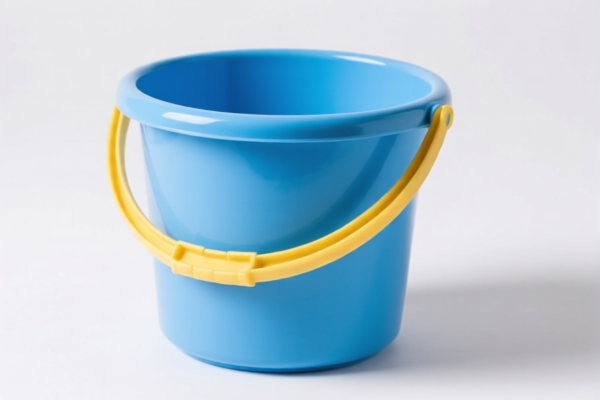
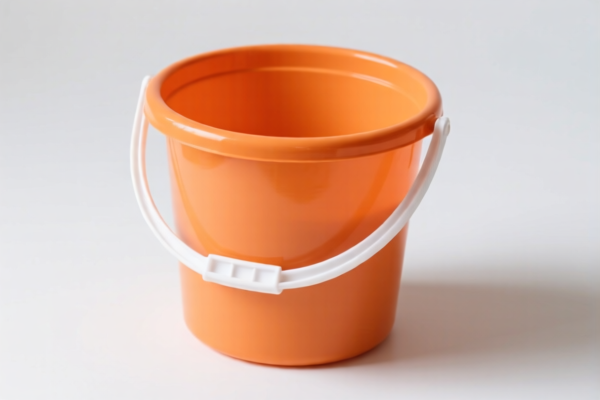
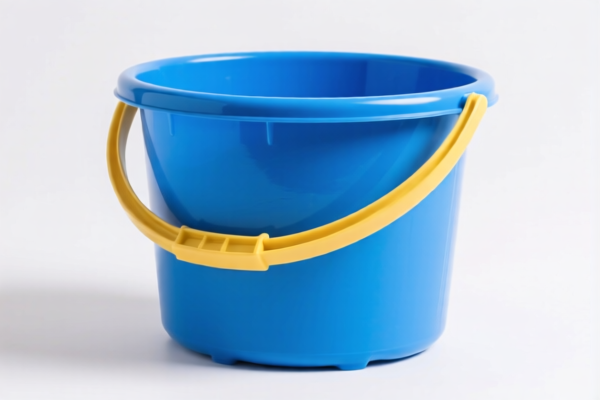

AI Analysis
🪣 Plastic Carrying Bucket (Plastic Transport Container)
🌐 HS Code Reference & Customs Clearance Guide | 2026 Latest Tariff Analysis | Professional-Level Customs Strategy
📌 Part 1: Product Definition & Classification: Do You Really Understand the "Plastic Carrying Bucket"?
A plastic carrying bucket is a versatile container used for transporting, storing, or moving goods. In international trade, its classification depends heavily on its material, form, and primary use. The key distinction lies in whether it is classified as a general "other plastic product," a specific "bucket/pail," a "packaging container," or potentially a "wooden bucket" (if material assumptions are misinterpreted).
⚠️ Key Differentiators:
- General Plastic Articles: If the specific shape "bucket" is not the primary defining feature, it may fall under "Other plastic articles." → HS 3926.90.40.00
- Specific "Buckets and Pails": If clearly defined as a bucket/pail, it falls under HS 3926.90.10.00.
- Packaging Containers: If used primarily as a packaging vessel for other goods, it may fall under HS 3923.90. → HS 3923.90.00.12 / 3923.90.00.14
- Material Risk (Wood): If mistakenly classified as wooden due to incomplete description, it falls under HS 4415.10.30.00.
📦 Part 2: HS Code Classification Details (2026 Latest Tariff Authority Comparison)
| HS Code | Product Description | Application Scenario | Material/Form Note |
|---|---|---|---|
3926.90.40.00 |
Other plastic articles (General) | General plastic containers, non-specific shapes, industrial plastic parts | Plastic, Article form |
3926.90.10.00 |
Buckets and pails (Plastic) | Standard plastic buckets, pails, transport buckets | Plastic, Bucket form, Specific Use |
3923.90.00.12 |
Other articles for packaging | Plastic buckets used as packaging vessels | Plastic, Bucket form, Packaging Use |
3923.90.00.14 |
Other plastic packaging containers | Plastic buckets defined as packaging containers | Plastic, Bucket form, Packaging Definition |
4415.10.30.00 |
Casks, barrels, vats (Wood) | Risk: Incorrectly assumed wooden material | Wood (Inferred), Barrel form |
🔍 Critical Reminder:
- Material is Key: Ensure the description explicitly states "Plastic." If ambiguous, customs may default to other materials (e.g., wood).
- Usage Matters: Is it for transport (3926) or packaging (3923)? This distinction drastically changes the tariff.
- Shape Specificity: "Bucket" is a specific sub-category. If not explicitly "bucket," it may fall under "Other articles" (3926.90.40.00), which has lower tariffs.
💰 Part 3: 2026 Latest Tariff Rate Details (Including Surtaxes, Policy Surcharges)
✅ Applicable Country: United States (US)
✅ Origin: China (CN)
✅ Effective Time: 2025–2026 (Includes subsequent imports)
🎯 1. 3926.90.40.00 —— Other Plastic Articles (Lowest Risk)
| Item | Content |
|---|---|
| Base Tariff | 2.8% |
| Section 301 Surtax | 0.0% |
| Section 122 Tariff | +10% |
| Total Tariff | 12.8% |
| Tax Calculation | CIF Value × 12.8% |
| De Minimis Eligibility | ❌ No (Subject to full assessment) |
| Legal Basis Path | Base: 2.8% + 122: 10% |
📌 Explanation:
- This is the lowest tariff option among plastic buckets.
- It applies if the product is classified broadly as "other plastic articles" rather than specifically as a "bucket" or "packaging."
- Strategy: If the product allows, argue for this classification to save 25%+ in tariffs.
🎯 2. 3926.90.10.00 —— Plastic Buckets and Pails (Medium Risk)
| Item | Content |
|---|---|
| Base Tariff | 3.4% |
| Section 301 Surtax | +7.5% |
| Section 122 Tariff | +10% |
| Total Tariff | 20.9% |
| Tax Calculation | CIF Value × 20.9% |
| De Minimis Eligibility | ❌ No |
| Legal Basis Path | Base: 3.4% + Surtax: 7.5% + 122: 10% |
📌 Explanation:
- Specific classification for "Buckets and Pails" triggers a higher Section 301 surtax (7.5%) compared to general articles.
- Total tax is 20.9%, significantly higher than the general article classification.
🎯 3. 3923.90.00.12 & 3923.90.00.14 —— Packaging Containers (Highest Risk)
| Item | Content |
|---|---|
| Base Tariff | 3.0% |
| Section 301 Surtax | +25.0% |
| Section 122 Tariff | +10% |
| Total Tariff | 38.0% |
| Tax Calculation | CIF Value × 38.0% |
| De Minimis Eligibility | ❌ No |
| Legal Basis Path | Base: 3.0% + Surtax: 25.0% + 122: 10% |
📌 Explanation:
- Classification under Chapter 3923 (Articles for the conveyance or packing of goods) attracts the highest Section 301 surtax of 25%.
- Total tax is 38.0%. This is a costly classification.
- Strategy: Avoid this classification unless the product is strictly defined as a "packaging container" for retail or industrial packing, not just a "carrying bucket."
🎯 4. 4415.10.30.00 —— Wooden Casks/Barrels (Misclassification Risk)
| Item | Content |
|---|---|
| Base Tariff | 0.0% |
| Section 301 Surtax | +25.0% |
| Section 122 Tariff | +10% |
| Total Tariff | 35.0% |
| Tax Calculation | CIF Value × 35.0% |
| De Minimis Eligibility | ❌ No |
| Legal Basis Path | Base: 0.0% + Surtax: 25.0% + 122: 10% |
📌 Explanation:
- This is a hypothetical risk if the material is misidentified as wood.
- While base tariff is 0%, the 25% surtax applies to wooden packaging/pallets from China.
- Do not use this code for plastic products. Customs will penalize misdeclaration.
🛠️ Part 4: Customs Clearance Practical Advice (Avoid Pitfalls)
✅ 1. Documentation Checklist (Mandatory)
| Document | Required | Description |
|---|---|---|
| ✅ Product Specification Sheet | ✔️ | Clearly state Material: 100% Plastic, Form: Bucket, Use: Transport/Carrying |
| ✅ Product Photos | ✔️ | Show the bucket clearly, including handles, walls, and any markings |
| ✅ Commercial Invoice | ✔️ | Description must be precise: "Plastic Carrying Bucket, Model XYZ" |
| ✅ Packing List | ✔️ | Detail quantity, weight, dimensions |
| ✅ Material Declaration | ✔️ | Explicitly declare "Plastic" to avoid wood misclassification |
✅ 2. Declaration Tips (Key Mantra)
🔥 "Plastic Must Be Stated, Use Defines Code, Packaging Avoids High Tax!"
| Scenario | Correct Declaration | Wrong Practice |
|---|---|---|
| General Transport Bucket | 3926.90.40.00 (12.8%) |
Declaring as "Bucket" → 20.9% |
| Specific "Bucket/Pail" | 3926.90.10.00 (20.9%) |
Declaring as "Packaging" → 38.0% |
| Packing Container | 3923.90.00.12 (38.0%) |
Declaring as "Art" → 12.8% |
| Wooden Bucket (Mislabel) | 4415.10.30.00 (35.0%) |
Declaring plastic as wood → Penalty |
✅ 3. Special Handling Cases
| Case | Handling Advice |
|---|---|
| Multi-Use Bucket | If used for both carrying and packing, choose the lower tariff (3926.90.40.00) if possible, by emphasizing "carrying/transport" over "packaging." |
| Customs Audit | Provide photos and specs proving it is plastic and not wood or metal. |
| Section 122 Impact | All classifications incur a 10% Section 122 tariff. Plan cash flow accordingly. |
| Pre-Ruling | Apply for an Advance Ruling to lock in 3926.90.40.00 if the product allows. |
🌍 Part 5: Global Market Comparison (2026 Latest)
| Country/Region | Recommended HS Code | Tariff (China Origin) | Notes |
|---|---|---|---|
| 🇺🇸 USA | 3926.90.40.00 |
12.8% | Lowest risk for plastic articles |
| 🇺🇸 USA | 3926.90.10.00 |
20.9% | Specific bucket classification |
| 🇺🇸 USA | 3923.90.00.12 |
38.0% | Highest risk (Packaging) |
| 🇨🇳 China | 3926.90.40.00 |
5% | Import duty to China |
| 🇪🇺 EU | 3926.90.99 |
~6.5% | General plastic articles |
| 🇬🇧 UK | 3926.90.99 |
~6.5% | Post-Brexit tariffs |
📌 Conclusion:
- USA is the most critical market for tariff optimization.
- USA applies significant surtaxes (Section 301 + 122).
- Avoid3923(Packaging) if possible, as it incurs the highest tax (38%).
- Maximize use of3926.90.40.00(12.8%) for general plastic carrying containers.
📌 Part 6: Common Errors & Pitfalls (Lessons Learned)
❌ Error 1: Declaring a plastic bucket as "Wooden Barrel"
👉 Consequence: Misdeclaration penalty + 35% tax.
❌ Error 2: Declaring a general bucket as "Packaging Container"
👉 Consequence: Tax jumps from 12.8% to 38.0% (+25.2% extra cost).
❌ Error 3: Not specifying "Plastic" in description
👉 Consequence: Customs may assume wood or metal, leading to delays or incorrect classification.
❌ Error 4: Ignoring Section 122 Tariff
👉 Consequence: Budget shortfall. All plastic articles from China face 10% additional tariff.
✅ Correct Practice:
"Plastic Carrying Bucket, 20L, Blue, Handle-equipped, Material: HDPE, Use: General Transport, Not for Retail Packaging"
🎯 Part 7: Conclusion: Precise Classification Saves Money!
🎯 Remember the Mantra:
🔹 "Plastic Stated, General Art is Best (12.8%). Bucket Specific is Mid (20.9%). Packaging is Expensive (38.0%)."
🔹 "Section 122 is 10%, Don’t Forget It!"
🔹 "HS Code Determines Cost, Declare Clearly, Avoid Penalties!"
📌 Pro Tip:
- If your product can be argued as "General Plastic Article" rather than "Specific Bucket" or "Packaging," choose 3926.90.40.00.
- Always provide clear photos and material declarations to avoid misclassification.
- Apply for Pre-Rulings if your product falls into a gray area.
📣 Act Now:
📞 Contact a professional customs broker + Provide Product Photos + Apply for HS Code Pre-Ruling
🚀 Ensure Smooth Clearance, Efficient Shipping, and Maximized Profit!
✨ Professional Clearance Starts with Accurate Classification!
💼 Every Cent of Cost Deserves Precise Calculation!
Customer Reviews
About HS Code Classification
The Harmonized System (HS) is an internationally standardized nomenclature developed by the World Customs Organization (WCO) to classify traded products. Over 200 countries use the HS system as the basis for customs tariffs, trade statistics, and import/export regulations.
Each HS code follows a hierarchical structure:
- Chapter (2 digits) — Broad category of goods (e.g., Chapter 84: Machinery and Mechanical Appliances)
- Heading (4 digits) — More specific grouping within the chapter
- Subheading (6 digits) — Internationally standardized breakdown, used by all WCO member countries
- National subdivisions (8-10 digits) — Country-specific extensions for further classification, such as US HTSUS 10-digit codes
Correct HS code classification is essential for smooth customs clearance, accurate duty payment, and compliance with trade regulations. Misclassification can lead to customs delays, overpayment of duties, or penalties.
When importing from CN to US, the applicable tariff rates may include:
- Most-Favored-Nation (MFN) rate — The standard duty rate applied to WTO members
- General rate — Applied to countries without trade agreements
- Trade remedy duties — Additional tariffs such as Section 301 (anti-dumping), Section 232 (national security), or countervailing duties
The information provided on this page is for reference purposes only. For official classification, please consult with your local customs authority or a licensed customs broker.