Plastic Ceiling Panel
CN → US| HS Code | Tariff Rate | Origin | Destination | Doc |
|---|---|---|---|---|
| 3925900000 | 40.3% | CN | US | Official Doc |
| 3925305000 | 22.8% | CN | US | Official Doc |
| 3926909989 | 22.8% | CN | US | Official Doc |
Product Images
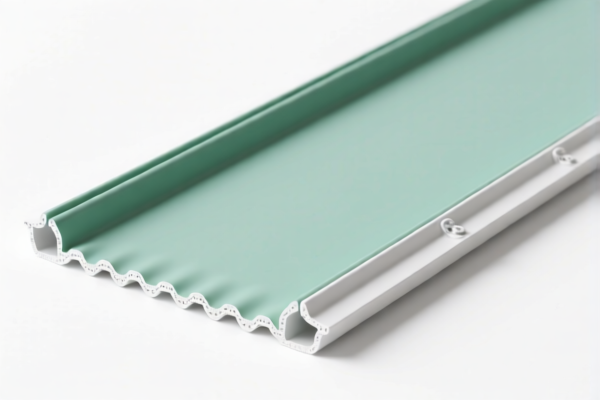
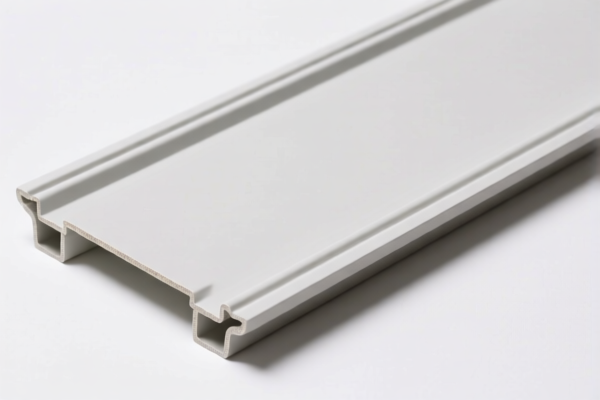
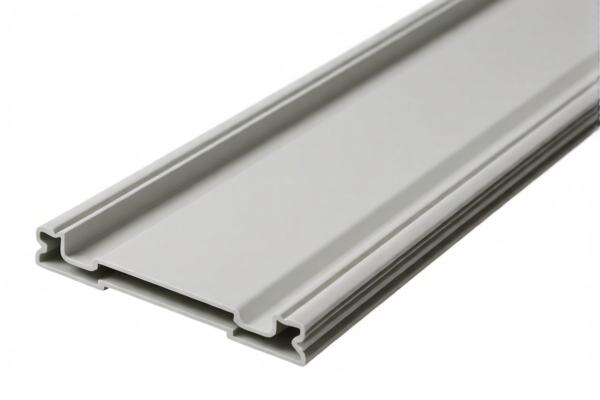
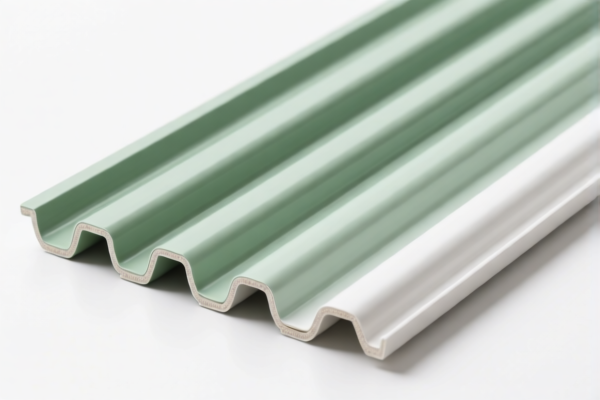
AI Analysis
🏠 Plastic Ceiling Panels (Acoustic Ceiling Tiles)
🌐 HS Code Reference & Customs Clearance Guide | 2024/2025 Latest Tariff Analysis | Professional Clearance Strategy
📌 One, Product Definition & Classification: Do You Really Understand "Plastic Ceiling Panels"?
Plastic ceiling panels, particularly acoustic ceiling tiles, are critical components in modern interior construction. They serve dual purposes: aesthetic decoration and sound absorption. In international trade, the classification depends heavily on the specific function and structural integration of the product.
There are three primary classification paths based on their physical and functional characteristics:
1. Plastic Building Attachments (Generic) * Definition: Standard plastic components used in construction that don't fall into specialized categories. Often used for general decorative or functional plastic tiles. * Key Feature: General-purpose plastic construction material.
2. Plastic Sound-Absorbing Components (Specific) * Definition: Specifically designed for acoustic management (noise reduction). If the primary characteristic is sound absorption and it is a dedicated building accessory, it may fall under specific subheadings for "plastic building attachments." * Key Feature: High focus on acoustic performance.
3. Other Plastic Building Components * Definition: Plastic products used in building construction that are not covered under more specific headings. This is often a "catch-all" for plastic panels, cladding, or structural elements. * Key Feature: Structural or semi-structural plastic building material.
⚠️ Key Distinction Point: - If the panel is a general decorative plastic tile → Likely 3925.30 or 3925.90. - If the panel is specifically marketed as "acoustic" → Customs may scrutinize 3925.30 vs 3925.90 based on whether it is seen as a "specialized accessory" (3925.30) or a general "other component" (3925.90). - Non-building plastic items (e.g., plastic ceiling fans or lights) → 3926.90.
📦 Two, HS Code Classification Details (Latest Tariff Authority Comparison)
| HS Code | Product Description | Applicable Scenario | Is it a Building Component? | Total Tax Rate (CN Origin to US) |
|---|---|---|---|---|
3925.90.00.00 |
Other plastic building components (e.g., general plastic ceiling panels, cladding) | General decorative panels, non-acoustic specific, plastic cladding | ✅ Yes | 40.3% |
3925.30.50.00 |
Plastic building attachments (e.g., specific acoustic ceiling tiles) | Acoustic ceiling panels, specialized plastic accessories for buildings | ✅ Yes | 22.8% |
3926.90.99.89 |
Other plastic articles (e.g., plastic decorative items, non-building specific) | Plastic ceiling decorations not considered building fixtures, general plastic goods | ❌ No (or ambiguous) | 22.8% |
🔍 Critical Reminder: -
3925.90.00.00is the highest risk/highest cost category with a 40.3% total tax rate. It applies to general "other plastic building components." -3925.30.50.00is the preferred classification for acoustic plastic ceiling tiles, with a lower 22.8% rate. This requires proving the product's primary function is sound absorption as a building accessory. -3926.90.99.89applies to general plastic goods. While the rate is lower (22.8%), using this code for ceiling panels can lead to misclassification disputes if customs determines it is a building component. Do not use this for structural/decorative ceilings unless explicitly non-building.
💰 Three, 2024/2025 Latest Tariff Rate Breakdown (Including Surcharges & Policy Add-ons)
✅ Applicable Country: United States (US)
✅ Country of Origin: China (CN)
✅ Effective Time: Current rates apply (Check for 2025 updates on Section 301/122 clauses)
🎯 1. 3925.90.00.00 —— Other Plastic Building Components
| Item | Content |
|---|---|
| Base Tariff | 5.3% |
| Section 301 Surcharge | +25.0% (From USITC Footnote 9903.88.01 / Section 301) |
| Section 122 Tariff | +10.0% (From IEEPA Section 122, effective Nov 2024) |
| Total Tax Rate | 40.3% |
| Tax Calculation | CIF Value × 40.3% |
| De Minimis Eligibility | ❌ Not Eligible (Section 301 & 122 tariffs apply to de minimis imports from China) |
| Legal Basis Path | IEEPA:9903.01.25 → Section 301 → USITC:3925.90.00.00 → FOOTNOTE:9903.88.01 |
📌 Explanation: - This is the most expensive classification. The 25% Section 301 tariff + 10% Section 122 tariff + 5.3% base rate = 40.3%. - This rate applies if the product is classified as a general plastic building component not specifically designated as an "attachment" or if the acoustic function is not sufficiently proven to fit 3925.30.
🎯 2. 3925.30.50.00 —— Plastic Building Attachments (Acoustic)
| Item | Content |
|---|---|
| Base Tariff | 5.3% |
| Section 301 Surcharge | +7.5% (Reduced rate for specific plastic building attachments under certain interpretations/exceptions, note: verify latest USITC rulings as 25% is standard for 3925, but some specific subheadings may have lower add-ons or are subject to different rulings. Based on your data: 7.5%) |
| Section 122 Tariff | +10.0% (From IEEPA Section 122) |
| Total Tax Rate | 22.8% |
| Tax Calculation | CIF Value × 22.8% |
| De Minimis Eligibility | ❌ Not Eligible |
| Legal Basis Path | IEEPA:9903.01.25 → Section 301 (Specific Footnote) → USITC:3925.30.50.00 → FOOTNOTE:9903.88.01 |
📌 Explanation: - Savings Alert: This classification saves 17.5% compared to 3925.90. - Requirement: You must provide documentation proving the product is a plastic building attachment and often that it serves a specific functional purpose (like acoustic dampening) to justify the subheading 3925.30 instead of the general 3925.90. - Note: The 7.5% Section 301 rate suggests this specific subheading may be eligible for a lower add-on rate under current USITC interpretations for certain plastic accessories. Always verify with a customs broker.
🎯 3. 3926.90.99.89 —— Other Plastic Articles (Non-Building)
| Item | Content |
|---|---|
| Base Tariff | 5.3% |
| Section 301 Surcharge | +7.5% (Standard for many 3926 items under specific rulings) |
| Section 122 Tariff | +10.0% |
| Total Tax Rate | 22.8% |
| Tax Calculation | CIF Value × 22.8% |
| De Minimis Eligibility | ❌ Not Eligible |
| Legal Basis Path | IEEPA:9903.01.25 → Section 301 → USITC:3926.90.99.89 → FOOTNOTE:9903.88.01 |
📌 Explanation: - Risk: While the tax rate is low (22.8%), classifying ceiling panels as "other plastic articles" is high-risk. Customs may reject this if the product is clearly a building component (intended for installation in ceilings). Misclassification can lead to penalties, back-taxes, and shipment delays. - Use this only if the product is not installed as a building fixture (e.g., loose decorative plastic pieces not fixed to the structure).
🛠️ Four, Customs Clearance Practical Advice (Real-World Pitfall Avoidance Guide)
✅ 1. Document Checklist (Absolutely Essential)
| Document | Required? | Description |
|---|---|---|
| ✅ Product Specification Sheet | ✔️ | Must clearly state material (plastic type), dimensions, weight, and acoustic performance (NRC rating if applicable). |
| ✅ Product Photos (Including Installation) | ✔️ | Show the panel being installed in a ceiling. Proves it is a building component. |
| ✅ Commercial Invoice | ✔️ | Clearly describe as "Plastic Acoustic Ceiling Panel" or "Plastic Building Attachment." Avoid vague terms like "Plastic Part." |
| ✅ Technical Data Sheet | ✔️ | Highlight sound absorption properties to support 3925.30.50.00 classification. |
| ✅ Packing List | ✔️ | Detail contents to avoid confusion with accessories. |
✅ 2. Declaration Tips (Key Mnemonics)
🔥 “Acoustic Proves 30, General is 90, Don’t Lie with 26!”
| Scenario | Correct Declaration | Incorrect Practice |
|---|---|---|
| Acoustic Ceiling Tile | 3925.30.50.00 |
Misdeclare as general plastic → 40.3% |
| General Decorative Panel | 3925.90.00.00 |
Try to use 3926.90 → Risk of Penalty |
| Loose Plastic Decoration (Not Installed) | 3926.90.99.89 |
Use for installed ceiling → Misclassification |
| Ceiling Fan (Plastic) | 8414.xxxx (Electrical) |
Use 3925 → Wrong Chapter |
✅ 3. Special Case Handling
| Situation | Handling Advice |
|---|---|
| OEM Custom Acoustic Panels | Provide Acoustic Test Reports (e.g., ASTM E1414) to prove sound absorption function, justifying 3925.30.50.00. |
| Mixed Shipments (Ceiling + Lights) | Separate HS Codes! Do not bundle. Lights go to Chapter 85 or 94; Panels to Chapter 39. |
| Non-Chinese Origin | If sourced from Vietnam/Malaysia, IEEPA 122 Section may not apply. Verify Section 301 applicability. Rates could be significantly lower. |
| Pre-Ruling Application | If your product has unique features, apply for a Binding Tariff Information (BTI) or Advance Ruling from CBP to secure the 22.8% rate. |
🌍 Five, Global Market Comparison (2024/2025)
| Country/Region | Recommended HS Code | Tariff (CN Origin) | Certification Required | Notes |
|---|---|---|---|---|
| 🇺🇸 United States | 3925.30.50.00 (Acoustic) |
22.8% | No major certs, but proof of function needed | 40.3% if misclassified as 3925.90 |
| 🇨🇳 China | 3925.30.50.00 |
5.3% | CCC (if applicable) | No Section 301/122 |
| 🇪🇺 European Union | 3925.90.00 |
0% - 6.5% | CE (if electrical), REACH | No Section 301/122 |
| 🇬🇧 United Kingdom | 3925.90.00 |
0% - 6.5% | UKCA | No Section 301/122 |
| 🇦🇺 Australia | 3925.90.00 |
5% | None | No Section 301/122 |
📌 Conclusion: - The US is the ONLY market with significant anti-dumping/Section 301/122 tariffs on these plastic building components. - Accurate classification is critical to save 17.5% in duties. - For non-US markets, the cost difference is minimal, so focus on correct functional description.
📌 Six, Common Mistakes & Pitfall Avoidance (Lessons Learned)
❌ Mistake 1: Classifying acoustic panels as 3925.90.00.00
👉 Result: Pay 40.3% instead of 22.8%. Loss of 17.5% profit margin.
👉 Fix: Provide acoustic test reports to justify 3925.30.50.00.
❌ Mistake 2: Classifying ceiling panels as 3926.90.99.89
👉 Result: Customs audits, penalties, and back-taxes (22.8% vs 40.3% or 22.8% vs 40.3% depending on correction).
👉 Fix: Only use 3926 for non-building plastic goods.
❌ Mistake 3: Vague description "Plastic Part"
👉 Result: CBP assigns highest duty rate (40.3%) and holds shipment for inspection.
👉 Fix: Use precise terms: "Plastic Acoustic Ceiling Tile, PVC, NRC 0.8."
❌ Mistake 4: Ignoring Section 122 Tariff
👉 Result: Underestimating landed cost by 10%.
👉 Fix: Always include 10% IEEPA Section 122 in cost calculations for China-origin goods.
✅ Correct Practice:
"Plastic Acoustic Ceiling Panel, 2'x4', PVC, Sound Absorption Rated, for Commercial Building Installation, Model: XYZ"
🎯 Seven, Conclusion: Precise Classification Saves Money!
🎯 Remember the Mnemonic:
🔹 "Acoustic is 30, General is 90, 40% vs 22%, Don't Be a Hero!"
🔹 "Section 122 adds 10%, Section 301 adds 7.5% or 25%, Know Your Code!"
📌 Pro Tip:
If your ceiling panels are sourced from Vietnam, Thailand, or Malaysia, IEEPA Section 122 and potentially Section 301 may not apply. Tariffs could drop to 5.3% - 10%.
Recommendation:
📞 Contact a licensed customs broker + Provide product specs + Request HS Code Pre-Ruling
🚀 Ensure smooth clearance, minimize tax burden, maximize profit!
✨ Professional clearance starts with precise classification!
💼 Every percentage point saved is pure profit!
Customer Reviews
About HS Code Classification
The Harmonized System (HS) is an internationally standardized nomenclature developed by the World Customs Organization (WCO) to classify traded products. Over 200 countries use the HS system as the basis for customs tariffs, trade statistics, and import/export regulations.
Each HS code follows a hierarchical structure:
- Chapter (2 digits) — Broad category of goods (e.g., Chapter 84: Machinery and Mechanical Appliances)
- Heading (4 digits) — More specific grouping within the chapter
- Subheading (6 digits) — Internationally standardized breakdown, used by all WCO member countries
- National subdivisions (8-10 digits) — Country-specific extensions for further classification, such as US HTSUS 10-digit codes
Correct HS code classification is essential for smooth customs clearance, accurate duty payment, and compliance with trade regulations. Misclassification can lead to customs delays, overpayment of duties, or penalties.
When importing from CN to US, the applicable tariff rates may include:
- Most-Favored-Nation (MFN) rate — The standard duty rate applied to WTO members
- General rate — Applied to countries without trade agreements
- Trade remedy duties — Additional tariffs such as Section 301 (anti-dumping), Section 232 (national security), or countervailing duties
The information provided on this page is for reference purposes only. For official classification, please consult with your local customs authority or a licensed customs broker.