Plastic Center Decoration
CN → US| HS Code | Tariff Rate | Origin | Destination | Doc |
|---|---|---|---|---|
| 9505104020 | 10.0% | CN | US | Official Doc |
| 9505102500 | 10.0% | CN | US | Official Doc |
| 7018905000 | 41.6% | CN | US | Official Doc |
| 7018105000 | 35.0% | CN | US | Official Doc |
| 3926305000 | 22.8% | CN | US | Official Doc |
Product Images
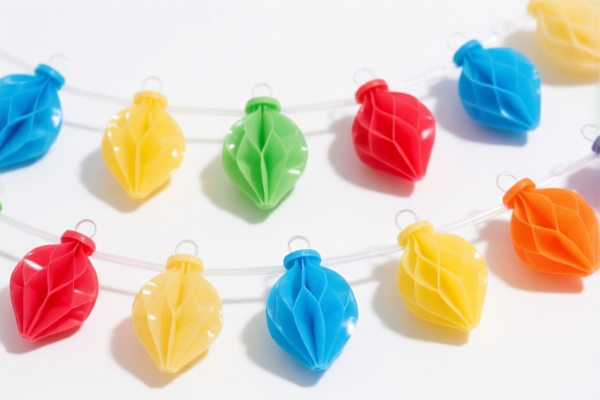
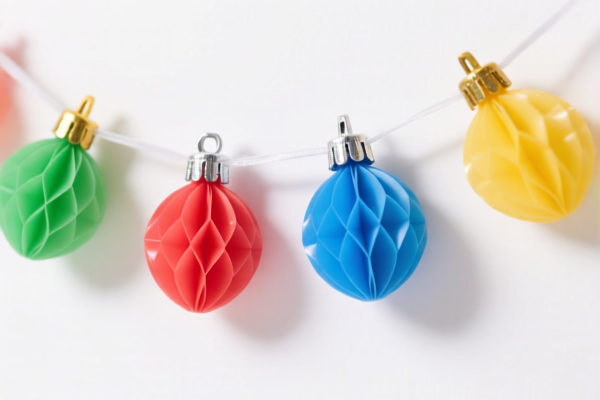
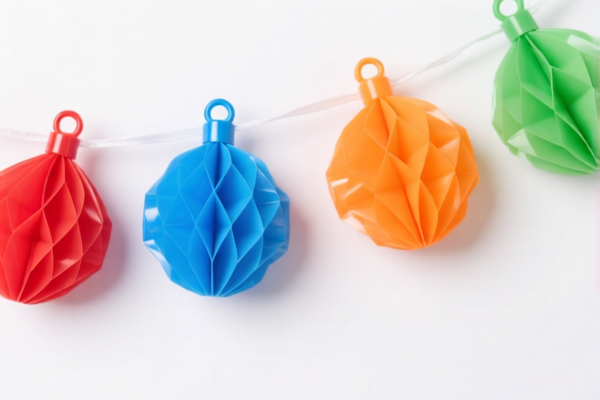
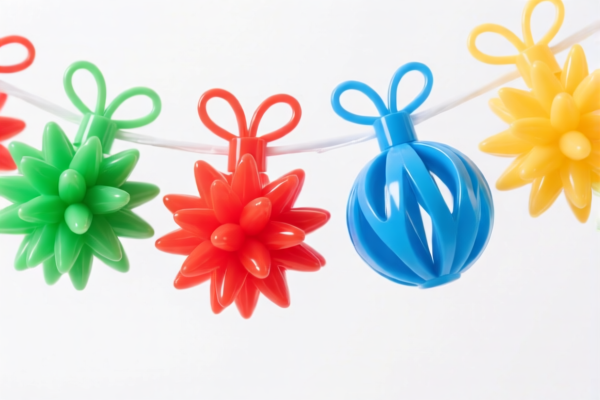
AI Analysis
🎄 Plastic Center Decoration (Christmas & Holiday Ornaments)
🌐 HS Code Reference & Customs Clearance Guide | 2026 Latest Tariff Analysis | Professional Clearance Strategy
📌 I. Product Definition & Classification: What is a "Plastic Center Decoration"?
Plastic Center Decorations are typically festive items made primarily of plastic, designed to be placed at the center of tables (centerpieces) or hung as general ornaments during Christmas and other holiday celebrations. In international trade, their classification depends heavily on material composition and specific function.
⚠️ Key Distinction Point:
- If the item is primarily plastic and serves as a festive ornament (not part of an artificial tree), it falls under Chapter 95 (Toys, Games, Sports Equipment).
- If classified incorrectly as glass or other materials, tariffs can skyrocket due to different base rates and trade restrictions.
📦 II. HS Code Classification Details (2026 Latest Tariff Authority Reference)
Based on the provided data, here are the five relevant HS Codes with their corresponding tax implications:
| HS Code | Product Description & Logic | Total Tax Rate | Key Tax Breakdown |
|---|---|---|---|
9505.10.40.20 |
Primary Classification: Plastic material, used for center decoration. Classified under "Other plastic Christmas decorations excluding artificial trees." | 10.0% | Base: 0% Add'l: 0% Sec 122: 10% |
9505.10.25.00 |
Alternative Classification: Plastic material, used for decoration. Classified under "Other Christmas decorations." | 10.0% | Base: 0% Add'l: 0% Sec 122: 10% |
7018.90.50.00 |
Risk Classification: Decorative item under other categories. Function matches center decoration, no obvious material conflict (but potentially incorrect if strictly plastic). | 41.6% | Base: 6.6% Add'l: 25% Sec 122: 10% |
7018.10.50.00 |
Misclassification Risk: Logic similar to glass ornaments but applied to plastic. Material is plastic, form is ornament. | 35.0% | Base: 0% Add'l: 25% Sec 122: 10% |
3926.30.50.00 |
Secondary Plastic Category: Plastic material and decorative piece usage. Classified under "Other articles of plastics." | 22.8% | Base: 5.3% Add'l: 7.5% Sec 122: 10% |
🔍 Key Insight:
- Chapter 95 (9505) is the correct chapter for festive decorations.
- Chapter 70 (Glass) and Chapter 39 (Plastics, other than toys/decorations) result in significantly higher tariffs due to additional duties (Section 301/122 tariffs).
- Always aim for9505.10.xxxxxxto minimize tax liability.
💰 III. 2026 Latest Tariff Rate Details (Including Additional Taxes)
✅ Applicable Country: USA (US)
✅ Origin: China (CN)
✅ Effective Time: 2025/2026 (Current Trade Policies)
🎯 1. Optimal Classification: 9505.10.40.20 & 9505.10.25.00 (Chapter 95)
| Item | Detail |
|---|---|
| Base Tariff | 0% (Ad Valorem) |
| Section 301 / Add'l Tariff | 0% (No additional Section 301 tariff for these specific sub-headings under current data) |
| Section 122 Tariff | +10% |
| Total Tax Rate | 10% |
| Calculation | CIF Value × 10% |
| De Minimis Exemption | ❌ Not Applicable (Usually Section 321 de minimis may apply for <$800, but this analysis focuses on formal entry tariffs. Check specific carrier policies.) |
| Legal Basis | HTSUS:9505.10.40.20 / 9505.10.25.00 → Section 122: 10% |
📌 Explanation:
- These codes fall under Holiday, Carnival, or Other Entertainment Articles.
- The 10% total tax is significantly lower than other classifications.
- The Section 122 Tariff applies to certain plastic articles, but in this specific Chapter 95 classification, it is the only additional cost.
🎯 2. Sub-Optimal Classification: 3926.30.50.00 (Plastics, Other Articles)
| Item | Detail |
|---|---|
| Base Tariff | 5.3% |
| Section 301 / Add'l Tariff | +7.5% |
| Section 122 Tariff | +10% |
| Total Tax Rate | 22.8% |
| Calculation | CIF Value × 22.8% |
| Legal Basis | HTSUS:3926.30.50.00 → Section 122: 10% + Section 301: 7.5% |
📌 Explanation:
- If customs determines the item is not a "decoration" but a "plastic article," it falls here.
- 22.8% is more than double the optimal rate.
🎯 3. High-Risk Misclassification: 7018.90.50.00 (Glass Ornaments)
| Item | Detail |
|---|---|
| Base Tariff | 6.6% |
| Section 301 / Add'l Tariff | +25% |
| Section 122 Tariff | +10% |
| Total Tax Rate | 41.6% |
| Calculation | CIF Value × 41.6% |
| Legal Basis | HTSUS:7018.90.50.00 → Section 301: 25% + Section 122: 10% |
📌 Explanation:
- This classification assumes the item is made of glass or treated similarly.
- If you declare plastic but use this code, you may face penalties for misdeclaration.
- If you correctly identify as plastic but customs reclassifies to glass due to poor description, this is the resulting risk.
🎯 4. Medium-Risk Misclassification: 7018.10.50.00 (Glass Ornaments, Specific)
| Item | Detail |
|---|---|
| Base Tariff | 0% |
| Section 301 / Add'l Tariff | +25% |
| Section 122 Tariff | +10% |
| Total Tax Rate | 35.0% |
| Calculation | CIF Value × 35.0% |
| Legal Basis | HTSUS:7018.10.50.00 → Section 301: 25% + Section 122: 10% |
🛠️ IV. Customs Clearance Practical Advice (Pitfall Avoidance Guide)
✅ 1. Preparation Checklist (Essential Documents)
| Document | Required | Description |
|---|---|---|
| ✅ Product Specification Sheet | ✔️ | Must clearly state "Plastic Material", "Christmas Decoration", "Centerpiece". |
| ✅ Product Photos | ✔️ | Show the item from all angles, highlighting plastic texture (no glass-like appearance if plastic). |
| ✅ Commercial Invoice | ✔️ | Use precise description: "Plastic Christmas Centerpiece Decoration". Avoid vague terms like "Holiday Item". |
| ✅ Packing List | ✔️ | Include quantity, weight, and dimensions. |
| ✅ Material Declaration | ✔️ | Explicitly state: "100% Plastic (PP/PE/PVC)". |
✅ 2. Declaration Tips (Key Mnemonic)
🔥 "Declare Plastic, Choose Ch 95, Avoid Ch 70, Save 30% Plus!"
| Scenario | Correct Declaration | Wrong Action | Consequence |
|---|---|---|---|
| Plastic Centerpiece | 9505.10.40.20 or 9505.10.25.00 |
Misdeclare as Glass (7018) |
41.6% Tax (vs 10%) + Penalties |
| Plastic Ornaments | 9505.10.25.00 |
Misdeclare as General Plastic (3926) |
22.8% Tax (vs 10%) |
| Mixed Material | If >50% Plastic, still try Ch 95 if primary function is decoration | Declare by material only | Potential Reclassification to 3926 |
✅ 3. Special Case Handling
| Situation | Recommendation |
|---|---|
| Plastic with Glass Accents | If glass is minor (<20%), still declare as Plastic/Ch 95. Provide proof of material composition. |
| LED-Lit Plastic Decorations | If it has electronic components, it might fall under Ch 85. However, if the primary value is decorative, Ch 95 is still preferred. Consult a specialist. |
| Artificial Tree Parts | If the center piece is part of an artificial tree, it might be classified differently. Ensure it's a standalone "centerpiece". |
🌍 V. Global Market Comparison (2026 Latest)
| Country/Region | Recommended HS Code | Tariff Rate | Certification Requirements | Notes |
|---|---|---|---|---|
| 🇺🇸 USA | 9505.10.40.20 |
10% | None specific for plastic decor | Lowest Tax Option. Avoid 7018. |
| 🇨🇳 China | 9505.10.40.20 |
0-5% | GB Standard | Low tariff. |
| 🇪🇺 EU | 9505.10.00 |
4.5% | CE, REACH, CPSIA (if for kids) | Standard EU tariff. |
| 🇬🇧 UK | 9505.10.00 |
4.5% | UKCA, Post-Brexit Rules | Similar to EU. |
| 🇯🇵 Japan | 9505.10.00 |
0% | JIS | No tariff for many festive items. |
📌 Conclusion:
- USA offers the 10% rate for correct Ch 95 classification.
- Misclassification to Glass (Ch 70) results in 35-41.6% taxes.
- Material accuracy is critical.
📌 VI. Common Errors & Pitfalls (Lessons Learned)
❌ Error 1: Describing product as "Holiday Ornament" without specifying material.
👉 Consequence: Customs may assume Glass (7018) → 41.6% Tax.
❌ Error 2: Using "Plastic Gift" instead of "Christmas Decoration".
👉 Consequence: May be classified as General Plastic (3926) → 22.8% Tax.
❌ Error 3: Ignoring Section 122 Tariff.
👉 Consequence: Even in Ch 95, 10% additional tax applies. Do not overlook it in cost calculations.
✅ Correct Practice:
"Plastic Christmas Centerpiece Decoration, 12-inch, Red and Gold, Made of PP Plastic, Not for Children Under 3"
🎯 VII. Conclusion: Precise Classification Saves Money!
🎯 Remember the Mnemonic:
🔹 "Plastic Decor = Ch 95 = 10% Tax"
🔹 "Glass Logic = Ch 70 = 35-41% Tax"
🔹 "General Plastic = Ch 39 = 22.8% Tax"
🔹 "Choose Wisely, Save 30% Today!"
📌 Pro Tip:
If your product has mixed materials (e.g., plastic base with glass balls), ensure the plastic component is predominant in value and function to maintain classification under 9505. Provide a BOM (Bill of Materials) to prove material composition.
📣 Immediate Action:
📞 Contact a licensed customs broker + Provide material test reports + Apply for Advance Ruling if shipment value is high.
🚀 Ensure your HS Code is9505.10.40.20or9505.10.25.00for maximum savings!
✨ Professional clearance starts with accurate classification!
💼 Every dollar saved in tariffs is pure profit!
Customer Reviews
About HS Code Classification
The Harmonized System (HS) is an internationally standardized nomenclature developed by the World Customs Organization (WCO) to classify traded products. Over 200 countries use the HS system as the basis for customs tariffs, trade statistics, and import/export regulations.
Each HS code follows a hierarchical structure:
- Chapter (2 digits) — Broad category of goods (e.g., Chapter 84: Machinery and Mechanical Appliances)
- Heading (4 digits) — More specific grouping within the chapter
- Subheading (6 digits) — Internationally standardized breakdown, used by all WCO member countries
- National subdivisions (8-10 digits) — Country-specific extensions for further classification, such as US HTSUS 10-digit codes
Correct HS code classification is essential for smooth customs clearance, accurate duty payment, and compliance with trade regulations. Misclassification can lead to customs delays, overpayment of duties, or penalties.
When importing from CN to US, the applicable tariff rates may include:
- Most-Favored-Nation (MFN) rate — The standard duty rate applied to WTO members
- General rate — Applied to countries without trade agreements
- Trade remedy duties — Additional tariffs such as Section 301 (anti-dumping), Section 232 (national security), or countervailing duties
The information provided on this page is for reference purposes only. For official classification, please consult with your local customs authority or a licensed customs broker.