Plastic Chemical Buckets
CN → US| HS Code | Tariff Rate | Origin | Destination | Doc |
|---|---|---|---|---|
| 3923900012 | 38.0% | CN | US | Official Doc |
| 3923900014 | 38.0% | CN | US | Official Doc |
| 3926901000 | 20.9% | CN | US | Official Doc |
| 3917290090 | 38.1% | CN | US | Official Doc |
| 3926909989 | 22.8% | CN | US | Official Doc |
Product Images
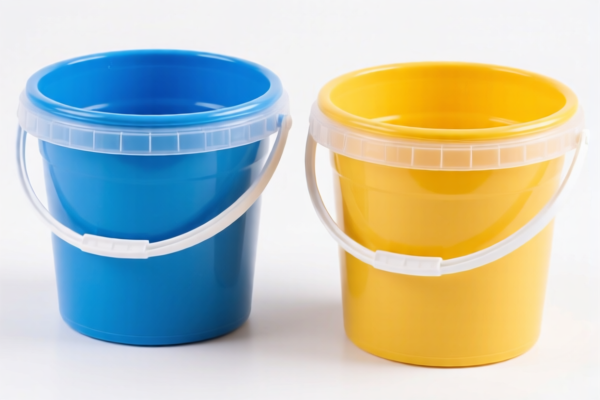

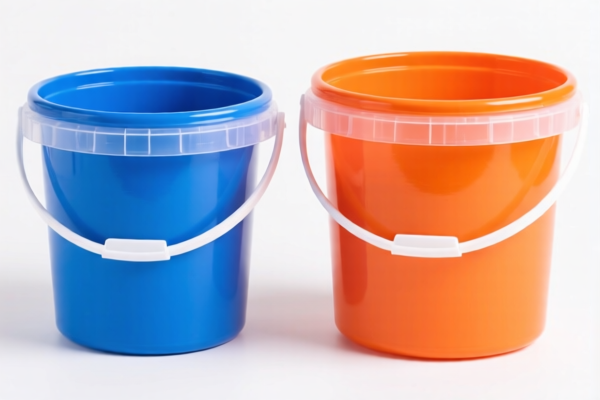
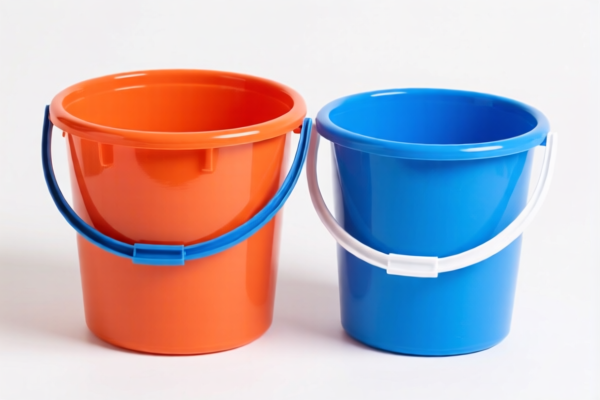
AI Analysis
🪣 Plastic Chemical Buckets
🌐 HS Code Reference & Customs Clearance Guide | 2026 Latest Tariff Analysis | Professional Clearance Strategy
📌 1. Product Definition and Classification: Do You Really Understand "Plastic Chemical Buckets"?
Plastic chemical buckets are rigid containers specifically designed for the storage, transportation, and packaging of chemical products. In international trade, their classification depends heavily on material composition, specific use, and structural design. Unlike general plastic containers, those intended for hazardous or specialized chemical packaging often fall under stricter regulatory and tariff categories.
⚠️ Key Distinction:
- If the bucket is a general-purpose plastic container (e.g., for food, cosmetics, or non-hazardous goods) → May fall under 3926.90 (Other plastic articles).
- If the bucket is specifically designed for chemical packaging (e.g., with liners, specific seals, or hazardous material certification) → May fall under 3923.90 (Articles for the conveyance or packing of goods).
📦 2. HS Code Classification Details (2026 Latest Tariff Authoritative Comparison)
| HS Code | Product Description | Applicable Scenario | Total Tax Rate (US/CN) |
|---|---|---|---|
3923.90.00.12 |
Plastic material, bucket shape, specifically for chemical packaging | ✅ Matched for specialized chemical drums/buckets | 38.0% |
3923.90.00.14 |
Plastic material, bucket shape, for conveyance/packing of goods | ✅ Matches logistics/packing use logic | 38.0% |
3926.90.10.00 |
Plastic material, bucket shape, fits plastic products/water-oil drum category | ✅ General plastic containers, water/oil drums | 20.9% |
3917.29.00.90 |
Plastic material, container/piping accessories type | ✅ Fallback logic for other plastic products | 38.1% |
3926.90.99.89 |
Plastic material, container articles, other plastic products | ✅ Other plastic container logic | 22.8% |
🔍 Key Reminder:
-3923.90is for packaging/conveyance articles. If your bucket is explicitly marketed as "for chemical packaging" or used in logistics supply chains, this is the most likely code.
-3926.90is for other plastic articles. If the bucket is a general-purpose storage container (not specifically for chemical logistics), this lower tax rate may apply.
-3917.29and3926.99are fallback codes for accessories or general containers, but carry higher or similar tax burdens due to additional duties.
💰 3. 2026 Latest Tariff Rate Details (Including Additional Taxes)
✅ Applicable Country: United States (US)
✅ Origin: China (CN)
✅ Effective Date: 2025-11-10 (and subsequent imports)
🎯 1. 3923.90.00.12 & 3923.90.00.14 — Plastic Containers for Chemical Packaging
| Item | Detail |
|---|---|
| Base Tariff | 3.0% (ad valorem) |
| Section 301 Additional Duty | +25.0% |
| 122 Clause Tariff (IEEPA) | +10.0% |
| Total Tax Rate | 38.0% |
| Tax Calculation | CIF Value × 38.0% |
| De Minimis Exemption | ❌ Not Available (deny_de_minimis) |
| Legal Basis Path | USITC:3923.90.00.12/14 → SECTION_301:8524.11.10.00 (Applied broadly) → IEEPA:9903.01.24 |
📌 Explanation:
- The 25% Section 301 duty applies to most Chinese-origin plastic packaging materials.
- The 10% IEEPA duty is an additional surcharge on Chinese goods effective from Nov 2025.
- Total 38% is a significant cost driver. Misclassification as a lower-rate code (e.g., 3926.90) can lead to audits and penalties.
🎯 2. 3926.90.10.00 — General Plastic Containers (Water/Oil Drums)
| Item | Detail |
|---|---|
| Base Tariff | 3.4% (ad valorem) |
| Section 301 Additional Duty | +7.5% |
| 122 Clause Tariff (IEEPA) | +10.0% |
| Total Tax Rate | 20.9% |
| Tax Calculation | CIF Value × 20.9% |
| De Minimis Exemption | ❌ Not Available (deny_de_minimis) |
| Legal Basis Path | USITC:3926.90.10.00 → SECTION_301:8524.11.10.00 (Lower bracket) → IEEPA:9903.01.24 |
📌 Note:
- This code applies if the bucket is not specifically for chemical logistics but for general storage (e.g., water, non-hazardous oils).
- Significant Tax Saving: 20.9% vs. 38.0%.
- Risk: If Customs determines the bucket is actually for chemical packaging, they may reclassify it to3923.90, leading to back taxes + penalties.
🎯 3. 3917.29.00.90 & 3926.90.99.89 — Fallback/Accessory Categories
| HS Code | Total Tax | Key Detail |
|---|---|---|
3917.29.00.90 |
38.1% | Plastic piping/accessories; 3.1% base + 25% S301 + 10% IEEPA |
3926.90.99.89 |
22.8% | Other plastic articles; 5.3% base + 7.5% S301 + 10% IEEPA |
📌 Warning: These are often "catch-all" codes. Using them incorrectly can trigger customs audits if the product clearly fits a more specific category.
🛠️ 4. Customs Clearance Practical Advice (Real-World Pitfall Guide)
✅ 1. Required Documentation Checklist
| Document | Required? | Description |
|---|---|---|
| ✅ Product Specification Sheet | ✔️ | Material type (HDPE/PP), capacity, chemical compatibility |
| ✅ Chemical Compatibility Certificate | ✔️ | Proof of suitability for specific chemicals (if claiming 3923.90) |
| ✅ Product Photos | ✔️ | Clear images of bucket, lids, seals, and labels |
| ✅ Commercial Invoice | ✔️ | Must clearly state "Plastic Chemical Bucket" or "Plastic Storage Container" |
| ✅ Packing List | ✔️ | Show quantity and packaging details |
| ✅ Origin Certificate | ✔️ | Required for trade agreement benefits (if applicable) |
✅ 2. Classification Strategy (Key Rules)
🔥 "Purpose Determines Code: Chemical Pack = 3923, General Store = 3926!"
| Scenario | Recommended HS Code | Risk if Misclassified |
|---|---|---|
| Bucket explicitly for chemical logistics/packing | 3923.90.00.12 / .14 |
Underpaying tax if reclassified; 38% |
| Bucket for general storage (water, oil, non-hazardous) | 3926.90.10.00 |
Overpaying if claimed as 3923; 20.9% |
| Bucket with piping/accessory features | 3917.29.00.90 |
High tax 38.1%; rarely appropriate |
| Generic plastic container | 3926.90.99.89 |
Tax 22.8%; fallback option |
✅ 3. Special Cases
| Case | Handling Advice |
|---|---|
| OEM Chemical Buckets | Provide client orders + design specs to justify 3923.90 classification |
| Buckets with Liners/Seals | Still classified as 3923.90 if for chemical packing; do not split |
| Non-Hazardous Chemicals | May argue for 3926.90 if no special packaging certification is needed |
| Used/Refurbished Buckets | May fall under different codes; check for "used goods" restrictions |
🌍 5. Global Market Comparison (2026 Latest)
| Country/Region | Recommended HS Code | Tariff (CN Origin) | Certification | Notes |
|---|---|---|---|---|
| 🇺🇸 USA | 3923.90.00.12 |
38.0% | No special cert | High duty due to Section 301 + IEEPA |
| 🇨🇳 China | 3923.90.00.12 |
~5-10% | GB Standard | Lower duty than US |
| 🇪🇺 EU | 3923.90.00.12 |
~0-4% | REACH Compliance | No Section 301 duty |
| 🇦🇺 Australia | 3923.90.00.12 |
~5% | As per contract | Moderate duty |
| 🇯🇵 Japan | 3923.90.00.12 |
~0-5% | JIS Standard | Low duty |
📌 Conclusion:
- The USA is the most expensive market for plastic chemical buckets due to 38% total tariff.
- EU, Japan, Australia have significantly lower tariffs (~0-5%).
- Strategy: Consider supply chain diversification (e.g., manufacturing in Vietnam or Mexico) to avoid US Section 301 duties.
📌 6. Common Mistakes & Pitfalls (Lessons Learned)
❌ Mistake 1: Declaring chemical buckets as general plastic containers (3926.90) to save tax
👉 Consequence: Customs reclassifies to 3923.90, leading to back taxes + 10% penalty + potential seizure.
❌ Mistake 2: Not providing chemical compatibility certificates for 3923.90 claims
👉 Consequence: Customs doubts the "packaging for chemicals" purpose, may impose higher duties or delay clearance.
❌ Mistake 3: Splitting buckets and lids into separate HS codes
👉 Consequence: Lids may be classified as "accessories" with 38.1% duty, increasing total cost unnecessarily.
❌ Mistake 4: Using "Plastic Bucket" as the only description
👉 Consequence: Vague description leads to customs holds. Use precise terms: "HDPE Plastic Chemical Drum, 20L, for Acid Storage."
✅ Correct Practice:
"HDPE Plastic Chemical Storage Bucket, 20 Liter, Certified for Corrosive Chemicals, Model XYZ, with Leak-Proof Lid"
🎯 7. Conclusion: Precise Classification Saves Money!
🎯 Remember the Rule:
🔹 "Chemical Pack = 3923 (38%), General Store = 3926 (20.9%)!"
🔹 "HS Code is Life: A 17% difference means thousands in savings!"
🔹 "Document the Purpose: Prove it’s for chemicals to justify 3923!"
📌 Pro Tip:
If your product is originally from Vietnam, Mexico, or Thailand, you may exempt IEEPA duties, reducing the tariff to 0-7.5%.
Recommend Advance Ruling (APA) with US Customs to secure your HS code before shipment.
📣 Immediate Action:
📞 Contact a professional customs broker + Provide product specs + Apply for HS Code Advance Ruling
🚀 Ensure smooth clearance, minimize costs, and maximize profit!
✨ Professional Clearance Starts with Accurate Classification!
💼 Every cent of cost deserves precise calculation!
Customer Reviews
About HS Code Classification
The Harmonized System (HS) is an internationally standardized nomenclature developed by the World Customs Organization (WCO) to classify traded products. Over 200 countries use the HS system as the basis for customs tariffs, trade statistics, and import/export regulations.
Each HS code follows a hierarchical structure:
- Chapter (2 digits) — Broad category of goods (e.g., Chapter 84: Machinery and Mechanical Appliances)
- Heading (4 digits) — More specific grouping within the chapter
- Subheading (6 digits) — Internationally standardized breakdown, used by all WCO member countries
- National subdivisions (8-10 digits) — Country-specific extensions for further classification, such as US HTSUS 10-digit codes
Correct HS code classification is essential for smooth customs clearance, accurate duty payment, and compliance with trade regulations. Misclassification can lead to customs delays, overpayment of duties, or penalties.
When importing from CN to US, the applicable tariff rates may include:
- Most-Favored-Nation (MFN) rate — The standard duty rate applied to WTO members
- General rate — Applied to countries without trade agreements
- Trade remedy duties — Additional tariffs such as Section 301 (anti-dumping), Section 232 (national security), or countervailing duties
The information provided on this page is for reference purposes only. For official classification, please consult with your local customs authority or a licensed customs broker.