Plastic Chopsticks
CN → US| HS Code | Tariff Rate | Origin | Destination | Doc |
|---|---|---|---|---|
| 3926903500 | 16.5% | CN | US | Official Doc |
| 3924102000 | 24.0% | CN | US | Official Doc |
| 3926909989 | 22.8% | CN | US | Official Doc |
| 3924104000 | 13.4% | CN | US | Official Doc |
Product Images
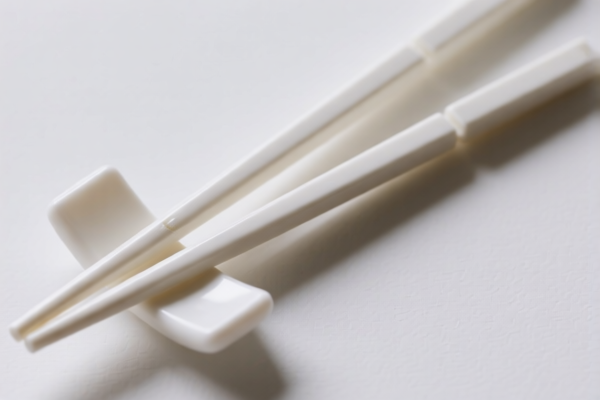
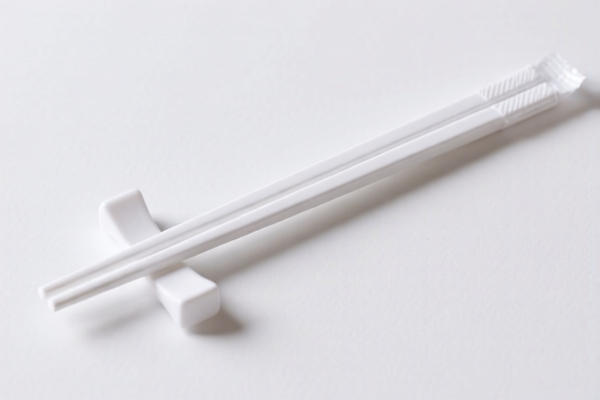
AI Analysis
🥢 Plastic Chopsticks (Disposable & Reusable)
🌐 HS Code Reference & Clearance Guide | 2026 Latest Tariff Analysis | Professional Entry Strategy
📌 I. Product Definition & Classification: Are You Sure You Know "Plastic Chopsticks"?
Plastic Chopsticks are single-use or durable eating utensils made from polymer materials (PP, PS, ABS, etc.). In international trade, they are NOT classified as generic "plastic articles" (unless unidentifiable). Their classification depends strictly on specific use and shape.
The Critical Distinction:
- General Plastic Utensils (spoons, forks, complex shapes) → Often fall under 3926.90 (Miscellaneous).
- Specific "Tableware" or "Chopsticks" → Must fall under 3924.10 (Tableware/Kitchenware).
⚠️ Key Classification Rule:
- If the item is explicitly chopsticks (even if made of plastic) → It MUST be classified under 3924.10.40.00.
- If the item is cutlery (forks/spoons) or general containers → It falls under 3924.10.20.00.
- If the item is a generic plastic part not defined as tableware → It falls under 3926.90 (Various categories).
- Mistake Alert: Do not classify plastic chopsticks under 3926.90 (General Plastics) just to avoid higher taxes; customs will reclassify, leading to penalties and delays.
📦 II. HS Code Classification Details (2026 Authorized Reference)
Based on your product data, here are the specific classifications for Plastic Chopsticks and related plastic tableware:
| HS Code | Product Description | Application Scenario | Tax Rate (Total) | Tax Detail Breakdown |
|---|---|---|---|---|
| 3924.10.40.00 | Plastic Chopsticks (Specific tableware) | Disposable dining, catering, fast food, picnic | 13.4% | Base: 3.4% Add-on: 0.0% Item 122: 10% |
| 3924.10.20.00 | Plastic Tableware (Dinnerware, non-chopsticks) | Plates, bowls, spoons, forks (general dining) | 24.0% | Base: 6.5% Add-on: 7.5% Item 122: 10% |
| 3926.90.35.00 | Plastic Articles (Non-bead/jewelry) | General plastic parts, non-food contact, decorative | 16.5% | Base: 6.5% Add-on: 0.0% Item 122: 10% |
| 3926.90.99.89 | Plastic Products (Others, unclassified) | Generic plastic components, packaging, industrial parts | 22.8% | Base: 5.3% Add-on: 7.5% Item 122: 10% |
🔍 Critical Warning:
- Chopsticks are "Tableware": Even if they look like sticks, if they are for eating, they belong to 3924.10.
- Tax Differential: Classifying "Chopsticks" as "Other Plastic Products" (3926.90) is illegal and risky. The correct code 3924.10.40.00 has the lowest total tax (13.4%) for this specific item.
- Item 122 Clause: All codes listed include a 10% surcharge (likely under Section 301 or similar trade remedy measures). This is mandatory for Chinese-origin plastic goods.
💰 III. 2026 Tariff Rate Deep Dive (Including Surcharges)
✅ Origin: China (CN)
✅ Target Market: United States (US) (Inferred from "122 Clause" & specific tax rates)
✅ Product: Plastic Tableware & General Articles
🎯 Case A: Plastic Chopsticks (3924.10.40.00) — The Most Cost-Effective Path
| Item | Content |
|---|---|
| Base Tariff | 3.4% (Ad Valorem) |
| Additional Tariff (Section 301) | 0.0% (Specific to this subcategory) |
| Item 122 Surcharge | +10.0% (Mandatory for Chinese plastic imports) |
| Total Effective Tax | 13.4% |
| Calculation Basis | CIF Value × 13.4% |
| De Minimis Exemption | ❌ No (Goods > $800 are subject to duties; below $800 may still face scrutiny if classified incorrectly) |
📌 Explanation:
- This is the optimal classification for chopsticks.
- The "Item 122" 10% is a specific trade measure on Chinese plastic goods.
- Why not 3926.90? Because "Tableware" has a specific chapter (3924), which overrides the "Other" category (3926). Using the wrong code (3926.90.99.89) would increase your tax to 22.8% unnecessarily.
🎯 Case B: General Plastic Tableware (3924.10.20.00) — Higher Risk
| Item | Content |
|---|---|
| Base Tariff | 6.5% |
| Additional Tariff | +7.5% (Section 301 surcharge) |
| Item 122 Surcharge | +10.0% |
| Total Effective Tax | 24.0% |
| Applicability | Plates, Bowls, Cups (Not chopsticks) |
📌 Note: If you ship a mix of chopsticks and spoons in one carton:
- Chopsticks: 13.4%
- Spoons/Plates: 24.0%
- Strategy: Do not mix! Ship them separately to avoid customs re-classifying the entire shipment at the highest rate.
🛠️ IV. Customs Clearance Action Plan (Real-World Avoidance Guide)
✅ 1. Documentation Checklist (Mandatory)
| Document | Requirement | Why It Matters |
|---|---|---|
| Product Specifications | ✔️ Must explicitly state "Plastic Chopsticks" | Confirms the "Tableware" definition |
| Material Composition | ✔️ 100% Plastic (PP/PS/ABS) | Proves it's not "wood" (different HS) |
| Commercial Invoice | ✔️ DO NOT write "General Plastic Parts" | Must write "Plastic Chopsticks" to match HS 3924.10.40.00 |
| Packing List | ✔️ Separate counts for Chopsticks vs. Other Tableware | Prevents mixed-rate penalties |
| Photos | ✔️ Clear image of the item on a table setting | Visual proof of "Eating Utensil" |
| Origin Certificate | ✔️ CO for China | Required for Item 122 calculation |
✅ 2. Declaration Strategy (Golden Rules)
🔥 The "Chopsticks Rule":
"If it's for eating, call it Tableware! Never call it 'General Plastic'!"
| Scenario | Correct Declaration (HS Code) | Incorrect Declaration (Risk) |
|---|---|---|
| Plastic Chopsticks | 3924.10.40.00 (13.4% tax) |
3926.90.99.89 (22.8% tax) → Overpaid & Suspicious |
| Plastic Spoons/Forks | 3924.10.20.00 (24.0% tax) |
3926.90.35.00 (16.5% tax) → Under-declared (Penalty Risk) |
| Plastic Packaging (Non-food) | 3926.90.35.00 (16.5% tax) |
3924.10.20.00 (24.0% tax) → Overpaid |
| Mixed Carton (Chopsticks + Plates) | Split Declaration or Highest Rate | Single Declaration → Entire Shipment Taxed at 24% |
✅ 3. Special Situations & Solutions
| Situation | Solution |
|---|---|
| "Biodegradable" Plastic Chopsticks | Still classified under 3924.10.40.00 if made of plastic polymers. Do not claim "Biodegradable" unless it meets specific compostable standards (then it might be different, but usually still 3924). |
| Disposable vs. Reusable | Both are Tableware. If reusable (e.g., rigid PP), still 3924.10.40.00. No tax difference. |
| "Chopstick Sticks" (Packaging) | If the chopsticks are inside a paper tube or plastic bag, declare the Chopsticks (13.4%) and the Packaging (3926.90) separately if value is significant. |
🌍 V. Global Market Comparison (2026)
| Country/Region | Recommended HS Code | Tariff Rate | Key Requirement |
|---|---|---|---|
| 🇺🇸 USA (China Origin) | 3924.10.40.00 |
13.4% | Item 122 (10%) + Base (3.4%) |
| 🇨🇳 China | 3924.10.40.00 |
~5% | No extra surcharge |
| 🇪🇺 EU | 3924.10.40.00 |
0-3% | CE + Food Contact Compliance |
| 🇯🇵 Japan | 3924.10.40.00 |
0-6% | Food Safety Standard JIS |
📌 Conclusion:
- USA is the most expensive market due to the Item 122 10% surcharge.
- Correct Classification is Money: Using3926.90for chopsticks costs you 9.4% more (22.8% - 13.4%).
- Never declare "Plastic Chopsticks" as "Other Plastic Products" (3926.90) unless they are truly not for eating (e.g., decorative props).
📌 VI. Common Mistakes & Pitfalls (Lessons Learned)
❌ Mistake 1: Labeling Chopsticks as "Plastic Accessories" or "General Parts" to hide the "Tableware" category.
👉 Result: Customs may reclassify to 3924.10.20.00 (24%) or penalize for misclassification.
👉 Loss: 10.6% extra tax + fines.
❌ Mistake 2: Mixing Chopsticks with Plates in one invoice.
👉 Result: Customs may tax the whole shipment at the highest rate (24%).
👉 Loss: 10.6% extra tax on chopsticks.
❌ Mistake 3: Failing to mention "Item 122" in the declaration notes.
👉 Result: Customs will calculate the 10% surcharge anyway, but may flag the shipment for audit.
👉 Loss: Delays.
✅ Correct Approach:
"Plastic Chopsticks, Disposable, Food Grade, PP Material, Model XYZ, HS: 3924.10.40.00"
🎯 VII. Final Verdict: Smart Shipping Strategy
🎯 The Golden Rule:
🔹 "Chopsticks = Tableware (3924.10)"
🔹 "Tax = 13.4% (Base 3.4% + Item 122 10%)"
🔹 "Separate Mixtures to Avoid 24% Penalty!"
📌 Pro Tip:
If you are shipping large quantities, ensure your Material Safety Data Sheet (MSDS) confirms "Food Contact" status to avoid being rejected by FDA (if entering the US).
📣 Action Required:
📞 Verify HS Code: Ensure your broker uses 3924.10.40.00.
🚀 Separate Shipments: Ship Chopsticks (13.4%) separately from Plates/Spoons (24.0%).
🛡️ Prepare for Audit: Keep photos and specs ready for "Item 122" verification.
✨ Precision in Classification = Savings in Cost!
💼 Your 13.4% Tax vs. 22.8% Tax: The difference is profit!
Customer Reviews
About HS Code Classification
The Harmonized System (HS) is an internationally standardized nomenclature developed by the World Customs Organization (WCO) to classify traded products. Over 200 countries use the HS system as the basis for customs tariffs, trade statistics, and import/export regulations.
Each HS code follows a hierarchical structure:
- Chapter (2 digits) — Broad category of goods (e.g., Chapter 84: Machinery and Mechanical Appliances)
- Heading (4 digits) — More specific grouping within the chapter
- Subheading (6 digits) — Internationally standardized breakdown, used by all WCO member countries
- National subdivisions (8-10 digits) — Country-specific extensions for further classification, such as US HTSUS 10-digit codes
Correct HS code classification is essential for smooth customs clearance, accurate duty payment, and compliance with trade regulations. Misclassification can lead to customs delays, overpayment of duties, or penalties.
When importing from CN to US, the applicable tariff rates may include:
- Most-Favored-Nation (MFN) rate — The standard duty rate applied to WTO members
- General rate — Applied to countries without trade agreements
- Trade remedy duties — Additional tariffs such as Section 301 (anti-dumping), Section 232 (national security), or countervailing duties
The information provided on this page is for reference purposes only. For official classification, please consult with your local customs authority or a licensed customs broker.