Plastic Clip (Spring Type)
CN → US| HS Code | Tariff Rate | Origin | Destination | Doc |
|---|---|---|---|---|
| 3926906520 | 14.2% | CN | US | Official Doc |
| 3926906530 | 14.2% | CN | US | Official Doc |
Product Images
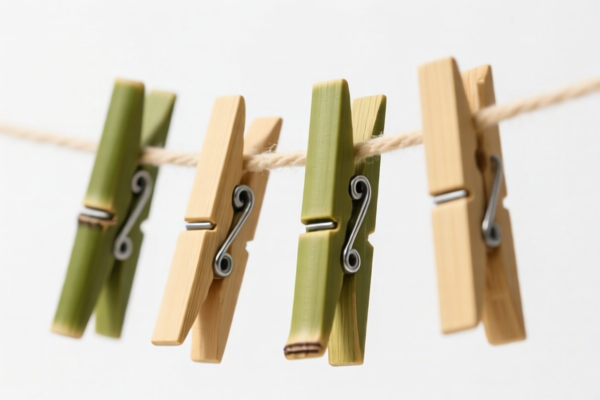
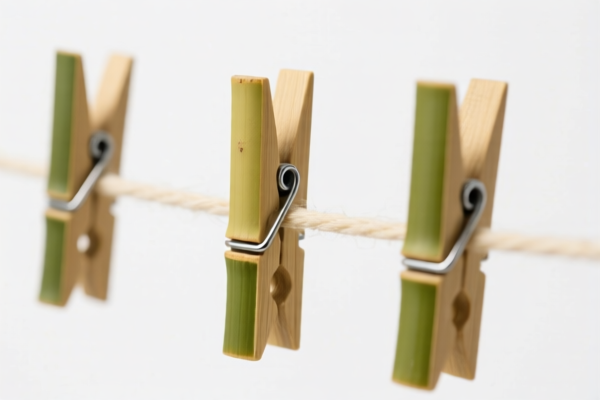
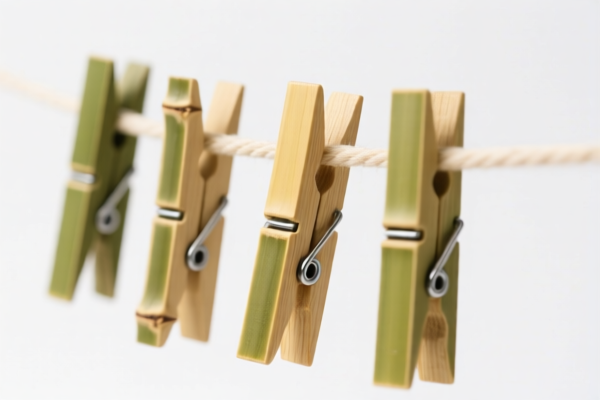
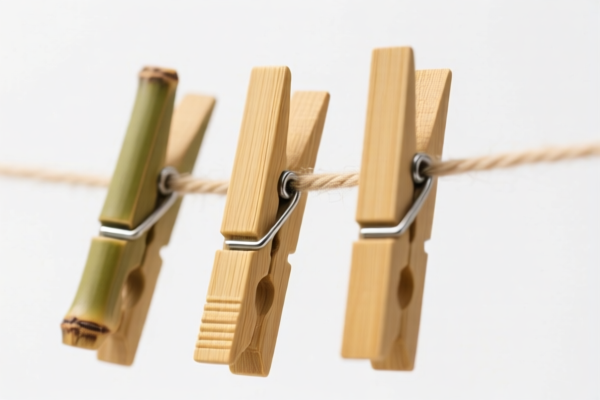
AI Analysis
🧹 Plastic Spring-Type Clothespins (Clips)
🌐 HS Code Reference & Customs Clearance Guide | 2026 Latest Tariff Analysis | Professional Compliance Strategy
📌 I. Product Definition & Classification: Do You Really Know "Plastic Clothespins"?
Plastic spring-type clothespins are common household and industrial fastening tools. In international trade, they fall under Chapter 39: Plastics and Articles Thereof. Specifically, they are classified as "Other articles of plastics" because they do not have a specific heading for "clothespins" in Chapters 1-38.
The classification hinges on two key factors: 1. Material: Plastic (Headings 3901–3914). 2. Value: The unit price per gross determines the specific subheading.
⚠️ Key Distinction:
- These are spring-type clips (metal spring + plastic body).
- Classification is strictly value-based: Over $0.80/gross vs. $0.35–$0.70/gross.
- NO other tax adjustments are applied in this specific dataset (Base Tax only).
📦 II. HS Code Classification Details (2026 Latest Tariff Authority)
Based on the provided data, the plastic spring-type clothespins are split into two value-based categories under HS Code 3926.90.65.
| HS Code | Product Description | Value Threshold | Tax Rate |
|---|---|---|---|
3926.90.65.20 |
Plastic Spring-Type Clothespins | > $0.80 per gross | 4.2% |
3926.90.65.30 |
Plastic Spring-Type Clothespins | $0.35 – $0.70 per gross | 4.2% |
🔍 Critical Note:
- Both codes share the same tax rate (4.2%).
- The only difference is the customs valuation threshold.
- Misdeclaring the value can lead to customs delays, reclassification, or penalties.
- No Additional Tariffs (e.g., Section 301 or IEEPA) are listed in this specific dataset for these codes.
💰 III. 2026 Latest Tariff Rate Breakdown
✅ Applicable Country: United States (US)
✅ Origin: China (CN)
✅ Effective Date: As per provided data
🎯 1. 3926.90.65.20 — High-Value Spring-Type Clothespins
| Item | Detail |
|---|---|
| Description | Valued over $0.80 but not over [Limit] per gross |
| Base Tariff | 4.2% |
| Additional Tariff (Section 301/IEEPA) | 0.0% |
| Total Tax Rate | 4.2% |
| Tax Calculation | CIF Value × 4.2% |
| De Minimis Eligibility | ❌ No (Not eligible for de minimis relief) |
| Legal Basis | 3926.90.65.20 → Tax: Base 4.2%, Add. 0.0% |
📌 Explanation:
- This code applies to premium or bulk-packaged plastic clothespins.
- Despite US-China trade tensions, no additional punitive tariffs are applied to this specific subheading in the provided data.
- Total cost impact is minimal (4.2%) compared to electronics or steel.
🎯 2. 3926.90.65.30 — Mid-Value Spring-Type Clothespins
| Item | Detail |
|---|---|
| Description | Valued over $0.35 but not over $0.70 per gross |
| Base Tariff | 4.2% |
| Additional Tariff (Section 301/IEEPA) | 0.0% |
| Total Tax Rate | 4.2% |
| Tax Calculation | CIF Value × 4.2% |
| De Minimis Eligibility | ❌ No |
| Legal Basis | 3926.90.65.30 → Tax: Base 4.2%, Add. 0.0% |
📌 Note:
- This code covers standard retail-grade clothespins.
- The tax rate is identical to the high-value category.
- No extra duties mean this is a low-risk, low-cost item for importers.
🛠️ IV. Customs Clearance Practical Advice (Real-World Pitfall Guide)
✅ 1. Required Documentation Checklist
| Document | Mandatory? | Notes |
|---|---|---|
| ✅ Commercial Invoice | ✔️ | Must clearly state "Plastic Spring-Type Clothespins" and Value per Gross |
| ✅ Packing List | ✔️ | Include gross/net weight, number of pieces per gross |
| ✅ Product Photos | ✔️ | Show plastic body + metal spring mechanism |
| ✅ HS Code Declaration | ✔️ | Specify 3926.90.65.20 or 3926.90.65.30 based on value |
| ✅ Origin Certificate | Optional | Not required for tariff exemption (0% additional tax) |
✅ 2. Declaration Tips (Key Mnemonic)
🔥 “Check the Gross Value, Pick the Code, No Extra Tax!”
| Scenario | Correct Declaration | Common Mistake |
|---|---|---|
| Value > $0.80/gross | 3926.90.65.20 |
Misdeclared as 3926.90.65.30 → Customs may reassess |
| Value $0.35–$0.70/gross | 3926.90.65.30 |
Over-declaring value → Unnecessary scrutiny |
| Non-spring type | ❌ Not in Dataset | If no spring, it may fall under 3926.90.98 (other) |
| Metal Clothespins | ❌ Wrong Chapter | Metal clips go to Chapter 73, not 39 |
✅ 3. Special Cases
| Situation | Handling Advice |
|---|---|
| Mixed Value Packs | Declare by dominant value tier or split shipments |
| OEM Custom Designs | Still 3926.90.65.xx if material/value match |
| Bulk Industrial Supply | Ensure "per gross" valuation is clear on invoice |
| Samples < $0.35/gross | ❌ Not Covered in this dataset |
🌍 V. Global Market Comparison (2026 Latest)
| Country/Region | Recommended HS Code | Tariff | Notes |
|---|---|---|---|
| 🇺🇸 USA | 3926.90.65.20 / .30 |
4.2% | No additional tariffs |
| 🇨🇳 China (Import) | 3926.90.98.00 |
~4.2% | Similar base rate |
| 🇪🇺 EU | 3926.90.97 |
1.7% | Lower than US |
| 🇬🇧 UK | 3926.90.97 |
1.7% | Post-Brexit tariff |
| 🇯🇵 Japan | 3926.90.90 |
4.0% | Close to US rate |
📌 Conclusion:
- The US tariff of 4.2% is moderate compared to electronics (25–45%) but higher than EU (1.7%).
- No Section 301 tariffs apply here, making it a stable import category.
📌 VI. Common Mistakes & Pitfalls (Lessons Learned)
❌ Mistake 1: Declaring "Plastic Clips" without specifying "Spring-Type"
👉 Consequence: Customs may reject or request clarification → Delay
❌ Mistake 2: Using "Clothespins" instead of "Spring-Type Clothespins"
👉 Consequence: May be misclassified as 3926.90.98 (other) → Audit Risk
❌ Mistake 3: Ignoring the "Per Gross" Value Threshold
👉 Consequence: If value is $0.75/gross but declared as $3926.90.65.30 → Underpayment
✅ Correct Practice:
"Plastic Spring-Type Clothespins, Model XYZ, 100 Gross per Carton, Value: $0.50/Gross, HS Code: 3926.90.65.30"
🎯 VII. Conclusion: Precision Pays Off!
🎯 Remember the Rule:
🔹 “Spring-Type? Check Plastic? Yes to Both!”
🔹 “Value Over $0.80? Use .20. Value $0.35–$0.70? Use .30.”
🔹 “Tax is Flat 4.2%, No Hidden Fees!”
📌 Pro Tip:
- Always verify the "per gross" value on your commercial invoice.
- If your clothespins are non-spring type (e.g., clip-only, no metal spring), they do NOT fall under these codes.
- For metal spring + plastic body, these are the correct codes.
📣 Take Action:
📞 Confirm HS Code with Customs Broker
📄 Ensure Invoice Clearly States "Spring-Type" & "Value per Gross"
🚀 Smooth Clearance, Low Tariff, High Efficiency!
✨ Professional Clearance Starts with Accurate Classification!
💼 Your Cost Control Depends on Precision!
Customer Reviews
About HS Code Classification
The Harmonized System (HS) is an internationally standardized nomenclature developed by the World Customs Organization (WCO) to classify traded products. Over 200 countries use the HS system as the basis for customs tariffs, trade statistics, and import/export regulations.
Each HS code follows a hierarchical structure:
- Chapter (2 digits) — Broad category of goods (e.g., Chapter 84: Machinery and Mechanical Appliances)
- Heading (4 digits) — More specific grouping within the chapter
- Subheading (6 digits) — Internationally standardized breakdown, used by all WCO member countries
- National subdivisions (8-10 digits) — Country-specific extensions for further classification, such as US HTSUS 10-digit codes
Correct HS code classification is essential for smooth customs clearance, accurate duty payment, and compliance with trade regulations. Misclassification can lead to customs delays, overpayment of duties, or penalties.
When importing from CN to US, the applicable tariff rates may include:
- Most-Favored-Nation (MFN) rate — The standard duty rate applied to WTO members
- General rate — Applied to countries without trade agreements
- Trade remedy duties — Additional tariffs such as Section 301 (anti-dumping), Section 232 (national security), or countervailing duties
The information provided on this page is for reference purposes only. For official classification, please consult with your local customs authority or a licensed customs broker.