Plastic Clothing Accessories
CN → US| HS Code | Tariff Rate | Origin | Destination | Doc |
|---|---|---|---|---|
| 6217108500 | 24.6% | CN | US | Official Doc |
| 7117909000 | 28.5% | CN | US | Official Doc |
| 6217109550 | 32.1% | CN | US | Official Doc |
| 6117809570 | 32.1% | CN | US | Official Doc |
| 6117909095 | 32.1% | CN | US | Official Doc |
Product Images
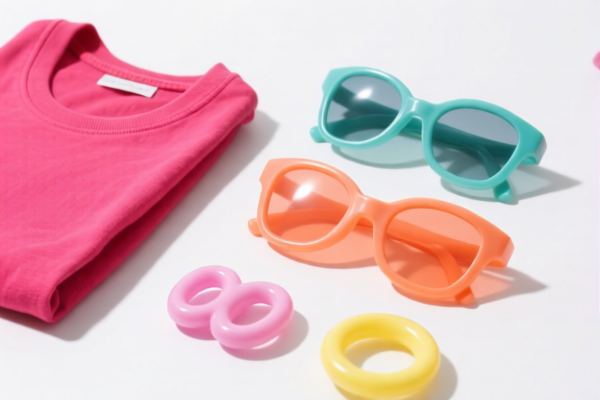
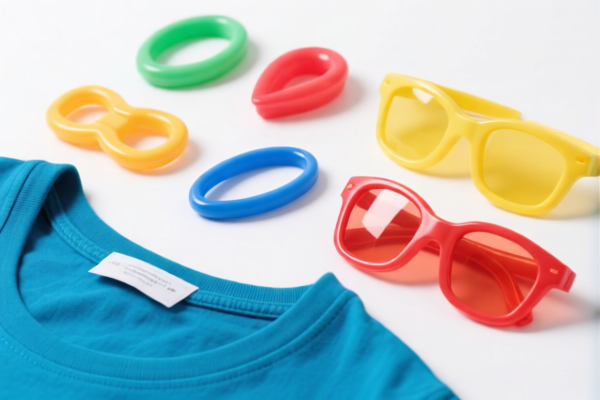
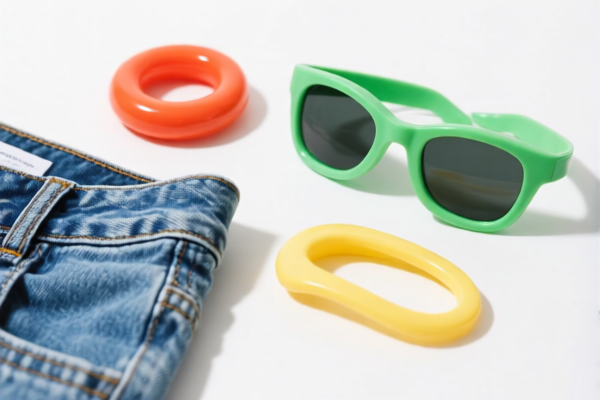
AI Analysis
🧵 Plastic Clothing Accessories: The Ultimate Classification & Duty Breakdown Guide
🌐 HS Code Reference & Customs Clearance Guide | 2026 Tariff Full Analysis | Professional Clearance Strategy
📌 I. Product Definition & Classification: Do You Really Understand "Plastic Clothing Accessories"?
"Plastic Clothing Accessories" is a broad category that includes items such as plastic buttons, zippers, snap fasteners, plastic hooks, loops, and decorative trimmings used in the assembly of garments. In international trade, these items are generally classified under Chapter 62 (Articles of Apparel and Clothing Accessories, not knitted or crocheted) or Chapter 61 (Knitted or Crocheted Apparel), depending on the specific material and function.
⚠️ Key Classification Principle:
- If the item is a generic accessory with no specific material definition in the heading, it falls under the catch-all/residual category of Chapter 62 or 61.
- If it is decorative and made of non-precious metals or other materials, it might fall under Chapter 71 (Imitation Jewelry).
- The term "Plastic" is often implied in the residual subheadings if not explicitly stated in the primary description.
📦 II. HS Code Classification Details (2026 Latest Tariff Authority Comparison)
Based on the provided data, here are the 5 possible HS Codes for "Plastic Clothing Accessories," along with their logical deductions:
| HS Code | Product Description & Logic | Summary Reasoning |
|---|---|---|
| 6217.10.85.00 | Clothing Accessories | Matched with ready-made garment accessories. If the material is not explicitly defined, it applies the residual category (catch-all). |
| 7117.90.90.00 | Imitation Jewelry / Decorative Accessories | Based on the residual category principle for "other items." Inferred as non-precious metal decorative accessories if considered ornamental rather than functional. |
| 6217.10.95.50 | Clothing Accessories | Exact match with "clothing accessories." Based on other category judgment rules, it is classified here as the standard residual item. |
| 6117.80.95.70 | Clothing Accessories | Matches "clothing accessories" usage. Based on the residual category rule for Chapter 61, it is assumed to fit here if knitted/croched is implied or by default. |
| 6117.90.90.95 | Clothing Accessories & Parts | Consistent with "clothing accessories and parts." Based on accessory category and residual category principles. |
🔍 Key Insight:
- All codes except 7117.90.90.00 fall under Chapter 61 or 62, which are standard for functional clothing accessories.
- 7117.90.90.00 is for decorative/ornamental accessories, which may attract a slightly lower base tariff but higher additional duties due to the "other" classification.
- 6217.10.85.00 and 6217.10.95.50 are the most common for plastic accessories like buttons and zippers.
💰 III. 2026 Latest Tariff Rate Details (Including Additional Taxes & Policy Surcharges)
✅ Applicable Country: United States (US)
✅ Origin: China (CN)
✅ Effective Date: November 10, 2025 (for imports after this date)
🎯 1. HS Code: 6217.10.85.00 – Clothing Accessories (Residual Category)
| Item | Content |
|---|---|
| Base Tariff | 14.6% (Ad Valorem) |
| Additional Tariff (Section 301) | 0.0% |
| Section 122 Tariff | 10% (Specific to this classification) |
| Total Tariff Rate | 24.6% |
| Tax Calculation | CIF Value × 24.6% |
| De Minimis Exemption | ❌ Not Eligible (Subject to full tariff) |
| Legal Basis Path | USITC:6217.10.85.00 → FOOTNOTE:122 → General Rate |
📌 Explanation:
- Base Tariff (14.6%): Standard MFN rate for "Other made-up clothing accessories."
- Section 122 Tariff (10%): A specific additional duty applied to this residual subheading.
- No Section 301 Tariff: This specific residual code does not carry the 25% Section 301 tariff, making it more favorable than many other apparel accessories.
🎯 2. HS Code: 7117.90.90.00 – Imitation Jewelry / Decorative Accessories
| Item | Content |
|---|---|
| Base Tariff | 11.0% (Ad Valorem) |
| Additional Tariff (Section 301) | 7.5% |
| Section 122 Tariff | 10% |
| Total Tariff Rate | 28.5% |
| Tax Calculation | CIF Value × 28.5% |
| De Minimis Exemption | ❌ Not Eligible |
| Legal Basis Path | USITC:7117.90.90.00 → FOOTNOTE:122 → Section 301:7.5% |
📌 Explanation:
- Base Tariff (11.0%): Lower than Chapter 62, applicable to "Imitation Jewelry."
- Section 301 Tariff (7.5%): Partial 301 tariff applies to this category.
- Section 122 Tariff (10%): Additional duty for residual items.
- Total 28.5%: Higher than 6217.10.85.00 due to the Section 301 component.
🎯 3. HS Code: 6217.10.95.50 – Clothing Accessories (Residual)
| Item | Content |
|---|---|
| Base Tariff | 14.6% |
| Additional Tariff (Section 301) | 7.5% |
| Section 122 Tariff | 10% |
| Total Tariff Rate | 32.1% |
| Tax Calculation | CIF Value × 32.1% |
| De Minimis Exemption | ❌ Not Eligible |
| Legal Basis Path | USITC:6217.10.95.50 → FOOTNOTE:122 → Section 301:7.5% |
📌 Explanation:
- This is a different residual subheading under 6217.10.
- Unlike 6217.10.85.00, it includes a 7.5% Section 301 tariff, pushing the total to 32.1%.
- Caution: Ensure your product matches the specific description for .85 vs .95 to avoid overpayment.
🎯 4. & 5. HS Codes: 6117.80.95.70 & 6117.90.90.95 – Knitted/Crocheted Accessories
| Item | Content |
|---|---|
| Base Tariff | 14.6% |
| Additional Tariff (Section 301) | 7.5% |
| Section 122 Tariff | 10% |
| Total Tariff Rate | 32.1% |
| Tax Calculation | CIF Value × 32.1% |
| De Minimis Exemption | ❌ Not Eligible |
| Legal Basis Path | USITC:6117.80.95.70 / 6117.90.90.95 → FOOTNOTE:122 → Section 301:7.5% |
📌 Explanation:
- These codes apply if the accessories are knitted or crocheted (Chapter 61).
- Same tariff structure as 6217.10.95.50: 14.6% + 7.5% + 10% = 32.1%.
- Use these only if the product is explicitly knitted/crocheted; otherwise, misclassification risk is high.
🛠️ IV. Customs Clearance Practical Advice (Real-World Pitfall Avoidance Guide)
✅ 1. Required Documentation Checklist
| Document | Must Provide | Notes |
|---|---|---|
| ✅ Product Specification Sheet | ✔️ | Include material (e.g., "Polypropylene"), size, and function (button, zipper, etc.). |
| ✅ Product Photos | ✔️ | Clear images of the accessory, including any branding or labels. |
| ✅ Commercial Invoice | ✔️ | Describe items as "Plastic Clothing Accessories" or "Synthetic Fiber Garment Accessories." |
| ✅ Packing List | ✔️ | Ensure quantities match the invoice. |
| ✅ Material Declaration | ✔️ | Confirm plastic type (e.g., ABS, PVC, PP) to support HS code selection. |
✅ 2. Declaration Tips (Key Mantra)
🔥 "Specify Material, Choose Residual, Avoid Chapter 71!"
| Scenario | Correct Declaration | Incorrect Practice |
|---|---|---|
| Plastic Buttons | 6217.10.85.00 (24.6%) |
Declare as "Decorative Beads" → 7117.90.90.00 (28.5%) |
| Plastic Zippers | 6217.10.85.00 (24.6%) |
Declare as "Textile Accessories" → Potential Misclassification |
| Knitted Garment Tags | 6117.90.90.95 (32.1%) |
Declare as "Plastic" → Risk of Rejection |
| Ornamental Plastic Charms | 7117.90.90.00 (28.5%) |
Declare as "Buttons" → Penalty for Misclassification |
📌 Note:
- 6217.10.85.00 is the most cost-effective for general plastic accessories (24.6% vs 28.5%+).
- Avoid declaring functional plastic accessories as "Imitation Jewelry" unless they are primarily decorative (e.g., fashion brooches, ornamental pins).
✅ 3. Special Case Handling
| Scenario | Handling Advice |
|---|---|
| Mixed Materials | If accessory has plastic + metal parts, classify based on essential character. If plastic dominates, use Chapter 62. |
| Bulk vs. Retail | Bulk shipments of raw plastic buttons should be declared as "Garment Accessories", not "Parts of Garments." |
| OEM/Private Label | Ensure invoice matches the brand name and model to avoid valuation disputes. |
| De Minimis Threshold | ❌ Not Eligible for Section 321 (800 USD) due to China origin and Section 122/301 tariffs. |
🌍 V. Global Market Customs Comparison (2026 Latest)
| Country/Region | Recommended HS Code | Total Tariff | Notes |
|---|---|---|---|
| 🇺🇸 United States | 6217.10.85.00 |
24.6% | Best option for plastic accessories. |
| 🇪🇺 European Union | 6217.10.90 |
~8-10% | No Section 122/301; lower base tariff. |
| 🇨🇳 China (Import) | 6217.10.90 |
~10-12% | Standard MFN rate; no extra surcharges. |
| 🇬🇧 United Kingdom | 6217.10.90 |
~8-10% | Post-Brexit tariff similar to EU. |
📌 Conclusion:
- US market is the most challenging due to Section 122 and Section 301 tariffs.
- 6217.10.85.00 is the optimal HS Code for plastic clothing accessories entering the US, as it avoids the higher Section 301 component found in other residual subheadings.
📌 VI. Common Errors & Pitfalls (Lessons Learned)
❌ Error 1: Declaring plastic buttons as "Jewelry" (7117.90.90.00)
👉 Consequence: Higher tariff (28.5% vs 24.6%) + potential audit for misclassification.
❌ Error 2: Using 6217.10.95.50 instead of 6217.10.85.00
👉 Consequence: Unexpected 7.5% Section 301 tariff, increasing total to 32.1%.
❌ Error 3: Failing to specify "Plastic" in the description
👉 Consequence: Customs may classify as "Textile Accessories" (different tariff) or request additional information, causing delays.
✅ Best Practice:
"Plastic Buttons, Garment Accessories, Model XYZ, Material: PP, HS: 6217.10.85.00"
🎯 VII. Conclusion: Precise Classification Saves Money!
🎯 Remember the Mantra:
🔹 "6217.85 is the Gold Standard for Plastic Accessories (24.6%).
🔹 "Avoid 7117 and 6217.95 to Save 7.5-8%."
📌 Pro Tip:
- Always request a Pre-Ruling from US Customs and Border Protection (CBP) if your product falls into a residual category to avoid disputes.
- For large volumes, consider supply chain diversification to non-China origins to mitigate Section 301/122 risks.
📣 Take Action Now:
📞 Consult with a licensed customs broker.
📄 Provide clear product descriptions and photos.
🚀 Clear your goods smoothly, minimize duties, and maximize profits!
✨ Professional Clearance Starts with Accurate Classification!
💼 Every Dollar of Duty is Worth Saving!
Customer Reviews
About HS Code Classification
The Harmonized System (HS) is an internationally standardized nomenclature developed by the World Customs Organization (WCO) to classify traded products. Over 200 countries use the HS system as the basis for customs tariffs, trade statistics, and import/export regulations.
Each HS code follows a hierarchical structure:
- Chapter (2 digits) — Broad category of goods (e.g., Chapter 84: Machinery and Mechanical Appliances)
- Heading (4 digits) — More specific grouping within the chapter
- Subheading (6 digits) — Internationally standardized breakdown, used by all WCO member countries
- National subdivisions (8-10 digits) — Country-specific extensions for further classification, such as US HTSUS 10-digit codes
Correct HS code classification is essential for smooth customs clearance, accurate duty payment, and compliance with trade regulations. Misclassification can lead to customs delays, overpayment of duties, or penalties.
When importing from CN to US, the applicable tariff rates may include:
- Most-Favored-Nation (MFN) rate — The standard duty rate applied to WTO members
- General rate — Applied to countries without trade agreements
- Trade remedy duties — Additional tariffs such as Section 301 (anti-dumping), Section 232 (national security), or countervailing duties
The information provided on this page is for reference purposes only. For official classification, please consult with your local customs authority or a licensed customs broker.