Plastic Clothing Storage Box
CN → US| HS Code | Tariff Rate | Origin | Destination | Doc |
|---|---|---|---|---|
| 3924104000 | 13.4% | CN | US | Official Doc |
| 3924905650 | 20.9% | CN | US | Official Doc |
| 3926901000 | 20.9% | CN | US | Official Doc |
| 3926909989 | 22.8% | CN | US | Official Doc |
| 3923900080 | 38.0% | CN | US | Official Doc |
| 3923109000 | 38.0% | CN | US | Official Doc |
Product Images


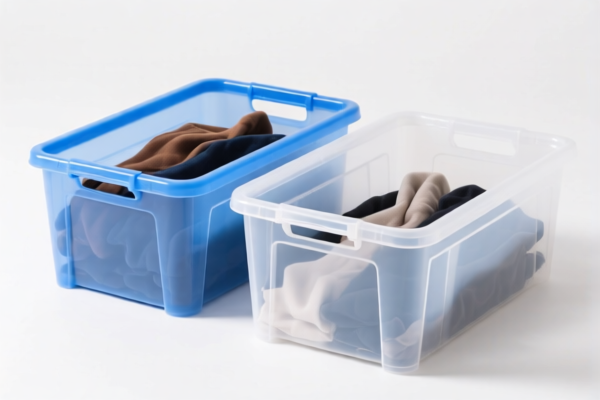
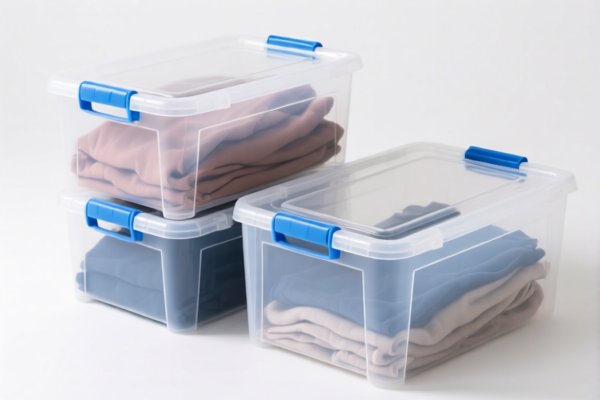
AI Analysis
📦 Plastic Clothing Storage Box (家居收纳置物盒)
🌐 HS Code Reference & Customs Clearance Guide | 2026 Latest Tariff Analysis | Professional Entry Strategy
📌 I. Product Definition & Classification: What Exactly is a "Storage Box"?
A Plastic Clothing Storage Box is a household item designed for organizing and storing garments. In international trade, its classification depends heavily on its specific design, intended use, and structural characteristics. It is not a "one-size-fits-all" category.
To determine the correct HS Code, you must distinguish between: 1. Dedicated Storage/Sorters: Boxes designed primarily as organizers (e.g., drawer dividers, stackable bins with lids). 2. Packaging/Shipping Containers: Boxes intended for transporting goods or holding products in a retail/packaging context. 3. General Household Items: Plastic items that don't fit neatly into "packaging" or "specific sorters."
⚠️ Key Distinction Point:
- If the box is a finished household product meant for end-user organization (e.g., under-bed storage, closet bins) → It generally falls under Chapter 39 (Articles of Plastic) but needs to be sorted by sub-category (Storage vs. Packaging).
- If it is a shipping carton/box (even if plastic) used for logistics → It may fall under Chapter 39.23 (Articles for the conveyance or packaging of goods).
- If it is a general container not specifically designed as a "sorter" or "packaging" → It falls under Chapter 39.26 (Other articles of plastic).
📦 II. HS Code Classification Details (2026 Latest Tariff Authority Comparison)
| HS Code | Product Description | Applicable Scenario | Tax Rate (Total) | Tax Details |
|---|---|---|---|---|
3924.10.40.00 |
Plastic material, storage boxes for home organization | Primary Choice for typical closet/under-bed bins; designed specifically for organizing clothes. | 13.4% | Base: 3.4% Add'l: 0.0% Section 122: 10% |
3924.90.56.50 |
Plastic material, other home utility items (storage boxes) | Secondary Choice if not strictly a "sorter" but still a household storage item. Slightly broader category. | 20.9% | Base: 3.4% Add'l: 7.5% Section 122: 10% |
3926.90.10.00 |
Plastic material, articles such as storage boxes or containers | Fallback for general plastic containers that don't fit specific home utility definitions. | 20.9% | Base: 3.4% Add'l: 7.5% Section 122: 10% |
3926.90.99.89 |
Plastic material, other plastic articles not specifically provided for | High Risk/High Cost: Used if the product is deemed a "miscellaneous" plastic item with no specific storage or packaging definition. | 22.8% | Base: 5.3% Add'l: 7.5% Section 122: 10% |
3923.90.00.80 |
Plastic material, containers for conveyance or packaging of goods | WRONG if marketed as a final household product. Only applies if the box is packaging for another product (e.g., bulk shipping container). | 38.0% | Base: 3.0% Add'l: 25.0% Section 122: 10% |
3923.10.90.00 |
Plastic material, boxes for transport or packaging | WRONG if marketed as a final household product. Only applies if the box is packaging for another product. | 38.0% | Base: 3.0% Add'l: 25.0% Section 122: 10% |
🔍 Critical Reminder:
- If the box is sold as a finished household good for storing clothes, do NOT classify it under3923(Packaging). This is a common and costly error. -3924.10.40.00offers the lowest tax rate (13.4%) and is the most accurate for dedicated clothing storage boxes. -3923codes attract a 25% additional tariff, making them extremely expensive for household goods.
💰 III. 2026 Latest Tariff Rate Breakdown (Including Surcharges & Policy Add-ons)
✅ Applicable Country: United States (US)
✅ Origin: China (CN)
✅ Effective Time: 2025/2026 Tariff Schedule
🎯 1. 3924.10.40.00 — The Optimal Choice: Household Storage Boxes
| Item | Content |
|---|---|
| Base Duty | 3.4% |
| Section 301 Surcharge | 0.0% |
| Section 122 Duty | 10.0% (Specific to certain plastic articles) |
| Total Tax Rate | 13.4% |
| Tax Calculation | CIF Value × 13.4% |
| De Minimis Eligibility | ❌ No (Section 122 duties usually negate de minimis benefits) |
| Legal Basis Path | HTSUS:3924.10.40.00 → USITC Footnote → Section 122 |
📌 Explanation:
- This code represents plastic articles of a kind used for domestic purposes (specifically storage/sorters).
- The 10% Section 122 duty is a special surcharge often applied to plastic household items to protect domestic manufacturers.
- No Section 301 (25%) applies, making this the most cost-effective classification for eligible products.
🎯 2. 3924.90.56.50 & 3926.90.10.00 — The "Other" Category
| Item | Content |
|---|---|
| Base Duty | 3.4% |
| Section 301 Surcharge | 7.5% |
| Section 122 Duty | 10.0% |
| Total Tax Rate | 20.9% |
| Tax Calculation | CIF Value × 20.9% |
📌 Note:
- These codes incur a 7.5% Section 301 surcharge in addition to the 10% Section 122 duty.
- Use these only if the product cannot be clearly defined as a "storage sorter" under3924.10.
🎯 3. 3923.90.00.80 & 3923.10.90.00 — The High-Cost Trap (Packaging)
| Item | Content |
|---|---|
| Base Duty | 3.0% |
| Section 301 Surcharge | 25.0% |
| Section 122 Duty | 10.0% |
| Total Tax Rate | 38.0% |
| Tax Calculation | CIF Value × 38.0% |
⚠️ Warning:
- Do NOT use these codes for retail-ready clothing storage boxes.
- These codes are for transportation packaging (e.g., plastic crates for shipping, bulk containers).
- Misclassification here leads to 38% tax, which is nearly 3x the optimal rate.
🛠️ IV. Customs Clearance Practical Advice (Combat Pitfalls)
✅ 1. Documentation Checklist (Non-Negotiable)
| Document | Required | Explanation |
|---|---|---|
| ✅ Product Specification Sheet | ✔️ | Must clearly state: "Plastic Storage Box for Home Use," dimensions, material (e.g., PP/PE), and capacity. |
| ✅ Photos of Product | ✔️ | Show the box with/without clothes, highlighting its use as a storage unit, not a shipping container. |
| ✅ Commercial Invoice | ✔️ | Description must match HS Code: "Plastic Household Storage Box" (Avoid vague terms like "Plastic Container"). |
| ✅ Packing List | ✔️ | Detail contents. Ensure the box is not described as "packaging for another item." |
| ✅ Certificate of Origin (CO) | ✔️ | Required to prove origin and apply any potential exemptions (though limited for China-origin plastics). |
✅ 2. Declaration Strategy (Key Mantra)
🔥 "Household Use is Key, Packaging is Trap, Name it Right, Save Money!"
| Scenario | Correct Declaration | Incorrect Declaration |
|---|---|---|
| Retail Storage Box (with lid, for closet) | "Plastic Household Storage Box" → 3924.10.40.00 |
"Plastic Shipping Box" → 3923.10.90.00 (38% Tax) |
| Bulk Container for Factory Use | "Plastic Transport Crate" → 3923.10.90.00 |
"Household Storage Box" → Incorrect Use |
| General Plastic Bin (no specific storage function) | "Plastic Utility Container" → 3926.90.10.00 |
Vague term "Box" |
✅ 3. Special Situations
| Situation | Handling Advice |
|---|---|
| OEM Custom Boxes | Provide design drawings showing it is a finished consumer product, not a packaging component. |
| Box with Wheels/Handles | Still falls under 3924.10.40.00 if primarily for storage. Do not split into "wheels" and "box." |
| Set with Liners | Declare the entire set as a storage box. Do not separate the liner as a textile. |
| Used/Refurbished Boxes | Usually prohibited or heavily restricted under plastic waste regulations. New only. |
🌍 V. Global Market Comparison (2026 Latest)
| Country/Region | Recommended HS Code | Tariff | Certification | Notes |
|---|---|---|---|---|
| 🇺🇸 USA | 3924.10.40.00 |
13.4% | None | Best Rate. Avoid 3923 (38%). |
| 🇨🇳 China | 3924.10.40.00 |
~5-10% | N/A | Standard import tax. |
| 🇪🇺 EU | 3924.10.40.00 |
~2.5% | CE (if applicable) | No Section 122 equivalent. |
| 🇬🇧 UK | 3924.10.40.00 |
~2.5% | UKCA | Post-Brexit rules apply. |
| 🇦🇺 Australia | 3924.10.40.00 |
5% | None | GST applies at 10%. |
📌 Conclusion:
- The USA is the most complex market due to Section 122 and 301 duties.
- Correct classification is critical: A 24.6% tax difference exists between3924.10.40.00(13.4%) and3923.10.90.00(38.0%).
- China-origin plastic storage boxes face specific surcharges, so precision in documentation is paramount.
📌 VI. Common Errors & Pitfalls (Lessons Learned)
❌ Error 1: Calling a retail storage box a "Shipping Container"
👉 Consequence: Tax jumps from 13.4% to 38%. Loss of 24.6% margin!
❌ Error 2: Using "Plastic Container" as a generic description without specifying "Household Use"
👉 Consequence: Customs may default to 3926.90.99.89 (22.8%) or 3923 (38%) due to ambiguity.
❌ Error 3: Failing to disclose Section 122 eligibility
👉 Consequence: Even with 3924.10.40.00, you still pay 10% Section 122. Ensure the product is not excluded from this surcharge (most plastic household articles are included).
✅ Correct Approach:
"Plastic Household Storage Box, PP Material, Stackable Design, for Closet Organization, Model XYZ, No Packaging Function"
🎯 VII. Conclusion: Precision Saves Money!
🎯 Remember the Mantra:
🔹 "Household Storage is King (13.4%), Packaging is Death (38%), Be Specific, Avoid the Trap!"
🔹 "HS Code determines cost, 25% difference can kill your profit, declare correctly, sleep soundly!"
📌 Pro Tip:
If your storage box has special features (e.g., vacuum sealing, airtight seal), ensure these are described as functional aspects of the storage box, not as separate "packaging equipment." This keeps it under
3924.10.40.00.
📣 Action Required:
📞 Consult your customs broker with product photos and spec sheets.
🚀 Get an Advance Ruling if unsure. It’s worth the small fee to avoid a 24.6% tax shock!
✨ Professional Clearance, Starting with Accurate Classification!
💼 Every dollar saved in tariffs is pure profit!
Customer Reviews
About HS Code Classification
The Harmonized System (HS) is an internationally standardized nomenclature developed by the World Customs Organization (WCO) to classify traded products. Over 200 countries use the HS system as the basis for customs tariffs, trade statistics, and import/export regulations.
Each HS code follows a hierarchical structure:
- Chapter (2 digits) — Broad category of goods (e.g., Chapter 84: Machinery and Mechanical Appliances)
- Heading (4 digits) — More specific grouping within the chapter
- Subheading (6 digits) — Internationally standardized breakdown, used by all WCO member countries
- National subdivisions (8-10 digits) — Country-specific extensions for further classification, such as US HTSUS 10-digit codes
Correct HS code classification is essential for smooth customs clearance, accurate duty payment, and compliance with trade regulations. Misclassification can lead to customs delays, overpayment of duties, or penalties.
When importing from CN to US, the applicable tariff rates may include:
- Most-Favored-Nation (MFN) rate — The standard duty rate applied to WTO members
- General rate — Applied to countries without trade agreements
- Trade remedy duties — Additional tariffs such as Section 301 (anti-dumping), Section 232 (national security), or countervailing duties
The information provided on this page is for reference purposes only. For official classification, please consult with your local customs authority or a licensed customs broker.