Plastic Clothing Storage Boxes
CN → US| HS Code | Tariff Rate | Origin | Destination | Doc |
|---|---|---|---|---|
| 3924104000 | 13.4% | CN | US | Official Doc |
| 3924905650 | 20.9% | CN | US | Official Doc |
| 3923109000 | 38.0% | CN | US | Official Doc |
| 3923900080 | 38.0% | CN | US | Official Doc |
| 3926909989 | 22.8% | CN | US | Official Doc |
Product Images


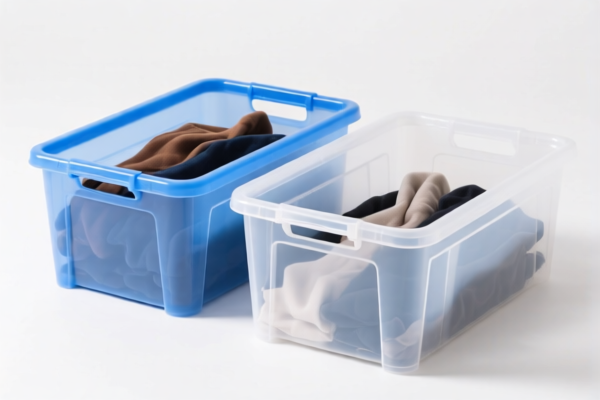
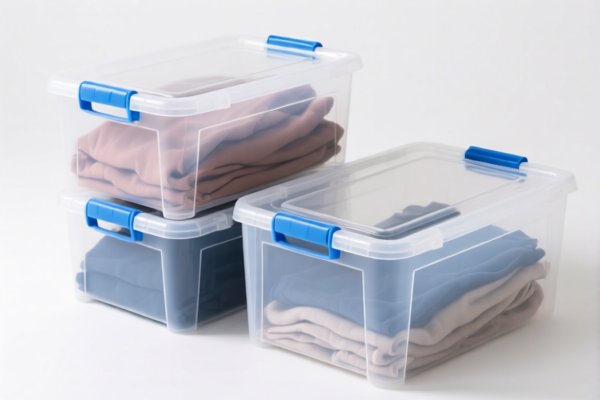
AI Analysis
📦 Plastic Clothing Storage Boxes (Plastic Storage Solutions)
🌐 HS Code Reference & Customs Clearance Guide | 2026 Latest Tariff Analysis | Professional Classification Strategy
📌 One, Product Definition & Classification: What Exactly Are "Plastic Clothing Storage Boxes"?
Plastic clothing storage boxes are essential home organization tools, typically made of polypropylene (PP) or polyethylene (PE). In international trade, the key to accurate classification lies in their specific structure, function, and form. A slight difference in design (e.g., with/without a handle, hinged vs. separate lid, hanging vs. stackable) can lead to vastly different HS Codes and tax liabilities.
⚠️ Critical Distinction:
- Hanging Baskets/Bins: Designed to be suspended on rods or hooks → Often classified under 3924 (Tableware, kitchenware, or similar household articles).
- Rigid Boxes/Bins: Designed to sit on shelves, stacks, or floor → Often classified under 3923 (Articles for the conveyance or packing of goods, e.g., boxes, cases, crates).
- Plastic Boards/Plates: Flat sheets used for storage organization → Classified under 3926 (Other articles of plastics).
📊 Two, HS Code Classification Details (2026 Latest Tariff Authority Match)
Based on the provided data, here are the 5 specific HS Codes and their precise applications for "Plastic Clothing Storage Boxes":
| HS Code | Product Description | Typical Form & Use Case | Why This Code? |
|---|---|---|---|
| 3924.10.40.00 | Plastic Hanging Storage Basket | Fabric/plastic mesh bags with hooks, designed to hang in closets. | Classified as "Household Articles" because they are primarily for home organization rather than transport. |
| 3924.90.56.50 | Plastic Hanging Storage Basket (Other) | Other types of plastic household hanging organizers not specifically listed in 3924.10. | Classified as "Other Plastic Household Articles". |
| 3923.10.90.00 | Plastic Storage Box/Bin | Rigid boxes, crates, or bins with lids, designed for stacking or shelf storage. | Classified as "Boxes, Cases, Crates & Similar Articles" because their primary function is containment/packing. |
| 3923.90.00.80 | Plastic Storage Supplies | Plastic storage items used for transport or packing related purposes (e.g., bulk transport bins). | Classified as "Other Articles for Conveyance/Packing". |
| 3926.90.99.89 | Plastic Board for Storage | Flat plastic boards, dividers, or liner sheets used inside storage units. | Classified as "Other Plastic Articles" (specifically board-shaped products), not a box/container. |
🔍 Key Reminder:
- If the product is hanging (with hooks/strings), it leans toward 3924.
- If the product is rigid, stackable, or box-shaped, it leans toward 3923.
- If it is a flat board/divider, it falls under 3926.
💰 Three, 2026 Latest Tariff Rate Breakdown (Including Additional Taxes & Policy Surcharges)
✅ Applicable Country: United States (US)
✅ Origin: China (CN)
✅ Effective Time: Ongoing (Based on 2025-2026 trade policy data)
🎯 1. 3924.10.40.00 & 3924.90.56.50 —— Plastic Hanging Storage Baskets
These items are classified as Household Articles. They benefit from lower base duties but are still subject to significant additional tariffs.
| Item | Content |
|---|---|
| Base Duty Rate | 3.4% (Ad Valorem) |
| Trade War Surcharge (Section 301) | 7.5% (Applied to many plastic household goods) |
| Section 122 Surcharge | 10% (Specific anti-dumping/countervailing measure) |
| Total Tax Rate | 20.9% |
| Tax Calculation | CIF Value × 20.9% |
| De Minimis Eligibility | ❌ No (Deemed too high for $800 exemption; check current de minimis rules) |
| Legal Basis Path | USITC:3924.10.40.00 → Section 301: 7.5% → Section 122: 10% |
📌 Explanation:
- The 7.5% is the standard Section 301 tariff for many plastic household items.
- The 10% Section 122 tariff applies specifically to certain plastic imports.
- Total: 20.9%. This is a moderate-high tariff, significantly higher than free-trade agreements (FTAs) but lower than other categories.
🎯 2. 3926.90.99.89 —— Plastic Storage Boards/Plates
| Item | Content |
|---|---|
| Base Duty Rate | 5.3% (Ad Valorem) |
| Trade War Surcharge (Section 301) | 7.5% |
| Section 122 Surcharge | 10% |
| Total Tax Rate | 22.8% |
| Tax Calculation | CIF Value × 22.8% |
| De Minimis Eligibility | ❌ No |
| Legal Basis Path | USITC:3926.90.99.89 → Section 301: 7.5% → Section 122: 10% |
📌 Explanation:
- Although the base rate is slightly higher (5.3% vs 3.4%), the total impact is only 1.9% higher than hanging baskets.
- Still a significant cost factor.
🎯 3. 3923.10.90.00 & 3923.90.00.80 —— Plastic Storage Boxes/Bins (Rigid)
These items are classified as Packing/Transport Articles, which face the highest tariffs in this dataset.
| Item | Content |
|---|---|
| Base Duty Rate | 3.0% (Ad Valorem) |
| Trade War Surcharge (Section 301) | 25.0% (High-level tariff for plastic packaging/packing articles) |
| Section 122 Surcharge | 10% |
| Total Tax Rate | 38.0% |
| Tax Calculation | CIF Value × 38.0% |
| De Minimis Eligibility | ❌ No |
| Legal Basis Path | USITC:3923.10.90.00 → Section 301: 25% → Section 122: 10% |
📌 Explanation:
- The 25% Section 301 tariff is the maximum standard rate for many Chinese plastic imports.
- Total: 38.0%. This is a very high tariff. Misclassifying a rigid box as a "household article" (3924) to save 17% is a major customs violation risk.
🛠️ Four, Customs Clearance Practical Advice (Avoid Pitfalls)
✅ 1. Document Preparation Checklist
| Document | Required | Description |
|---|---|---|
| ✅ Product Photos | ✔️ | Clear images showing the item’s structure (hanging hooks vs. rigid box). |
| ✅ Product Specification Sheet | ✔️ | Material (PP/PE), dimensions, weight, usage (hanging vs. stacking). |
| ✅ Commercial Invoice | ✔️ | Must accurately describe the item (e.g., "Hanging Plastic Basket" vs. "Plastic Storage Box"). |
| ✅ Packing List | ✔️ | Show contents clearly. Do not mix hanging baskets with rigid boxes in one line item if possible. |
| ✅ Declaration of Compliance | ✔️ | If applicable, confirm no prohibited chemicals in plastic. |
✅ 2. Classification Tips (Key Mantra)
🔥 "Hang it? Go to 3924. Box it? Go to 3923. Board it? Go to 3926."
| Scenario | Correct HS Code | Tariff | Wrong Classification | Consequence |
|---|---|---|---|---|
| Hanging Closet Organizer | 3924.10.40.00 |
20.9% | 3923.10.90.00 |
Overpayment of 17.1% |
| Rigid Stackable Box | 3923.10.90.00 |
38.0% | 3924.10.40.00 |
Underpayment, Risk of Penalty & Back Taxes |
| Plastic Dividers/Boards | 3926.90.99.89 |
22.8% | 3923.10.90.00 |
Overpayment of 15.2% |
✅ 3. Special Situation Handling
| Situation | Advice |
|---|---|
| Mixed Packaging | If a shipment contains both hanging baskets and rigid boxes, declare separately. Do not lump them into one "Plastic Storage Items" line. |
| OEM Custom Boxes | Provide design drawings to prove if the item is primarily for "home organization" (3924) or "conveyance/packing" (3923). |
| De Minimis Risk | For single small packages (under $800), some carriers may allow entry, but customs reserves the right to collect duties. High-risk items (3923) are more likely to be audited. |
| Section 122 Impact | This 10% tariff is non-negotiable for these plastic goods. Factor it into your price calculation. |
🌍 Five, Global Market Clearance Comparison (2026 Latest)
| Country/Region | Recommended HS Code | Estimated Total Tariff | Key Certification | Notes |
|---|---|---|---|---|
| 🇺🇸 USA | 3924.10.40.00 (Hanging) |
20.9% | None specific | High risk for 3923 items (38%) |
| 🇺🇸 USA | 3923.10.90.00 (Rigid Box) |
38.0% | None specific | Highest tariff tier |
| 🇨🇳 China | 3924.10.40.00 |
0%~5% | CCC (if applicable) | Low duty for domestic sales |
| 🇪🇺 EU | 3924.10.40.00 |
4.5% | REACH, RoHS | Standard EU customs duty |
| 🇯🇵 Japan | 3924.10.40.00 |
0% | PSE (if electrical) | Very low duty |
| 🇦🇺 Australia | 3924.10.40.00 |
5% | ACS | Standard duty |
📌 Conclusion:
- USA is the most challenging market due to the 10% Section 122 + 7.5%/25% Section 301 surcharges.
- Rigid plastic boxes (3923) are the most heavily taxed.
- Hanging baskets (3924) are the most tax-efficient option for the US market.
📌 Six, Common Mistakes & Pitfalls (Lessons Learned)
❌ Mistake 1: Calling all plastic storage items "Plastic Boxes" and using 3923.10.90.00
👉 Result: Paying 38% when you could pay 20.9% if they are hanging baskets.
👉 Solution: Accurately describe the product as "Hanging Basket" or "Organizer" in the invoice.
❌ Mistake 2: Misclassifying rigid storage boxes as "Household Articles" (3924)
👉 Result: Customs Audit & Penalty. The tariff difference is 17.1%, which is a clear under-declaration.
👉 Solution: If it’s a rigid box, crate, or bin, use 3923.
❌ Mistake 3: Ignoring the "Section 122" 10% tariff
👉 Result: Profit margin erosion. Many exporters forget to include this in their cost calculations.
👉 Solution: Always add 10% to your Landed Cost model for these HS Codes.
🎯 Seven, Conclusion: Accurate Classification, Maximize Profit!
🎯 Remember the Mantra:
🔹 "Hanging = 3924 (20.9%). Rigid Box = 3923 (38.0%). Board = 3926 (22.8%)."
🔹 "Don't guess the HS Code. A 17% tariff difference can kill your profit."
📌 Pro Tip:
If you are shipping to the US, prioritize "Hanging Storage Baskets" (3924) over "Rigid Storage Boxes" (3923) for cost efficiency.
Ensure your commercial invoice clearly distinguishes between "Hanging Baskets" and "Storage Boxes/Crates" to avoid customs delays.
📣 Immediate Action:
📞 Review your product list.
🖼️ Take clear photos of your packaging and products.
📋 Confirm if your items are "Hanging" or "Rigid".
🚀 Choose the correct HS Code to save up to 17% in tariffs!
✨ Professional Clearance Starts with Precise Classification!
💼 Every Percentage Point Counts in Your Profit Margin!
Customer Reviews
About HS Code Classification
The Harmonized System (HS) is an internationally standardized nomenclature developed by the World Customs Organization (WCO) to classify traded products. Over 200 countries use the HS system as the basis for customs tariffs, trade statistics, and import/export regulations.
Each HS code follows a hierarchical structure:
- Chapter (2 digits) — Broad category of goods (e.g., Chapter 84: Machinery and Mechanical Appliances)
- Heading (4 digits) — More specific grouping within the chapter
- Subheading (6 digits) — Internationally standardized breakdown, used by all WCO member countries
- National subdivisions (8-10 digits) — Country-specific extensions for further classification, such as US HTSUS 10-digit codes
Correct HS code classification is essential for smooth customs clearance, accurate duty payment, and compliance with trade regulations. Misclassification can lead to customs delays, overpayment of duties, or penalties.
When importing from CN to US, the applicable tariff rates may include:
- Most-Favored-Nation (MFN) rate — The standard duty rate applied to WTO members
- General rate — Applied to countries without trade agreements
- Trade remedy duties — Additional tariffs such as Section 301 (anti-dumping), Section 232 (national security), or countervailing duties
The information provided on this page is for reference purposes only. For official classification, please consult with your local customs authority or a licensed customs broker.