Plastic Coaster
CN → US| HS Code | Tariff Rate | Origin | Destination | Doc |
|---|---|---|---|---|
| 9403708003 | 35.0% | CN | US | Official Doc |
| 3926904800 | 13.4% | CN | US | Official Doc |
| 3926909989 | 22.8% | CN | US | Official Doc |
Product Images
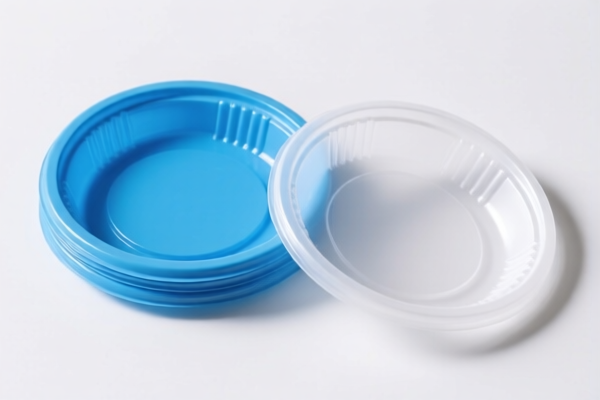
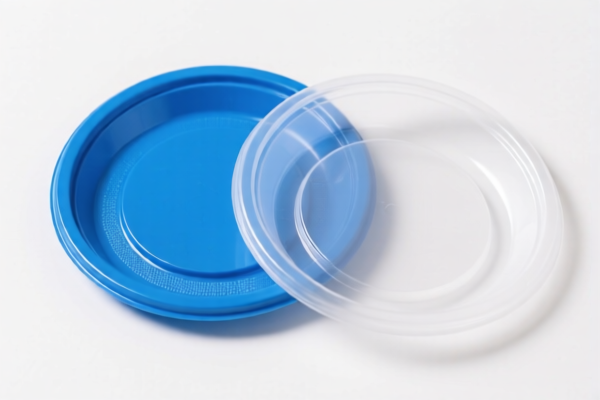

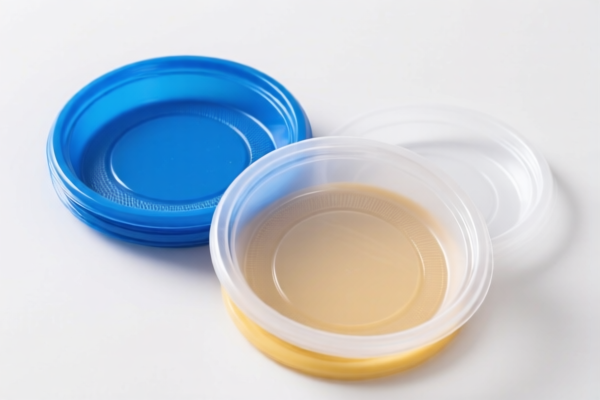
AI Analysis
🥤 Plastic Coasters (PVC Mats)
🌐 HS Code Reference & Customs Clearance Guide | 2026 Latest Tariff Analysis | Professional Level Customs Strategy
📌 I. Product Definition & Classification: Do You Really Understand "Plastic Coasters"?
Plastic coasters, primarily made of PVC (Polyvinyl Chloride), are small protective items used under drinking vessels to prevent water rings on furniture. In international trade, their classification is highly debated because they sit on the boundary between "furniture accessories" and "general plastic articles."
There are two main classification perspectives in customs practice: 1. As Furniture/Accessory: Viewed as an accessory for furniture (tables), falling under the "Furniture" chapter. 2. As Plastic Articles: Viewed purely as a manufactured plastic product, falling under the "Plastics" chapter.
⚠️ Key Distinction Point:
- If classified as Furniture Accessory → HS 9403.70.80.03 (High risk of punitive tariffs).
- If classified as General Plastic Article → HS 3926.90.48.00 (Lower tax burden, strategic choice).
- Note: HS 3926.90.99.89 is a fallback category but carries a moderate tax burden.
📦 II. HS Code Classification Details (2026 Latest Tariff Authority Comparison)
| HS Code | Product Description | Applicability Scenario | Summary/Logic |
|---|---|---|---|
9403.70.80.03 |
Other furniture parts, made of plastic (PVC) | Coasters viewed as furniture accessories | 🛋️ "Catch-all" for Plastic Furniture: Regarded as a non-specific furniture component. |
3926.90.48.00 |
Other articles of plastics and articles of other materials of heading 39.13 | Coasters viewed as general plastic products | 🧱 "Material & Form" Focus: Based on PVC material and simple shaped form, fits "other plastic articles." |
3926.90.99.89 |
Other plastic articles not specified elsewhere | Coasters as non-specific utility items | 📦 "Catch-all" for Plastics: Used when specific plastic usage isn't defined; a generic fallback. |
🔍 Key Reminder:
- HS 3926.90.48.00 is often the most cost-effective choice for PVC coasters because it attracts 0% additional trade war tariffs, provided you can justify it as a "general plastic article" rather than a "furniture part." - HS 9403.70.80.03 triggers significant punitive tariffs (25% + 10%) because furniture parts are heavily targeted in trade restrictions.
💰 III. 2026 Latest Tariff Rate Breakdown (Including Surtaxes & Policy Add-ons)
✅ Applicable Country: United States (US)
✅ Origin: China (CN)
✅ Effective Time: November 10, 2025 (including subsequent imports)
🎯 1. 9403.70.80.03 —— Plastic Furniture Parts (High Tariff Risk)
| Item | Details |
|---|---|
| Base Tariff | 0.0% (Ad Valorem) |
| Additional Trade Tariff (Section 301) | +25.0% (China-origin punitive tariff) |
| IEEPA Tariff (Section 122/EEA) | +10.0% (Targeting specific Chinese imports) |
| Total Tariff Rate | 35.0% |
| Tax Calculation | CIF Value × 35% |
| De Minimis Eligibility | ❌ Not Eligible (Deny De Minimis) |
| Legal Basis Path | USITC:9403.70.80.03 → Section 301: Footnote 9903.88.01 → IEEPA:9903.01.25 |
📌 Explanation:
- Classifying coasters as "furniture parts" exposes them to the highest tier of US punitive tariffs.
- The 25% is the standard Section 301 tariff on many Chinese goods.
- The 10% is the additional IEEPA tariff often applied to specific categories or regions.
- Total 35% is extremely high, eroding profit margins significantly.
🎯 2. 3926.90.48.00 —— Other Plastic Articles (Strategic Optimization)
| Item | Details |
|---|---|
| Base Tariff | 3.4% (Ad Valorem) |
| Additional Trade Tariff (Section 301) | 0.0% (Exempt or not listed in punitive list) |
| IEEPA Tariff | +10.0% (Still applies to China origin) |
| Total Tariff Rate | 13.4% |
| Tax Calculation | CIF Value × 13.4% |
| De Minimis Eligibility | ❌ Not Eligible (Deny De Minimis) |
| Legal Basis Path | USITC:3926.90.48.00 → IEEPA:9901.25 (or similar IEEPA clause) |
📌 Note:
- This is the recommended classification for most PVC coasters.
- While it has a 3.4% base tariff, it avoids the 25% Section 301 punitive tariff, saving 21.6% compared to the furniture classification.
- The 10% IEEPA tariff still applies, but the overall burden is much lower.
🎯 3. 3926.90.99.89 —— Other Plastic Articles (Fallback Option)
| Item | Details |
|---|---|
| Base Tariff | 5.3% (Ad Valorem) |
| Additional Trade Tariff (Section 301) | +7.5% (Moderate punitive rate) |
| IEEPA Tariff | +10.0% (Applies to China origin) |
| Total Tariff Rate | 22.8% |
| Tax Calculation | CIF Value × 22.8% |
| De Minimis Eligibility | ❌ Not Eligible (Deny De Minimis) |
| Legal Basis Path | USITC:3926.90.99.89 → Section 301: Footnote 9903.88.01 → IEEPA:9903.01.24 |
📌 Note:
- This is a middle-ground option.
- It avoids the full 25% tariff but still incurs a 7.5% Section 301 tariff.
- Use this only if3926.90.48.00is rejected by customs, but be aware it is still 9.4% more expensive than the optimal classification.
🛠️ IV. Customs Clearance Practical Advice (Battle-Tested Pitfall Guide)
✅ 1. Documentation Checklist (Non-negotiable)
| Document | Required? | Explanation |
|---|---|---|
| ✅ Product Spec Sheet | ✔️ | Must specify material (100% PVC or PVC blend), thickness, weight, and usage (non-structural). |
| ✅ Product Photos | ✔️ | Clear images showing the item is flat, flexible, and lacks furniture-like rigidity. |
| ✅ Commercial Invoice | ✔️ | Description should emphasize "Plastic Article" or "PVC Mat" rather than "Furniture Accessory." |
| ✅ Material Safety Data Sheet (MSDS) | ✔️ | Proves chemical composition (PVC). |
| ✅ Packing List | ✔️ | Details net/gross weight to support valuation. |
| ✅ Pre-Ruling Document | ✔️ | Highly Recommended: Obtain an official HS Code pre-ruling from CBP to avoid disputes. |
✅ 2. Declaration Tactics (Key Mantra)
🔥 “Don’t Say Furniture, Say Plastic! Material Over Function!”
| Scenario | Correct Declaration | Wrong Approach |
|---|---|---|
| PVC Coaster | "PVC Plastic Coaster, General Purpose, Non-Structural" | "Furniture Accessory" or "Table Mat" |
| Packaging | Declare as "Plastic Articles of Heading 39.26" | Declare as "Furniture Parts" |
| Classification Choice | Target 3926.90.48.00 |
Accidentally default to 9403.70.80.03 |
| Customs Inquiry | Argue "General Use Plastic Product" | Admit it is specifically for "Furniture Protection" |
💡 Why?
- Customs officers may initially view coasters as furniture parts.
- By emphasizing the material (PVC) and general nature (not exclusively tied to a specific furniture piece), you can argue for Chapter 39 (Plastics) over Chapter 94 (Furniture).
- Chapter 39, Heading 39.26 allows for "Other Articles of Plastic," which often has better tariff outcomes under current trade policies.
✅ 3. Special Handling
| Situation | Advice |
|---|---|
| Customs Audit | If challenged, provide engineers' reports stating the coaster has no structural function and is merely a surface protector. |
| Mixed Containers | If shipping coasters with actual furniture, separate the declaration. Do not mix 9403 furniture items with 3926 plastic items in a way that triggers cross-audits. |
| Origin Marking | Ensure "Made in China" is clearly marked. This triggers the IEEPA 10% tariff regardless of HS code. |
🌍 V. Global Market Comparison (2026 Latest)
| Country/Region | Recommended HS Code | Tariff Rate | Certification | Notes |
|---|---|---|---|---|
| 🇺🇸 USA | 3926.90.48.00 |
13.4% | CPC (if applicable) | Best option avoids 25% Section 301. |
| 🇨🇳 China | 3926.90.48.00 |
5-6% | N/A | Low import duty for domestic sale. |
| 🇪🇺 EU | 3926.90.99 |
0-6% | CE/RoHS | Generally low tariffs, no trade war surtax. |
| 🇬🇧 UK | 3926.90.99 |
0-6% | UKCA | Post-Brexit rules align with EU broadly. |
📌 Conclusion:
- The USA is the most challenging market due to punitive tariffs.
- Strategic Classification is critical: Choose3926.90.48.00to minimize costs.
- Europe/UK are more lenient, but compliance (CE/RoHS) is key.
📌 VI. Common Mistakes & Pitfall Guide (Blood & Tears Lessons)
❌ Mistake 1: Declaring as "Furniture Accessory"
👉 Consequence: Triggers 25% Section 301 + 10% IEEPA = 35% Total Tax.
👉 Result: Profit margin destroyed.
❌ Mistake 2: Ignoring the IEEPA 10% Tariff
👉 Consequence: Even with 0% Section 301, you still pay 10% + Base Rate.
👉 Result: Unexpected cash flow issues.
❌ Mistake 3: Using "Table Mat" in Description
👉 Consequence: Customs associates "Mat" with "Furniture."
👉 Result: Misclassification audit.
✅ Correct Action:
"PVC Plastic Coaster, Non-Structural, General Use, 100% PVC Material, HS 3926.90.48.00"
🎯 VII. Conclusion: Professional Declaration, Cost Saving!
🎯 Remember the Mantra:
🔹 "Plastic Article, Not Furniture! 13.4% vs 35%! Declare Smart!"
🔹 "Base Rate Matters, Section 301 Kills Profits! Choose 3926 Over 9403!"
📌 Pro Tip:
If your product is exclusively made of PVC and has no specific furniture-integration features, always argue for 3926.90.48.00.
Consider applying for a CBP Pre-Ruling to lock in this classification legally.
📣 Immediate Action:
📞 Consult a Customs Broker + Provide Material Specs + Apply for Pre-Ruling
🚀 Minimize Tariffs, Maximize Profits, Clear Customs Smoothly!
✨ Professional Clearance Starts with Precise Classification!
💼 Every Percentage Point Saved is Pure Profit!
Customer Reviews
About HS Code Classification
The Harmonized System (HS) is an internationally standardized nomenclature developed by the World Customs Organization (WCO) to classify traded products. Over 200 countries use the HS system as the basis for customs tariffs, trade statistics, and import/export regulations.
Each HS code follows a hierarchical structure:
- Chapter (2 digits) — Broad category of goods (e.g., Chapter 84: Machinery and Mechanical Appliances)
- Heading (4 digits) — More specific grouping within the chapter
- Subheading (6 digits) — Internationally standardized breakdown, used by all WCO member countries
- National subdivisions (8-10 digits) — Country-specific extensions for further classification, such as US HTSUS 10-digit codes
Correct HS code classification is essential for smooth customs clearance, accurate duty payment, and compliance with trade regulations. Misclassification can lead to customs delays, overpayment of duties, or penalties.
When importing from CN to US, the applicable tariff rates may include:
- Most-Favored-Nation (MFN) rate — The standard duty rate applied to WTO members
- General rate — Applied to countries without trade agreements
- Trade remedy duties — Additional tariffs such as Section 301 (anti-dumping), Section 232 (national security), or countervailing duties
The information provided on this page is for reference purposes only. For official classification, please consult with your local customs authority or a licensed customs broker.