Plastic Coated Paper and Paperboard
CN → US| HS Code | Tariff Rate | Origin | Destination | Doc |
|---|---|---|---|---|
| 4811516000 | 35.0% | CN | US | Official Doc |
| 4810996500 | 35.0% | CN | US | Official Doc |
| 4811596000 | 35.0% | CN | US | Official Doc |
| 4823906000 | 35.0% | CN | US | Official Doc |
| 4823906700 | 35.0% | CN | US | Official Doc |
Product Images
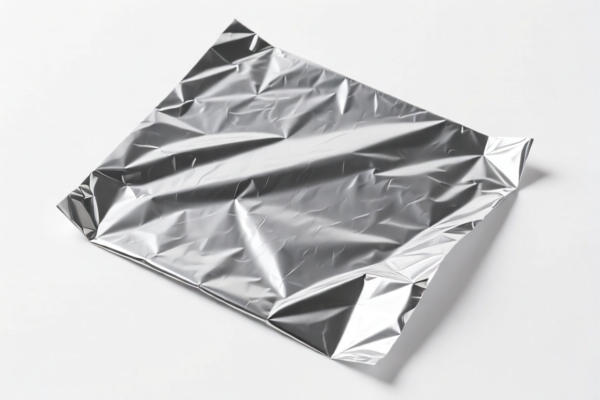

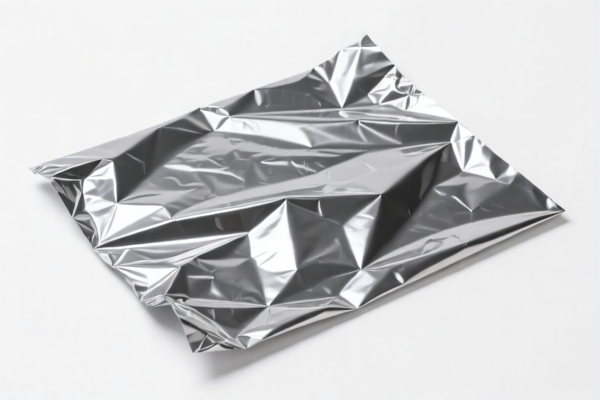
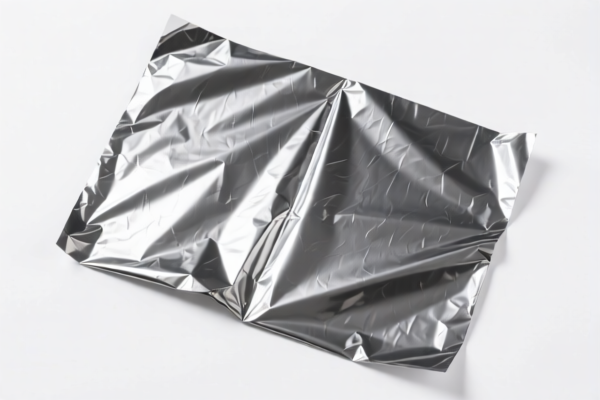
AI Analysis
📄 Plastic Coated Paper & Paperboard (涂塑纸及纸板)
🌐 HS Code Reference & Customs Clearance Guide | 2026 Latest Tariff Analysis | Professional Compliance Strategy
📌 I. Product Definition & Classification: What is "Plastic Coated Paper"?
Plastic coated paper and paperboard are composite materials consisting of paper or paperboard as the base substrate, covered, impregnated, or coated with plastic. These materials are widely used in packaging, printing, industrial applications, and consumer goods due to their moisture resistance, durability, and printability.
In international trade, the classification depends on the type of plastic used, the method of application (coating, impregnation, covering), and the physical form (roll, sheet, cut size). The key distinction lies in whether the material retains the fundamental characteristics of paper/paperboard or is transformed into a different article.
⚠️ Key Distinction Point:
- If the plastic coating is merely a surface treatment (e.g., laminated, coated) and the paper base defines the product’s essential character → Chapter 48.
- If the plastic layer is so thick or dominant that it constitutes the essential character → Chapter 39 (Plastics).
- Note: All HS codes listed below fall under Chapter 48, indicating the paper base remains the defining characteristic.
📦 II. HS Code Classification Details (2026 Latest Tariff Authority Mapping)
The following HS codes are derived from the provided data. All items are subject to a Total Tariff Rate of 35.0%.
| HS Code | Product Description | Application Scenario | Tariff Breakdown |
|---|---|---|---|
4811.51.60.00 |
Plastic-coated paper/board, matching coated/impregnated/plastic-covered paper or board material | General packaging, laminated paper, plastic-impregnated paper products | Base: 0%, Add. 25%, Sec 122: 10% |
4810.99.65.00 |
Plastic-coated paper/board, plastic coating logic consistent with other inorganic coatings, fitting paper/board category | Specialty coated paper, mixed coatings, paper with mixed surface treatments | Base: 0%, Add. 25%, Sec 122: 10% |
4811.59.60.00 |
Plastic-coated paper/board, plastic covering characteristics match paper/board basic material definition | Non-specified plastic coatings, general paperboard with plastic layer | Base: 0%, Add. 25%, Sec 122: 10% |
4823.90.60.00 |
Plastic-coated paper/board, matching coated paper/board material and morphological attributes | Cut paper/board, shaped paper products, non-roll forms | Base: 0%, Add. 25%, Sec 122: 10% |
4823.90.67.00 |
Plastic-coated paper/board, falls within coated paper/board category, fits tariff definition | Specific cut/sized coated paper, specialty paperboard items | Base: 0%, Add. 25%, Sec 122: 10% |
🔍 Critical Note:
- All five HS codes share the same total tariff rate of 35.0% for goods originating from China and entering the US market under current regulations.
- The distinction between these codes is primarily structural and definitional (e.g., roll vs. cut, specific plastic type, coating method), not financial.
- Misclassification may lead to delays or audits, even if the tariff rate is identical.
💰 III. 2026 Latest Tariff Rate Details (Including Additional Duties & Policy Surcharges)
✅ Applicable Country: United States (US)
✅ Origin: China (CN)
✅ Effective Date: Ongoing (Current Trade Policy)
🎯 Universal Tariff Structure for All Listed HS Codes
| Item | Detail |
|---|---|
| Base Duty Rate | 0% (Ad Valorem) |
| Section 301 Additional Duty | +25% (USITC Footnote related to Chinese-origin goods) |
| Section 122 Tariff | +10% (Specific statutory provision for certain paper/plastic composite goods) |
| Total Effective Rate | 35.0% |
| Duty Calculation | CIF Value × 35% |
| De Minimis Exemption | ❌ Not Applicable (Denied for goods subject to Section 301/122 duties) |
| Legal Basis Path | USITC:4811/4810/4823 → Sec301:9903.88.01 → Sec122:Statutory Provision |
📌 Explanation:
- The 25% Section 301 duty is part of the ongoing trade measures against Chinese imports;
- The 10% Section 122 duty applies specifically to certain paper and plastic composite materials;
- Combined 35% is a high-cost threshold, requiring precise documentation and valuation accuracy to avoid penalties.
- No de minimis exemption means even small shipments (e.g., samples, low-value parcels) are fully taxed.
🛠️ IV. Customs Clearance Practical Advice (Real-World Pitfall Avoidance Guide)
✅ 1. Required Documentation Checklist (All Mandatory)
| Document | Required | Notes |
|---|---|---|
| ✅ Product Specification Sheet | ✔️ | Must include: substrate type (paper/board), plastic type (PE, PP, PET, etc.), coating thickness, weight per square meter |
| ✅ Technical Data Sheet | ✔️ | Detailing lamination method, adhesive type (if any), surface finish |
| ✅ Commercial Invoice | ✔️ | Must clearly state: "Plastic Coated Paper Board, [HS Code], Origin: China" |
| ✅ Packing List | ✔️ | Specify dimensions, weight, and whether goods are in rolls or cut sheets |
| ✅ Certificate of Origin (CO) | ✔️ | Required to prove Chinese origin (triggers tariffs) |
| ✅ Product Photos | ✔️ | Show cross-section, surface texture, and labeling |
| ✅ Import License (if applicable) | ✔️ | For certain industrial paper products |
📌 Pro Tip:
- Always specify the plastic type (e.g., "Polyethylene coated") rather than just "plastic coated" to avoid ambiguity during customs examination.
✅ 2. Classification Strategy (Key Mnemonics)
🔥 “Coating Type, Base Material, Form Determines Code!”
| Scenario | Correct HS Code | Incorrect Practice |
|---|---|---|
| General plastic-coated paper (roll) | 4811.51.60.00 or 4811.59.60.00 |
Misclassifying as uncoated paper → Higher scrutiny |
| Paper with mixed/inorganic + plastic coating | 4810.99.65.00 |
Grouping with purely plastic sheets → Misclassification |
| Cut plastic-coated paper/board | 4823.90.60.00 or 4823.90.67.00 |
Declaring as "raw paper" → Delayed release |
| Specialty coated paper for printing | 4810.99.65.00 |
Using generic "paper" code → Audit risk |
📌 Critical Reminder:
- Do not split shipments into "paper" and "plastic" components to evade duties.
- Customs may reclassify under Chapter 39 (Plastics) if the plastic layer dominates, leading to higher tariffs or prohibition issues.
✅ 3. Special Cases Handling
| Situation | Recommendation |
|---|---|
| OEM Custom Coated Paper | Provide client specification + coating process diagram to prove paper base |
| Food-Grade Plastic Coated Paper | Include FDA compliance statement; may require additional health certificates |
| High-Performance Industrial Paper | Highlight technical specs (e.g., tear strength, moisture resistance) to justify Chapter 48 |
| Samples for Testing | Still subject to 35% duty; consider pre-shipment valuation to minimize financial impact |
🌍 V. Global Market Comparison (2026 Latest)
| Country/Region | Recommended HS Code | Tariff Rate | Certification Requirements | Notes |
|---|---|---|---|---|
| 🇺🇸 USA | 4811.51.60.00 etc. |
35% (China origin) | None specific | High tariff due to Sec 301 + 122 |
| 🇨🇳 China | 4811.51.60.00 etc. |
5-10% | CCC (if applicable) | No additional surcharges |
| 🇪🇺 EU | 4811.51.60.00 etc. |
6.5% | REACH, RoHS (if chemicals involved) | No additional duties |
| 🇦🇺 Australia | 4811.51.60.00 etc. |
5% | AICIS (chemicals) | Moderate rate |
| 🇯🇵 Japan | 4811.51.60.00 etc. |
0-3% | JIS, safety standards | Low duty environment |
📌 Conclusion:
- The US market imposes the highest barrier at 35%, making it costly for Chinese exporters.
- EU and Asia-Pacific markets remain more accessible with lower duties.
- Consider supply chain diversification (e.g., coating in Vietnam or Mexico) if targeting the US long-term.
📌 VI. Common Errors & Pitfalls (Blood & Tears Lessons)
❌ Error 1: Declaring as "Uncoated Paper" to avoid tariffs
👉 Consequence: Customs inspection reveals plastic layer → Reclassification + 35% duty + penalties
❌ Error 2: Failing to specify plastic type
👉 Consequence: Customs assigns worst-case HS code → Delayed clearance, storage fees
❌ Error 3: Splitting shipment into "Paper" + "Plastic Roll"
👉 Consequence: Violation of composite goods rules → Full seizure or heavy fines
❌ Error 4: Ignoring Section 122 applicability
👉 Consequence: Underpayment of 10% → Back taxes + interest + penalties
✅ Correct Practice:
“Plastic Coated Paper Board, PE Laminated, Roll Form, 100gsm, for Packaging, HS Code 4811.51.60.00, Origin: China, CIF Value: $10,000”
🎯 VII. Conclusion: Precision Classification Saves Money!
🎯 Remember the Mantra:
🔹 “Base Defines Code, Plastic Adds Cost, Section 301 + 122 = 35%!”
🔹 “Misclassify Once, Pay Twice: Duty + Penalty!”
🔹 “Document Everything, Declare Accurately, Clear Smoothly!”
📌 Pro Tips:
- If your product is not from China (e.g., coated in Thailand, imported from US), you may avoid the 25% Section 301 duty.
- Always apply for a Binding Ruling with US Customs (CBP) before shipping high-value batches.
- Use HS Code pre-validation tools to confirm the correct subheading based on your product’s exact specifications.
📣 Immediate Action Required:
📞 Engage a licensed customs broker + Provide full product specs + Submit Advance Ruling Request to CBP
🚀 Ensure compliant declarations, avoid delays, and optimize logistics costs for US-bound plastic coated paper products.
✨ Professional Clearance Starts with Accurate Classification!
💼 Your Margins Depend on Precise Tariff Management!
Customer Reviews
About HS Code Classification
The Harmonized System (HS) is an internationally standardized nomenclature developed by the World Customs Organization (WCO) to classify traded products. Over 200 countries use the HS system as the basis for customs tariffs, trade statistics, and import/export regulations.
Each HS code follows a hierarchical structure:
- Chapter (2 digits) — Broad category of goods (e.g., Chapter 84: Machinery and Mechanical Appliances)
- Heading (4 digits) — More specific grouping within the chapter
- Subheading (6 digits) — Internationally standardized breakdown, used by all WCO member countries
- National subdivisions (8-10 digits) — Country-specific extensions for further classification, such as US HTSUS 10-digit codes
Correct HS code classification is essential for smooth customs clearance, accurate duty payment, and compliance with trade regulations. Misclassification can lead to customs delays, overpayment of duties, or penalties.
When importing from CN to US, the applicable tariff rates may include:
- Most-Favored-Nation (MFN) rate — The standard duty rate applied to WTO members
- General rate — Applied to countries without trade agreements
- Trade remedy duties — Additional tariffs such as Section 301 (anti-dumping), Section 232 (national security), or countervailing duties
The information provided on this page is for reference purposes only. For official classification, please consult with your local customs authority or a licensed customs broker.