Plastic Commercial Pallet
CN → US| HS Code | Tariff Rate | Origin | Destination | Doc |
|---|---|---|---|---|
| 3926100000 | 15.3% | CN | US | Official Doc |
| 3924103000 | 22.8% | CN | US | Official Doc |
| 3924104000 | 13.4% | CN | US | Official Doc |
| 3926909989 | 22.8% | CN | US | Official Doc |
| 3926901000 | 20.9% | CN | US | Official Doc |
Product Images
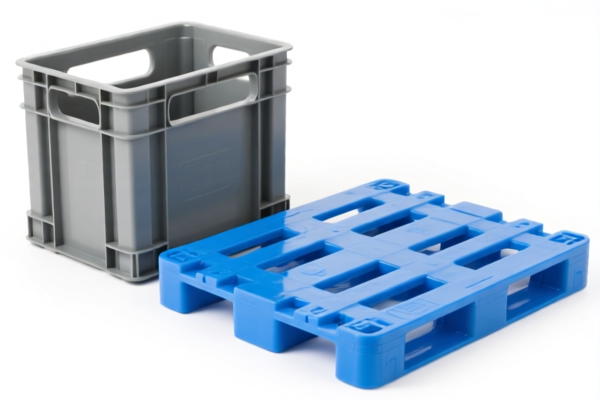

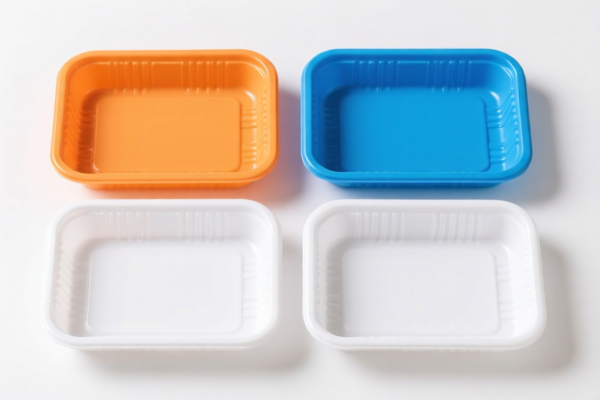
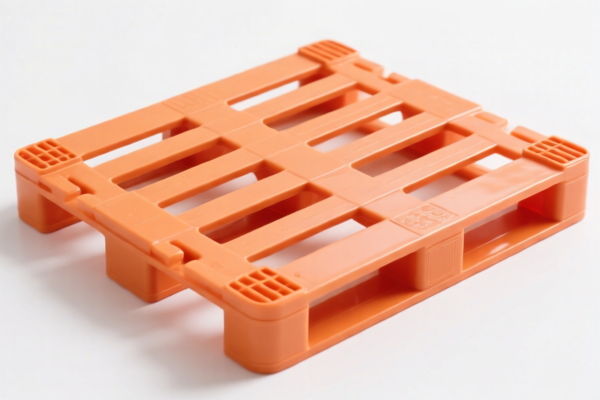
AI Analysis
📦 Plastic Commercial Pallets (Industrial & Food Service)
🌐 HS Code Reference & Customs Clearance Guide | 2026 Latest Tariff Analysis | Professional Logistics Strategy
📌 I. Product Definition & Classification: Are You Using the Right "Plastic Pallet"?
Plastic pallets are ubiquitous in global supply chains, but their classification in international trade depends entirely on three critical factors: 1. Material Composition (e.g., Polyethylene PE, Polypropylene PP, or generic plastic). 2. Intended Use/Context (Industrial logistics vs. Food service/Kitchenware). 3. Specific Design Features (e.g., Is it a specific type of tray?).
In international trade, "Plastic Pallet" is not a single HS Code. It is split between Industrial Logistics and Household/Kitchen Use. Misclassification can lead to severe tariff penalties (up to 22.8%) due to Section 301 and IEEPA tariffs.
⚠️ Key Distinction Point:
- If the pallet is for industrial storage, racking, or shipping → It falls under Chapter 39.26 (Other articles of plastics).
- If the pallet is for serving food, kitchen use, or tableware → It falls under Chapter 39.24 (Tableware, kitchenware, etc.).
- Material Specifics: If it is explicitly Polyethylene (PE), it may have a specific sub-heading (3926.90.10.00) with a lower base rate.
📦 II. HS Code Classification Matrix (2026 Latest Tariff Data)
Based on the provided dataset, here are the 5 possible classifications for "Plastic Commercial Pallets," ordered by commonality and tariff impact:
| HS Code | Product Description | Application Context | Base Duty | Total Duty (China-US) | Key Differentiator |
|---|---|---|---|---|---|
3926.90.10.00 |
Polyethylene (PE) Plastic Pallets | Industrial/Commercial Logistics | 3.4% | 20.9% | ✅ Lowest Total Tax. Specific material match (PE). |
3924.10.40.00 |
Plastic Trays for Tableware/Kitchen | Food Service, Restaurants, Catering | 3.4% | 13.4% | ✅ Lowest Total Tax. Classified as "Tableware/Kitchenware." |
3926.10.00.00 |
Other Plastic Articles (General Pallets) | General Industrial Use, Non-PE Materials | 5.3% | 15.3% | ⚠️ Moderate Tax. Classified as "Other plastic articles." |
3924.10.30.00 |
Plastic Pallets (Strictly Defined) | Ambiguous Use, Fits Pallet Definition Exactly | 5.3% | 22.8% | ❌ High Tax. Full Section 301 + IEEPA applied. |
3926.90.99.89 |
Plastic Articles (Catch-all/Fallback) | Non-Specific, Unidentified Plastic Pallets | 5.3% | 22.8% | ❌ High Tax. "Other" category, highest scrutiny. |
🔍 Critical Insight:
- Tableware (3924.10.40.00) has the lowest total duty (13.4%) because it has a lower base rate (3.4%) and 0% Section 301 tariff.
- Industrial Pallets (3926.10.00.00) are taxed at 15.3% because they avoid the 7.5% Section 301 tariff (only 10% IEEPA + 5.3% Base).
- Generic/PE Pallets (3926.90.10.00 & 3924.10.30.00) incur the highest duty (20.9% - 22.8%) due to higher base rates or full Section 301 penalties.
💰 III. 2026 Latest Tariff Rate Breakdown (China Origin to US)
✅ Applicable Country: United States (US)
✅ Country of Origin: China (CN)
✅ Effective Date: 2025-11-10 (Includes all subsequent imports)
🎯 1. 3926.90.10.00 — Polyethylene (PE) Pallets
Best for Industrial Use if Made of PE
| Item | Detail |
|---|---|
| Base Duty | 3.4% |
| Section 301 Duty | 7.5% |
| IEEPA Duty (Section 122/301) | 10.0% |
| Total Effective Duty | 20.9% |
| De Minimis Eligibility | ❌ No (Denied for Section 301 goods) |
| Legal Path | USITC:3926.90.10.00 → Section 301 Footnote → IEEPA 10% |
📌 Explanation:
- Lower Base Rate (3.4%) makes this more competitive than standard plastic articles (5.3%).
- However, it still attracts the 7.5% Section 301 tariff, bringing the total to 20.9%.
- Requirement: Must explicitly state "Polyethylene" in commercial invoice and product description.
🎯 2. 3926.10.00.00 — Other Plastic Articles (General Pallets)
Best for Standard Industrial Pallets (Non-PE or Unspecified)
| Item | Detail |
|---|---|
| Base Duty | 5.3% |
| Section 301 Duty | 0.0% |
| IEEPA Duty | 10.0% |
| Total Effective Duty | 15.3% |
| De Minimis Eligibility | ❌ No |
| Legal Path | USITC:3926.10.00.00 → IEEPA 10% |
📌 Explanation:
- Surprisingly Low Total Duty (15.3%)!
- This classification avoids Section 301 (0%) but still pays the 10% IEEPA tariff.
- Strategy: If your pallet is not strictly PE or Tableware, and you can justify it as "Other Plastic Articles" (e.g., specific utility items), this may be the cheapest industrial option.
🎯 3. 3924.10.40.00 — Plastic Trays (Kitchen/Tableware)
Best for Food Service Pallets
| Item | Detail |
|---|---|
| Base Duty | 3.4% |
| Section 301 Duty | 0.0% |
| IEEPA Duty | 10.0% |
| Total Effective Duty | 13.4% |
| De Minimis Eligibility | ❌ No |
| Legal Path | USITC:3924.10.40.00 → IEEPA 10% |
📌 Explanation:
- Lowest Total Duty (13.4%).
- Restriction: Only for tableware, kitchenware, or food service trays.
- Risk: If used in a warehouse/logistics setting, customs may reclassify it to 3926, adding 7.5% Section 301.
🎯 4. 3924.10.30.00 & 3926.90.99.89 — High-Risk Classifications
Avoid if Possible
| HS Code | Total Duty | Why It’s Expensive |
|---|---|---|
3924.10.30.00 |
22.8% | Base 5.3% + Section 301 7.5% + IEEPA 10% |
3926.90.99.89 |
22.8% | Base 5.3% + Section 301 7.5% + IEEPA 10% |
📌 Explanation:
- These codes incur ALL tariffs: Base + Section 301 + IEEPA.
-3924.10.30.00is often used for "Plastic Pallets" that don’t fit neatly into "Tableware" but are still in Chapter 39.24.
-3926.90.99.89is the "Dumpster" code for plastics. Customs may audit these heavily.
🛠️ IV. Customs Clearance Operational Guide (Pro Tips)
✅ 1. Documentation Checklist (Must-Haves)
| Document | Required? | Notes |
|---|---|---|
| ✅ Commercial Invoice | ✔️ | Must specify Material (e.g., "Polyethylene") and Use (e.g., "Food Service Tray" vs. "Warehouse Pallet"). |
| ✅ Product Specifications | ✔️ | Include dimensions, weight capacity, and material composition. |
| ✅ Product Photos | ✔️ | Show the pallet in its intended use (e.g., on a restaurant table vs. on a forklift). |
| ✅ FDA Compliance (if food) | ✔️ | If claiming 3924.10.40.00, provide FDA letter of compliance. |
| ✅ Country of Origin | ✔️ | Must be marked "Made in China." |
✅ 2. Strategic Classification Advice
| Scenario | Recommended HS Code | Why? |
|---|---|---|
| Pallet for Warehouses/Forklifts | 3926.10.00.00 |
15.3% Duty. Avoids Section 301. Best for general industrial use. |
| Pallet for Restaurants/Catering | 3924.10.40.00 |
13.4% Duty. Lowest tax. Must prove food service use. |
| Pallets Made of Polyethylene (PE) | 3926.90.10.00 |
20.9% Duty. Specific material, but higher base rate + Section 301. |
| Ambiguous/General Use | ❌ Avoid 3926.90.99.89 |
22.8% Duty. Highest risk, highest cost. |
🔥 "Claim Tableware, Pay Less; Claim Industrial, Pay More. Claim PE, Pay Middle."
✅ 3. Special Cases & Pitfalls
| Pitfall | Consequence | Solution |
|---|---|---|
| Misdeclaring Food Tray as Warehouse Pallet | Customs may reclassify to 3926.10.00.00 → 15.3% vs 13.4%. Minor difference, but requires documentation. |
Ensure invoice says "Food Service Tray" if using 3924.10.40.00. |
| Misdeclaring Warehouse Pallet as Tableware | Severe Penalty. If used in a warehouse, customs will reject 3924 code and apply Section 301 (7.5%) → 22.8%. |
Only use 3924.10.40.00 if the product is exclusively for food service. |
| Not Specifying Material (PE vs. PP) | Customs may default to 3926.90.99.89 → 22.8%. |
Always specify "Polyethylene (PE)" if applicable to qualify for 3926.90.10.00 (20.9%) or 3926.10.00.00 (15.3%). |
| Splitting Shipments to Avoid De Minimis | ❌ Not Allowed. Section 301 goods are not eligible for de minimis (800 USD exemption). | All shipments from China are subject to duties, regardless of value. |
🌍 V. Global Market Comparison (2026)
| Market | Recommended HS Code | Total Duty (China) | Notes |
|---|---|---|---|
| 🇺🇸 USA | 3926.10.00.00 or 3924.10.40.00 |
13.4% – 15.3% | Avoid 3926.90.99.89 (22.8%). |
| 🇨🇳 China | 3926.10.00.00 |
5.3% | No Section 301/IEEPA for imports into China. |
| 🇪🇺 EU | 3926.10.00.00 |
4.5% - 6.5% | No Section 301. Standard EU tariff applies. |
| 🇬🇧 UK | 3926.10.00.00 |
4.5% - 6.5% | Post-Brexit tariffs similar to EU. |
📌 Conclusion:
- USA is the most complex market due to Section 301 and IEEPA tariffs.
- Strategic Move: If your pallet can be legally classified as Tableware (3924.10.40.00), you save ~2% - 9% compared to industrial pallets.
- Second Best: If industrial, use3926.10.00.00to avoid the 7.5% Section 301 tariff.
📌 VI. Common Mistakes & How to Avoid Them
❌ Mistake 1: Using "Plastic Pallet" as the sole description.
👉 Result: Customs may choose the highest duty code (3926.90.99.89) → 22.8%.
✅ Fix: Specify "Polyethylene Warehouse Pallet" or "Plastic Food Service Tray".
❌ Mistake 2: Claiming 3924.10.40.00 for heavy-duty industrial pallets.
👉 Result: Customs audit, reclassification, and back taxes + penalties.
✅ Fix: Only use food service codes for products designed for kitchen/restaurant use.
❌ Mistake 3: Ignoring the 10% IEEPA Tariff.
👉 Result: Underestimating total landed cost.
✅ Fix: All China-origin plastic pallets face at least 10% IEEPA + Base Duty.
🎯 VII. Final Recommendation: Optimize Your Costs
🏆 Best Option for Food Service:
3924.10.40.00
- Total Duty: 13.4%
- Why: Lowest base rate (3.4%) + No Section 301.
🥈 Best Option for Industrial/Logistics:
3926.10.00.00
- Total Duty: 15.3%
- Why: Avoids Section 301 (7.5%), only pays 10% IEEPA + 5.3% Base.
🥉 If Made of Polyethylene (PE):
3926.90.10.00
- Total Duty: 20.9%
- Why: Lower base rate (3.4%) but pays Section 301 (7.5%). Only use if 3926.10.00.00 is not applicable.
📞 Pro Tip:
Request a Pre-Ruling (CBP Binding Ruling) from US Customs if your pallet design is unique. This guarantees your HS Code and avoids surprise audits.
Document your product’s intended use clearly in commercial invoices to support your classification.
✨ Smart Customs Clearance: Precision in Classification = Profit in Your Pocket!
💼 Don’t let "Plastic Pallet" cost you 22.8%. Aim for 13.4% or 15.3%.
Customer Reviews
About HS Code Classification
The Harmonized System (HS) is an internationally standardized nomenclature developed by the World Customs Organization (WCO) to classify traded products. Over 200 countries use the HS system as the basis for customs tariffs, trade statistics, and import/export regulations.
Each HS code follows a hierarchical structure:
- Chapter (2 digits) — Broad category of goods (e.g., Chapter 84: Machinery and Mechanical Appliances)
- Heading (4 digits) — More specific grouping within the chapter
- Subheading (6 digits) — Internationally standardized breakdown, used by all WCO member countries
- National subdivisions (8-10 digits) — Country-specific extensions for further classification, such as US HTSUS 10-digit codes
Correct HS code classification is essential for smooth customs clearance, accurate duty payment, and compliance with trade regulations. Misclassification can lead to customs delays, overpayment of duties, or penalties.
When importing from CN to US, the applicable tariff rates may include:
- Most-Favored-Nation (MFN) rate — The standard duty rate applied to WTO members
- General rate — Applied to countries without trade agreements
- Trade remedy duties — Additional tariffs such as Section 301 (anti-dumping), Section 232 (national security), or countervailing duties
The information provided on this page is for reference purposes only. For official classification, please consult with your local customs authority or a licensed customs broker.