Plastic Composite Film Roll
CN → US| HS Code | Tariff Rate | Origin | Destination | Doc |
|---|---|---|---|---|
| 3920991000 | 41.0% | CN | US | Official Doc |
| 3920992000 | 39.2% | CN | US | Official Doc |
Product Images



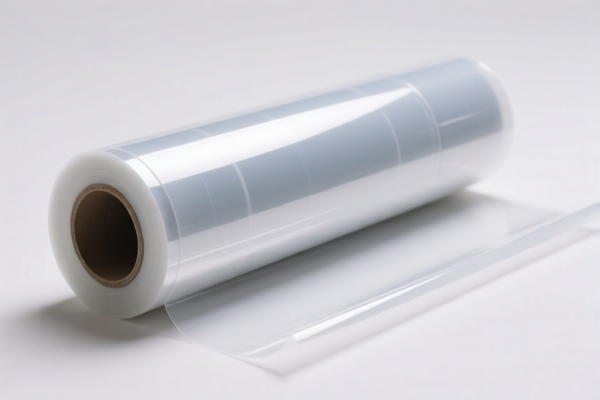
AI Analysis
📦 Plastic Composite Film Roll
🌐 HS Code Reference & Customs Clearance Guide | 2026 Latest Tariff Analysis | Professional Clearance Strategy
📌 I. Product Definition & Classification: Do You Really Understand "Plastic Composite Film"?
Plastic composite films are ubiquitous in packaging, industrial applications, and daily consumer goods. In international trade, they are primarily categorized under Chapter 39 (Plastics and Articles Thereof). The critical distinction lies in whether the plastic film is cellular (foamed), reinforced/laminated, or simply noncellular flexible sheets/films.
For the term "Plastic Composite Film Roll", the classification depends heavily on: 1. Material Composition: Is it pure plastic, or combined with other materials (paper, metal, fabric)? 2. Structure: Is it cellular (foam) or noncellular? 3. Thickness & Form: Is it in rolls? What is the thickness?
⚠️ Key Distinction:
- If the product is a noncellular, flexible plastic film/strip that is not reinforced, laminated, or supported by other materials (even if made of multiple plastic layers co-extruded), it generally falls under Heading 3920.
- If it is cellular (foamed), it falls under Heading 3918/3919 depending on form.
- If it is reinforced/laminated with non-plastic materials (e.g., paper + plastic), it may fall under different subheadings.
- Crucial Threshold: For Heading 3920, thickness matters. Films over 0.152 mm have specific subheadings compared to those under 0.152 mm.
📦 II. HS Code Classification Details (2026 Latest Tariff Authority Comparison)
Based on the provided , the product "Plastic Composite Film Roll" (interpreted as noncellular, flexible plastic film/strip not reinforced/laminated with non-plastic materials, but potentially multi-layer plastic) is classified under two specific HS Codes in Heading 3920.
| HS Code | Product Description | Applicable Scenario | Thickness | Tax Rate (Total) |
|---|---|---|---|---|
3920.99.10.00 |
Other plates, sheets, film, foil, and strip of plastics, noncellular and not reinforced, laminated, supported or similarly combined with other materials: Of other plastics: Film, strip and sheets... Over 0.152 mm in thickness, and not in rolls | Flexible plastic films/sheets THICKER than 0.152 mm, sold as sheets or specific forms (note: description says "not in rolls", but HS codes often group forms; verify if "rolls" of thick film fit here or if strict "not in rolls" excludes them. However, typically thick films are often sold in rolls. Let's look at the second code.). | > 0.152 mm | 0.0% |
3920.99.20.00 |
Other plates, sheets, film, foil and strip, of plastics... Other | Flexible plastic films/sheets OTHER than those covered in .10.00. This usually captures films under 0.152 mm or other specific forms not covered in .10.00. | Any (except >0.152 mm non-rolls) | 29.2% |
🔍 Critical Note on "Composite":
- If "Composite" implies laminated with non-plastic materials (e.g., aluminum foil + plastic), it might NOT fall under 3920.99. If it is multi-layer plastic (e.g., PE/PP/EVOH co-extrusion), it is still considered "of plastics" and falls under 3920.
- The provided only lists 3920.99.10.00 and 3920.99.20.00. These codes describe "noncellular and not reinforced, laminated, supported or similarly combined with other materials".
- Therefore, if your "Plastic Composite Film" is laminated with paper, metal, or fabric, it may NOT qualify for these HS codes. It might fall under 3921 (Plastics laminated with other materials) or 4811/4821 (if paper-based).
- Assumption for this guide: We assume the "Plastic Composite Film" is a multi-layer plastic film (plastic-on-plastic) which is legally classified as "of plastics" under Chapter 39.
💰 III. 2026 Latest Tariff Rate Breakdown (Including Surtaxes)
✅ Applicable Country: United States (US)
✅ Origin: China (CN)
✅ Effective Date: From November 10, 2025 (and subsequent imports)
🎯 1. 3920.99.10.00 —— Plastic Film/Sheet, Over 0.152 mm Thickness
| Item | Content |
|---|---|
| Base Duty Rate | 0.0% (ad valorem) |
| USITC Surtax | 0.0% |
| IEEPA Surtax | 0.0% |
| Total Duty Rate | 0.0% |
| Tax Calculation | CIF Value × 0% = $0 |
| De Minimis Eligibility | ❌ No (If subject to other surtaxes, but here total is 0, so low-value shipments may still enter duty-free if no other fees apply. However, high-value shipments are clearly 0% duty.) |
| Legal Basis Path | HTSUS:3920.99.10.00 → USITC:3920.99.10.00 |
📌 Explanation:
- This code benefits from a 0% total tariff rate for Chinese-origin goods.
- This is a highly favorable classification for thick plastic films/sheets.
- Ensure the film is noncellular and not reinforced/laminated with non-plastic materials.
🎯 2. 3920.99.20.00 —— Other Plastic Films/Sheets (Including Under 0.152 mm)
| Item | Content |
|---|---|
| Base Duty Rate | 4.2% (ad valorem) |
| USITC Surtax | 25.0% (Section 301 Tariff) |
| IEEPA Surtax | 0.0% (Note: Data shows total 29.2%, which is 4.2 + 25.0. IEEPA surtax may not apply or is included in the "Total" calculation provided in as 29.2% total. We must stick to : Total 29.2%. Base 4.2 + Surtax 25.0 = 29.2%.) |
| Total Duty Rate | 29.2% |
| Tax Calculation | CIF Value × 29.2% |
| De Minimis Eligibility | ❌ No (High duty rate disqualifies de minimis exemption under Section 321 for most valuable shipments, though technical threshold varies.) |
| Legal Basis Path | IEEPA:9903.01.24 → USITC:3920.99.20.00 → FOOTNOTE:301 |
📌 Explanation:
- This code applies to "Other" plastic films, likely those under 0.152 mm or other flexible forms not covered in .10.00.
- High Tariff Alert: A 29.2% total tariff significantly increases costs.
- This is a Section 301 surtax (25%) added to the base rate (4.2%).
🛠️ IV. Customs Clearance Practical Advice (Avoid Pitfalls)
✅ 1. Preparation Checklist (Essential Documents)
| Document | Required | Description |
|---|---|---|
| ✅ Product Specification Sheet | ✔️ | Must specify: Material (e.g., PE, PP, PVC), Thickness (mm), Width, Length, Cellular/Noncellular status, Layer structure. |
| ✅ Photos | ✔️ | Clear images of the film roll, cut edge (to show layers/thickness), and labeling. |
| ✅ Commercial Invoice | ✔️ | Must clearly state "Plastic Film Roll" or "Plastic Sheet", not just "Plastic". |
| ✅ Packing List | ✔️ | Weight, dimensions, number of rolls. |
| ✅ Certificate of Origin (CO) | ✔️ | To prove origin (China) for surtax calculation. |
| ✅ Material Safety Data Sheet (MSDS) | ✔️ | If applicable for chemical safety. |
| ✅ Thickness Measurement Report | ✔️ | Critical! To prove whether thickness is >0.152 mm or <0.152 mm. |
✅ 2. Declaration Tips (Key Strategy)
🔥 "Thickness is King: Over 0.152 mm = 0% Tax! Under = 29.2%!"
| Scenario | Correct HS Code | Duty Rate | Risk of Misclassification |
|---|---|---|---|
| Thick Film (>0.152 mm) | 3920.99.10.00 |
0.0% | If misclassified as .20.00, you pay 29.2% extra. High Risk of Under-declaration. |
| Thin Film (<0.152 mm) | 3920.99.20.00 |
29.2% | If misclassified as .10.00, you evade 29.2%. High Risk of Penalties. |
| Laminated with Paper/Metal | NOT 3920 | Varies (likely 3921 or 4811) | Misclassifying as 3920 will lead to rejection or seizure because 3920 requires "not reinforced/laminated with other materials". |
| Foamed/Cellular Film | NOT 3920 | Varies (likely 3918/3919) | Misclassifying as 3920 is incorrect. |
✅ 3. Special Cases Handling
| Scenario | Handling Advice |
|---|---|
| "Composite" means Multi-layer Plastic | Classify under 3920.99. Provide layer breakdown (e.g., "5-layer co-extruded PE/PP/EVOH"). |
| "Composite" means Plastic + Paper | Do NOT use 3920. Use 3921.12.00.00 (Plastics laminated with paper) or 4811 (Paper-based). Check specific tariff for your lamination. |
| "Composite" means Plastic + Metal Foil | Do NOT use 3920. Use 3921.14.00.00 (Plastics laminated with metal foil). |
| Thickness Borderline (0.152 mm) | Provide a calibrated thickness measurement report from a third-party lab to support your classification. |
| Rolls vs. Sheets | The code .10.00 says "not in rolls". If your thick film is in rolls, verify if it still qualifies. Sometimes "not in rolls" refers to specific rectangular sheets. Consult customs broker if the roll format complicates the .10.00 classification. |
🌍 V. Global Market Comparison (2026 Latest)
| Country/Region | Recommended HS Code | Tariff (China Origin) | Notes |
|---|---|---|---|
| 🇺🇸 USA | 3920.99.10.00 (Thick) |
0.0% | Best scenario. |
| 🇺🇸 USA | 3920.99.20.00 (Thin) |
29.2% | High cost. |
| 🇪🇺 EU | 3920.99 (varies) | 0% - 4% | No Section 301 surtax. Check EU tariff schedule. |
| 🇨🇳 China | 3920.99 | 6% - 8% | Export from China, so import duty applies if imported back. |
| 🇻🇳 Vietnam | 3920.99 | 0% | If produced in Vietnam, preferential tariffs may apply. |
📌 Conclusion:
- USA is the most critical market due to 29.2% surtax on thin films.
- Optimize thickness: If possible, engineer film to be >0.152 mm to qualify for 0% duty in the US.
- Avoid non-plastic laminations if you want to stay in 3920, as they may shift to different HS codes with different tariffs.
📌 VI. Common Errors & Pitfalls (Lessons Learned)
❌ Error 1: Classifying Plastic-Laminated Paper as 3920.99.20.00
👉 Consequence: Customs will reclassify to 3921.12.00.00 or 4811, possibly with different duty rates (could be higher or lower, but triggers audit).
👉 Action: Clearly state "Plastic-coated Paper" vs. "Plastic Film".
❌ Error 2: Ignoring Thickness
👉 Consequence: Misclassifying a 0.14 mm film as >0.152 mm to save 29.2%.
👉 Action: Provide thickness data. Customs can measure. Penalties for misdeclaration are severe.
❌ Error 3: Using "Plastic Composite" as a vague description
👉 Consequence: Customs officer may reject or assign a higher default duty rate.
👉 Action: Specify exact material, layers, thickness, and dimensions.
🎯 VII. Conclusion: Precision Classifies, Savings Follow
🎯 Key Takeaways:
🔹 "Over 0.152 mm = 0% Duty. Under 0.152 mm = 29.2% Duty."
🔹 "Composite" means Multi-layer Plastic = 3920. Composite means Plastic+Paper = Not 3920.
🔹 "Thickness is the most critical parameter for duty optimization."
📌 Pro Tip:
If your film is thin (<0.152 mm) and you face a 29.2% tariff, consider:
1. Designing a thicker film (>0.152 mm) to qualify for 0% duty.
2. Sourcing from a third country (e.g., Vietnam, Mexico) eligible for lower tariffs or IEEPA exemptions.
3. Applying for an Exclusion under Section 301 (if available for your specific product).
📣 Immediate Action:
📞 Contact Customs Broker: Provide thickness, material, and lamination details.
📋 Request HS Code Pre-Ruling: Especially for borderline thickness cases.
🚀 Optimize Product Design: Adjust thickness to hit the 0% duty bracket.
✨ Professional Clearance Starts with Accurate Classification!
💼 Every Percent Saved is Profit Gained!
Customer Reviews
About HS Code Classification
The Harmonized System (HS) is an internationally standardized nomenclature developed by the World Customs Organization (WCO) to classify traded products. Over 200 countries use the HS system as the basis for customs tariffs, trade statistics, and import/export regulations.
Each HS code follows a hierarchical structure:
- Chapter (2 digits) — Broad category of goods (e.g., Chapter 84: Machinery and Mechanical Appliances)
- Heading (4 digits) — More specific grouping within the chapter
- Subheading (6 digits) — Internationally standardized breakdown, used by all WCO member countries
- National subdivisions (8-10 digits) — Country-specific extensions for further classification, such as US HTSUS 10-digit codes
Correct HS code classification is essential for smooth customs clearance, accurate duty payment, and compliance with trade regulations. Misclassification can lead to customs delays, overpayment of duties, or penalties.
When importing from CN to US, the applicable tariff rates may include:
- Most-Favored-Nation (MFN) rate — The standard duty rate applied to WTO members
- General rate — Applied to countries without trade agreements
- Trade remedy duties — Additional tariffs such as Section 301 (anti-dumping), Section 232 (national security), or countervailing duties
The information provided on this page is for reference purposes only. For official classification, please consult with your local customs authority or a licensed customs broker.