Plastic Condiment Dishes
CN → US| HS Code | Tariff Rate | Origin | Destination | Doc |
|---|---|---|---|---|
| 3924101000 | 13.4% | CN | US | Official Doc |
| 3924104000 | 13.4% | CN | US | Official Doc |
Product Images
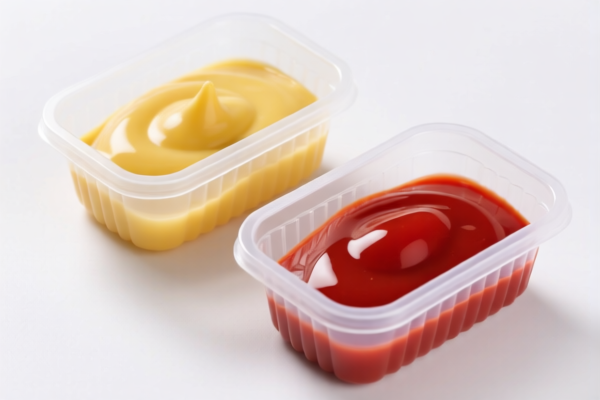
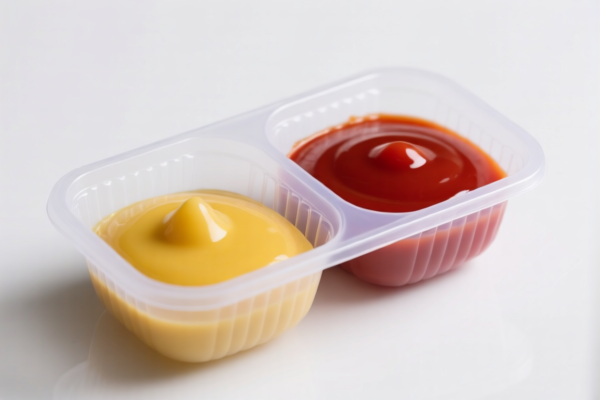
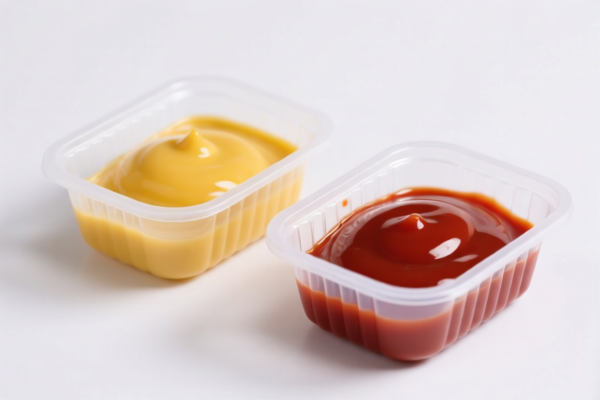
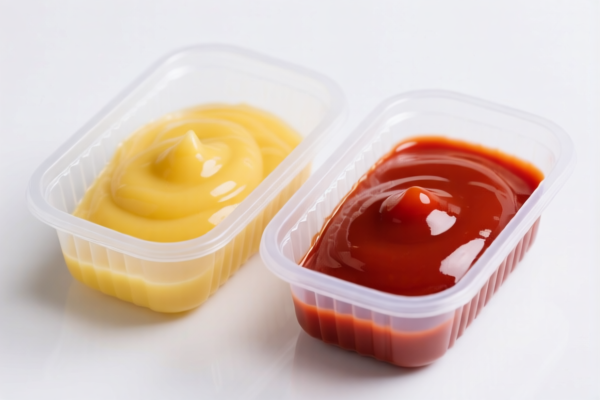
AI Analysis
🍽️ Plastic Condiment Dishes: HS Code Classification & US Customs Clearance Strategy (2026)
🌐 HS Code Reference & Customs Guide | Latest Tariff Analysis for Plastic Seasoning Dishes | Professional Clearance Strategy
📌 Part I: Product Definition & Classification – Are You Sure You Know "Plastic Condiment Dishes"?
Plastic condiment dishes are essential tableware items used in households, restaurants, and hospitality industries to hold sauces, spices, and seasonings. In international trade, their classification depends strictly on material, form, and specific use.
Although the product name is "Plastic Condiment Dishes," customs classification can vary significantly based on whether the item is considered a general tableware item or a specific condiment container. This distinction directly impacts the tariff rate.
⚠️ Key Classification Point:
- If the dish is a general plastic tableware item (broad category) → May be classified under 3924.10.20.00
- If the dish is specifically designed as a condiment holder or seasoning container (narrower category) → May be classified under 3924.10.40.00
📦 Part II: HS Code Classification Details (2026 Latest Tariff Schedule)
| HS Code | Product Description | Application Scenario | Tariff Rate |
|---|---|---|---|
3924.10.20.00 |
Plastic condiment dishes, in the form of plates/bowls, used as tableware/for seasoning | General plastic dishes used for serving condiments | 24.0% |
3924.10.40.00 |
Plastic condiment dishes, classified under "Other plastic tableware and articles," used specifically for seasoning | Specific seasoning containers, sauce cups, spice jars | 13.4% |
🔍 Important Note:
-3924.10.20.00is a broader category for plastic tableware, including dishes, bowls, and plates.
-3924.10.40.00is a narrower category specifically for seasoning/condiment containers.
- Choosing the correct HS Code is critical: The tariff difference is 10.6% (24.0% vs. 13.4%), which can significantly impact costs for high-volume shipments.
💰 Part III: 2026 Latest Tariff Rate Breakdown (Including Additional Taxes & Policy Surcharges)
✅ Applicable Country: United States (US)
✅ Country of Origin: China (CN)
✅ Effective Date: November 10, 2025 onwards (including subsequent imports)
🎯 1. 3924.10.20.00 – Plastic Condiment Dishes (General Tableware)
| Item | Content |
|---|---|
| Base Tariff | 6.5% |
| Section 301 Additional Tariff | +7.5% |
| Section 122 Tariff | +10.0% |
| Total Tariff | 24.0% |
| Tax Calculation | CIF Value × 24.0% |
| De Minimis Exemption Eligible? | ❌ No (deny_de_minimis) |
| Legal Basis Path | USITC:3924.10.20.00 → Section 301: 7.5% → Section 122: 10% |
📌 Explanation:
- Base Tariff 6.5%: Standard US import duty for plastic tableware under HS 3924.
- Section 301 Tariff 7.5%: Additional tariff imposed on Chinese goods under the Trade Act of 1974, Section 301.
- Section 122 Tariff 10%: Additional tariff under Section 122 of the Trade Act of 1974, often applied to specific Chinese imports.
- Total 24.0%: High tariff burden. Must be factored into pricing and cost structure.
🎯 2. 3924.10.40.00 – Plastic Condiment Dishes (Specific Seasoning Use)
| Item | Content |
|---|---|
| Base Tariff | 3.4% |
| Section 301 Additional Tariff | 0.0% |
| Section 122 Tariff | +10.0% |
| Total Tariff | 13.4% |
| Tax Calculation | CIF Value × 13.4% |
| De Minimis Exemption Eligible? | ❌ No (deny_de_minimis) |
| Legal Basis Path | USITC:3924.10.40.00 → Section 122: 10% |
📌 Note:
- Base Tariff 3.4%: Lower base duty for specific condiment containers.
- Section 301 Tariff 0.0%: This specific subheading is exempt from Section 301 additional tariffs.
- Section 122 Tariff 10%: Still subject to Section 122 tariff.
- Total 13.4%: Significantly lower than3924.10.20.00(24.0%).
- Strategic Advantage: If your product can be clearly defined as a condiment/seasoning container, using3924.10.40.00saves 10.6% in tariffs.
🛠️ Part IV: Customs Clearance Practical Advice (Real-World Pitfall Avoidance Guide)
✅ 1. Required Documentation Checklist (All Mandatory)
| Document | Required | Description |
|---|---|---|
| ✅ Product Specification Sheet | ✔️ | Include material (PP, PS, etc.), dimensions, volume, color |
| ✅ Product Photos (Clear) | ✔️ | Show shape, packaging, and any labeling |
| ✅ Commercial Invoice | ✔️ | Clearly state "Plastic Condiment Dishes" or "Plastic Seasoning Containers" |
| ✅ Packing List | ✔️ | Detail quantity, weight, and packaging type |
| ✅ Certificate of Origin (CO) | ✔️ | Required for origin verification; affects tariff applicability |
| ✅ Third-Party Test Report (if applicable) | ✔️ | FDA Food Contact Safety, BPA-Free certification (if claimed) |
✅ 2. Declaration Strategy (Key Tips)
🔥 "Declare Clearly, Specify Use, Avoid General Terms, Save 10%! "
| Scenario | Correct Declaration | Incorrect Declaration |
|---|---|---|
| General plastic dish for sauces | Plastic Condiment Dishes, for Seasoning Use |
"Plastic Dishes" (too vague) |
| Specific sauce cups/spice jars | Plastic Seasoning Containers, HS 3924.10.40.00 |
"Plastic Tableware" (misclassified) |
| Mixed set (dishes + condiment holders) | Split Declaration | Mixed HS Code → Audit Risk |
⚠️ Critical Reminder:
- Do NOT use generic terms like "Plastic Dishes" or "Plastic Tableware" without specifying the condiment/seasoning use.
- If the product is clearly designed for seasonings (small size, specific shape), use3924.10.40.00to benefit from the lower tariff.
- If the product is a general-purpose dish that can hold condiments but is not exclusively designed for it, use3924.10.20.00.
✅ 3. Special Case Handling
| Scenario | Handling Advice |
|---|---|
| OEM Custom Designs | Provide design drawings or photos to prove condiment-specific use |
| Mixed Packaging | If condiment dishes are packed with other tableware, separate declarations are required |
| FDA Compliance | Ensure products meet FDA 21 CFR 177 for food contact plastics; provide test reports |
| Origin Verification | Confirm all components are produced in China to avoid origin disputes |
🌍 Part V: Global Market Clearance Comparison (2026 Latest)
| Country/Region | Recommended HS Code | Tariff | Certification Requirements | Remarks |
|---|---|---|---|---|
| 🇺🇸 United States | 3924.10.40.00 |
13.4% | FDA + BPA-Free (if claimed) | Best option for cost-saving |
| 🇺🇸 United States | 3924.10.20.00 |
24.0% | FDA + BPA-Free (if claimed) | Higher cost; use only if not condiment-specific |
| 🇨🇳 China | 3924.10.40.00 |
3.4% | None | Lower import duty in China |
| 🇪🇺 European Union | 3924.10.40.00 |
6.5% | CE + Food Contact Compliance | No Section 301/122 tariffs |
| 🇬🇧 United Kingdom | 3924.10.40.00 |
6.5% | UKCA + Food Contact Compliance | Post-Brexit rules apply |
| 🇦🇺 Australia | 3924.10.40.00 |
5.0% | ACCC + Food Safety | No additional surcharges |
📌 Conclusion:
- United States imposes high additional tariffs (Section 301 + Section 122).
- HS 3924.10.40.00 is the optimal choice for Chinese-origin plastic condiment dishes, saving 10.6% compared to3924.10.20.00.
- EU/UK/Australia do NOT apply Section 301 or Section 122 tariffs; only base duty applies.
📌 Part VI: Common Mistakes & Pitfall Avoidance (Lessons Learned)
❌ Mistake 1: Using generic term "Plastic Dishes" for declaration
👉 Consequence: Customs may classify under 3924.10.20.00 → 24.0% tariff instead of 13.4% → Overpayment!
❌ Mistake 2: Mixing condiment dishes with other tableware in one shipment without separate declaration
👉 Consequence: Customs audit → Delay + Penalties
❌ Mistake 3: Claiming "FDA Compliant" without providing test reports
👉 Consequence: Cargo detained → Fines + Return/Re-export
❌ Mistake 4: Incorrect origin declaration (e.g., claiming Vietnam origin for China-made goods)
👉 Consequence: Fraud Charges + Seizure
✅ Correct Approach:
"Plastic Condiment Dishes, PP Material, 50ml, BPA-Free, FDA Compliant, Model XYZ, Made in China"
🎯 Part VII: Conclusion – Professional Declaration Saves Money!
🎯 Remember the Key Phrase:
🔹 "Specify Use, Choose
3924.10.40.00, Save 10.6%!"
🔹 "Generic Declaration = 24%, Specific Declaration = 13.4%, Difference is Profit!"
📌 Pro Tip:
- For US imports, always use
3924.10.40.00for plastic condiment dishes to benefit from the 0% Section 301 tariff.- For EU/UK/Australia, base duty is lower anyway, but correct classification still ensures smooth clearance.
- Pre-clearance Ruling: If uncertain, apply for a Binding Tariff Information (BTI) ruling from US Customs (CBP) to confirm classification.
📣 Immediate Action:
📞 Contact a Professional Customs Broker
📤 Provide Product Photos + Specifications
🚀 Ensure Correct HS Code Declaration, Avoid Surprises, Maximize Profit!
✨ Professional Clearance Starts with Accurate Classification!
💼 Every Cent of Savings Counts in International Trade!
Customer Reviews
About HS Code Classification
The Harmonized System (HS) is an internationally standardized nomenclature developed by the World Customs Organization (WCO) to classify traded products. Over 200 countries use the HS system as the basis for customs tariffs, trade statistics, and import/export regulations.
Each HS code follows a hierarchical structure:
- Chapter (2 digits) — Broad category of goods (e.g., Chapter 84: Machinery and Mechanical Appliances)
- Heading (4 digits) — More specific grouping within the chapter
- Subheading (6 digits) — Internationally standardized breakdown, used by all WCO member countries
- National subdivisions (8-10 digits) — Country-specific extensions for further classification, such as US HTSUS 10-digit codes
Correct HS code classification is essential for smooth customs clearance, accurate duty payment, and compliance with trade regulations. Misclassification can lead to customs delays, overpayment of duties, or penalties.
When importing from CN to US, the applicable tariff rates may include:
- Most-Favored-Nation (MFN) rate — The standard duty rate applied to WTO members
- General rate — Applied to countries without trade agreements
- Trade remedy duties — Additional tariffs such as Section 301 (anti-dumping), Section 232 (national security), or countervailing duties
The information provided on this page is for reference purposes only. For official classification, please consult with your local customs authority or a licensed customs broker.