Plastic Conductive Film
CN → US| HS Code | Tariff Rate | Origin | Destination | Doc |
|---|---|---|---|---|
| 5903102090 | 35.0% | CN | US | Official Doc |
| 3919905060 | 40.8% | CN | US | Official Doc |
| 3919905040 | 40.8% | CN | US | Official Doc |
| 3921901500 | 41.5% | CN | US | Official Doc |
| 3921901100 | 39.2% | CN | US | Official Doc |
Product Images
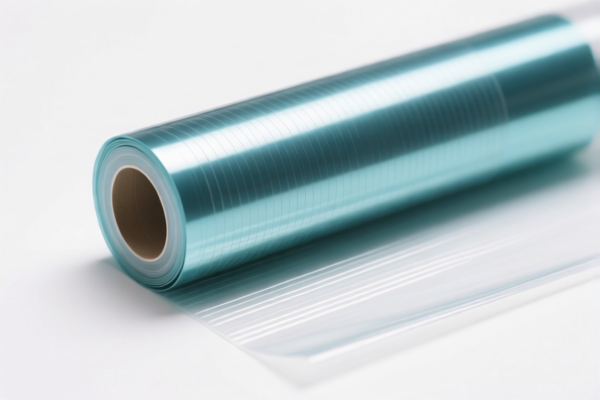
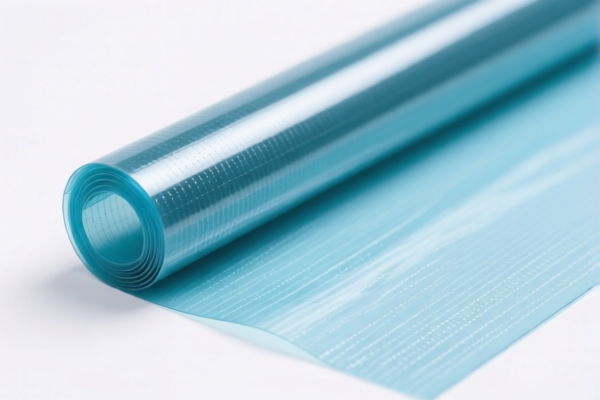
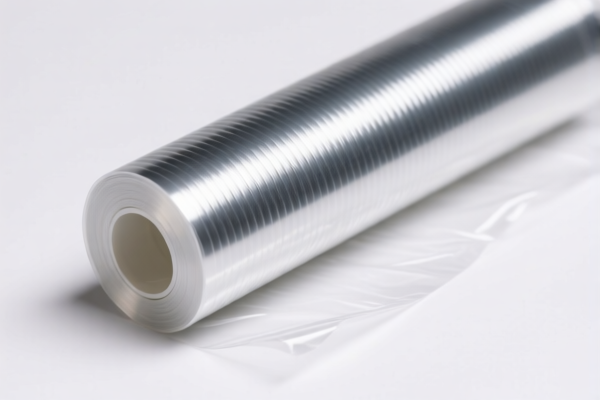
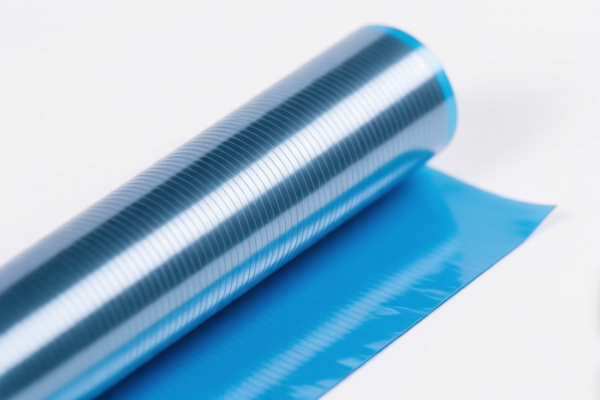
AI Analysis
🎬 Plastic Conductive Film (Polyester Conductive Film)
🌐 HS Code Reference & Customs Clearance Guide | 2026 Latest Tariff Analysis | Professional Entry Strategy
📌 I. Product Definition & Classification: Do You Truly Understand "Plastic Conductive Film"?
Plastic Conductive Film, typically made from Polyester (PET) substrates, is a critical functional material used in electronics, shielding, and industrial applications. In international trade, its classification is highly sensitive to its physical form, adhesive properties, and combination with other materials.
It is generally categorized into two main groups:
- Textile/Plastic Covered Films: Films specifically treated or layered to function as conductive textiles or specialized plastic covers.
- Self-Adhesive Plastic Films: Rolls or sheets that function like sticky tapes or transparent adhesive films.
- Rigid/Flat Plastic Sheets & Films: Generic plastic plates, sheets, or foils that meet standard plastic material definitions.
- Composite Plastic Films: Films where the plastic layer is combined with textile or conductive materials, creating a hybrid structure.
⚠️ Key Distinction Point:
- If it is a loose sheet/film with specific textile/plastic covering characteristics → 5903.10.20.90
- If it acts like a tape/sticky film (self-adhesive) → 3919.90.50.60 / 3919.90.50.40
- If it is a standard plastic sheet/film without adhesive or textile covering → 3921.90.15.00
- If it is a composite of plastic and textile/conductive materials → 3921.90.11.00
📦 II. HS Code Classification Details (2026 Latest Tariff Authority Comparison)
| HS Code | Product Description | Application Scenario | Key Characteristic |
|---|---|---|---|
5903.10.20.90 |
Polymeric impregnated/coated/laminated textile fabrics | Textile/Plastic covered films, conductive textile bases | ✅ Covered/Coated |
3919.90.50.60 |
Other plates, sheets, film, foil, tape, strip | Self-adhesive polyester conductive film | ✅ Self-Adhesive |
3919.90.50.40 |
Other transparent adhesive tape/foils | Transparent conductive film tapes | ✅ Transparent Adhesive |
3921.90.15.00 |
Other plates, sheets, film, foil, strip (Plastic) | Standard plastic sheet/film classification | ✅ Plastic Sheet |
3921.90.11.00 |
Combined with textile or other materials | Composite film (Plastic + Conductive/Textile) | ✅ Composite/Hybrid |
🔍 Key Reminder:
- Self-adhesive films are almost always classified under Chapter 3919 (Self-adhesive plates, sheets, film, foil, tape, strip and other flat shapes). - If the film is not self-adhesive but acts as a textile cover, it may fall under Chapter 5903. - Standard non-adhesive plastic films fall under Chapter 3921. - Composite films (plastic + textile/conductive) have specific sub-headings under 3921.90.11.00.
💰 III. 2026 Latest Tariff Rate Breakdown (Including Surcharges & Policy Add-ons)
✅ Applicable Country: United States (US)
✅ Country of Origin: China (CN)
✅ Effective Date: Ongoing (Subject to current trade policies)
🎯 1. 5903.10.20.90 —— Polymeric Covered/Coated Textile Film
| Item | Content |
|---|---|
| Base Tariff Rate | 0% (ad valorem) |
| USITC Surcharge | +25% (Section 301) |
| IEEPA Surcharge | +10% (China-specific) |
| Total Rate | 35.0% |
| Tax Calculation | CIF Value × 35% |
| De Minimis Eligibility | ❌ Not Eligible (deny_de_minimis) |
| Legal Path | Base: 0% → Sec 301: 25% → IEEPA: 10% |
📌 Explanation:
- This code captures films that are polymer-covered or coated, often used in textile-like applications. - The 35% total rate is significantly lower than adhesive alternatives, making it a favorable classification if the product structure fits. - Crucial: Must prove the product is "covered/coated" and not merely a plain plastic sheet.
🎯 2. 3919.90.50.60 —— Self-Adhesive Plastic Film (Other)
| Item | Content |
|---|---|
| Base Tariff Rate | 5.8% |
| USITC Surcharge | +25% (Section 301) |
| IEEPA Surcharge | +10% (China-specific) |
| Total Rate | 40.8% |
| Tax Calculation | CIF Value × 40.8% |
| De Minimis Eligibility | ❌ Not Eligible (deny_de_minimis) |
| Legal Path | Base: 5.8% → Sec 301: 25% → IEEPA: 10% |
📌 Note:
- This is the highest tax bracket among the options. - Applies to self-adhesive conductive films that do not fit other specific adhesive categories. - High base rate (5.8%) makes this the most expensive option.
🎯 3. 3919.90.50.40 —— Transparent Adhesive Tape/Film
| Item | Content |
|---|---|
| Base Tariff Rate | 5.8% |
| USITC Surcharge | +25% (Section 301) |
| IEEPA Surcharge | +10% (China-specific) |
| Total Rate | 40.8% |
| Tax Calculation | CIF Value × 40.8% |
| De Minimis Eligibility | ❌ Not Eligible (deny_de_minimis) |
| Legal Path | Base: 5.8% → Sec 301: 25% → IEEPA: 10% |
📌 Note:
- Same tax rate as3919.90.50.60due to identical base and surcharge structure. - Specifically for transparent adhesive films/tapes. - If your film is not transparent, you must use3919.90.50.60.
🎯 4. 3921.90.15.00 —— Other Plastic Sheets/Films
| Item | Content |
|---|---|
| Base Tariff Rate | 6.5% |
| USITC Surcharge | +25% (Section 301) |
| IEEPA Surcharge | +10% (China-specific) |
| Total Rate | 41.5% |
| Tax Calculation | CIF Value × 41.5% |
| De Minimis Eligibility | ❌ Not Eligible (deny_de_minimis) |
| Legal Path | Base: 6.5% → Sec 301: 25% → IEEPA: 10% |
📌 Note:
- Highest base rate (6.5%) results in the highest total tax (41.5%). - Applies to generic plastic sheets/films that are not self-adhesive and not covered/coated as textiles. - Avoid this classification unless the product is a simple, non-adhesive, non-composite plastic film.
🎯 5. 3921.90.11.00 —— Composite Plastic Film (Combined with Textile/Conductive)
| Item | Content |
|---|---|
| Base Tariff Rate | 4.2% |
| USITC Surcharge | +25% (Section 301) |
| > 📌 Note: | |
| > - Lowest total tax rate (39.2%) among the adhesive/composite options. | |
| > - Requires proof that the film is combined with textile or conductive materials in a specific composite manner. | |
| > - Ideal for multi-layer conductive films where the plastic is bonded with conductive textiles or foils. |
🛠️ IV. Customs Clearance Practical Advice (Real-World Pitfall Avoidance)
✅ 1. Required Documentation Checklist (Non-Negotiable)
| Document | Mandatory | Description |
|---|---|---|
| ✅ Product Specifications | ✔️ | Material composition (PET% ratio), dimensions, conductivity level (ohm/sq) |
| ✅ Structure Diagram | ✔️ | Show layers: Base film, coating, adhesive, conductive layer |
| ✅ Product Photos | ✔️ | Clear images of roll ends, labels, and surface texture |
| ✅ Test Reports | ✔️ | Conductivity test, adhesion test, material safety (RoHS/REACH) |
| ✅ Commercial Invoice | ✔️ | Must specify "Polyester Conductive Film" and HS Code |
| ✅ Packing List | ✔️ | Net/Gross weight, dimensions, number of rolls |
| ✅ Proof of Composition | ✔️ | For 3921.90.11.00, provide proof of composite structure |
✅ 2. Classification Strategy (Key Mantras)
🔥 “Adhesive = 3919, Non-Adhesive = 3921/5903, Composite = 3921.11”
| Scenario | Correct HS Code | Incorrect Approach |
|---|---|---|
| Self-adhesive conductive film | 3919.90.50.60 or 3919.90.50.40 |
Declare as "Plastic Sheet" → 41.5% |
| Non-adhesive, textile-covered film | 5903.10.20.90 |
Declare as "Plastic Sheet" → 41.5% |
| Non-adhesive, standard plastic film | 3921.90.15.00 |
Declare as "Adhesive Tape" → 40.8% |
| Composite (Plastic + Conductive Textile) | 3921.90.11.00 |
Declare as "Plastic Sheet" → 41.5% |
✅ 3. Special Cases Handling
| Situation | Handling Advice |
|---|---|
| OEM Custom Film | Provide customer design specs to prove composite/adhesive nature |
| Rolled vs. Cut Sheets | Rolls usually fall under 3919/3921; cut sheets may still follow same HS if form is unchanged |
| Conductive Coating Thickness | If coating is thin, it may be considered "coated" (5903) rather than "composite" |
| Transparent vs. Opaque | Transparent films may qualify for 3919.90.50.40; opaque for 3919.90.50.60 |
🌍 V. Global Market Customs Comparison (2026 Latest)
| Country/Region | Recommended HS Code | Tariff (China Origin) | Certification Requirements | Notes |
|---|---|---|---|---|
| 🇺🇸 USA | 5903.10.20.90 |
35.0% | N/A | Lowest tax if structure fits |
| 🇺🇸 USA | 3921.90.11.00 |
39.2% | N/A | Best for composite films |
| 🇨🇳 China | 3921.90.15.00 |
6.5% | CCC (if applicable) | No surcharges |
| 🇪🇺 EU | 3921.90.15.00 |
0-6.5% | CE, REACH | No surcharges |
| 🇦🇺 Australia | 3921.90.15.00 |
5% | C-Band | No surcharges |
📌 Conclusion:
- USA imposes high surcharges (35%-41.5%) on all plastic films from China. - Minimizing tax requires precise classification: 3903 (35%) is the best option if the film can be classified as polymeric-covered textile film. - If it is self-adhesive, expect 40.8% tax. - Composite films can achieve 39.2% tax, which is better than standard plastic sheets (41.5%).
📌 VI. Common Mistakes & Pitfalls (Lessons Learned)
❌ Mistake 1: Declaring self-adhesive film as "Plastic Sheet" (3921.90.15.00)
👉 Consequence: Tax rate 41.5% instead of 40.8% or 39.2%.
👉 Risk: Customs may reclassify and charge difference + penalties.
❌ Mistake 2: Declaring composite film as standard plastic film
👉 Consequence: Tax rate 41.5% instead of 39.2%.
👉 Risk: Loss of tax benefit due to incorrect material description.
❌ Mistake 3: Ignoring adhesive nature
👉 Consequence: If film is self-adhesive but declared as non-adhesive, customs will reclassify to 3919.
👉 Risk: Audit, back taxes, and delays.
✅ Correct Practice:
"Polyester Conductive Film, Self-Adhesive, 50um Thickness, Conductive Coating, Roll Form"
OR
"Polymer-Coated Conductive Textile Film, Non-Adhesive, Roll Form"
🎯 VII. Conclusion: Precision Classification Saves Money!
🎯 Remember the Mantra:
🔹 "Adhesive = 3919 (40.8%), Composite = 3921.11 (39.2%), Covered Textile = 5903 (35%)!"
🔹 "HS Code determines tax, 2.8% difference is real savings, wrong declaration means fines!"
📌 Pro Tip:
- If your film is non-adhesive and can be described as "polymer-coated textile" or "covered film", aggressively pursue 5903.10.20.90 for the 35% rate.
- If it is composite, use 3921.90.11.00 for 39.2%.
- Avoid 3921.90.15.00 (41.5%) and 3919 (40.8%) unless structurally necessary.
- Always apply for Pre-Ruling (Advance Ruling) from US Customs (CBP) to lock in the HS Code before shipment.
📣 Immediate Action:
📞 Contact your customs broker with material structure diagrams.
🚀 Optimize your HS Code to save up to 6.5% in tariffs.
💼 Precision in classification = Profit in your pocket!
✨ Professional Customs Clearance Starts with Accurate Classification!
💼 Every percentage point saved is pure profit!
Customer Reviews
About HS Code Classification
The Harmonized System (HS) is an internationally standardized nomenclature developed by the World Customs Organization (WCO) to classify traded products. Over 200 countries use the HS system as the basis for customs tariffs, trade statistics, and import/export regulations.
Each HS code follows a hierarchical structure:
- Chapter (2 digits) — Broad category of goods (e.g., Chapter 84: Machinery and Mechanical Appliances)
- Heading (4 digits) — More specific grouping within the chapter
- Subheading (6 digits) — Internationally standardized breakdown, used by all WCO member countries
- National subdivisions (8-10 digits) — Country-specific extensions for further classification, such as US HTSUS 10-digit codes
Correct HS code classification is essential for smooth customs clearance, accurate duty payment, and compliance with trade regulations. Misclassification can lead to customs delays, overpayment of duties, or penalties.
When importing from CN to US, the applicable tariff rates may include:
- Most-Favored-Nation (MFN) rate — The standard duty rate applied to WTO members
- General rate — Applied to countries without trade agreements
- Trade remedy duties — Additional tariffs such as Section 301 (anti-dumping), Section 232 (national security), or countervailing duties
The information provided on this page is for reference purposes only. For official classification, please consult with your local customs authority or a licensed customs broker.