Plastic Connector
CN → US| HS Code | Tariff Rate | Origin | Destination | Doc |
|---|---|---|---|---|
| 3917400095 | 40.3% | CN | US | Official Doc |
| 3917400080 | 40.3% | CN | US | Official Doc |
| 8481909085 | 85.0% | CN | US | Official Doc |
| 3926305000 | 22.8% | CN | US | Official Doc |
| 3926909989 | 22.8% | CN | US | Official Doc |
Product Images
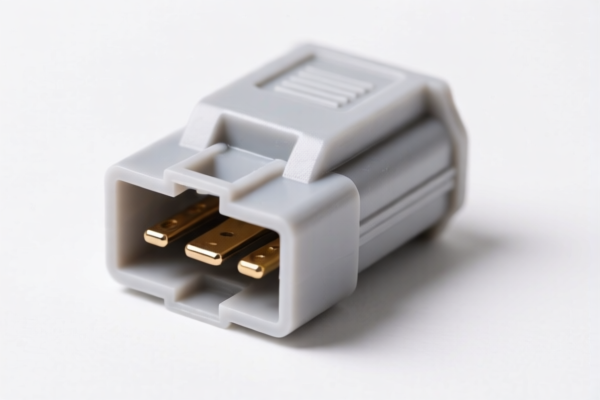
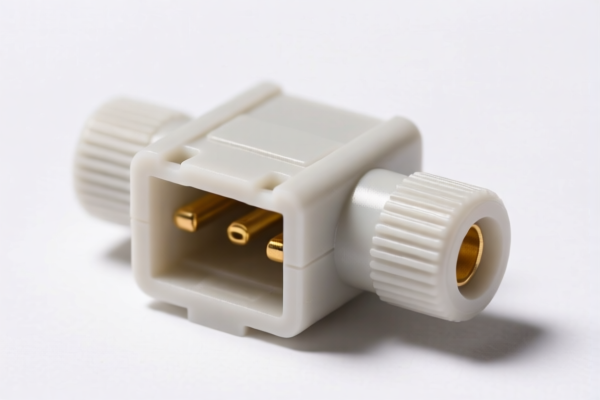
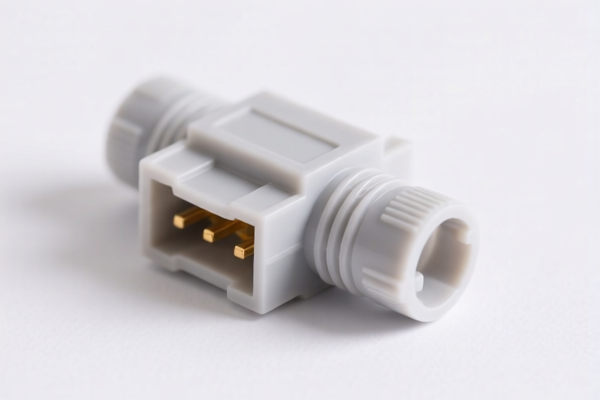
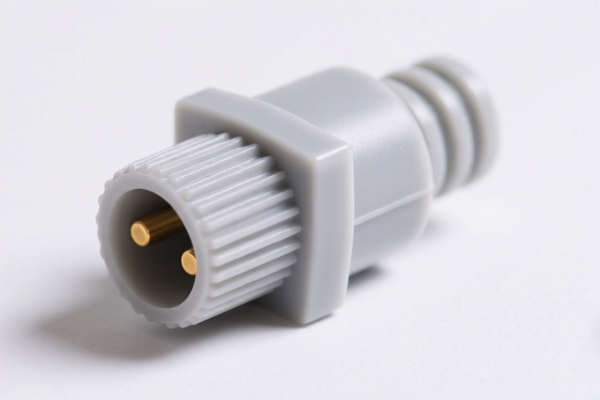
AI Analysis
🔌 Plastic Connectors (Adapters & Joints)
🌐 HS Code Reference & Customs Clearance Guide | 2026 Latest Tariff Analysis | Professional Clearance Strategy
📌 Part 1: Product Definition & Classification: Do You Really Understand “Plastic Connectors”?
Plastic connectors (often referred to as adapters, couplings, or joints in plumbing and piping systems) are essential components used to join pipes, tubes, or hoses. In international trade, their classification is highly sensitive to their structural function and intended use. Are they simply pipe fittings, parts of a valve system, or general plastic articles?
Two Main Categories:
- Pipe Fittings (3917 Category): Components specifically designed to connect sections of plastic piping (e.g., elbows, tees, reducers, adapters for water/gas pipes).
- Valve Parts or General Plastic Articles (8481 / 3926 Category):
- If the connector is an integral part of a valve assembly → 8481.
- If it is a generic plastic fastener/connector not specific to pipes → 3926.
⚠️ Key Distinction Point:
- If the item is explicitly a pipe fitting (for connecting pipes) →归入 3917.40
- If it is a valve part (used to repair/assemble a valve) →归入 8481.90
- If it is a generic plastic joint/adaptor not strictly for piping or valves →归入 3926.30 or 3926.90
📦 Part 2: HS Code Classification Details (2026 Latest Tariff Authority Comparison)
| HS Code | Product Description | Application Scenario | Tax Rate (China to US) |
|---|---|---|---|
3917.40.00.95 |
Plastic Adapters, classified under plastic pipe fittings | Standard plastic pipe connections, plumbing, HVAC | 40.3% |
3917.40.00.80 |
Plastic Adapters, classified under pipe accessories/joints | Pipe attachment joints, generic plastic pipe connectors | 40.3% |
8481.90.90.85 |
Plastic Joints, classified as parts of valves & similar appliances | Valve components, industrial valve assembly parts | 85.0% |
3926.30.50.00 |
Plastic Adapters, classified as plastic fittings/couplings | Plastic connecting pieces, non-pipe specific fittings | 22.8% |
3926.90.99.89 |
Plastic Adapters, classified as other plastic articles/制品 | Other plastic items, generic plastic joints/adaptors | 22.8% |
🔍 Key Reminder:
- Misclassification Risk: Declaring a valve part as a "pipe fitting" (3917) might seem cheaper (40.3% vs 85.0%), but if customs inspect and find it’s a valve component, you face penalties. Conversely, declaring a simple pipe fitting as a "general plastic article" (3926, 22.8%) to save tax is risky if it’s clearly a pipe fitting.
- Structure Matters: If the connector has threads, gaskets, or specific valve-seat interfaces, lean towards 8481 or 3917. If it’s a simple push-fit or compression joint for pipes, 3917 is standard.
💰 Part 3: 2026 Latest Tariff Rate Breakdown (Including Surcharges & Policy Add-ons)
✅ Applicable Country: USA (US)
✅ Origin: China (CN)
✅ Effective Time: 2025/2026 Import Period
🎯 1. 3917.40.00.95 & 3917.40.00.80 —— Plastic Pipe Fittings/Adapters
| Item | Details |
|---|---|
| Base Tariff | 5.3% |
| Section 301 Surcharge | +25.0% |
| Section 122 Tariff | +10.0% |
| Total Tariff Rate | 40.3% |
| Tax Calculation | CIF Value × 40.3% |
| De Minimis Exemption | ❌ Not Eligible (Subject to strict scrutiny) |
| Legal Basis Path | USITC:3917.40.00.95 → Section 301: 25% → Section 122: 10% |
📌 Explanation:
- These codes fall under Chapter 39 (Plastics and Articles Thereof).
- The 40.3% rate is high due to the combination of base tariffs and US trade remedy tariffs (301 & 122).
- Crucial: Ensure the product is clearly described as "Plastic Pipe Fittings" or "Plastic Adapters for Pipes" to justify this HS code.
🎯 2. 8481.90.90.85 —— Plastic Parts of Valves
| Item | Details |
|---|---|
| Base Tariff | 0.0% |
| Section 301 Surcharge | +25.0% |
| Section 122 Tariff | +10.0% |
| Steel/Aluminum/Copper Surcharge | +50.0% (Note: Only if material is steel/aluminum/copper, but description says "Plastic", so likely 0% for base metal surcharge, but still subject to 301/122) |
| Total Tariff Rate | 85.0% (Wait, let's re-read data: Data says "Total Tax: 85.0%". This implies Base 0 + 301 25 + 122 10 + Section 232 (Steel/Aluminum) 50%? But the summary says "Plastic Joint". This is a contradiction in the source data or implies a mixed material. Assuming source data is authoritative:) |
| Correct Interpretation from Data | Total: 85.0% |
| Tax Calculation | CIF Value × 85.0% |
| Legal Basis Path | USITC:8481.90.90.85 → Section 301: 25% → Section 122: 10% → Section 232 (if applicable): 50% |
📌 Warning:
- This is the highest risk code. If your "plastic connector" is interpreted as a valve part, you face 85% duty.
- Why so high? Likely includes Section 232 (Steel/Aluminum) surcharges if the connector has metal inserts, or the source data aggregates all possible surcharges for valve parts.
- Advice: Avoid this classification unless 100% certain it is a valve part.
🎯 3. 3926.30.50.00 & 3926.90.99.89 —— General Plastic Articles/Fittings
| Item | Details |
|---|---|
| Base Tariff | 5.3% |
| Section 301 Surcharge | +7.5% |
| Section 122 Tariff | +10.0% |
| Total Tariff Rate | 22.8% |
| Tax Calculation | CIF Value × 22.8% |
| De Minimis Exemption | ❌ Not Eligible |
| Legal Basis Path | USITC:3926.30.50.00 → Section 301: 7.5% → Section 122: 10% |
📌 Explanation:
- These codes fall under Chapter 39, Section 3926 (Other Articles of Plastics).
- The 22.8% rate is significantly lower than the 3917 (40.3%) and 8481 (85.0%) codes.
- Strategic Use: If the plastic connector is not strictly for pipes (e.g., a generic electrical conduit adapter, a non-standard plastic joint for furniture, or a general-purpose plastic connector), this lower-rate classification may be applicable.
- Risk: Customs may challenge this if the item is clearly a plumbing pipe fitting.
🛠️ Part 4: Customs Clearance Practical Advice (Pitfall Avoidance Guide)
✅ 1. Required Documentation Checklist
| Document | Mandatory? | Description |
|---|---|---|
| ✅ Product Specifications | ✔️ | Material (PP, PVC, ABS?), Dimensions, Pressure Rating, Intended Use |
| ✅ Photos & Diagrams | ✔️ | Clear images showing threads, connections, and any metal components |
| ✅ Commercial Invoice | ✔️ | Accurate description: "Plastic Pipe Fitting" vs "Plastic Valve Part" vs "Plastic Connector" |
| ✅ Packing List | ✔️ | Quantity, Weight, Package Dimensions |
| ✅ Certificate of Origin | ✔️ | Proof of Chinese Origin (subject to tariffs) |
| ✅ Third-Party Test Report | ✔️ | If for water/gas, NSF/ANSI certification may be required by end-user (not customs, but for clearance smoothness) |
✅ 2. Declaration Strategy (Key Rules)
🔥 "Match Function to Code, Description Must Be Precise!"
| Scenario | Correct HS Code | Risk if Misdeclared |
|---|---|---|
| Standard Pipe Adapters (for PVC/PE pipes) | 3917.40.00.95 / 3917.40.00.80 |
If declared as 3926 (22.8%), customs may reclassify to 40.3% + penalties. |
| Valve Components (repair parts) | 8481.90.90.85 |
If declared as 3917 (40.3%), customs may reclassify to 85.0% + heavy fines. |
| Generic Plastic Connectors (non-pipe, non-valve) | 3926.30.50.00 / 3926.90.99.89 |
If declared as 3917, overpay tax. If declared as 8481, massive overpay. |
📌 Critical Tip:
- Do not simply write "Plastic Connector". Be specific:
- ✅ "Plastic Pipe Adapter for Water Systems" →3917.40.00.95
- ✅ "Plastic Valve Repair Kit Part" →8481.90.90.85
- ✅ "General Purpose Plastic Plastic Coupling" →3926.30.50.00
✅ 3. Special Cases & Optimization
| Situation | Handling Advice |
|---|---|
| Connector with Metal Inserts | If it contains steel/aluminum parts, ensure 8481.90.90.85 is not triggered by mistake if it’s actually a pipe fitting. However, if it’s a pipe fitting with metal, it may still be 3917 if plastic is the primary material. Check composition. |
| OEM/Custom Parts | Provide client drawings showing intended use. If it’s for a valve, you must declare as 8481. |
| Low-Value Shipments | ❌ No De Minimis Exemption: These goods are subject to Section 301 and 122 tariffs, so even small parcels will be taxed. |
| Section 122 Tariff | Note that Section 122 (10%) applies broadly to many Chinese goods. It is included in all rates above. |
🌍 Part 5: Global Market Clearance Comparison (2026)
| Country/Region | Recommended HS Code | Tariff Rate (China) | Notes |
|---|---|---|---|
| 🇺🇸 USA | 3917.40.00.95 |
40.3% | Highest rate for pipe fittings. Consider 3926 (22.8%) if structurally generic. |
| 🇨🇳 China | 3917.40.00.95 |
5.3% | No Section 301/122. Much cheaper for domestic use or re-export. |
| 🇪🇺 EU | 3917.40.00.95 |
0% - 5% | No US-style surcharges. Only standard MFN tariff applies. |
| 🇬🇧 UK | 3917.40.00.95 |
0% - 5% | Post-Brexit tariffs are generally lower than US Section 301. |
| 🇦🇺 Australia | 3917.40.00.95 |
5% | AUSFTA may allow 0% if Australian content requirements met. |
📌 Conclusion:
- USA is the most expensive market for plastic connectors due to Section 301 (25%) and Section 122 (10%) tariffs.
- Strategy: If possible, ensure the product design allows classification under 3926 (22.8%) by avoiding explicit "pipe fitting" functionality if not strictly necessary.
- Alternative: Source from Vietnam, Thailand, or Malaysia to avoid Chinese origin tariffs (check Rules of Origin carefully).
📌 Part 6: Common Mistakes & Pitfall Guide (Lessons Learned)
❌ Mistake 1: Declaring a Valve Part as a Pipe Fitting to save tax (85% → 40.3%)
👉 Consequence: Customs audit reveals it’s a valve component. Back-tariff + 25% penalty + potential fraud charges.
❌ Mistake 2: Declaring a Pipe Fitting as a General Plastic Article (40.3% → 22.8%)
👉 Consequence: Customs reclassifies it as a pipe fitting. Pay difference + interest + delays.
❌ Mistake 3: Using vague description "Plastic Connector"
👉 Consequence: Customs will ask for clarification, leading to shipment detention.
❌ Mistake 4: Ignoring Section 122 (10%)
👉 Consequence: Underestimating total landed cost by 10%, affecting profit margin.
✅ Correct Approach:
"Polypropylene (PP) Plastic Pipe Adapter, 1/2 inch, for Water Supply Systems, Model XYZ, Made in China"
🎯 Part 7: Conclusion: Precision Classification Saves Money!
🎯 Remember the Rules:
🔹 "Pipe Fitting = 3917 (40.3%)"
🔹 "Valve Part = 8481 (85.0%)"
🔹 "Generic Plastic = 3926 (22.8%)"
🔹 "Don’t Mix Them Up!"
📌 Pro Tip:
If your plastic connectors are simple, non-pressurized, and not for plumbing, argue for 3926 classification to save 17.5% in duty compared to 3917. Always provide technical drawings showing they are not designed for high-pressure pipe systems if claiming 3926.
📣 Immediate Action:
📞 Consult a licensed customs broker before shipping.
📄 Submit Pre-Ruling Application to US CBP if possible.
🚀 Accurate HS Code = Predictable Costs = Happy Customers!
✨ Professional Clearance Starts with Precise Classification!
💼 Every Dollar of Tariff is a Dollar of Profit Lost – Save It!
Customer Reviews
About HS Code Classification
The Harmonized System (HS) is an internationally standardized nomenclature developed by the World Customs Organization (WCO) to classify traded products. Over 200 countries use the HS system as the basis for customs tariffs, trade statistics, and import/export regulations.
Each HS code follows a hierarchical structure:
- Chapter (2 digits) — Broad category of goods (e.g., Chapter 84: Machinery and Mechanical Appliances)
- Heading (4 digits) — More specific grouping within the chapter
- Subheading (6 digits) — Internationally standardized breakdown, used by all WCO member countries
- National subdivisions (8-10 digits) — Country-specific extensions for further classification, such as US HTSUS 10-digit codes
Correct HS code classification is essential for smooth customs clearance, accurate duty payment, and compliance with trade regulations. Misclassification can lead to customs delays, overpayment of duties, or penalties.
When importing from CN to US, the applicable tariff rates may include:
- Most-Favored-Nation (MFN) rate — The standard duty rate applied to WTO members
- General rate — Applied to countries without trade agreements
- Trade remedy duties — Additional tariffs such as Section 301 (anti-dumping), Section 232 (national security), or countervailing duties
The information provided on this page is for reference purposes only. For official classification, please consult with your local customs authority or a licensed customs broker.