Plastic Construction Bucket
CN → US| HS Code | Tariff Rate | Origin | Destination | Doc |
|---|---|---|---|---|
| 3926904000 | 12.8% | CN | US | Official Doc |
| 3926901000 | 20.9% | CN | US | Official Doc |
| 3923900012 | 38.0% | CN | US | Official Doc |
| 3923900014 | 38.0% | CN | US | Official Doc |
| 4415103000 | 35.0% | CN | US | Official Doc |
Product Images
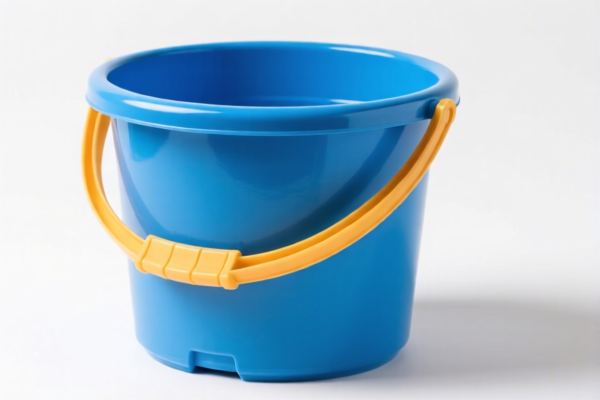
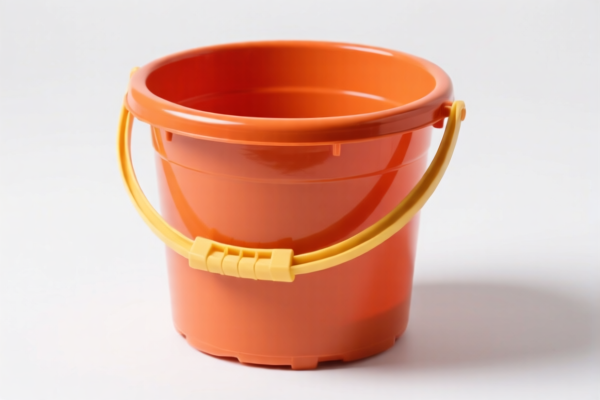
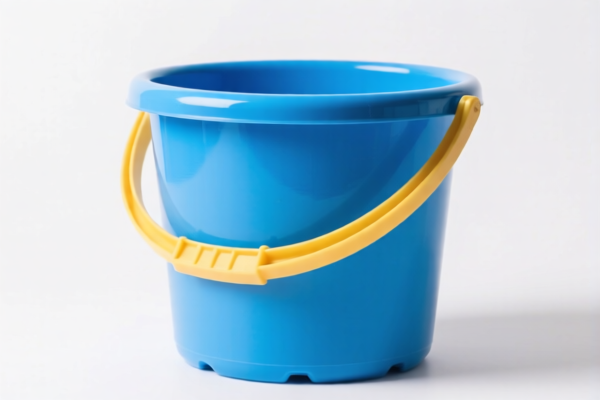

AI Analysis
🪣 Plastic Construction Bucket: The Ultimate HS Code & Customs Clearance Guide (2026 Update)
🌐 HS Code Classification & Tariff Breakdown | Professional Import Strategy for US Customs
📌 Product Overview: What is a "Plastic Construction Bucket"?
A Plastic Construction Bucket is a rigid container made primarily of polymer materials (PE, PP, ABS, etc.), designed for durability in industrial, construction, or heavy-duty household environments. Unlike decorative household buckets, these are often characterized by reinforced handles, thick walls, and stackable designs.
In international trade, the classification of these buckets hinges on two key factors: 1. Material: Is it strictly plastic? 2. Function/Nature: Is it a "Packaging Container" (e.g., used for transporting goods, chemicals, or paint) or a general "Plastic Article"?
⚠️ Critical Distinction:
- If the bucket is designed to contain and transport goods (like paint, cement, or water) as a package, it likely falls under Chapter 39 (Plastics) as a container/packaging item.
- If it is a general-purpose item without specific packaging intent, it may fall under "Other Plastic Articles."
- Note: Wooden buckets are explicitly excluded from plastic classifications.
📦 II. HS Code Classification Matrix (Based on Provided Data)
| HS Code | Product Description & Logic | Key Characteristics |
|---|---|---|
3926.90.40.00 |
Other Plastic Articles | General plastic goods not specified elsewhere. Logic: Plastic + Form = Article. |
3926.90.10.00 |
Plastic Buckets & Pails | Specific classification for "Buckets and pails." Logic: Plastic + Purpose (Bucket). |
3923.90.00.12 |
Plastic Packagings | Plastic containers for packing goods. Logic: Plastic + Form (Bucket) + Purpose (Packing). |
3923.90.00.14 |
Plastic Packagings (Buckets) | Plastic containers specifically defined as "Buckets/Pails" for packing. Logic: Matches both form and definition. |
4415.10.30.00 |
Wooden Crates, Drums & Similar | Exclusionary Logic: Based on common sense, if the bucket is wooden, it falls here. Not applicable for plastic buckets. |
💰 III. Detailed Tariff Analysis (2026 US Import Rules)
✅ Applicable Market: United States (US)
✅ Origin: China (CN) (Based on tax structure provided)
✅ Impact: High Tariffs due to Section 301 & IEEPA provisions
🎯 1. 3926.90.40.00 — Other Plastic Articles
- Logic: This is the "catch-all" for plastic goods that don't fit into specific packaging (Ch 3923) or specific appliance parts.
- Tariff Breakdown:
- Base Duty: 2.8%
- Section 301 (Add'l Tariff): 0.0% (Note: Some general plastics may be exempt or lower, but here listed as 0%)
- IEEPA (122 Section/China Specific): 10%
- ✅ Total Effective Rate: 12.8%
- Verdict: Lowest Risk/Cost. If customs accepts this code, it is the most economical option.
🎯 2. 3926.90.10.00 — Plastic Buckets & Pails
- Logic: Specific to "Buckets and pails." More precise than 3926.90.40.00 but still under "Other Plastic Articles."
- Tariff Breakdown:
- Base Duty: 3.4%
- Section 301 (Add'l Tariff): 7.5%
- IEEPA (122 Section/China Specific): 10%
- ✅ Total Effective Rate: 20.9%
- Verdict: Moderate Cost. Often disputed. If the bucket is clearly a "bucket," customs may prefer this over 3926.90.40.00, but the higher Section 301 rate applies.
🎯 3. 3923.90.00.12 — Plastic Packagings (Other)
- Logic: Classified as "Packagings and articles for the packing of goods." If the bucket is used to sell/transport paint, cement, or bulk chemicals, it is considered "packaging."
- Tariff Breakdown:
- Base Duty: 3.0%
- Section 301 (Add'l Tariff): 25.0%
- IEEPA (122 Section/China Specific): 10%
- ✅ Total Effective Rate: 38.0%
- Verdict: High Cost. Packing materials often face higher scrutiny and higher 301 tariffs.
🎯 4. 3923.90.00.14 — Plastic Packagings (Buckets)
- Logic: Specific sub-category for buckets used as packaging.
- Tariff Breakdown:
- Base Duty: 3.0%
- Section 301 (Add'l Tariff): 25.0%
- IEEPA (122 Section/China Specific): 10%
- ✅ Total Effective Rate: 38.0%
- Verdict: High Cost. Same as above. If the bucket is sold empty for consumer use (not as packaging for another good), this code might be challenged.
🎯 5. 4415.10.30.00 — Wooden Packaging
- Logic: Incorrect for Plastic. This code is for Wooden crates, drums, and similar packing.
- Tariff Breakdown:
- Base Duty: 0.0%
- Section 301 (Add'l Tariff): 25.0%
- IEEPA (122 Section/China Specific): 10%
- ✅ Total Effective Rate: 35.0%
- ⚠️ WARNING: Do NOT use this code for plastic buckets. Misclassification leads to delays, fines, and potential seizure. The material is plastic, not wood.
🛠️ IV. Customs Clearance Strategy & Recommendations
✅ 1. The "Golden Rule" of Classification
Is it Packaging or a Product? - If the bucket is sold empty to be filled by the consumer (e.g., a paint bucket sold at a hardware store for reuse): Argue for 3926.90.xxxx (Articles). - If the bucket is sold filled (e.g., a pail of paint or cement) or designed strictly as a shipping container for bulk goods: It is 3923.90.xxxx (Packagings).
✅ 2. Recommended Path for Cost Efficiency
| Scenario | Recommended HS Code | Total Tax | Why? |
|---|---|---|---|
| General Purpose Plastic Bucket (e.g., janitorial, toy, storage) | 3926.90.40.00 |
12.8% | Lowest tariff. Broad category. Easiest to justify as "not primarily packaging." |
| Dedicated "Bucket" Design (Industrial use) | 3926.90.10.00 |
20.9% | More accurate if "Buckets" are explicitly listed in the HTSUS notes for this subheading. |
| Used as Shipping/Packaging Container | 3923.90.00.12 / .14 |
38.0% | High cost. Only use if the bucket is integral to the packing process (e.g., bulk chemical drums). |
✅ 3. Documentation Checklist
To prevent misclassification and audits, prepare: 1. Product Photos: Show the bucket from all angles, including handles, rims, and bottom. 2. Material Spec Sheet: Confirm 100% Plastic composition (HDPE, PP, etc.). Do not mention wood or metal reinforcements unless negligible. 3. Intended Use Statement: * For Low Tax: "For general storage/household use. Not primarily designed as a transport packaging container for hazardous goods." * For High Tax: "For transporting bulk liquids/chemicals." (Only if true). 4. Packing List: Clearly state "Plastic Buckets" not "Wooden Crates" or "Packaging Materials" if aiming for 3926.
✅ 4. Common Pitfalls & Fixes
- ❌ Pitfall: Declaring plastic buckets as
4415(Wooden) to save on Section 301.- Consequence: Customs will flag material mismatch. Fines + Seizure.
- Fix: Always declare correct material.
- ❌ Pitfall: Declaring all buckets as
3923(Packaging).- Consequence: Higher 25% tariff.
- Fix: If the bucket is a retail product (like a mop bucket or toy bucket), argue for
3926(Articles).
- ❌ Pitfall: Ignoring IEEPA 10%.
- Consequence: Underpayment.
- Fix: Factor in the 10% IEEPA surcharge on ALL Chinese-origin plastic goods (39xx) and wood goods (44xx) shipped to the US.
🌍 V. Global Market Snapshot (2026)
| Destination | HS Code Focus | Key Risk |
|---|---|---|
| 🇺🇸 USA | 3926.90 vs 3923.90 |
Section 301 (Up to 25%) + IEEPA 10%. Classification is critical to save thousands per container. |
| 🇨🇳 China | 3926.90 |
Standard import duties. No Section 301. Lower risk. |
| 🇪🇺 EU | 3926.90 |
Standard EU duties (~3-4%). No massive anti-dumping on generic plastics. |
📌 VI. Final Verdict & Action Plan
- Do NOT use
4415.10.30.00. It is for wood. Using it for plastic is fraud/misdeclaration. - Aim for
3926.90.40.00(12.8%) if the bucket is a general consumer/industrial item.- Strategy: Emphasize "General Use" in commercial invoices. Avoid words like "Packaging," "Shipping Container," or "Bulk Transport."
- Expect
3926.90.10.00(20.9%) if customs insists on the specific "Bucket" description. - Avoid
3923.90(38.0%) unless the product is explicitly a shipping package for other goods. The 25% Section 301 tariff makes this very expensive.
🚀 Pro Tip: If you are importing large volumes, consider Advance Rulings from US Customs (CBP) to lock in the
3926.90.40.00classification legally and avoid future audits.
✨ Precision in Code = Profit in Pocket.
📞 Consult a licensed customs broker to verify your specific product design against the 2026 HTSUS notes.
Customer Reviews
About HS Code Classification
The Harmonized System (HS) is an internationally standardized nomenclature developed by the World Customs Organization (WCO) to classify traded products. Over 200 countries use the HS system as the basis for customs tariffs, trade statistics, and import/export regulations.
Each HS code follows a hierarchical structure:
- Chapter (2 digits) — Broad category of goods (e.g., Chapter 84: Machinery and Mechanical Appliances)
- Heading (4 digits) — More specific grouping within the chapter
- Subheading (6 digits) — Internationally standardized breakdown, used by all WCO member countries
- National subdivisions (8-10 digits) — Country-specific extensions for further classification, such as US HTSUS 10-digit codes
Correct HS code classification is essential for smooth customs clearance, accurate duty payment, and compliance with trade regulations. Misclassification can lead to customs delays, overpayment of duties, or penalties.
When importing from CN to US, the applicable tariff rates may include:
- Most-Favored-Nation (MFN) rate — The standard duty rate applied to WTO members
- General rate — Applied to countries without trade agreements
- Trade remedy duties — Additional tariffs such as Section 301 (anti-dumping), Section 232 (national security), or countervailing duties
The information provided on this page is for reference purposes only. For official classification, please consult with your local customs authority or a licensed customs broker.