Plastic Construction Hose
CN → US| HS Code | Tariff Rate | Origin | Destination | Doc |
|---|---|---|---|---|
| 3917310000 | 38.1% | CN | US | Official Doc |
| 3917320010 | 38.1% | CN | US | Official Doc |
| 3917320020 | 38.1% | CN | US | Official Doc |
| 3917330000 | 38.1% | CN | US | Official Doc |
| 3917390050 | 38.1% | CN | US | Official Doc |
Product Images
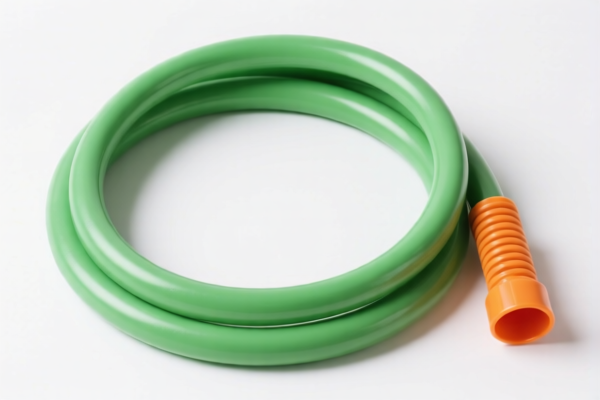
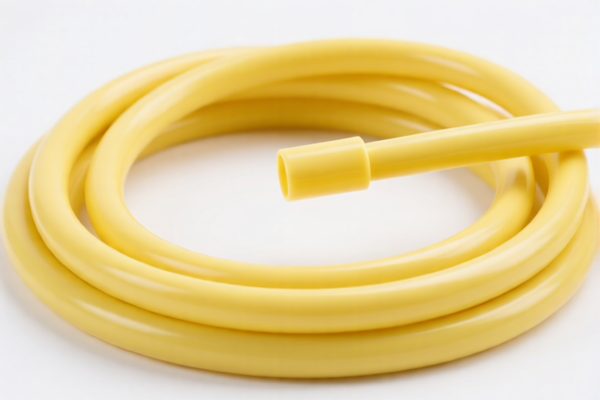
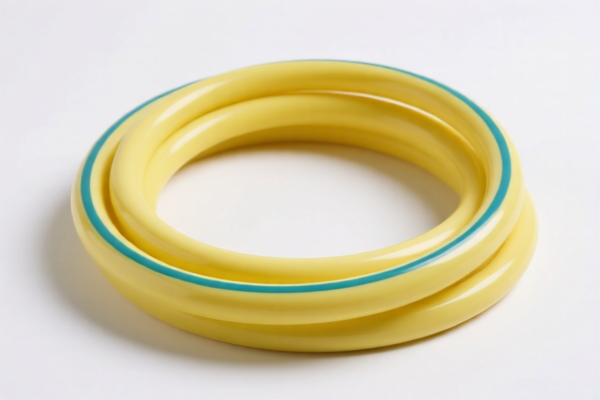
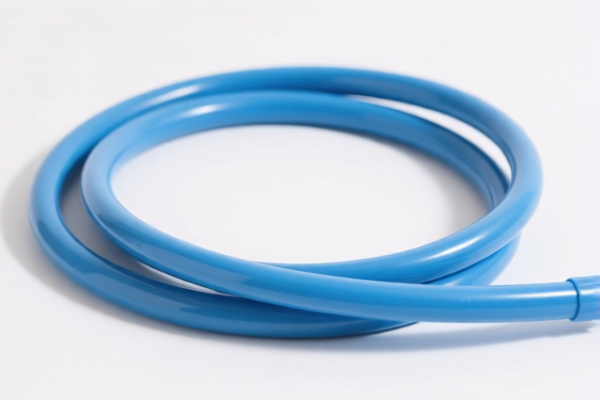
AI Analysis
🧪 Plastic Construction Hose (Chemical/Industrial Media Transfer)
🌐 HS Code Reference & Customs Clearance Guide | 2026 Latest Tariff Analysis | Professional通关 Strategy
📌 I. Product Definition & Classification: Do You Really Understand "Plastic Construction Hose"?
"Plastic Construction Hose" is a broad term in international trade, typically referring to flexible tubes made of plastic materials (such as PVC, PE, or other polymers) used for transporting chemical media, water, air, or other industrial fluids.
Key Distinction Points: * Material Specifics: Is it PVC, PE, or another plastic? The HS code varies slightly based on the specific polymer type. * Usage Scenario: Is it for general construction water supply or for chemical media transfer? This determines whether it falls under general plastic tubes or those for chemical/industrial use. * Pressure Rating: Is it a standard pressure hose or a high-pressure hose? High-pressure applications may have specific sub-categories.
⚠️ Critical Note:
- All items in the provided dataset are subject to significant additional tariffs (Total Tax Rate: 38.1%) due to current trade policies (Section 301 + Section 122).
- Misclassification can lead to severe delays or incorrect duty payments. Precision is key!
📦 II. HS Code Classification Details (2026 Latest Tariff Authority Alignment)
Based on the provided <DATA>, here are the exact HS codes and their corresponding descriptions for plastic construction/chemical hoses.
| HS Code | Product Description (Summary) | Material/Form | Key Classification Feature |
|---|---|---|---|
3917.31.00.00 |
Plastic hose for chemical media, plastic material, hose form, for chemical media transport. | Plastic | Chemical Media Focus: Specifically classified for hoses transporting chemical substances. |
3917.32.00.10 |
Plastic hose (e.g., PVC), plastic material, hose form, for chemical media transmission. | Plastic (e.g., PVC) | PVC Specific: Explicitly mentions PVC as the material for chemical transfer. |
3917.32.00.20 |
Plastic PE hose, material is PE (Polyethylene), hose form, conforms to PE tube classification. | PE (Polyethylene) | PE Specific: Strictly for Polyethylene hoses, highlighting the polymer type. |
3917.33.00.00 |
Plastic hose, material is PE (Polyethylene), hose form, conforms to material and form classification characteristics. | PE (Polyethylene) | General PE Hose: Broader category for PE hoses, focusing on material/form match. |
3917.39.00.50 |
Plastic high-pressure hose, plastic material, hose form, meets high-pressure hose classification requirements. | Plastic | High-Pressure Specific: For hoses designed to withstand high pressure, regardless of specific polymer. |
🔍 Classification Logic:
- If your hose is PVC-based and for chemical use, use3917.32.00.10.
- If your hose is PE-based, choose between3917.32.00.20(if strict PE classification is needed) or3917.33.00.00(general PE).
- If the hose is high-pressure rated (generic plastic), use3917.39.00.50.
- All these codes share the same tax structure due to their similarity in material and function under current trade rules.
💰 III. 2026 Latest Tariff Rate Breakdown (Including Surtaxes & Policy Add-ons)
✅ Applicable Country: United States (US)
✅ Origin: China (CN)
✅ Total Tax Rate: 38.1%
✅ Effective Date: Ongoing (Post-2025 Policy Updates)
🎯 1. All Listed HS Codes (3917.31.00.00 to 3917.39.00.50)
| Item | Details |
|---|---|
| Base Tariff | 3.1% (Standard MFN rate for plastic tubes) |
| Section 301 Surcharge | +25.0% (Retaliatory tariffs on Chinese goods) |
| Section 122 Tariff | +10.0% (Additional tariff under Section 122 provisions) |
| Total Tax Rate | 38.1% |
| Tax Calculation | CIF Value × 38.1% |
| De Minimis Eligibility | ❌ NO (High-risk category, no de minimis exemption) |
| Legal Basis Path | USITC:3917.xxxx.xxxx → FOOTNOTE:Section301 → FOOTNOTE:Section122 |
📌 Explanation:
- The 3.1% is the standard base duty for plastic pipes/hoses.
- The 25.0% is the well-known Section 301 tariff targeting Chinese manufacturing.
- The 10.0% is a specific Section 122 tariff, often applied to critical industrial goods or under specific national security/emergency provisions.
- Total 38.1% is a high-duty threshold. Importers must factor this into their landed cost calculations immediately.
🛠️ IV. Customs Clearance Practical Advice (Battle-Tested Pitfall Avoidance Guide)
✅ 1. Documentation Checklist (Non-Negotiable)
| Document | Required | Explanation |
|---|---|---|
| ✅ Product Specification Sheet | ✔️ | Must detail material (PVC/PE), diameter, pressure rating, and intended use (chemical/water). |
| ✅ Composition Certificate | ✔️ | Proof that the hose is >50% plastic by weight. |
| ✅ Commercial Invoice | ✔️ | Clearly state "Plastic Hose" or "PE Hose," not vague terms like "Tube." |
| ✅ Packing List | ✔️ | List net/gross weight per carton. |
| ✅ Country of Origin Certificate | ✔️ | To confirm China origin (triggering the 38.1% rate). |
| ✅ Safety Data Sheet (SDS) | ✔️ | If for chemical media, SDS proves compatibility and safety, aiding customs inspection. |
| ✅ Test Report | ✔️ | Pressure test results if claiming "High-Pressure" status (3917.39.00.50). |
✅ 2. Declaration Tips (Key Mantras)
🔥 “Specify Material, Declare Use, Avoid Ambiguity!”
| Scenario | Correct Declaration | Error to Avoid |
|---|---|---|
| PVC Hose for Chemicals | 3917.32.00.10 – "PVC Plastic Hose for Chemical Transfer" |
Vague: "Plastic Tube" → Risk of reclassification. |
| PE Hose | 3917.32.00.20 or 3917.33.00.00 – "Polyethylene Hose" |
Vague: "Construction Hose" → Customs may guess. |
| High-Pressure Hose | 3917.39.00.50 – "High-Pressure Plastic Hose" |
If actual pressure is low, misclassification → Penalties. |
| Mixed Materials | Ensure plastic is the primary material (>50%) | If metal reinforcement is primary, HS code changes entirely! |
✅ 3. Special Case Handling
| Situation | Handling Advice |
|---|---|
| Reinforced Hoses | If the hose has a metal wire mesh core, it may not qualify as a "plastic" product. Check if the plastic is merely a lining. If metal is primary, HS code shifts (e.g., to 7308 or 8481). |
| OEM/Custom Orders | Provide customer specs to justify the specific material (PE vs. PVC) for accurate sub-code selection. |
| Sample Shipments | Even samples are subject to the 38.1% tax if declared as commercial goods. Use proper value declaration to avoid audits. |
| Dual-Use Items | If the hose is used for both chemical and water transport, declare the primary intended use as per the manufacturer's spec sheet. |
🌍 V. Global Market Comparison (2026 Latest)
| Country/Region | Recommended HS Code | Tariff Rate | Certification | Notes |
|---|---|---|---|---|
| 🇺🇸 USA | 3917.31.00.00 – 3917.39.00.50 |
38.1% | No specific CE/FCC | High tariff due to 301/122 clauses. |
| 🇨🇳 China | 3917.31.00.00 |
~3.1% | CCC (if applicable) | Base rate only, no Section 301. |
| 🇪🇺 EU | 3917.29 / 3917.39 |
~4-6% | REACH + RoHS | No Section 301/122 surcharges. |
| 🇲🇽 Mexico | 3917.29 |
~0-5% | NOM | Check USMCA eligibility. |
📌 Conclusion:
- The USA imposes a massive 38.1% duty on these plastic hoses from China.
- Competitors from Vietnam, Mexico, or EU have a significant cost advantage (4-6% vs. 38.1%).
- Strategy: Consider transshipment (if legal and compliant), sourcing from non-China origins, or adjusting pricing to absorb the tariff.
📌 VI. Common Errors & Pitfall Guide (Lessons from Tears)
❌ Error 1: Declaring "Plastic Hose" without specifying material (PVC/PE).
👉 Consequence: Customs may downgrade to a higher duty code or request extensive clarification, causing delays.
❌ Error 2: Ignoring the "High-Pressure" claim.
👉 Consequence: If declared as 3917.39.00.50 (high-pressure) but actual pressure is low, it may be reclassified, but if the pressure is higher than declared, it risks safety compliance issues.
❌ Error 3: Not accounting for the 10% Section 122 tariff.
👉 Consequence: Many importers only calculate the 25% Section 301. Forgetting the 10% leads to a 10% underpayment and potential audits.
❌ Error 4: Using vague names like "Construction Material."
👉 Consequence: Customs cannot classify properly → Hold → Demurrage charges.
✅ Correct Approach:
"PVC Plastic Hose, 2-inch Diameter, Chemical Resistant, for Industrial Fluid Transfer, Model ABC, US Origin (if applicable), CE Certified."
🎯 VII. Conclusion: Professional Declaration, Cost Optimization, Efficient Clearance!
🎯 Remember the Mantra:
🔹 "Material First, Use Second, 38.1% is the Reality!"
🔹 "Don't guess the HS code, specify PVC or PE clearly!"
🔹 "Section 301 + Section 122 = 35% Surtax, Plan Your Budget!"
📌 Pro Tip:
If your plastic hoses are not of Chinese origin (e.g., produced in Vietnam, Thailand, or Mexico), you may avoid the 25% Section 301 and 10% Section 122 tariffs, bringing the rate down to the base 3.1% + minimal local duties.
Recommendation: Apply for an Advance Ruling if unsure about the "High-Pressure" or "Chemical Media" classification to ensure compliance and avoid penalties.
📣 Immediate Action:
📞 Consult a licensed customs broker + Provide detailed product specs + Calculate landed cost with 38.1% tariff.
🚀 Ensure smooth clearance, avoid surprise fees, and protect your margins!
✨ Professional clearance starts with precise classification!
💼 Every cent saved on accurate declaration counts!
Customer Reviews
About HS Code Classification
The Harmonized System (HS) is an internationally standardized nomenclature developed by the World Customs Organization (WCO) to classify traded products. Over 200 countries use the HS system as the basis for customs tariffs, trade statistics, and import/export regulations.
Each HS code follows a hierarchical structure:
- Chapter (2 digits) — Broad category of goods (e.g., Chapter 84: Machinery and Mechanical Appliances)
- Heading (4 digits) — More specific grouping within the chapter
- Subheading (6 digits) — Internationally standardized breakdown, used by all WCO member countries
- National subdivisions (8-10 digits) — Country-specific extensions for further classification, such as US HTSUS 10-digit codes
Correct HS code classification is essential for smooth customs clearance, accurate duty payment, and compliance with trade regulations. Misclassification can lead to customs delays, overpayment of duties, or penalties.
When importing from CN to US, the applicable tariff rates may include:
- Most-Favored-Nation (MFN) rate — The standard duty rate applied to WTO members
- General rate — Applied to countries without trade agreements
- Trade remedy duties — Additional tariffs such as Section 301 (anti-dumping), Section 232 (national security), or countervailing duties
The information provided on this page is for reference purposes only. For official classification, please consult with your local customs authority or a licensed customs broker.