Plastic Construction Pipes
CN → US| HS Code | Tariff Rate | Origin | Destination | Doc |
|---|---|---|---|---|
| 3917230000 | 38.1% | CN | US | Official Doc |
| 3916200020 | 40.8% | CN | US | Official Doc |
| 3916200010 | 40.8% | CN | US | Official Doc |
| 3917290090 | 38.1% | CN | US | Official Doc |
| 3926909987 | 22.8% | CN | US | Official Doc |
Product Images

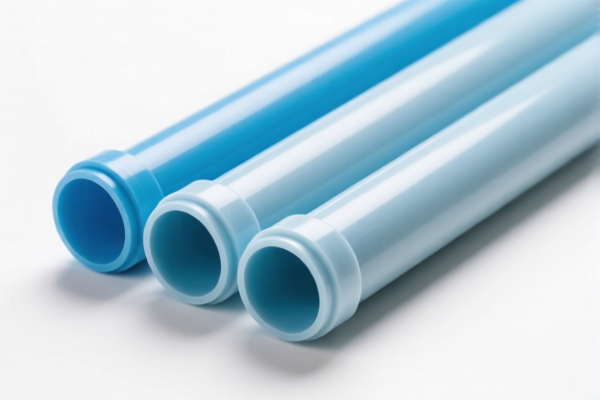

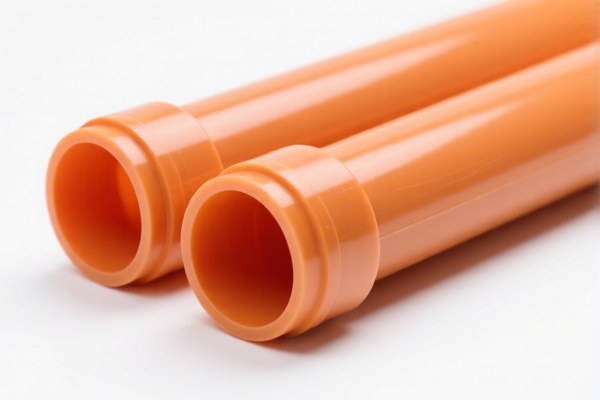
AI Analysis
🏗️ Plastic Construction Pipes (Plastic Pipe for Building)
🌐 HS Code Reference & Customs Clearance Guide | 2026 Latest Tariff Analysis | Professional Clearance Strategy
📌 I. Product Definition & Classification: What Exactly Are "Plastic Construction Pipes"?
"Plastic Construction Pipes" are rigid or semi-rigid tubing made from synthetic polymers (such as PVC, PE, PP, or PPR) specifically designed for use in building infrastructure. In international trade, these are not a single monolithic category. They are strictly classified based on geometry, specific application, and structural form.
Key Classification Logic: 1. Standard Pipes (Hollow Profiles): Circular or oval tubes used for water supply, drainage, or conduit. → Generally HS 3917. 2. Structural/Extruded Profiles: Pipes shaped specifically for windows, doors, railings, or siding panels. → Generally HS 3916. 3. Miscellaneous/Other: Pipes that don’t fit the specific "building profile" or "tube" definitions. → HS 3926.
⚠️ Critical Distinction:
- If it is a simple round tube for plumbing/conduit → HS 3917
- If it is a shaped profile for windows/doors/siding → HS 3916
- If it is a general plastic fitting/part not defined elsewhere → HS 3926
📦 II. HS Code Classification Details (2026 Latest Tariff Authority Cross-Reference)
| HS Code | Product Description | Application Scenario | Tax Profile |
|---|---|---|---|
3917.23.00.00 |
Plastic tubes, pipes, and hoses, with the simplest shape being circular, for building | Standard plastic pipes for water, gas, or electrical conduit in construction | 38.1% |
3916.20.00.20 |
Monolithic structures of plastics, for windows, doors, platforms, or railings | Shaped profiles for window frames, door casings, or balcony railings | 40.8% |
3916.20.00.10 |
Monolithic structures of plastics, for exterior wall siding | PVC vinyl siding strips or exterior cladding profiles | 40.8% |
3917.29.00.90 |
Other plastic tubes, pipes, and hoses, not having fittings | General-purpose plastic tubes for construction not specifically listed above | 38.1% |
3926.90.99.87 |
Other articles of plastics and articles of other materials of heading 3901 to 3914, not elsewhere specified | Catch-all category for plastic pipe parts/accessories or non-specific pipe types | 22.8% |
🔍 Key Reminder:
- HS 3916 applies to "Monolithic Structures" (extruded profiles with a cross-section other than circular, often used for architectural components like window frames).
- HS 3917 applies to "Tubes, Pipes, and Hoses" (typically circular or simple hollow shapes used for fluid/electric transport).
- Misclassifying a window profile as a simple pipe (3917) or vice versa can lead to 2.7% tariff differences + customs audits.
💰 III. 2026 Latest Tariff Rate Breakdown (Including Surtaxes, Policy Add-ons)
✅ Applicable Country: United States (US)
✅ Origin: China (CN)
✅ Effective Date: 2025 Nov 10 onwards (inclusive of subsequent imports)
🎯 1. 3917.23.00.00 & 3917.29.00.90 —— Plastic Pipes for Building / Other Plastic Tubes
| Item | Content |
|---|---|
| Base Tariff | 3.1% (Ad Valorem) |
| Section 301 Surtax | +25.0% (From USITC Footnote 9903.03) |
| Section 122 Tariff | +10.0% (Specific China-related surcharge) |
| Total Tax Rate | 38.1% |
| Tax Calculation | CIF Value × 38.1% |
| De Minimis Eligibility | ❌ NO (deny_de_minimis) |
| Legal Basis Path | USITC:3917.23.00.00 → FOOTNOTE:9903.03 → IEEPA:9903.01.24 |
📌 Explanation:
- The 25% Section 301 tax is the primary driver for high costs on Chinese plastic imports.
- The 10% Section 122 tax adds an additional layer specifically targeting certain Chinese manufactured goods.
- Total 38.1% is substantial. Ensure your product is correctly identified as "Pipe for Building" (3917) and not a higher-rated general plastic article to avoid overpayment or misclassification penalties.
🎯 2. 3916.20.00.20 & 3916.20.00.10 —— Plastic Profiles for Windows, Doors, Siding
| Item | Content |
|---|---|
| Base Tariff | 5.8% (Ad Valorem) |
| Section 301 Surtax | +25.0% |
| Section 122 Tariff | +10.0% |
| Total Tax Rate | 40.8% |
| Tax Calculation | CIF Value × 40.8% |
| De Minimis Eligibility | ❌ NO |
| Legal Basis Path | USITC:3916.20.00.20 → FOOTNOTE:9903.03 → IEEPA:9903.01.24 |
📌 Note:
- These codes carry a higher base rate (5.8%) compared to standard pipes (3.1%), resulting in a total of 40.8%.
- This category covers extruded profiles (e.g., PVC window frames, siding strips).
- Do not misdeclare window frames as "pipes" (3917) to save 2.7%. Customs uses cross-sectional shape analysis to verify. If it looks like a window frame, it gets the window frame tax.
🎯 3. 3926.90.99.87 —— Other Plastic Articles (Catch-All)
| Item | Content |
|---|---|
| Base Tariff | 5.3% (Ad Valorem) |
| Section 301 Surtax | +7.5% (Note: Lower Section 301 rate for this specific subheading) |
| Section 122 Tariff | +10.0% |
| Total Tax Rate | 22.8% |
| Tax Calculation | CIF Value × 22.8% |
| De Minimis Eligibility | ❌ NO |
| Legal Basis Path | USITC:3926.90.99.87 → FOOTNOTE:9903.01 (Lower tier) → IEEPA:9903.01.24 |
📌 Caution:
- This is the lowest tax rate (22.8%) among the listed options.
- However, it is a "Dumb-down" category. You can only use this if the item does not fit the specific definitions of "Pipes" (3917) or "Monolithic Structures" (3916).
- Risk: Customs may reject this classification if the item is clearly a pipe or profile, leading to reclassification to 3917/3916 and penalties. Use only for true "other" plastic parts.
🛠️ IV. Customs Clearance Practical Advice (Real-World Pitfall Guide)
✅ 1. Required Documentation Checklist (Non-Negotiable)
| Document | Mandatory? | Description |
|---|---|---|
| ✅ Product Specifications | ✔️ | Must state: Material (PVC/PE/etc.), Diameter/Profile Shape, Wall Thickness, Intended Use (e.g., "Electrical Conduit," "Window Frame"). |
| ✅ Cross-Sectional Diagram | ✔️ | Crucial! To distinguish between Pipe (3917) and Profile (3916). Circle = 3917; Rectangle/L-Shape = 3916. |
| ✅ Product Photos | ✔️ | Clear images showing ends, joints, and any printed markings. |
| ✅ Commercial Invoice | ✔️ | Must clearly describe product as "Plastic Pipe for Building" or "PVC Window Profile." Avoid vague terms like "Plastic Tubing." |
| ✅ Bill of Lading | ✔️ | Ensure weight and volume match invoice. |
| ✅ Certificate of Origin (CO) | ✔️ | Required to prove origin for Section 122/301 calculations. |
✅ 2. Declaration Tips (Key Mnemonics)
🔥 “Shape Dictates Code, Code Dictates Tax! Round is 3917, Shaped is 3916!”
| Scenario | Correct HS Code | Wrong Declaration | Consequence |
|---|---|---|---|
| Round PVC Pipe (Water/Electric) | 3917.23.00.00 or 3917.29.00.90 |
Declare as "Plastic Part" (3926) | Audit risk, potential penalty for under-declaring duty. |
| PVC Window Frame Profile | 3916.20.00.20 |
Declare as "Pipe" (3917) | Underpayment of 2.7%. Customs will reclassify and charge back + interest. |
| Exterior Siding Strip | 3916.20.00.10 |
Declare as "Pipe" (3917) | Underpayment of 2.7%. High audit risk for "Siding" items. |
| Miscellaneous Plastic Bracket/Connector | 3926.90.99.87 |
Declare as "Pipe" (3917) | Overpayment of 15.3%. You pay more than necessary! |
✅ 3. Special Handling Cases
| Case | Handling Advice |
|---|---|
| Composite Pipes (e.g., PEX-Al-PEX) | Check if inner/outer layer is plastic. If plastic is predominant, 3917 may still apply. Provide material composition %. |
| Coiled Pipes | Still considered "Tubes/Pipes" (3917) if circular. Do not classify as "Sheet/Plate." |
| Pipes with Fittings Attached | If shipped as a kit (pipe + elbow), customs may view the pipe as the essential character. Declare as Pipe. |
| Recycled Plastic Pipes | Same HS codes apply, but ensure Recycled Content is declared if claiming any domestic incentive (none for US import tax, but good for transparency). |
🌍 V. Global Market Comparison (2026 Latest)
| Country/Region | Recommended HS Code | Estimated Total Tax (China Origin) | Key Certification | Notes |
|---|---|---|---|---|
| 🇺🇸 USA | 3917.23.00.00 / 3916.20.00 |
38.1% - 40.8% | No specific US cert needed for customs, but ASTM standards apply | Highest tax burden. Section 301 + 122 hit hard. |
| 🇨🇳 China | 3917.23.00.00 |
~3% - 5% | CCC (if applicable) | Low tax. Export-driven market. |
| 🇪🇺 EU | 3917.23.00.00 |
0% - 4.5% | CE Marking (Construction Products Regulation) | No Section 301. Much lower duty than US. |
| 🇨🇦 Canada | 3917.23.00.00 |
~0% - 5% | CSA Certification | No high surtaxes. Favourable for North American supply chain. |
| 🇲🇽 Mexico | 3917.23.00.00 |
~0% - 5% | NOM Certification | USMCA may apply if rules of origin met. |
📌 Conclusion:
- The US market is significantly more expensive for Chinese plastic pipes due to Section 301 & 122 tariffs.
- If targeting the US, verify classification strictly. A 2.7% error (3916 vs 3917) can be costly at volume.
- Consider non-Chinese origins (Vietnam, Thailand, Mexico) for US-bound plastic pipes to avoid surtaxes.
📌 VI. Common Mistakes & Pitfall Guide (Lessons Learned)
❌ Mistake 1: Declaring all plastic tubes as 3926.90.99.87 to get 22.8% tax.
👉 Consequence: Customs flags "Pipe for Building" descriptions but wrong code. Reclassification penalty + 15%+ underpayment.
❌ Mistake 2: Confusing "Window Profiles" (3916) with "Pipes" (3917).
👉 Consequence: Window profiles are shaped extrusions. Customs uses CTN (Computerized Tracking Network) data to cross-check. If photos show non-circular cross-sections, expect an audit.
❌ Mistake 3: Ignoring "Section 122" Tariff.
👉 Consequence: Many brokers only calculate Base + 301. Missing the 10% Section 122 leads to unpaid duties. Total is 38.1% or 40.8%, NOT 28.1% or 30.8%.
❌ Mistake 4: Vague Description: "Plastic Pipe."
👉 Consequence: Customs cannot determine if it's for building (3917) or industrial (3917) or other (3926). Delays clearance.
✅ Correct Practice:
"PVC Pipe, 4-inch Diameter, Schedule 40, for Residential Water Supply, Circular Cross-Section, Model XYZ"
OR
"PVC Window Frame Profile, White, Extruded, for Residential Windows, Model ABC"
🎯 VII. Conclusion: Precision in Classification Saves Money!
🎯 Remember the Mantra:
🔹 "Round Pipe = 3917 (38.1%)!"
🔹 "Shaped Profile = 3916 (40.8%)!"
🔹 "Other Part = 3926 (22.8%) - Use with Caution!"
🔹 "Don't Forget Section 122! +10% is Real!"
📌 Pro Tip:
- If your plastic pipes are manufactured in Vietnam, Thailand, or Mexico, you may qualify for zero Section 301/122 tariffs.
- Recommendation: For large volumes to the US, Apply for a Binding Ruling with US Customs and Border Protection (CBP) to confirm HS Code and tax liability.
- Avoid De Minimis: Plastic pipes are NOT eligible for the $800 de minimis exemption. All duties apply.
📣 Immediate Action:
📞 Consult a Licensed Customs Broker
📸 Provide Cross-Sectional Diagrams
📄 Request Advance Ruling for High-Volume Items
✨ Professional Clearance Starts with Accurate Classification!
💼 Your Margin Depends on Correct HS Codes!
Customer Reviews
About HS Code Classification
The Harmonized System (HS) is an internationally standardized nomenclature developed by the World Customs Organization (WCO) to classify traded products. Over 200 countries use the HS system as the basis for customs tariffs, trade statistics, and import/export regulations.
Each HS code follows a hierarchical structure:
- Chapter (2 digits) — Broad category of goods (e.g., Chapter 84: Machinery and Mechanical Appliances)
- Heading (4 digits) — More specific grouping within the chapter
- Subheading (6 digits) — Internationally standardized breakdown, used by all WCO member countries
- National subdivisions (8-10 digits) — Country-specific extensions for further classification, such as US HTSUS 10-digit codes
Correct HS code classification is essential for smooth customs clearance, accurate duty payment, and compliance with trade regulations. Misclassification can lead to customs delays, overpayment of duties, or penalties.
When importing from CN to US, the applicable tariff rates may include:
- Most-Favored-Nation (MFN) rate — The standard duty rate applied to WTO members
- General rate — Applied to countries without trade agreements
- Trade remedy duties — Additional tariffs such as Section 301 (anti-dumping), Section 232 (national security), or countervailing duties
The information provided on this page is for reference purposes only. For official classification, please consult with your local customs authority or a licensed customs broker.