Plastic Container Lid
CN → US| HS Code | Tariff Rate | Origin | Destination | Doc |
|---|---|---|---|---|
| 3926909989 | 22.8% | CN | US | Official Doc |
| 3924905650 | 20.9% | CN | US | Official Doc |
| 3924104000 | 13.4% | CN | US | Official Doc |
| 3926901000 | 20.9% | CN | US | Official Doc |
| 3923109000 | 38.0% | CN | US | Official Doc |
Product Images
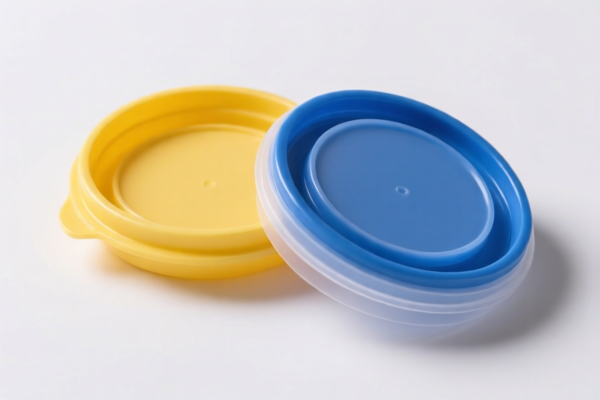
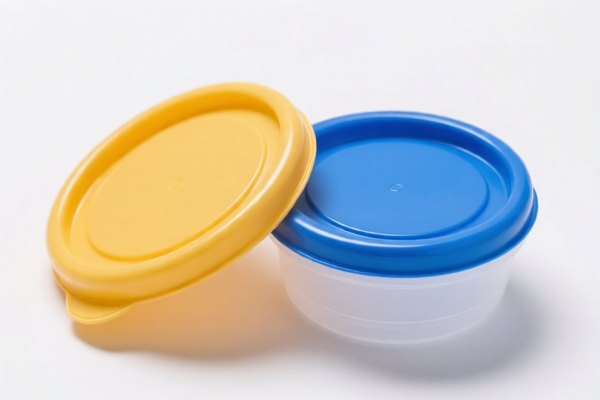
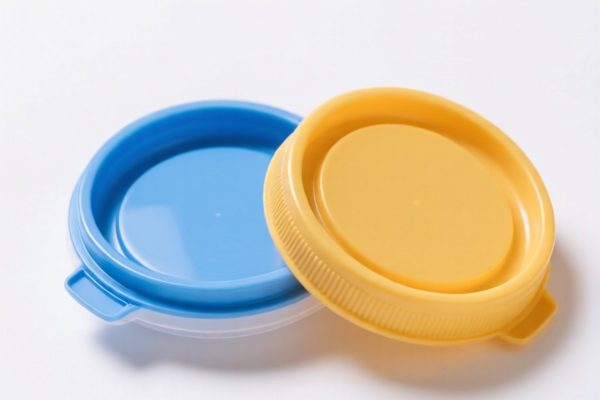
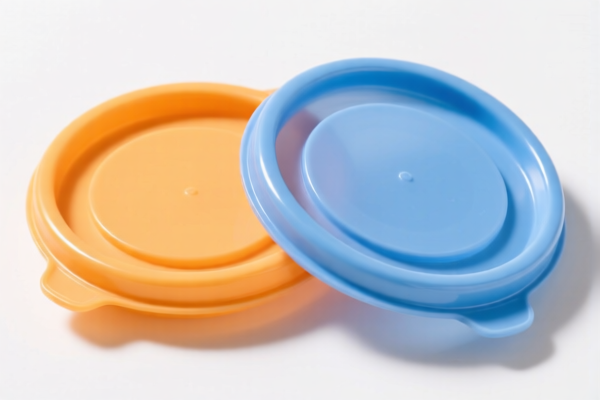
AI Analysis
🧪 Plastic Container Lid
[Plastic Lids / Caps / Covers for Containers]
🌐 HS Code Reference & Customs Clearance Guide | 2026 Latest Tariff Analysis | Professional Level Strategy
📌 1. Product Definition & Classification: What Exactly is a "Plastic Container Lid"?
A "Plastic Container Lid" is a broad term in international trade that covers various closing devices for bottles, jars, boxes, and cans. In customs classification, intent and specific application dictate the HS Code, which drastically affects the tax rate.
Common Types: * General Purpose Lids: Simple snap-on lids for generic containers (e.g., Tupperware-style, cosmetic jars). * Kitchen/Household Lids: Lids specifically designed for food storage, kitchen utensils, or dining ware (e.g., lunchbox lids, coffee mug covers). * Packaging/Industrial Lids: Lids designed primarily as part of a packaging unit (e.g., bottle caps for beverages, industrial drum covers).
⚠️ Key Distinction Point:
- If the lid is a standalone accessory for kitchenware or household items → Often falls under 3924 or 3926.
- If the lid is considered an integral part of packaging (e.g., a bottle cap for a drink) → Often falls under 3923.
- Do not simply guess! The specific "use" defined in the product description matters most.
📦 2. HS Code Classification Matrix (Based on Provided Data)
| HS Code | Summary Description | Total Tax | Tax Breakdown (Base + 301/122) | Primary Use Case |
|---|---|---|---|---|
| 3926.90.99.89 | Other plastic articles | 22.8% | Base: 5.3% + 301: 7.5% + 122: 10% | Generic plastic lids, non-specific containers |
| 3924.90.56.50 | Household/Kitchen plastic items | 20.9% | Base: 3.4% + 301: 7.5% + 122: 10% | Kitchenware accessories, home supply lids |
| 3924.10.40.00 | Tableware/Kitchenware & Cookware | 13.4% | Base: 3.4% + 301: 0.0% + 122: 10% | Lowest Tax! Food-grade dining/meal prep lids |
| 3926.90.10.00 | Other plastic articles (Container parts) | 20.9% | Base: 3.4% + 301: 7.5% + 122: 10% | General container accessories, generic caps |
| 3923.10.90.00 | Packaging articles (Lids/Covers) | 38.0% | Base: 3.0% + 301: 25.0% + 122: 10% | Highest Tax! Commercial packaging, bottle caps |
🔍 Critical Insight:
- 3924.10.40.00 is the "Golden Ticket" for food-related lids (dining, meal prep). It has 0% Section 301 tariffs, resulting in the lowest total tax (13.4%).
- 3923.10.90.00 is the "Trap." If classified as general packaging (like a soda bottle cap), it incurs a massive 25% Section 301 tariff, leading to a 38.0% total tax.
- 3926 codes are the "Middle Ground" for general plastic goods, incurring the standard 7.5% Section 301 tariff.
💰 3. Detailed Tariff Breakdown (2026 Update)
✅ Scope: Imports from China to USA
✅ Components: Base Duty + Section 301 Tariff + Section 122 Tariff
🎯 1. 3924.10.40.00 — Best Option for Food-Grade Lids
- Base Duty: 3.4%
- Section 301 Tariff: 0.0% (Exempt)
- Section 122 Tariff: 10.0%
- Total Effective Rate: 13.4%
- Legal Basis: Classified as "Tableware, kitchenware... of plastics."
- Strategy: Ensure the product description explicitly states "Food Grade," "Dining," or "Kitchen Use" to qualify for this lower tariff bucket.
🎯 2. 3924.90.56.50 & 3926.90.10.00 — Standard Plastic Accessories
- Base Duty: 3.4%
- Section 301 Tariff: 7.5%
- Section 122 Tariff: 10.0%
- Total Effective Rate: 20.9%
- Legal Basis: Classified as "Other articles of plastics" or "Household items" not specifically defined as tableware.
- Strategy: Use this if the lids are for non-food items (e.g., cosmetic jars, general storage bins) but still have a "household" context.
🎯 3. 3926.90.99.89 — Generic Plastic Articles
- Base Duty: 5.3%
- Section 301 Tariff: 7.5%
- Section 122 Tariff: 10.0%
- Total Effective Rate: 22.8%
- Legal Basis: "Other plastic articles" with no specific use case defined.
- Strategy: This is the default fallback if the use is unclear. Higher base duty than other 3926 codes.
🎯 4. 3923.10.90.00 — Packaging Articles (High Risk)
- Base Duty: 3.0%
- Section 301 Tariff: 25.0% (Severe Penalty)
- Section 122 Tariff: 10.0%
- Total Effective Rate: 38.0%
- Legal Basis: "Boxes, cases, crates... and similar articles, for the conveyance or packing of goods."
- Strategy: AVOID if possible. Only use this if the item is strictly a commercial packaging component (e.g., a screw cap for a chemical drum or industrial bottle) that does NOT qualify as household/kitchenware.
🛠️ 4. Customs Clearance Practical Advice
✅ 1. Documentation Requirements
| Document | Requirement | Why It Matters |
|---|---|---|
| Commercial Invoice | Must specify "Material: 100% Plastic" and "Intended Use: e.g., Food Storage, Cosmetic Jar, Industrial Drum" | Determines if it falls under 3924 (Kitchen/Household) or 3923 (Packaging). |
| Product Photos | High-res images showing the lid's shape, threads, and seal | Helps customs verify if it looks like a "cap" (3923) or a "dish accessory" (3924). |
| Material Declaration | Explicitly state food-contact compliance (FDA/LFGB) if claiming 3924.10.40.00 | Supports the "Kitchen/Tableware" classification for tax benefit. |
| Packing List | Clearly separate lids from containers if sold separately | If sold with a container, ensure the HS code matches the primary function of the set. |
✅ 2. Classification Strategy (The "How-To")
🔥 Rule of Thumb:
"Food & Kitchen = 13.4% | Home/General = 20.9% | Industrial Packaging = 38.0%"
| Scenario | Recommended HS Code | Reasoning |
|---|---|---|
| Lid for a Tupperware-style food container | 3924.10.40.00 |
It is "tableware/kitchenware." Qualifies for 301 exemption. |
| Lid for a cosmetic jar (creams, lotions) | 3926.90.10.00 or 3924.90.56.50 |
Not food. Falls under household accessories or general plastic. |
| Screw cap for a plastic water bottle | 3923.10.90.00 |
This is "packaging" for conveyance. High tax applies. |
| Lid for an industrial chemical drum | 3923.10.90.00 |
Clearly packaging/industrial use. High tax applies. |
| Generic lid for a plastic storage bin | 3926.90.10.00 |
General household plastic article. Mid-range tax. |
✅ 3. Special Handling Tips
- Avoid "Packaging" Language for Food Lids: If you are shipping food storage lids, do not describe them as "packaging for goods." Use terms like "Food Storage Container Accessories," "Kitchen Ware Lids," or "Dining Tableware Parts."
- Verify the "122" Tariff: All these codes currently carry a 10% Section 122 tariff. Ensure your broker is applying this correctly on top of the base and 301 rates.
- Pre-Ruling Recommendation: If you have large volumes, apply for a Binding Ruling from US Customs & Border Protection (CBP). Classifying a lid as
3924.10.40.00instead of3923.10.90.00saves you 24.6% in duties. This is significant.
🌍 5. Global Market Context (2026)
| Region | HS Code Focus | Note |
|---|---|---|
| USA | 3924.10.40.00 (Best) |
Aggressive 301/122 tariffs make classification critical. |
| EU | Varies | Generally lower base duties, but VAT applies. Check CE marking. |
| China | 3924 / 3926 |
Export from China is common; ensure correct EXIM declaration. |
📌 6. Common Mistakes & Pitfalls
❌ Mistake 1: Describing food container lids as "Packaging Materials"
👉 Result: Customs may reclassify to 3923.10.90.00 → 38.0% Tax instead of 13.4%.
❌ Mistake 2: Assuming all plastic lids are the same
👉 Result: Using 3926.90.99.89 (22.8%) for a simple food lid when 3924.10.40.00 (13.4%) is available. Overpayment of 9.4%.
❌ Mistake 3: Ignoring Section 122 Tariff
👉 Result: Underestimating landed cost. Remember, 10% is added to all these categories.
🎯 7. Conclusion
For Plastic Container Lids, the difference between 13.4% and 38.0% is massive.
🎯 Action Plan:
1. Check Usage: Is it for food/kitchen? → Aim for 3924.10.40.00.
2. Check Material: Is it for general household or cosmetics? → Use 3926.90.10.00 or 3924.90.56.50.
3. Avoid Packaging Classification: If it’s not a commercial transport package, don’t use 3923.
4. Consult a Broker: Always validate your HS Code with a licensed customs broker before shipment.
📣 Immediate Action:
📞 Contact your customs broker today.
📄 Update your invoice descriptions to highlight "Kitchen," "Dining," or "Household" use if applicable.
🚀 Optimize your landed cost by 24%+ through correct classification!
✨ Precision in Classification = Profit in Your Pocket! 💼
Customer Reviews
About HS Code Classification
The Harmonized System (HS) is an internationally standardized nomenclature developed by the World Customs Organization (WCO) to classify traded products. Over 200 countries use the HS system as the basis for customs tariffs, trade statistics, and import/export regulations.
Each HS code follows a hierarchical structure:
- Chapter (2 digits) — Broad category of goods (e.g., Chapter 84: Machinery and Mechanical Appliances)
- Heading (4 digits) — More specific grouping within the chapter
- Subheading (6 digits) — Internationally standardized breakdown, used by all WCO member countries
- National subdivisions (8-10 digits) — Country-specific extensions for further classification, such as US HTSUS 10-digit codes
Correct HS code classification is essential for smooth customs clearance, accurate duty payment, and compliance with trade regulations. Misclassification can lead to customs delays, overpayment of duties, or penalties.
When importing from CN to US, the applicable tariff rates may include:
- Most-Favored-Nation (MFN) rate — The standard duty rate applied to WTO members
- General rate — Applied to countries without trade agreements
- Trade remedy duties — Additional tariffs such as Section 301 (anti-dumping), Section 232 (national security), or countervailing duties
The information provided on this page is for reference purposes only. For official classification, please consult with your local customs authority or a licensed customs broker.