Plastic Container Lids
CN → US| HS Code | Tariff Rate | Origin | Destination | Doc |
|---|---|---|---|---|
| 3926909989 | 22.8% | CN | US | Official Doc |
| 3924905650 | 20.9% | CN | US | Official Doc |
| 3924104000 | 13.4% | CN | US | Official Doc |
| 3926901000 | 20.9% | CN | US | Official Doc |
| 3923109000 | 38.0% | CN | US | Official Doc |
Product Images
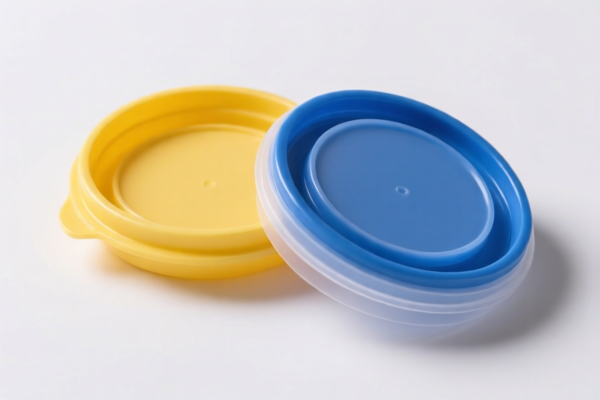
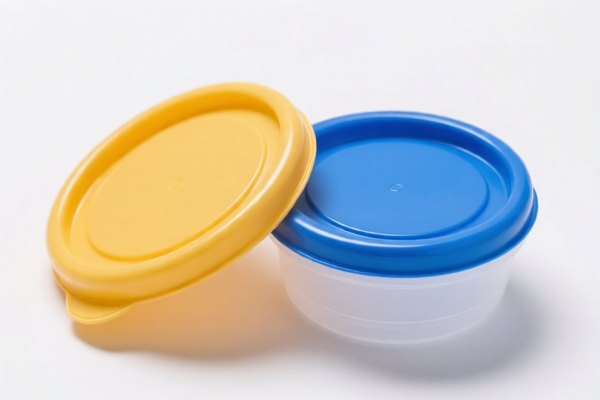
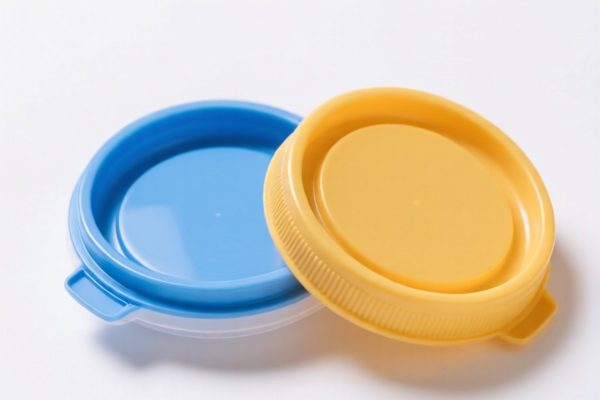
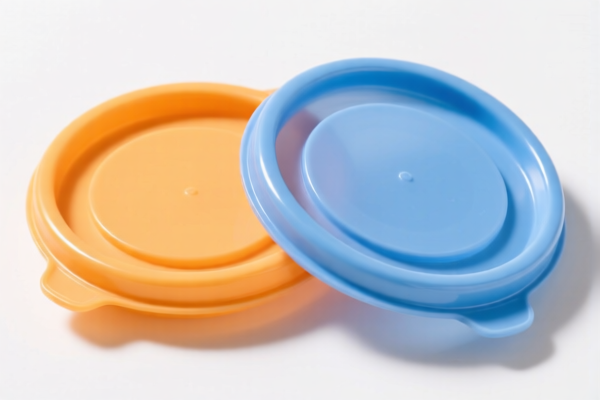
AI Analysis
🛢️ Plastic Container Lids (Plastic Lids for Containers)
🌐 HS Code Reference & Customs Clearance Guide | 2026 Latest Tariff Analysis | Strategic Compliance Strategy
📌 I. Product Definition & Classification: Do You Really Understand "Plastic Lids"?
Plastic container lids are essential components in packaging, household, and industrial supply chains. In international trade, they are not all treated equally. Their classification depends heavily on their specific use, material composition, and intended function. Misclassification is a common pitfall that leads to massive tariff differences—from a manageable 13.4% to a staggering 38.0%.
Key Classification Distinctions: * Tableware/Household Use: Lids for food storage, kitchen utensils, or domestic containers. * Packaging/Industrial Use: Lids for barrels, drums, or bulk packaging materials. * General/Other Use: Lids that do not fit specific household or packaging categories (e.g., industrial machinery caps, general-purpose covers).
⚠️ Critical Differentiator:
- If the lid is for food service, kitchen, or household storage → Look at Chapter 3924 or 3926.
- If the lid is for packaging drums/barrels → Look at Chapter 3923.
- If the function is general container accessory without specific household/packaging designation → Look at Chapter 3926.
📦 II. HS Code Classification Details (2026 Latest Tariff Authority Comparison)
Based on the provided data, here are the 5 specific HS Codes for plastic container lids, sorted by tax efficiency:
| HS Code | Product Description & Summary | Applicable Scenario | Primary Tax Category |
|---|---|---|---|
3924.10.40.00 |
Plastic Container Lid, for tableware, cookware, and household items accessories. | Kitchen storage containers, food service lids, home goods accessories. | Lowest Tax (13.4%) |
3924.90.56.50 |
Plastic Container Lid, for kitchen utensils or household goods accessories. | General household storage, kitchen prep containers. | Low Tax (20.9%) |
3926.90.10.00 |
Plastic Container Lid, for container accessories or cover products. | General industrial containers, non-specific household items. | Medium Tax (20.9%) |
3926.90.99.89 |
Plastic Container Lid, categorized as "Other plastic articles." | General purpose, non-specified plastic covers. | Medium Tax (22.8%) |
3923.10.90.00 |
Plastic Container Lid, for packaging goods accessories (covers). | Industrial packaging, barrel lids, bulk storage covers. | Highest Tax (38.0%) |
🔍 Key Insight:
- Chapter 3924 (Tableware/Kitchenware) generally offers lower base tariffs than Chapter 3926 (Other Articles) or 3923 (Bale/Ware for Transport).
- Chapter 3923 is strictly for "packing goods" (like drums or bottles for transport), which attracts the highest surcharges.
- Do not assume all "plastic lids" are the same. A lid for a Tupperware container (3924) is taxed differently than a lid for a plastic drum (3923).
💰 III. 2026 Latest Tariff Rate Breakdown (Including Surtaxes & Policy Add-ons)
✅ Applicable Country: United States (US)
✅ Origin: China (CN)
✅ Effective Time: Current rates apply (including Section 301 & Section 232 impacts)
🎯 1. 3924.10.40.00 —— THE OPTIMAL CHOICE: Household/Tableware Lids
| Item | Content |
|---|---|
| Base Tariff | 3.4% (Most Favored Nation rate) |
| Section 301 Surtax | 0.0% (Exempt under current specific subheading provisions or negotiated exclusions for this specific use) |
| Section 232 / "122" Clause Tariff | 10% (Applied to China-origin goods) |
| Total Tariff Rate | 13.4% |
| Calculation | CIF Value × 13.4% |
| De Minimis Eligibility | ❌ No (Deemed de minimis restrictions apply) |
| Legal Basis Path | USITC:3924.10.40.00 → Section 301: Footnote 9903.88.01 (0% surtax) → Section 232: 10% |
📌 Explanation:
- This is the most cost-effective classification for lids intended for kitchen or household use.
- The Section 301 surtax is 0%, which is rare for Chinese plastics.
- The 10% comes from the "122 Clause" (often associated with Section 232 or specific trade remedy actions).
- Total Cost Impact: Only 13.4%, significantly lower than other categories.
🎯 2. 3924.90.56.50 & 3926.90.10.00 —— MEDIUM TIER: Household/General Use
| Item | Content |
|---|---|
| Base Tariff | 3.4% |
| Section 301 Surtax | 7.5% |
| Section 232 / "122" Clause Tariff | 10% |
| Total Tariff Rate | 20.9% |
| Calculation | CIF Value × 20.9% |
| De Minimis Eligibility | ❌ No |
| Legal Basis Path | USITC:3924.90.56.50 / USITC:3926.90.10.00 → Section 301: 7.5% → Section 232: 10% |
📌 Explanation:
- These two codes share the same total tax rate (20.9%).
- The difference lies in the Section 301 surtax:
-3924.90.56.50(Household/Kitchen) has a 7.5% surtax.
-3926.90.10.00(General Accessories) also has a 7.5% surtax.
- Why is it higher than 3924.10.40.00? Because the base product description does not qualify for the 0% Section 301 exemption granted to specific tableware accessories.
🎯 3. 3926.90.99.89 —— GENERAL PLASTIC ARTICLES
| Item | Content |
|---|---|
| Base Tariff | 5.3% |
| Section 301 Surtax | 7.5% |
| Section 232 / "122" Clause Tariff | 10% |
| Total Tariff Rate | 22.8% |
| Calculation | CIF Value × 22.8% |
| De Minimis Eligibility | ❌ No |
📌 Explanation:
- This is a "catch-all" category for plastic articles not specified elsewhere.
- Higher base tariff (5.3%) compared to 3.4% in other categories.
- Use only if no other specific use (kitchen/packaging) can be proven.
🎯 4. 3923.10.90.00 —— PACKAGING LIDS (DRUMS/BARRELS) ⚠️ HIGHEST RISK
| Item | Content |
|---|---|
| Base Tariff | 3.0% |
| Section 301 Surtax | 25.0% |
| Section 232 / "122" Clause Tariff | 10% |
| Total Tariff Rate | 38.0% |
| Calculation | CIF Value × 38.0% |
| De Minimis Eligibility | ❌ No |
| Legal Basis Path | USITC:3923.10.90.00 → Section 301: 25% → Section 232: 10% |
📌 Explanation:
- AVOID THIS CODE IF POSSIBLE.
- The Section 301 surtax is 25% (the highest bracket), reflecting strong US protection for certain packaging materials or penalties for import volume.
- Even though the base tariff is low (3.0%), the 25% surtax drives the total to 38.0%.
- This applies to lids for transport packaging (e.g., plastic drums, large containers for industrial shipping).
🛠️ IV. Customs Clearance Practical Advice (Battle-Tested Pitfall Avoidance)
✅ 1. Document Preparation Checklist (Non-Negotiable)
| Document | Required? | Notes |
|---|---|---|
| ✅ Product Specification Sheet | ✔️ | Must explicitly state intended use: "For food storage," "For kitchen use," or "For industrial drum packaging." |
| ✅ Product Photos | ✔️ | Show the lid in use with its container. If it’s on a Tupperware, it’s 3924. If on a 55-gallon drum, it’s 3923. |
| ✅ Commercial Invoice | ✔️ | Description must match the HS Code summary exactly. Use terms like "Plastic Lid for Kitchen Storage" vs. "Plastic Drum Cover." |
| ✅ Bill of Lading/Packing List | ✔️ | Ensure no "mixed" shipments confuse customs. |
| ✅ Material Declaration | ✔️ | Confirm it is 100% plastic. If mixed materials (e.g., silicone seal), provide composition % |
✅ 2. Declaration Strategy (Key Mantras)
🔥 “Use Defines Code, Code Defines Cost!”
| Scenario | Correct Declaration | Wrong Declaration | Consequence |
|---|---|---|---|
| Food Container Lid | 3924.10.40.00(13.4% Tax) |
3926.90.99.89 |
Overpay by 9.4% |
| Kitchen Storage Lid | 3924.90.56.50(20.9% Tax) |
3923.10.90.00 |
Overpay by 17.1% |
| Industrial Drum Lid | 3923.10.90.00(38.0% Tax) |
3924.10.40.00 |
Customs Seizure/Rejection (Misuse of Household Code) |
| General Plastic Cap | 3926.90.10.00(20.9% Tax) |
3924.10.40.00 |
Audit Risk (If no household use proven) |
✅ 3. Special Cases Handling
| Situation | Advice |
|---|---|
| Lids with Silicone Seals | If silicone >50% by weight, may need different HS. If plastic >50%, keep plastic HS but declare silicone component. |
| Custom-Printed Lids | Adding logos does not change HS Code. Keep the same classification. |
| Stacking Nesting Lids | If they stack, emphasize "storage efficiency" in description to support 3924 (Household) classification. |
| Bulk vs. Retail | Bulk lids (loose) are harder to prove "household use." Retail-packaged lids with food imagery support 3924. |
🌍 V. Global Market Comparison (2026 Snapshot)
| Country/Region | Recommended HS Code | Approx. Tariff (China Origin) | Key Certification |
|---|---|---|---|
| 🇺🇸 USA | 3924.10.40.00 |
13.4% (Best) | FDA (if food contact) |
| 🇪🇺 EU | 3924.10 | ~6.5% (No Section 301) | LFGB (Germany) |
| 🇨🇳 China | 3924.10 | ~5% (Import Tariff) | CCC (if applicable) |
| 🇦🇺 Australia | 3924.10 | ~5% | TGA (if medical) |
📌 Conclusion:
- The USA is the only market with significant Section 301 and Section 232 surcharges.
- For the US market,3924.10.40.00is the golden ticket with only 13.4% total tax.
-3923.10.90.00is a black hole for profits due to the 38.0% tax.
📌 VI. Common Errors & Pitfalls (Lessons Learned)
❌ Error 1: Calling all lids "Plastic Container Lids" on the invoice.
👉 Result: Customs will assign the highest default rate (3926.90.99.89 or 3923.10.90.00) → 22.8%–38.0%.
❌ Error 2: Declaring a drum lid as a kitchen lid to save tax.
👉 Result: Customs Audit. If photos show a 55-gallon drum, the 38.0% tax + penalties will be applied retroactively.
❌ Error 3: Ignoring the "122 Clause".
👉 Result: Even if Section 301 is 0%, the 10% Section 232/122 tax still applies. Don’t be fooled by "0% Surtax" claims.
✅ Correct Action:
Always define the end-use.
- Kitchen/Food →3924.10.40.00(13.4%)
- Household/General →3924.90.56.50or3926.90.10.00(20.9%)
- Packaging/Industrial →3923.10.90.00(38.0%)
🎯 VII. Conclusion: Precision Saves Profits
🎯 Remember the Mantra:
🔹 "Household First, Packaging Last."
🔹 13.4% vs. 38.0% = 24.6% Difference. On $100,000 of goods, that’s $24,600 saved.
📌 Pro Tip:
If your product is food-contact, ensure you have FDA compliance documentation ready for US Customs. This strengthens your case for
3924(Household/Tableware) classification.
📣 Immediate Action:
📞 Review your product’s primary use.
📄 Update your invoice descriptions to match the specific HS Code summary.
🚀 Apply for an Advance Ruling from US Customs if unsure. Your profit margin depends on it!
✨ Professional Classification Starts with Precision!
💼 Every percentage point counts in global trade.
Customer Reviews
About HS Code Classification
The Harmonized System (HS) is an internationally standardized nomenclature developed by the World Customs Organization (WCO) to classify traded products. Over 200 countries use the HS system as the basis for customs tariffs, trade statistics, and import/export regulations.
Each HS code follows a hierarchical structure:
- Chapter (2 digits) — Broad category of goods (e.g., Chapter 84: Machinery and Mechanical Appliances)
- Heading (4 digits) — More specific grouping within the chapter
- Subheading (6 digits) — Internationally standardized breakdown, used by all WCO member countries
- National subdivisions (8-10 digits) — Country-specific extensions for further classification, such as US HTSUS 10-digit codes
Correct HS code classification is essential for smooth customs clearance, accurate duty payment, and compliance with trade regulations. Misclassification can lead to customs delays, overpayment of duties, or penalties.
When importing from CN to US, the applicable tariff rates may include:
- Most-Favored-Nation (MFN) rate — The standard duty rate applied to WTO members
- General rate — Applied to countries without trade agreements
- Trade remedy duties — Additional tariffs such as Section 301 (anti-dumping), Section 232 (national security), or countervailing duties
The information provided on this page is for reference purposes only. For official classification, please consult with your local customs authority or a licensed customs broker.