Plastic Corrosion Resistant Hose
CN → US| HS Code | Tariff Rate | Origin | Destination | Doc |
|---|---|---|---|---|
| 3917400095 | 40.3% | CN | US | Official Doc |
| 3917400080 | 40.3% | CN | US | Official Doc |
| 3926305000 | 22.8% | CN | US | Official Doc |
| 3926909989 | 22.8% | CN | US | Official Doc |
| 3917290050 | 38.1% | CN | US | Official Doc |
Product Images
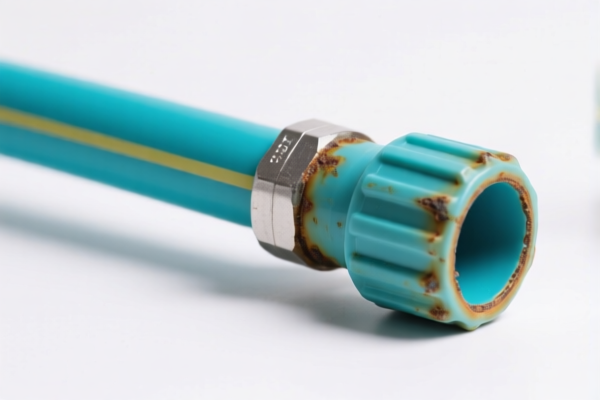
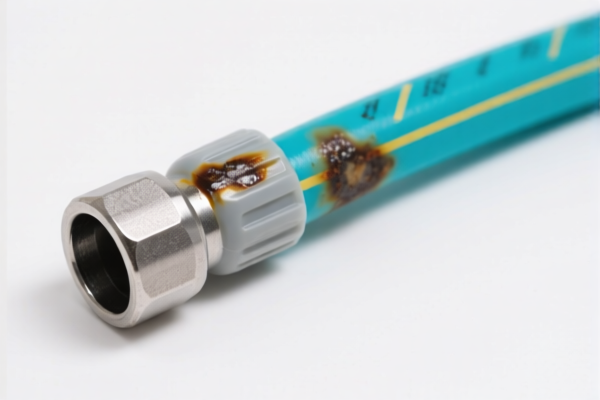
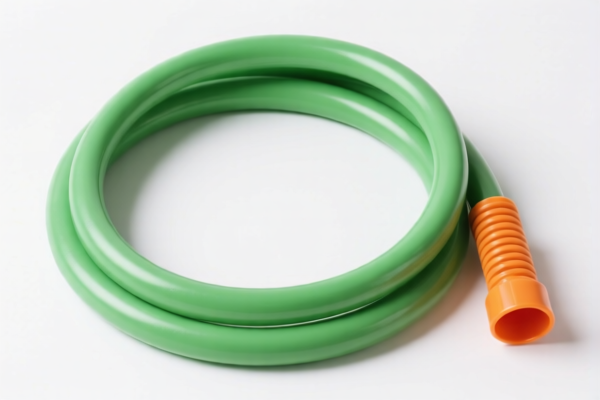
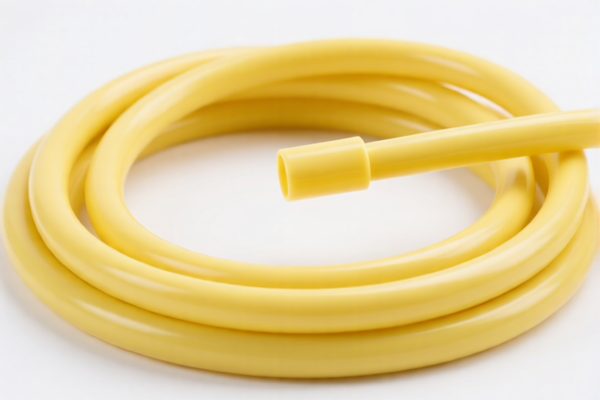
AI Analysis
🛢️ Plastic Corrosion Resistant Hose (耐腐蚀塑料软管/管件)
🌐 HS Code Reference & Customs Clearance Guide | 2026 Latest Tariff Analysis | Professional Entry Strategy
📌 1. Product Definition and Classification: Do You Really Know "Plastic Pipes"?
"Plastic Corrosion Resistant Hose" is a broad term that often leads to classification errors. In international trade, these products are categorized based on their structure, material rigidity, and specific function. Misclassification can lead to significant tariff differences due to US Section 301 and Section 232 tariffs.
Key Distinction Points: - Plastic Pipes/Tubes (3917): Rigid or semi-rigid tubes, hoses, and conduits used for conveying liquids or gases. - Plastic Fittings/Accessories (3917.40): Connectors, joints, and couplings specifically designed for pipes. - Other Plastic Articles (3926): General-purpose plastic articles that don't fit neatly into the "pipe" or "fitting" categories, such as loose connectors or generic parts.
⚠️ Critical Classification Logic: - If the item is a rigid tube or hard hose → It falls under 3917. - If the item is a soft/flexible hose → It also falls under 3917 (specifically flexible tubes). - If the item is a connector/joint for these pipes → It may fall under 3917.40 (if classified as a pipe accessory) or 3926 (if classified as a general plastic article).
📦 2. HS Code Classification Details (2026 Latest Tariff Authority Reference)
Based on the provided data, here are the specific HS Codes for "Plastic Corrosion Resistant Hoses/Fittings":
| HS Code | Product Description | Application Scenario | Key Characteristics |
|---|---|---|---|
3917.29.00.50 |
Plastic Rigid Hose (塑料硬质软管) | Industrial fluid transfer, chemical handling | Hard tube structure, plastic material. |
3917.40.00.95 |
Corrosion Resistant Plastic Pipe Fittings (耐腐蚀塑料管件) | General pipe connection systems | Classified under "Other" pipe accessories, plastic material. |
3917.40.00.80 |
Corrosion Resistant Plastic Pipe Fittings (耐腐蚀塑料管件) | Specialized pipe attachments | Classified under "Other" in Chapter 39, plastic material. |
3926.30.50.00 |
Corrosion Resistant Plastic Fittings (耐腐蚀塑料管件) | Loose connectors, joints | Classified as "Other plastic articles," used as connectors. |
3926.90.99.89 |
Corrosion Resistant Plastic Parts (耐腐蚀塑料管件) | Generic plastic spare parts/attachments | Classified as "Other" plastic articles, no specific pipe fitment function defined. |
🔍 Key Reminder: - Rigid vs. Flexible: Both
3917.29.00.50(Rigid Hose) and3917.40.00.xxxx(Fittings) fall under Chapter 39.17 (Plastic Pipes/Tubes/Fittings). - Accessories vs. General Articles: Items classified under3917.40are specifically deemed "pipe accessories," while3926items are "other plastic articles." This distinction affects tariff rates.
💰 3. 2026 Latest Tariff Rate Breakdown (Including Surcharges & Policy Add-ons)
✅ Applicable Country: United States (US)
✅ Country of Origin: China (CN)
✅ Effective Time: Current US Trade Regulations (Section 301, Section 232, etc.)
🎯 1. 3917.29.00.50 —— Plastic Rigid Hose
| Item | Content |
|---|---|
| Base Tariff Rate | 3.1% (Ad Valorem) |
| Section 301 Surcharge | +25.0% (USITC Footnote 9903.88.01) |
| Section 232 / Other Surcharge | +10.0% (122 Clause Tariff) |
| Total Tariff Rate | 38.1% |
| Tax Calculation | CIF Value × 38.1% |
| De Minimis Eligibility | ❌ No (Denied for Section 301 goods) |
| Legal Basis Path | USITC:3917.29.00.50 → Section 301: 25% → Section 122: 10% |
📌 Explanation: - Base Tariff (3.1%): Standard Most Favored Nation (MFN) rate for plastic hoses. - Section 301 (25%): Significant surcharge for Chinese-origin plastic goods under trade remedy laws. - Section 122 (10%): Additional surcharge for specific industrial imports. - Total 38.1%: High tariff burden. Must be factored into cost analysis.
🎯 2. 3917.40.00.95 & 3917.40.00.80 —— Pipe Fittings (Chapter 39.17)
| Item | Content |
|---|---|
| Base Tariff Rate | 5.3% (Ad Valorem) |
| Section 301 Surcharge | +25.0% |
| Section 232 / Other Surcharge | +10.0% (122 Clause Tariff) |
| Total Tariff Rate | 40.3% |
| Tax Calculation | CIF Value × 40.3% |
| De Minimis Eligibility | ❌ No |
| Legal Basis Path | USITC:3917.40.00.95/80 → Section 301: 25% → Section 122: 10% |
📌 Explanation: - These codes are classified as pipe accessories. - The base rate is slightly higher (5.3%) than rigid hoses (3.1%). - The surcharges (25% + 10%) remain the same, leading to the highest total rate of 40.3%. - Critical: Do not confuse these with general plastic fittings to avoid under-reporting taxes.
🎯 3. 3926.30.50.00 & 3926.90.99.89 —— Other Plastic Fittings/Parts
| Item | Content |
|---|---|
| Base Tariff Rate | 5.3% (Ad Valorem) |
| Section 301 Surcharge | +7.5% |
| Section 232 / Other Surcharge | +10.0% (122 Clause Tariff) |
| Total Tariff Rate | 22.8% |
| Tax Calculation | CIF Value × 22.8% |
| De Minimis Eligibility | ❌ No |
| Legal Basis Path | USITC:3926.30.50.00 / 3926.90.99.89 → Section 301: 7.5% → Section 122: 10% |
📌 Explanation: - These codes fall under Chapter 39.26 (Other Plastic Articles). - Significant Tariff Advantage: The Section 301 surcharge is only 7.5% instead of 25%. - Total Rate: 22.8%, which is ~17.5% lower than the 3917.40 codes. - Risk: This classification must be justifiable. If the item is clearly a "pipe fitting," customs may reclassify it to 3917.40, resulting in back taxes and penalties.
🛠️ 4. Customs Clearance Practical Advice (Battle-Tested Pitfall Guide)
✅ 1. Required Documentation Checklist (Non-Negotiable)
| Document | Mandatory? | Notes |
|---|---|---|
| ✅ Product Specification Sheet | ✔️ | Must specify material (e.g., PVC, PTFE, PP), diameter, wall thickness, and pressure rating. |
| ✅ Product Photos | ✔️ | Clear images of the product, including any labels, joints, and flexibility/rigidity demonstration. |
| ✅ Commercial Invoice | ✔️ | Must clearly state "Plastic Corrosion Resistant Hose/Fitting" and correct HS Code. |
| ✅ Packing List | ✔️ | Detail contents to show if items are kits (pipe + fittings) or standalone. |
| ✅ Material Safety Data Sheet (MSDS) | ✔️ | Proves corrosion resistance and material composition. |
| ✅ Certificate of Origin | ✔️ | Essential for determining origin and applying correct tariffs. |
✅ 2. Declaration Strategy (Key Mantra)
🔥 "Be Specific: Rigid vs. Soft, Accessory vs. Article!"
| Scenario | Correct Declaration | Incorrect Practice |
|---|---|---|
| Hard Plastic Tube | 3917.29.00.50 (Rigid Hose) |
Generic "Plastic Pipe" → Risk of reclassification |
| Pipe Connector/Joint | 3917.40.00.95 (Pipe Accessory) |
3926.90.99.89 (Generic Part) → High Risk of Penalty |
| Loose Plastic Connector | 3926.30.50.00 (Other Plastic Article) |
3917.40.00.80 → Overpaying 17.5% tax |
| Kit (Pipe + Fitting) | Declare separately or as a set | Split declaration incorrectly → Delays |
✅ 3. Special Case Handling
| Scenario | Handling Advice |
|---|---|
| Custom-Fitted Hoses | Provide detailed specs. If it's a "soft hose," ensure it's not misclassified as "rigid." |
| Fittings Sold Separately | If sold as a set with pipes, clarify if they are integral. If sold alone, argue for 3926 if possible to save tax, but be prepared for audit. |
| High-Pressure Industrial Hoses | Emphasize "rigid" nature to justify 3917.29. |
| Chemical Resistance Certification | Provide third-party lab reports to support "corrosion resistant" claim, justifying the material type. |
🌍 5. Global Market Comparison (2026 Latest)
| Country/Region | Recommended HS Code | Tariff (China Origin) | Certification Requirements | Notes |
|---|---|---|---|---|
| 🇺🇸 USA | 3917.29.00.50 / 3917.40.00.95 / 3926.30.50.00 |
22.8% – 40.3% | ASTM/NSF (if for drinking water) | High tariffs. Section 301 applies heavily. |
| 🇨🇳 China | 3917.29.00.50 / 3917.40.00.95 |
5% – 6% | CCC (if applicable) | No US surcharges. |
| 🇪🇺 EU | 3917.29.00 / 3917.40.00 |
0% – 2.5% | REACH, RoHS | Low base tariffs, no US-style surcharges. |
| 🇦🇺 Australia | 3917.29.00 / 3917.40.00 |
5% – 10% | AS/NZS Standards | Moderate tariffs. |
| 🇯🇵 Japan | 3917.29.00 / 3917.40.00 |
0% – 5% | JIS Standards | Low tariffs. |
📌 Conclusion: - The US market is significantly more expensive due to Section 301 and Section 122 tariffs. - Cost Optimization: If the product can be legitimately classified as
3926(Other Plastic Articles), the tariff drops to 22.8%, saving ~17.5% compared to3917.40. However, this requires strong justification that the item is not a dedicated pipe fitting.
📌 6. Common Errors & Pitfall Guide (Lessons Learned)
❌ Error 1: Declaring all plastic pipes under 3926 to avoid high taxes.
👉 Consequence: Customs reclassifies to 3917.40 → Back taxes + 25% penalty!
❌ Error 2: Confusing "Hose" (Soft) with "Tube" (Rigid).
👉 Consequence: Misclassification under 3917.29 vs 3917.40 → Delays and additional documentation requests.
❌ Error 3: Not disclosing "Corrosion Resistant" material specs.
👉 Consequence: Customs may suspect dangerous goods or restricted materials → Inspection delay.
❌ Error 4: Using generic terms like "Plastic Part" on the invoice.
👉 Consequence: Customs may assign a default code with higher tariffs or reject the entry.
✅ Correct Practice:
"PTFE Corrosion Resistant Plastic Hose, 2-inch Diameter, Flexible, Industrial Use, Model XYZ"
OR
"PVC Pipe Connector, 1/2 inch, Corrosion Resistant, Plastic, Model ABC"
🎯 7. Conclusion: Professional Declaration, Cost Saving, Efficient Clearance!
🎯 Remember the Mantra:
🔹 "Rigid/Soft Hose: 3917.29 (38.1%)
🔹 Dedicated Pipe Fitting: 3917.40 (40.3%)
🔹 General Plastic Connector: 3926 (22.8%)
🔹 Choose Wisely, Declare Precisely!"**
📌 Tip: If your plastic fittings are exported to countries other than the US (e.g., EU, Japan, Australia), the tariffs are significantly lower (0%-5%). Consider supply chain diversification if the US market becomes too costly due to tariffs.
📣 Immediate Action:
📞 Consult a licensed customs broker + Provide product photos + Apply for HS Code Ruling if unsure between
3917and3926.
🚀 Ensure your Corrosion Resistance claims are backed by lab tests to support the material description.
✨ Professional Customs Clearance Starts with Accurate Classification!
💼 Every percentage point matters in the age of trade wars!
Customer Reviews
About HS Code Classification
The Harmonized System (HS) is an internationally standardized nomenclature developed by the World Customs Organization (WCO) to classify traded products. Over 200 countries use the HS system as the basis for customs tariffs, trade statistics, and import/export regulations.
Each HS code follows a hierarchical structure:
- Chapter (2 digits) — Broad category of goods (e.g., Chapter 84: Machinery and Mechanical Appliances)
- Heading (4 digits) — More specific grouping within the chapter
- Subheading (6 digits) — Internationally standardized breakdown, used by all WCO member countries
- National subdivisions (8-10 digits) — Country-specific extensions for further classification, such as US HTSUS 10-digit codes
Correct HS code classification is essential for smooth customs clearance, accurate duty payment, and compliance with trade regulations. Misclassification can lead to customs delays, overpayment of duties, or penalties.
When importing from CN to US, the applicable tariff rates may include:
- Most-Favored-Nation (MFN) rate — The standard duty rate applied to WTO members
- General rate — Applied to countries without trade agreements
- Trade remedy duties — Additional tariffs such as Section 301 (anti-dumping), Section 232 (national security), or countervailing duties
The information provided on this page is for reference purposes only. For official classification, please consult with your local customs authority or a licensed customs broker.