Plastic Crusher
CN → US| HS Code | Tariff Rate | Origin | Destination | Doc |
|---|---|---|---|---|
| 8479820040 | 35.0% | CN | US | Official Doc |
| 8438800000 | 35.0% | CN | US | Official Doc |
| 8479820080 | 35.0% | CN | US | Official Doc |
Product Images
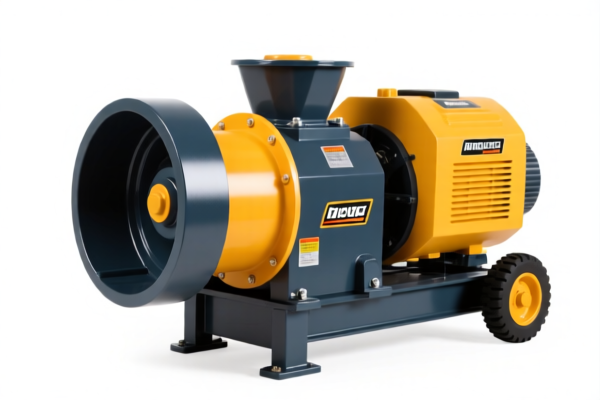
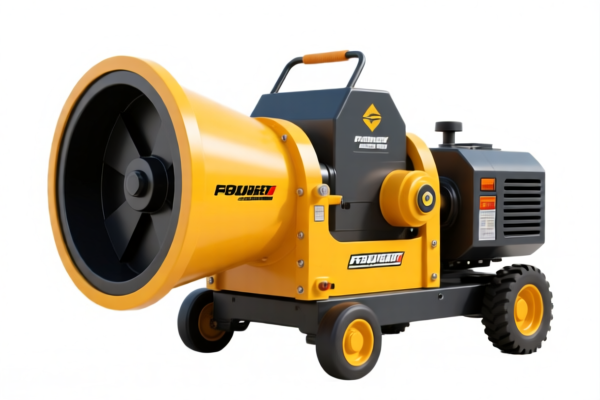
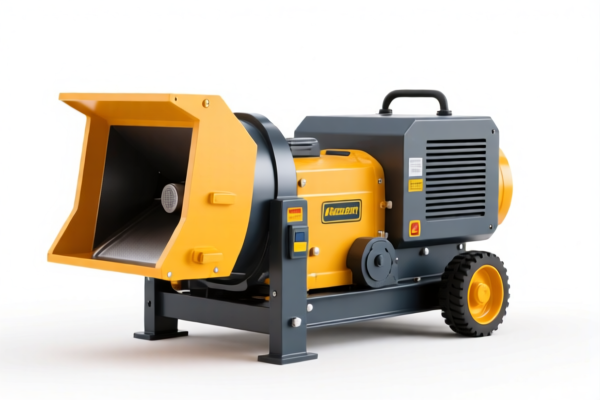
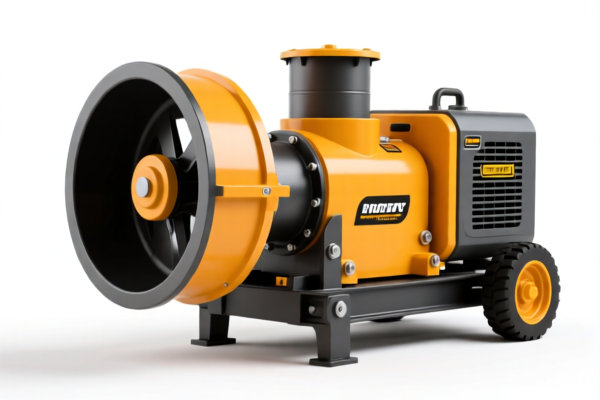
AI Analysis
🏭 Plastic Crusher (Plastic Shredder/Macerator)
🌐 HS Code Classification & Customs Clearance Guide | 2026 Tariff Analysis | Strategic Entry for US Market
📌 I. Product Definition: What is a "Plastic Crusher"?
A Plastic Crusher (also referred to as Plastic Shredder, Macerator, or Grinding Machine) is industrial machinery designed to reduce the volume of plastic waste, bottles, films, or hard plastics into smaller fragments, flakes, or granules. It is a critical component in the recycling and polymer processing supply chain.
In international trade, the classification depends on its primary function and mechanical structure. According to the provided data, it falls under Chapter 84 (Nuclear reactors, boilers, machinery and mechanical appliances; parts thereof), specifically under heading 8479 (Machines and mechanical appliances having individual functions, not specified or included elsewhere) or 8438 (Machinery for the preparation of industrial food or drink products, or for the preparation of beverages, if applicable to specific plastic processing contexts).
⚠️ Key Distinction:
- If it is a general-purpose shredding/grinding machine for various materials (including plastics), it typically falls under 8479.
- If it is specifically designed as part of a larger food/beverage processing line (less common for pure "plastic" crushers unless processing food-grade pellets), it might touch 8438.
- All three HS codes provided below carry the same high tariff burden due to US trade policies.
📦 II. HS Code Classification Details (Based on Provided Data)
| HS Code | Product Description | Functional Category | Key Characteristics |
|---|---|---|---|
| 8479.82.00.40 | Plastic Shredder, used for crushing. | Mechanical Function Category | Matches specific mechanical functions for crushing/plastic handling. |
| 8438.80.00.00 | Plastic Shredder, used for paper/plastic shredding. | Other Machinery Category | Classified under "other machinery" in processing equipment. |
| 8479.82.00.80 | Plastic Crusher/Macerator for crushing/grinding. | Other Machines & Mechanical Appliances | Fits the broad category of "other machines" performing crushing/grinding. |
🔍 Analysis:
Despite the slight differences in description (e.g., "shredder" vs. "crusher," or "8438" vs. "8479"), all three HS codes are subject to the identical total tariff rate of 35% under current US regulations for Chinese-origin goods. The distinction is often semantic or based on specific machine design documentation, but the financial impact is identical.
💰 III. 2026 Latest Tariff Rate Breakdown (USA Import)
✅ Target Market: United States (US)
✅ Country of Origin: China (CN)
✅ Effective Date: Rates apply to imports starting November 10, 2025 (and ongoing)
🎯 Total Tariff Rate: 35.0%
| Tariff Component | Rate | Source / Legal Basis |
|---|---|---|
| Basic Customs Duty (Base Rate) | 0.0% | Standard MFN rate for these machinery categories is often 0% or very low. |
| Section 301 Additional Tariff | 25.0% | USITC Footnote: 9903.88.01 (List 3 items). This is the major cost driver. |
| Section 122 Tariff (IEEPA) | 10.0% | International Emergency Economic Powers Act (IEEPA) additional tariff for specific Chinese imports. |
| TOTAL EFFECTIVE RATE | 35.0% | Base (0%) + Section 301 (25%) + Section 122 (10%) |
📌 Explanation:
- Base Rate (0%): The standard Harmonized Tariff Schedule (HTSUS) base duty for most industrial crushing machinery is negligible.
- Section 301 (25%): This is the retaliatory tariff imposed on a wide range of Chinese industrial goods, including machinery and mechanical appliances.
- Section 122 (10%): This is a recent/additional layer of tariffs applied specifically to certain categories of Chinese imports under IEEPA authority.
- Calculation:(CIF Value + Insurance + Freight) × 35%= Total Duty Payable.
🛠️ IV. Customs Clearance Practical Advice (Risk Mitigation)
✅ 1. Documentation Checklist (Essential for Smooth Clearance)
| Document | Requirement | Notes |
|---|---|---|
| Commercial Invoice | Must clearly state "Plastic Crusher/Shredder" | Avoid vague terms like "Plastic Machine." |
| Packing List | Detailed itemization | Include dimensions and weight accurately. |
| Product Specifications | Technical datasheet | Must confirm it is industrial machinery, not a consumer appliance. |
| Origin Certificate | Certificate of Origin (CO) | Mandatory for determining Section 301 applicability. |
| Function Description | Detailed statement of use | Explain if it crushes PET bottles, PE films, etc. |
✅ 2. Classification Strategy & Pitfalls
🔥 Key Rule: "Function Determines Heading, Policy Determines Price."
| Scenario | Recommended HS Code | Tariff Impact | Risk Level |
|---|---|---|---|
| General Industrial Crusher | 8479.82.00.40 or 8479.82.00.80 |
35% | Low (if documented correctly) |
| Food-Grade Plastic Granulator | 8438.80.00.00 |
35% | Low (same rate, different heading) |
| Consumer-Grade Shredder (e.g., office paper shredder made of plastic) | Not Covered | Potentially Higher/Different | HIGH - Do not misclassify as industrial machinery. |
⚠️ Critical Warning:
- Do NOT claim it is "not subject to Section 301." These machinery items are explicitly listed in the USITC exclusion lists' exclusions (if any exclusions existed, they have largely expired or do not cover these specific mechanical functions).
- Do NOT under-declare the value. The 35% is calculated on the CIF value (Cost, Insurance, Freight). Any discrepancy will lead to severe penalties.
- Labeling: Ensure the machine nameplate clearly states "Plastic Crusher" or "Shredding Machine" to avoid classification disputes as "parts of other machines" (which might have different duty rates but high risk of reclassification).
✅ 3. Special Considerations
| Issue | Advice |
|---|---|
| Origin Routing | If shipped from a third country (e.g., Vietnam), original material and substantial transformation must be proven. Otherwise, US Customs will trace it back to China and apply the 35% tariff. |
| Exclusions | Check if your specific model has a valid Section 301 Exclusion (HTSUS specific codes). Note: Most mechanical crushers are NOT excluded. |
| Bonded Warehouses | Consider using a Foreign Trade Zone (FTZ) if you are unsure of the final destination or need to store goods before sale. |
🌍 V. Global Market Comparison (2026 Context)
| Market | HS Code | Base Duty | Add. Tariffs | Total Est. | Notes |
|---|---|---|---|---|---|
| 🇺🇸 USA | 8479.82.00.40 / .80 / 8438.80.00.00 | 0% | 35% (301+122) | 35% | High Barrier. Must budget for 35% landed cost increase. |
| 🇪🇺 EU | 8479.82.00.00 | 0-2.7% | None (typically) | ~0-3% | Favorable. No major retaliatory tariffs on this category. |
| 🇨🇳 China | 8479.82.00.00 | 0% | None (Import) | 0% | Low duty for import into China. |
| 🇲🇽 Mexico | 8479.82.00.00 | 0-5% | None (USMCA) | 0-5% | Potential hub for re-export to US if USMCA rules met. |
📌 Strategic Insight:
The USA is the most expensive market for Plastic Crushers due to the layered tariffs.
- Alternative: If targeting the US, consider sourcing from Vietnam, Thailand, or Mexico (where USMCA may apply) to potentially avoid the 35% tariff.
- Compliance: If importing from China to the US, 35% is a sunk cost. Factor this into your pricing model immediately.
📌 VI. Common Mistakes & Pitfalls (Lessons Learned)
❌ Mistake 1: Classifying as "Parts of Machinery" to seek a lower base duty.
👉 Consequence: Customs may classify it as a "complete machine" and apply the 35% tariff plus penalties for misdeclaration.
❌ Mistake 2: Ignoring the "Section 122" tariff.
👉 Consequence: Underestimating landed cost by 10%. Many importers only look at the 25% Section 301 rate and forget the additional 10%.
❌ Mistake 3: Vague Description on Invoice ("Plastic Machine").
👉 Consequence: Customs may hold the shipment for inspection, delaying clearance by weeks.
✅ Fix: Use precise terms: "Industrial Plastic Shredder, Model XYZ, for crushing PET bottles."
🎯 VII. Conclusion: Actionable Steps
- Verify HS Code: Confirm with your broker if
8479.82.00.40or8479.82.00.80best fits your machine's technical specs. - Calculate Landed Cost: Add 35% of the CIF value to your cost basis.
- Check Exclusions: Search the USITC Exclusion List for your specific HTS code to see if any relief is available (unlikely but worth checking).
- Documentation: Ensure the Certificate of Origin is perfectly aligned with the invoice description.
- Consider Origin Strategy: If volume is high, evaluate supply chain shifts to non-China origins to mitigate the 35% tariff burden.
📣 Immediate Action:
📞 Consult a Licensed Customs Broker to file a Pre-Ruling if unsure.
📊 Update your ERP/Accounting System to reflect a 35% Duty Cost for US-bound Plastic Crushers from China.
🚀 Optimize Your Supply Chain to avoid the tariff trap.
✨ Precision in Classification, Profitability in Trade!
💼 Don't let hidden tariffs crush your margins!
Customer Reviews
About HS Code Classification
The Harmonized System (HS) is an internationally standardized nomenclature developed by the World Customs Organization (WCO) to classify traded products. Over 200 countries use the HS system as the basis for customs tariffs, trade statistics, and import/export regulations.
Each HS code follows a hierarchical structure:
- Chapter (2 digits) — Broad category of goods (e.g., Chapter 84: Machinery and Mechanical Appliances)
- Heading (4 digits) — More specific grouping within the chapter
- Subheading (6 digits) — Internationally standardized breakdown, used by all WCO member countries
- National subdivisions (8-10 digits) — Country-specific extensions for further classification, such as US HTSUS 10-digit codes
Correct HS code classification is essential for smooth customs clearance, accurate duty payment, and compliance with trade regulations. Misclassification can lead to customs delays, overpayment of duties, or penalties.
When importing from CN to US, the applicable tariff rates may include:
- Most-Favored-Nation (MFN) rate — The standard duty rate applied to WTO members
- General rate — Applied to countries without trade agreements
- Trade remedy duties — Additional tariffs such as Section 301 (anti-dumping), Section 232 (national security), or countervailing duties
The information provided on this page is for reference purposes only. For official classification, please consult with your local customs authority or a licensed customs broker.