Plastic Curtain
CN → US| HS Code | Tariff Rate | Origin | Destination | Doc |
|---|---|---|---|---|
| 5903102090 | 35.0% | CN | US | Official Doc |
| 3920991000 | 41.0% | CN | US | Official Doc |
| 3925200020 | 22.8% | CN | US | Official Doc |
| 3925200091 | 22.8% | CN | US | Official Doc |
| 6303192110 | 23.9% | CN | US | Official Doc |
Product Images
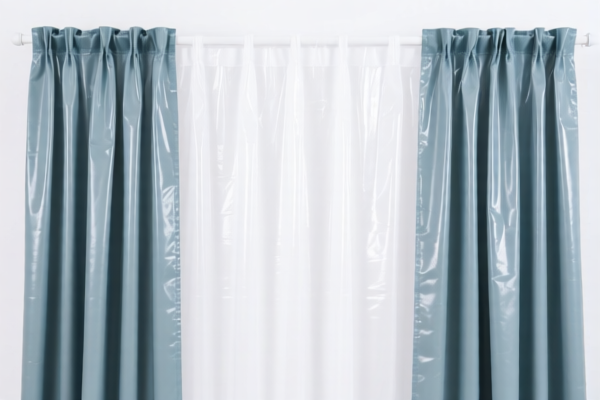
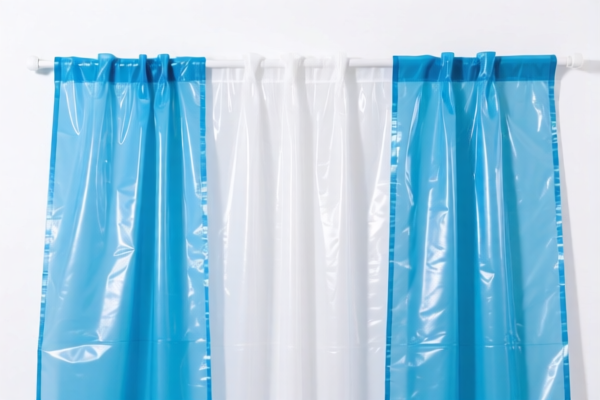
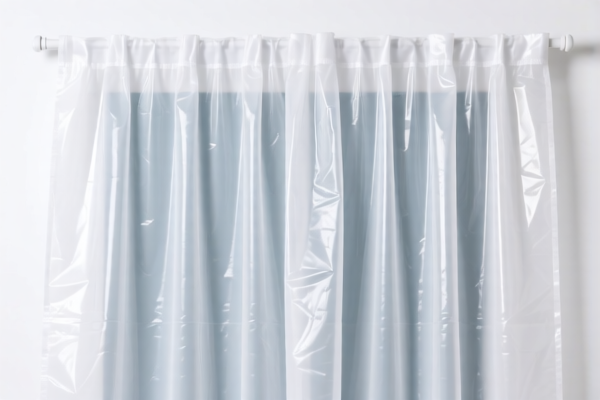
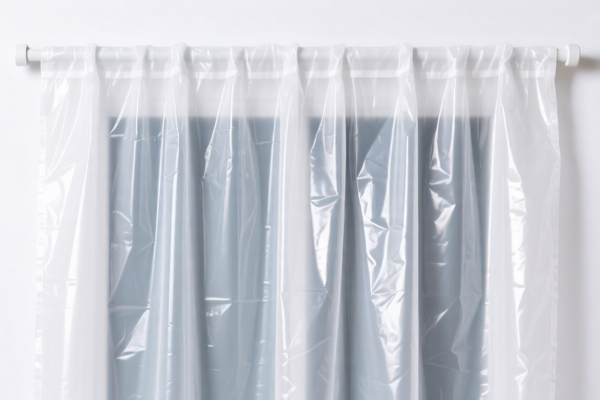
AI Analysis
🪟 Plastic Curtains & Shutters: HS Code Classification & Clearance Strategy (2026)
🌐 HS Code Reference & Clearance Guide | 2026 Latest Tariff Analysis | Professional Customs Strategy
📌 Part 1: Product Definition & Classification – Are You Misclassifying "Plastic Curtains"?
"Plastic Curtains" is a generic term that can refer to two distinct product categories in international trade, leading to significantly different HS Code classifications and tax liabilities. The key lies in the physical form and function:
1. Plastic Blinds/Shutters (Venetian Blinds):
These consist of horizontal slats connected by tapes or cords. They are often made of rigid or semi-rigid plastic strips. In customs terms, these are often viewed as finished articles or specific window furnishings.
2. Plastic Sheet/Film (Rolls or Cut Panels):
These are continuous sheets of plastic, possibly textured or perforated, used as curtains or partitions. They fall under plastic articles in their primary material form, not as finished window coverings.
⚠️ Critical Distinction:
- If the product has slats, headrails, and operating cords → It is a finished article (likely Heading 5903 or 6303 depending on material/process).
- If the product is a flat sheet, film, or plate intended for further processing → It is a semi-finished plastic good (likely Heading 3920 or 3925).
- If it is a complete window unit made of plastic → It is a construction article (Heading 3925).
📦 Part 2: HS Code Classification Details (2026 Latest Tariff Authority)
Based on the provided data, here are the six possible classifications for "Plastic Curtains" and their logical explanations:
| HS Code | Product Description & Logic | Applicable Scenario | Key Differentiator |
|---|---|---|---|
| 5903.10.20.90 | Plastic Venetian Blinds – Coated/Impregnated Fabric | Finished blinds made of plastic-coated textile or plastic slats treated as fabric-like. | "Plastic-coated/impregnated fabric" logic. Best for fabric-based plastic blinds. |
| 3920.99.10.00 | Plastic Sheets/Films – Composite/Laminated Structure | Rolls or sheets of plastic (laminated) used as curtains, not yet formed into slats. | "Composite/Laminated structure". Best for raw plastic sheets or laminated films. |
| 3925.20.00.20 | Plastic Windows – With Frames | Plastic window units with frames, where the "curtain" is part of a fixed window assembly. | "Windows and frames". Best for rigid plastic window panels with frames. |
| 3925.20.00.91 | Plastic Windows – Without Frames (General) | Standalone plastic window panels or shutters without complex frames. | "Plastic windows". Best for simple plastic window shutters/panels. |
| 6303.19.21.10 | Knitted/Crocheted Curtains – Textile Material | Curtains made of textile fibers (polyester, nylon, etc.), even if synthetic. | "Knitted/Crocheted". Best for fabric curtains that are synthetic/textile-based. |
| 6303.92.20.10 | Other Textile Curtains – Woven/Synthetic | Woven synthetic fiber curtains. | "Woven/Synthetic". Best for standard synthetic fabric curtains. |
🔍 Important Note:
- "Plastic" in HS Codes often refers to the material composition (Chapter 39) or coating (Chapter 59).
- If the product is a finished blind (slats + cords), 5903.10.20.90 is a strong candidate if viewed as a textile/plastic composite.
- If it is a flat sheet, 3920.99.10.00 applies.
- If it is a fabric curtain (even if polyester), 6303 applies, not 3920.
- Misclassification Risk**: Declaring a finished blind as a "plastic sheet" (3920) may lead to customs rejection because it is an "article" rather than a "material."
💰 Part 3: 2026 Tariff Rate Breakdown (Including Additional Taxes & Policies)
✅ Applicable Country: United States (US)
✅ Origin: China (CN)
✅ Effective Date: November 10, 2025 (and subsequent imports)
🎯 1. 5903.10.20.90 – Plastic-Coated Fabric Blinds
| Item | Content |
|---|---|
| Base Tariff | 0.0% |
| Section 301 Surcharge | +25.0% |
| IEEPA Surcharge | +10.0% (Section 122) |
| Total Tariff | 35.0% |
| Tax Calculation | CIF Value × 35% |
| De Minimis Exemption | ❌ Not Allowed (deny_de_minimis) |
| Legal Basis | Section 301: Footnote 9903.88.01 → IEEPA: 9903.01.25 |
📌 Explanation:
- This classification treats the product as a textile/plastic composite. The 25% is the Section 301 tariff on textiles/finished goods from China. The 10% is the IEEPA Section 122 tariff.
- Total: 35%. High impact on cost.
🎯 2. 3920.99.10.00 – Plastic Sheets/Films (Laminated)
| Item | Content |
|---|---|
| Base Tariff | 6.0% |
| Section 301 Surcharge | +25.0% |
| IEEPA Surcharge | +10.0% (Section 122) |
| Total Tariff | 41.0% |
| Tax Calculation | CIF Value × 41% |
| De Minimis Exemption | ❌ Not Allowed |
| Legal Basis | Section 301: Footnote 9903.88.01 → IEEPA: 9903.01.24 |
📌 Explanation:
- Plastic sheets are subject to the 6% base tariff for plastics.
- The 25% and 10% surcharges still apply.
- Total: 41%. This is the highest tax rate among all options.
- Risk: If you declare a finished blind as a plastic sheet, customs may reclassify it, leading to penalties.
🎯 3. & 4. 3925.20.00.20 & 3925.20.00.91 – Plastic Windows
| Item | Content |
|---|---|
| Base Tariff | 5.3% |
| Section 301 Surcharge | +7.5% |
| IEEPA Surcharge | +10.0% (Section 122) |
| Total Tariff | 22.8% |
| Tax Calculation | CIF Value × 22.8% |
| De Minimis Exemption | ❌ Not Allowed |
| Legal Basis | Section 301: Footnote 9903.88.01 → IEEPA: 9903.01.24 |
📌 Explanation:
- Plastic windows are classified under Chapter 39.25.
- Lower base tariff (5.3%) and lower Section 301 rate (7.5%) compared to textiles or general plastics.
- Total: 22.8%. This is the most favorable rate if the product can be legally classified as a "plastic window" (e.g., rigid shutters with frames).
- Note: This classification is not for fabric curtains or slatted blinds.
🎯 5. 6303.19.21.10 – Knitted/Crocheted Curtains (Textile)
| Item | Content |
|---|---|
| Base Tariff | 6.4% |
| Section 301 Surcharge | +7.5% |
| IEEPA Surcharge | +10.0% (Section 122) |
| Total Tariff | 23.9% |
| Tax Calculation | CIF Value × 23.9% |
| De Minimis Exemption | ❌ Not Allowed |
| Legal Basis | Section 301: Footnote 9903.88.01 → IEEPA: 9903.01.24 |
📌 Explanation:
- If the "plastic curtain" is actually a synthetic fabric curtain (e.g., polyester), it falls under Chapter 63.
- Total: 23.9%. Moderate rate.
- Key: Must be textile-based, not rigid plastic slats.
🎯 6. 6303.92.20.10 – Woven Synthetic Curtains
| Item | Content |
|---|---|
| Base Tariff | 11.3% |
| Section 301 Surcharge | +7.5% |
| IEEPA Surcharge | +10.0% (Section 122) |
| Total Tariff | 28.8% |
| Tax Calculation | CIF Value × 28.8% |
| De Minimis Exemption | ❌ Not Allowed |
| Legal Basis | Section 301: Footnote 9903.88.01 → IEEPA: 9903.01.24 |
📌 Explanation:
- Woven synthetic curtains have a higher base tariff (11.3%) than knitted ones.
- Total: 28.8%.
- Key: Must be woven fabric, not plastic sheets or slats.
🛠️ Part 4: Clearance Practical Advice (Avoiding Pitfalls)
✅ 1. Preparation Checklist (All Items Required)
| Document | Required | Description |
|---|---|---|
| ✅ Product Specifications | ✔️ | Material composition (plastic type, textile blend), dimensions, form (slats, sheet, fabric). |
| ✅ Product Photos | ✔️ | Clear images of the product, including headrails, cords, slats, or rolls. |
| ✅ Bill of Materials (BOM) | ✔️ | Breakdown of components (e.g., slat material, tape material, cord material). |
| ✅ Commercial Invoice | ✔️ | Precise description: e.g., "Plastic Venetian Blinds" vs. "PVC Curtain Sheet". |
| ✅ Packing List | ✔️ | Details of packaging, weight, and dimensions. |
| ✅ Test Reports | ✔️ | If textile, provide flammability tests; if plastic, provide toxicity reports. |
✅ 2. Declaration Tips (Key Mantras)
🔥 "Form Defines Function, Material Defines Chapter!"
| Scenario | Correct Declaration | Wrong Practice | Consequence |
|---|---|---|---|
| Finished Blinds (Slats + Cords) | 5903.10.20.90 (if plastic-coated fabric) or 6303 (if textile) |
Declare as "Plastic Sheet" | 41% Tax + Penalty |
| PVC Roll Sheet (No Slats) | 3920.99.10.00 |
Declare as "Curtain" | Customs may reclassify as finished good, higher tax |
| Rigid Plastic Window Shutters | 3925.20.00.20 |
Declare as "Curtain" | 22.8% Tax (Correct if valid) |
| Polyester Fabric Curtain | 6303.19.21.10 or 6303.92.20.10 |
Declare as "Plastic Curtain" | Misleading description → Delay |
📌 Crucial Advice:
- Do not use the vague term "Plastic Curtain" on the commercial invoice.
- Use specific terms: "PVC Venetian Blinds," "Polyester Textile Curtain," "Laminated Plastic Sheet."
- If the product is rigid shutters with frames, consider 3925 for lower taxes.
- If it is flexible slats, 5903 or 6303 is more appropriate.
✅ 3. Special Cases
| Case | Handling Advice |
|---|---|
| Hybrid Products (Plastic Slats + Fabric Tape) | Classify based on essential character. Usually, plastic slats dominate → 5903. |
| Custom Sizes | Declare as "Cut-to-Size Blinds" to avoid being classified as "semi-finished." |
| OEM Products | Provide customer agreement to prove end-use. |
| Small Samples | If under $800 (de minimis), still ensure correct classification to avoid future audits. |
🌍 Part 5: Global Market Comparison (2026)
| Market | Recommended HS Code | Tariff (China Origin) | Key Requirements |
|---|---|---|---|
| 🇺🇸 USA | 5903.10.20.90 or 6303 |
23.9% – 41.0% | Section 301 (25%) + IEEPA (10%) |
| 🇪🇺 EU | 5903.10 or 6303 |
Varies (0-12%) | CE, REACH, EPR |
| 🇨🇳 China | 3920 or 6303 |
5-13% | CCC (if applicable) |
| 🇬🇧 UK | 5903.10 or 6303 |
0-12% | UKCA, EPR |
📌 Conclusion:
- USA has the highest tariffs due to Section 301 and IEEPA.
- EU and UK have lower base tariffs but strict environmental regulations (EPR, REACH).
- Optimization Strategy: If possible, classify as Plastic Windows (3925) for lower US tariffs, but ensure the product fits the definition.
📌 Part 6: Common Mistakes & Pitfalls (Lessons Learned)
❌ Mistake 1: Declaring Finished Blinds as Plastic Sheets (3920).
👉 Result: Customs reclassifies to 5903 or 6303, imposing 25% Section 301 instead of 7.5%.
✅ Fix: Use precise product names and provide photos of finished features (slats, cords).
❌ Mistake 2: Declaring Textile Curtains as Plastic Products (3920).
👉 Result: High tax (41%) and potential fraud allegations.
✅ Fix: Identify material correctly. Polyester = 6303. PVC Slats = 5903.
❌ Mistake 3: Ignoring Section 122 (IEEPA 10%).
👉 Result: All Chinese-origin goods now face an additional 10%.
✅ Fix: Include IEEPA 10% in all cost calculations.
🎯 Part 7: Conclusion – Precision is Profit!
🎯 Remember:
🔹 "Plastic Curtain" is NOT an HS Code.
🔹 "Slats + Cords" = Finished Article (5903/6303).
🔹 "Sheets/Rolls" = Material (3920).
🔹 "Windows with Frames" = Construction (3925).
📌 Pro Tip:
- If you sell rigid plastic shutters, aim for 3925 (22.8% total tax).
- If you sell fabric blinds, aim for 6303 (23.9% total tax).
- If you sell PVC slatted blinds, 5903 (35% total tax).
📣 Immediate Action:
📞 Consult a Customs Broker with product photos.
📄 Apply for Advance Ruling if unsure.
🚀 Optimize your supply chain to minimize the 25% + 10% impact.
✨ Accurate Classification Saves Money!
💼 Every Percentage Point Counts in 2026!
Customer Reviews
About HS Code Classification
The Harmonized System (HS) is an internationally standardized nomenclature developed by the World Customs Organization (WCO) to classify traded products. Over 200 countries use the HS system as the basis for customs tariffs, trade statistics, and import/export regulations.
Each HS code follows a hierarchical structure:
- Chapter (2 digits) — Broad category of goods (e.g., Chapter 84: Machinery and Mechanical Appliances)
- Heading (4 digits) — More specific grouping within the chapter
- Subheading (6 digits) — Internationally standardized breakdown, used by all WCO member countries
- National subdivisions (8-10 digits) — Country-specific extensions for further classification, such as US HTSUS 10-digit codes
Correct HS code classification is essential for smooth customs clearance, accurate duty payment, and compliance with trade regulations. Misclassification can lead to customs delays, overpayment of duties, or penalties.
When importing from CN to US, the applicable tariff rates may include:
- Most-Favored-Nation (MFN) rate — The standard duty rate applied to WTO members
- General rate — Applied to countries without trade agreements
- Trade remedy duties — Additional tariffs such as Section 301 (anti-dumping), Section 232 (national security), or countervailing duties
The information provided on this page is for reference purposes only. For official classification, please consult with your local customs authority or a licensed customs broker.