Plastic Curtains
CN → US| HS Code | Tariff Rate | Origin | Destination | Doc |
|---|---|---|---|---|
| 5903102090 | 35.0% | CN | US | Official Doc |
| 3920991000 | 41.0% | CN | US | Official Doc |
| 3925200020 | 22.8% | CN | US | Official Doc |
| 3925200091 | 22.8% | CN | US | Official Doc |
| 6303192110 | 23.9% | CN | US | Official Doc |
| 6303922010 | 28.8% | CN | US | Official Doc |
Product Images
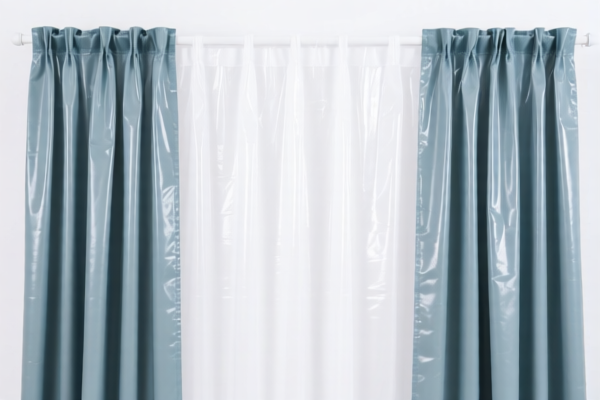
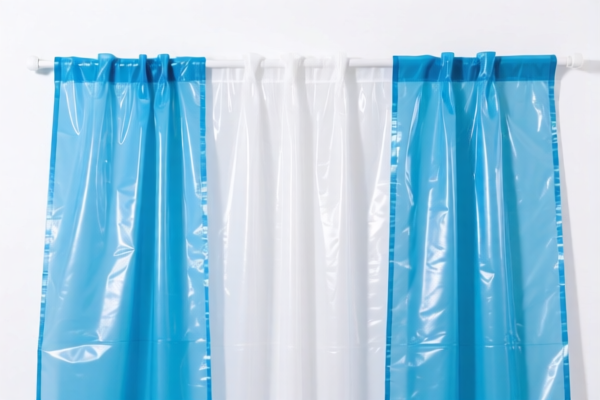
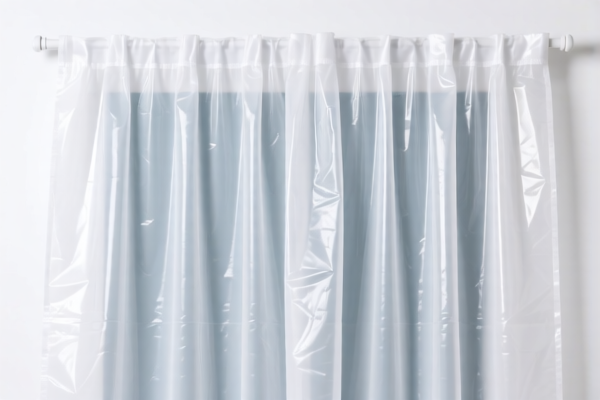
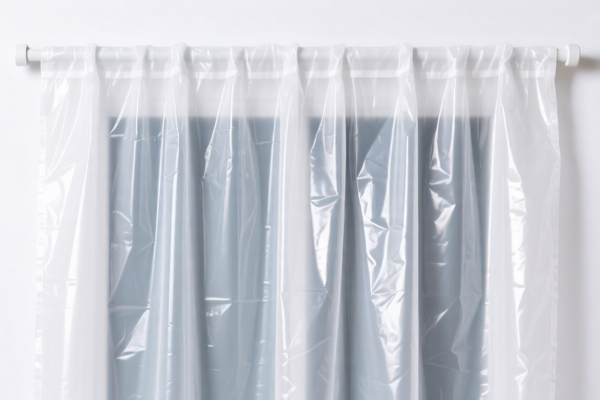
AI Analysis
🪟 Plastic Curtains & Blinds (Shading Devices)
🌐 HS Code Reference & Customs Clearance Guide | 2026 Latest Tariff Analysis | Professional Entry Strategy
📌 I. Product Definition & Classification: What Exactly Are "Plastic Curtains"?
In international trade, "Plastic Curtains" is a broad term that usually refers to venetian blinds, roller shades, or vertical slats made from PVC or other polymers. The customs classification hinges critically on two factors: 1. Structural Form: Is it a flexible fabric-like curtain (treated textile) or rigid/semi-rigid slats/panels? 2. Construction Method: Is it coated/impregnated fabric, or a composite/laminated structure?
⚠️ Key Distinction Points: - If the product is plastic-coated/impregnated fabric shaped into curtains → Classified under Chapter 59 (Textile Articles). - If the product is rigid plates/sheets/films or laminated composites → Classified under Chapter 39 (Plastics). - If the product is a complete window unit (frame + shutter/blinds) → Classified under Chapter 39 (Plastic Windows/Doors).
📦 II. HS Code Classification Details (2026 Latest Tariff Authority Comparison)
Based on the provided data, here are the 6 specific HS Codes applicable to plastic curtains/window coverings, along with their tax implications.
| HS Code | Product Description | Classification Logic | Total Tax Rate (CN Origin) |
|---|---|---|---|
5903.10.20.90 |
Plastic Venetian Blinds (Fabric Type) | Treated textile; plastic coated/impregnated fabric shaped as curtains. | 35.0% |
3920.99.10.00 |
Plastic Blinds (Sheet/Film Type) | Composite/laminated structure; plastic sheets/films extended into flat panels. | 41.0% |
3925.20.00.20 |
Plastic Windows (With Shutters/Blinds) | Complete plastic window units including shutters/blinds. | 22.8% |
3925.20.00.91 |
Plastic Windows (General) | General plastic window units (without specific shutter sub-classification). | 22.8% |
6303.19.21.10 |
Knitted/Crocheted Curtains | Textile curtains (plastic coating inferred); knitted or crocheted structure. | 23.9% |
6303.92.20.10 |
Woven Textile Curtains | Textile curtains (synthetic fiber); woven structure. | 28.8% |
🔍 Critical Note: -
5903.10.20.90is the most common for standard PVC venetian blinds that are technically "textile fabrics coated with plastic." -3920.99.10.00applies if the blinds are manufactured as rigid plastic strips/laminates rather than flexible fabric. -3925.xxapplies only if you are importing complete window assemblies (frame + plastic blinds/shutters), not just the curtain component. -6303.xxcodes apply if the "plastic" is merely a coating on a textile base, and the primary identity is that of a textile curtain.
💰 III. 2026 Latest Tariff Rate Breakdown (Including Surcharges)
✅ Applicable Country: United States (US)
✅ Origin: China (CN)
✅ Effective Time: 2025/2026 Current Rules
🎯 1. 5903.10.20.90 – Plastic Coated Fabric Curtains
| Item | Detail |
|---|---|
| Base Tariff | 0.0% |
| Section 301 Surcharge | 25.0% |
| IEEPA Section 122 Tariff | 10.0% |
| Total Effective Rate | 35.0% |
| Calculation Basis | CIF Value × 35% |
| De Minimis Exemption | ❌ Not Eligible (High tariff rate exceeds threshold) |
| Legal Path | Base 0% + Section 301: 25% + IEEPA: 10% |
📌 Explanation:
- This is a high-cost classification. The 25% Section 301 tariff is mandatory for most Chinese-origin goods in this chapter.
- The additional 10% IEEPA tariff further increases costs.
- Total 35% makes this a premium import cost category.
🎯 2. 3920.99.10.00 – Plastic Sheet/Film Blinds
| Item | Detail |
|---|---|
| Base Tariff | 6.0% |
| Section 301 Surcharge | 25.0% |
| IEEPA Section 122 Tariff | 10.0% |
| Total Effective Rate | 41.0% |
| Calculation Basis | CIF Value × 41% |
| De Minimis Exemption | ❌ Not Eligible |
| Legal Path | Base 6% + Section 301: 25% + IEEPA: 10% |
📌 Warning:
- This is the highest tax rate among the options (41%).
- It applies if customs determines the product is a plastic laminate/sheet rather than a textile.
- Strategy: Avoid this classification if possible by providing evidence that the product is a textile fabric (even if coated).
🎯 3. 3925.20.00.20 & 3925.20.00.91 – Plastic Windows/Window Coverings
| Item | Detail |
|---|---|
| Base Tariff | 5.3% |
| Section 301 Surcharge | 7.5% |
| IEEPA Section 122 Tariff | 10.0% |
| Total Effective Rate | 22.8% |
| Calculation Basis | CIF Value × 22.8% |
| De Minimis Exemption | ❌ Not Eligible |
| Legal Path | Base 5.3% + Section 301: 7.5% + IEEPA: 10% |
📌 Key Insight:
- Lower Total Tax (22.8%) compared to fabric/plastic sheet classifications.
- Crucial Condition: This only applies if you are importing complete plastic window units (including frames and integrated shutters/blinds).
- If you are importing standalone blinds to be installed later, this HS Code is incorrect and will lead to misdeclaration penalties.
🎯 4. 6303.19.21.10 – Knitted/Crocheted Textile Curtains
| Item | Detail |
|---|---|
| Base Tariff | 6.4% |
| Section 301 Surcharge | 7.5% |
| IEEPA Section 122 Tariff | 10.0% |
| Total Effective Rate | 23.9% |
| Calculation Basis | CIF Value × 23.9% |
| De Minimis Exemption | ❌ Not Eligible |
📌 Explanation:
- Applies to knitted or crocheted plastic-coated curtains.
- Lower surcharge (7.5% vs 25%) because certain textile items may be excluded from the full Section 301 list, but still subject to IEEPA 10%.
- Must prove the primary material is textile (knitted/crocheted), not just plastic film.
🎯 5. 6303.92.20.10 – Woven Textile Curtains
| Item | Detail |
|---|---|
| Base Tariff | 11.3% |
| Section 301 Surcharge | 7.5% |
| IEEPA Section 122 Tariff | 10.0% |
| Total Effective Rate | 28.8% |
| Calculation Basis | CIF Value × 28.8% |
| De Minimis Exemption | ❌ Not Eligible |
📌 Explanation:
- Applies to woven synthetic fiber curtains with plastic coating.
- Higher base tariff (11.3%) than knitted versions.
- Still significantly cheaper than3920(41%) but more expensive than5903(35%)? Wait, 28.8% < 35%.
- Best for Woven Textile: If your product is clearly woven fabric with PVC coating, this is the lowest cost option (28.8%).
🛠️ IV. Customs Clearance Practical Advice (Pitfall Avoidance Guide)
✅ 1. Essential Documentation Checklist
| Document | Mandatory? | Purpose |
|---|---|---|
| ✅ Product Spec Sheet | ✔️ | Must specify: Material (PVC/Textile), Structure (Knitted/Woven/Rigid), Form (Blind/Curtain). |
| ✅ Material Composition Statement | ✔️ | Clearly state % of textile vs. plastic coating. Critical for distinguishing 5903 vs 3920. |
| ✅ Product Photos | ✔️ | Show flexibility (fabric vs. rigid sheet) and installation method. |
| ✅ Commercial Invoice | ✔️ | Description must match HS Code logic (e.g., "PVC-Coated Knitted Curtain" vs. "Plastic Blind Slats"). |
| ✅ Packing List | ✔️ | Ensure no mixed declarations. |
✅ 2. Declaration Strategy (Key Mnemonics)
🔥 "Fabric vs. Film: Check the Flex! Frame vs. Shade: Check the Unit!"
| Scenario | Recommended HS Code | Tax Rate | Risk |
|---|---|---|---|
| Standard PVC Venetian Blinds (Flexible, slat-based, often treated as textile-coated) | 5903.10.20.90 |
35.0% | Low. Most common for blinds. |
| Rigid Plastic Slats/Shutters (Not flexible, laminate structure) | 3920.99.10.00 |
41.0% | High Cost. Avoid if possible. |
| Complete Plastic Window Unit (Frame + Integrated Blinds) | 3925.20.00.20 |
22.8% | Medium. Only if frame is included. |
| Knitted PVC Curtain (Fabric-like, knitted) | 6303.19.21.10 |
23.9% | Low. Best for soft curtains. |
| Woven PVC Curtain (Fabric-like, woven) | 6303.92.20.10 |
28.8% | Low. Best for woven fabric blinds. |
⚠️ Common Mistake:
Declaring rigid plastic blinds as5903(Textile) to save tax.
🚫 Consequence: Customs may reclassify to3920(41%) + Penalties.
✅ Correct Approach: If it’s fabric-based (even with plastic coating), use5903or6303. If it’s pure plastic sheets, use3920.
✅ 3. Special Cases & Tips
| Situation | Recommendation |
|---|---|
| OEM Custom Blinds | Provide design drawings showing material layer (textile base + plastic coating). |
| Mixed Packaging | If blinds are packed with wooden frames, declare the main commodity (blinds) and ensure frame is not declared separately to avoid complex classification. |
| Importing Samples | Even samples are subject to tariffs. Do not use "Gift" or "Free Sample" to evade 35%+ taxes. |
| Plastic vs. Textile Debate | If the plastic coating is >50% by weight or value, customs may shift to Chapter 39. Keep textile weight high if targeting 6303. |
🌍 V. Global Market Comparison (2026)
| Market | Recommended HS Code (Plastic Blinds) | Estimated Total Tax | Notes |
|---|---|---|---|
| 🇺🇸 USA | 5903.10.20.90 or 3920.99.10.00 |
35% - 41% | High Section 301 + IEEPA tariffs. |
| 🇨🇳 China | 5903.10.20.90 |
~5-10% | No Section 301/IEEPA. |
| 🇪🇺 EU | 5903.10.20.90 |
~0-6% | No anti-dumping on PVC blinds generally. |
| 🇬🇧 UK | 5903.10.20.90 |
~0-6% | Post-Brexit rules similar to EU. |
📌 Conclusion:
- USA is the most expensive market due to 35-41% effective tariffs.
- Cost Optimization: If possible, restructure supply chain to avoid pure plastic sheet classification (3920).
- Best Value: If using knitted/woven fabric base, target6303codes (23.9-28.8%) instead of3920(41%).
📌 VI. Common Errors & Pitfalls (Lessons Learned)
❌ Error 1: Declaring rigid plastic blinds as 5903 (Textile).
👉 Result: Customs rejects, reclassifies to 3920 (41%), demands back taxes + fines.
❌ Error 2: Declaring standalone blinds as 3925 (Plastic Windows).
👉 Result: Misdeclaration. 3925 requires a window frame. Penalty for incorrect origin/structure.
❌ Error 3: Ignoring IEEPA 10% in cost calculation.
👉 Result: Underpricing in profit models. Total tax is Base + 301 + 10%, not just Base + 301.
❌ Error 4: Using "Plastic Curtain" as the product name without material detail.
👉 Result: Customs asks for clarification, delays clearance.
✅ Correct Name: "PVC-Coated Knitted Polyester Venetian Blinds, Model XYZ"
🎯 VII. Conclusion: Precise Classification Saves Money!
🎯 Remember the Golden Rules:
🔹 "Fabric is King: Use 5903/6303 for lower 301 rates (7.5%)."
🔹 "Plastic Sheet is Queen: Use 3920 only if necessary (25% 301)."
🔹 "Windows with Frames: Use 3925 (7.5% 301)."
📌 Pro Tip:
- For standard PVC Venetian Blinds, 5903.10.20.90 (35%) is the industry standard.
- If you can engineer the product as a Knitted Textile with PVC coating, aim for 6303.19.21.10 (23.9%) to save 11.1% in taxes.
- Always include a Material Composition Statement in your shipment documents to justify the HS Code.
📣 Action Item:
📞 Consult with a customs broker to review your Bill of Materials (BOM).
📝 Ensure your product description explicitly states "Knitted/Woven Textile Base" if targeting6303.
🚀 Clear Customs Efficiently, Maximize Profit Margins!
✨ Professional Clearance Starts with Accurate Classification!
💼 Every Percentage Point of Tariff Matters!
Customer Reviews
About HS Code Classification
The Harmonized System (HS) is an internationally standardized nomenclature developed by the World Customs Organization (WCO) to classify traded products. Over 200 countries use the HS system as the basis for customs tariffs, trade statistics, and import/export regulations.
Each HS code follows a hierarchical structure:
- Chapter (2 digits) — Broad category of goods (e.g., Chapter 84: Machinery and Mechanical Appliances)
- Heading (4 digits) — More specific grouping within the chapter
- Subheading (6 digits) — Internationally standardized breakdown, used by all WCO member countries
- National subdivisions (8-10 digits) — Country-specific extensions for further classification, such as US HTSUS 10-digit codes
Correct HS code classification is essential for smooth customs clearance, accurate duty payment, and compliance with trade regulations. Misclassification can lead to customs delays, overpayment of duties, or penalties.
When importing from CN to US, the applicable tariff rates may include:
- Most-Favored-Nation (MFN) rate — The standard duty rate applied to WTO members
- General rate — Applied to countries without trade agreements
- Trade remedy duties — Additional tariffs such as Section 301 (anti-dumping), Section 232 (national security), or countervailing duties
The information provided on this page is for reference purposes only. For official classification, please consult with your local customs authority or a licensed customs broker.