Plastic Cutting Mat
CN → US| HS Code | Tariff Rate | Origin | Destination | Doc |
|---|---|---|---|---|
| 5903102010 | 35.0% | CN | US | Official Doc |
| 4016996050 | 37.5% | CN | US | Official Doc |
| 4016990500 | 20.9% | CN | US | Official Doc |
| 5903102090 | 35.0% | CN | US | Official Doc |
| 3921190090 | 41.5% | CN | US | Official Doc |
Product Images
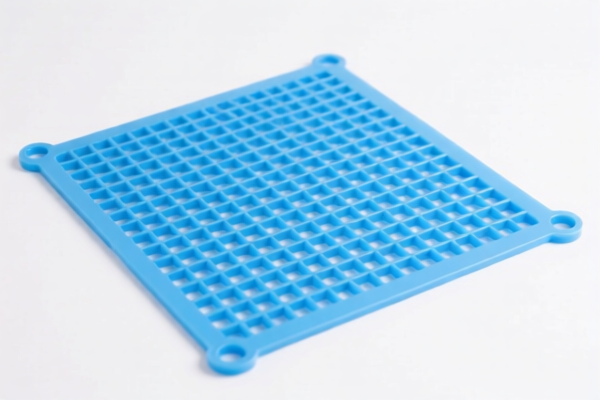
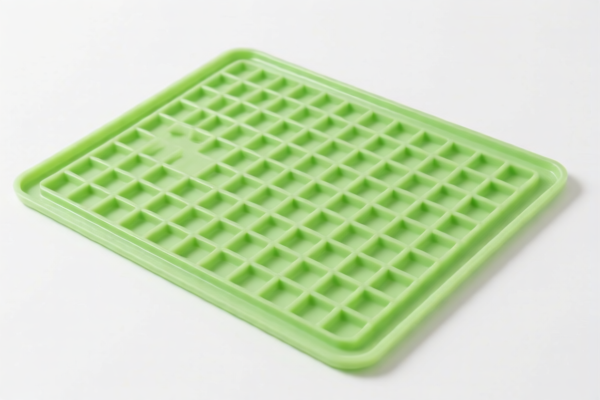
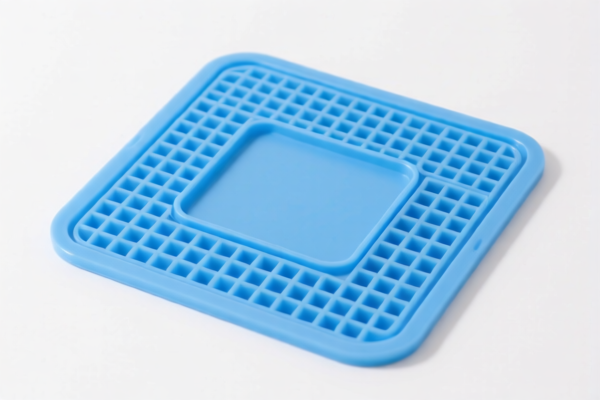
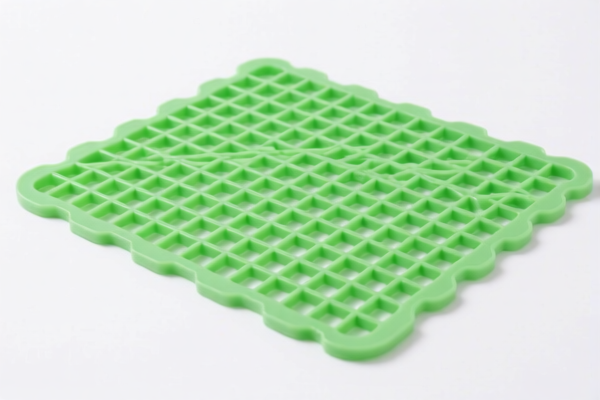
AI Analysis
✂️ Plastic Cutting Mat (The Ultimate Guide to Customs Clearance)
🌐 HS Code Reference & Customs Clearance Strategy | 2026 Latest Tariff Analysis | Professional Grade Compliance
📌 I. Product Definition & Classification: Do You Really Know "Cutting Mat"?
Plastic Cutting Mats are essential tools for crafts, sewing, engineering, and industrial applications. In international trade, they are not classified as a single generic item. Instead, they are divided based on their material composition and manufacturing process. Misclassification leads to severe penalties and delays.
Vinyl Coated Fabrics (PVC): Mats made from fabric impregnated or coated with polyvinyl chloride. Often marketed as "heavy-duty" or "industrial" mats. Solid Plastic Sheets/Mats: Mats made from molded or extruded plastic sheets (e.g., polyethylene, PVC sheets). Rubber Products: Mats made from vulcanized rubber or similar rubber materials.
⚠️ Key Distinction Point:
- If the mat is a fabric base coated with plastic (PVC) →归入 5903.10 (Textile + Plastic)
- If the mat is a solid rubber piece → 归入 4016.99 (Rubber Articles)
- If the mat is a solid plastic sheet/board → 归入 3921.19 (Plastic Plates/Sheets)
📦 II. HS Code Classification Details (2026 Latest Tariff Authority Comparison)
Based on the provided data, here are the specific classifications for different types of cutting mats:
| HS Code | Product Description | Application Scenario | Material Type | Total Tax Rate |
|---|---|---|---|---|
5903.10.20.10 |
Polyvinyl chloride (PVC) coated fabrics, suitable for multi-purpose consumable cutting mats | Craft mats, graphic design mats, self-healing mats (fabric base) | PVC Coated Fabric | 35.0% |
4016.99.60.50 |
Other vulcanized rubber products, suitable for non-specific use rubber cutting mats | Industrial rubber mats, heavy-duty studio mats | Vulcanized Rubber | 37.5% |
4016.99.05.00 |
Other household items, suitable for vulcanized rubber or similar rubber material cutting mats | Home craft rubber mats, specific household use | Rubber/Similar Rubber | 20.9% |
5903.10.20.90 |
Other PVC coated fabrics, suitable for plastic-impregnated/coated material cutting mats | Industrial PVC mats, general purpose coated mats | PVC Coated Fabric | 35.0% |
3921.19.00.90 |
Plates, sheets, film, foil of plastics, suitable for plastic material cutting boards | Solid plastic boards, acrylic-like cutting mats | Solid Plastic | 41.5% |
🔍 Critical Reminder:
- Material is King: Customs officers will strip-test or request material composition certificates. If you claim "Plastic" but it's "Rubber," you face fraud charges. - "Coated" vs. "Solid": A mat that feels like fabric but has a plastic coating falls under 5903 (Textile Chapter), NOT 39 (Plastics Chapter). This is the most common error. - Use Case Matters: For rubber mats, "Household" (4016.99.05.00) has a lower tax rate (20.9%) than "Non-specific" (4016.99.60.50, 37.5%). Ensure marketing materials emphasize household use if applicable.
💰 III. 2026 Latest Tariff Rate Breakdown (Including Surcharges & Policy Add-ons)
✅ Applicable Country: United States (US)
✅ Origin: China (CN)
✅ Effective Date: Includes imports after recent tariff adjustments (Base + Section 301 + Section 122/IEEPA)
🎯 1. 5903.10.20.10 & 5903.10.20.90 —— PVC Coated Fabric Cutting Mats
| Item | Details |
|---|---|
| Base Duty Rate | 0.0% (ad valorem) |
| Section 301 Surcharge | +25.0% (USITC Footnote associated with HTS 5903) |
| Section 122 / IEEPA Surcharge | +10.0% (Targeted Chinese goods) |
| Total Duty Rate | 35.0% |
| Tax Calculation | CIF Value × 35% |
| De Minimis Exemption | ❌ Not Eligible (deny_de_minimis) |
| Legal Basis Path | Base: 5903.10 → Sec301: +25% → Sec122: +10% |
📌 Explanation:
- These mats are classified as textile-based composites. - Although the base duty is 0%, the 35% total effective rate is high due to trade war tariffs. - Common Error: Importing as "Plastic Sheets" to avoid textile tariffs will fail if the fabric base is detected.
🎯 2. 4016.99.60.50 —— Non-Specific Rubber Cutting Mats
| Item | Details |
|---|---|
| Base Duty Rate | 2.5% (ad valorem) |
| Section 301 Surcharge | +25.0% |
| Section 122 / IEEPA Surcharge | +10.0% |
| Total Duty Rate | 37.5% |
| Tax Calculation | CIF Value × 37.5% |
| De Minimis Exemption | ❌ Not Eligible (deny_de_minimis) |
| Legal Basis Path | Base: 4016.99 → Sec301: +25% → Sec122: +10% |
📌 Note:
- This is the highest tax bracket in the dataset. - Only use this code if the mat is clearly rubber and not intended for specific household labeling. - Cost Impact: This rate is 16.6 percentage points higher than the household rubber option.
🎯 3. 4016.99.05.00 —— Household Rubber Cutting Mats
| Item | Details |
|---|---|
| Base Duty Rate | 3.4% (ad valorem) |
| Section 301 Surcharge | +7.5% (Reduced surcharge for specific household items) |
| Section 122 / IEEPA Surcharge | +10.0% |
| Total Duty Rate | 20.9% |
| Tax Calculation | CIF Value × 20.9% |
| De Minimis Exemption | ❌ Not Eligible (deny_de_minimis) |
| Legal Basis Path | Base: 4016.99.05 → Sec301: +7.5% → Sec122: +10% |
📌 Optimization Tip:
- This is the MOST COST-EFFECTIVE option for rubber mats. - Condition: The product MUST be marketed, labeled, and sold as a Household Item. - If you sell it to industrial buyers, customs may reclassify it to4016.99.60.50(37.5%) and assess back-duties.
🎯 4. 3921.19.00.90 —— Solid Plastic Cutting Boards
| Item | Details |
|---|---|
| Base Duty Rate | 6.5% (ad valorem) |
| Section 301 Surcharge | +25.0% |
| Section 122 / IEEPA Surcharge | +10.0% |
| Total Duty Rate | 41.5% |
| Tax Calculation | CIF Value × 41.5% |
| De Minimis Exemption | ❌ Not Eligible (deny_de_minimis) |
| Legal Basis Path | Base: 3921.19 → Sec301: +25% → Sec122: +10% |
📌 Warning:
- This is the HIGHEST TAX RATE in the dataset. - Only use if the mat is a solid, non-textile, non-rubber plastic sheet. - Do not use for "cutting mats" that have any fabric or rubber component.
🛠️ IV. Customs Clearance Practical Advice (Battle-Tested Pitfall Avoidance)
✅ 1. Required Documentation Checklist (Non-Negotiable)
| Document | Mandatory? | Description |
|---|---|---|
| ✅ Product Specification Sheet | ✔️ | Must explicitly state: Material Composition (e.g., "60% Polyester Fabric, 40% PVC Coating") |
| ✅ Material Safety Data Sheet (MSDS) | ✔️ | Required for chemical clearance, especially for PVC and Rubber. |
| ✅ Product Photos (Front/Back/Edge) | ✔️ | Must show texture. If it looks like fabric, declare as 5903. If smooth solid, declare as 3921. |
| ✅ Commercial Invoice | ✔️ | Must use precise description: "PVC Coated Fabric Cutting Mat" or "Household Rubber Cutting Mat". Avoid generic "Plastic Mat". |
| ✅ Packaging Label | ✔️ | Label should indicate intended use (e.g., "For Home Craft Use") if claiming the lower 20.9% rate for rubber. |
✅ 2. Declaration Strategies (Key Mantras)
🔥 “Material First, Use Second, Name Precise, Tax Minimized!”
| Scenario | Correct Declaration | Incorrect Declaration | Consequence |
|---|---|---|---|
| Fabric-based PVC mat | 5903.10.20.10 |
"Plastic Sheet" | 41.5% (Wrong, plus potential fraud) |
| Solid Plastic Board | 3921.19.00.90 |
"Rubber Mat" | 37.5% (Wrong, mismatched material) |
| Rubber Mat (Home Use) | 4016.99.05.00 |
"Industrial Rubber Pad" | 37.5% (Lost savings of ~16.6%) |
| Rubber Mat (Industrial) | 4016.99.60.50 |
"Household Mat" | 20.9% → Audited & Back-duties |
✅ 3. Special Case Handling
| Situation | Handling Advice |
|---|---|
| Hybrid Mats (Rubber + Fabric) | Declare as Rubber (4016) if rubber is the essential character. Provide composition % in invoice. |
| "Self-Healing" Mats | Usually PVC-coated fabric (5903). Ensure the "self-healing" property doesn't trigger chemical restrictions. |
| OEM Private Label | If the buyer is a craft store, label as "Household" to qualify for 4016.99.05.00 (20.9%). |
| Industrial/Studio Grade | Must declare as "Non-specific" or "Industrial" to avoid misrepresentation. Use 5903 or 4016.99.60.50. |
🌍 V. Global Market Clearance Comparison (2026 Latest)
| Country/Region | Recommended HS Code | Duty Rate | Certification | Notes |
|---|---|---|---|---|
| 🇺🇸 USA | 4016.99.05.00 (Rubber/Household) |
20.9% | None | Best rate for rubber. 5903 is 35%. 3921 is 41.5%. |
| 🇨🇳 China | 4016.99.05.00 |
~5-10% | CCC (if applicable) | Lower base rates, no Section 301. |
| 🇪🇺 EU | 4016.99 / 5903 |
0-4% | REACH (Chemicals) | Check REACH compliance for PVC/Rubber. |
| 🇬🇧 UK | 4016.99 / 5903 |
0-4% | UKCA | Post-Brexit rules similar to EU for duty. |
📌 Conclusion:
- USA is the most punitive market for cutting mats due to Section 301 and Section 122 tariffs. - Strategy: If selling to the US, maximize the "Household" classification for rubber mats (4016.99.05.00) to save 16.6% vs. the industrial rate. - Avoid3921.19.00.90(Plastic Sheets) unless necessary, as it carries the highest tax burden (41.5%).
📌 VI. Common Errors & Pitfall Guide (Blood & Tears Lessons)
❌ Error 1: Calling a "Fabric-Covered PVC Mat" a "Plastic Sheet"
👉 Result: Customs opens the package, sees fabric lining, reclassifies to 5903. If you declared 3921 (41.5%) but it should be 5903 (35%), you might think you saved money, but you face penalties for misdeclaration. If you declared 3921 and they find rubber, they reclassify to 4016.99.60.50 (37.5%) + fines.
❌ Error 2: Labeling Industrial Rubber Mats as "Household" to get 20.9%
👉 Result: Customs sees "Industrial Grade" in the description or buyer is a factory. Reclassified to 37.5% + Back Duties + Penalties.
❌ Error 3: Ignoring Material Composition
👉 Result: No MSDS → Detention at Border. PVC emits specific chemicals; customs requires safety data.
❌ Error 4: Using Generic "Cutting Mat" in Invoice
👉 Result: CBP (US Customs) uses discretion. If they guess wrong, you pay the highest applicable rate or face inspection delays.
✅ Correct Practice:
"Rubber Cutting Mat, 18x24 inch, Black, For Home Craft Use, Model XYZ, Vulcanized Rubber"
OR
"PVC Coated Fabric Cutting Mat, Self-Healing, Polyester Base with PVC Coating, Model ABC"
🎯 VII. Conclusion: Precise Classification Saves Profit!
🎯 Remember the Mantra:
🔹 "Rubber Household? 20.9%! Rubber Industrial? 37.5%! PVC Fabric? 35%! Solid Plastic? 41.5%!"
🔹 "Material Truths Save Dollars, Mislabeling Costs Thousands!"
📌 Pro Tip:
If your cutting mats are originally manufactured in Vietnam, Thailand, or Malaysia, you may be eligible to bypass Section 301/122 tariffs.
💡 Action:
📞 Consult a customs broker for Substantial Transformation documentation.
🚀 Legitimate Supply Chain Diversification is the only legal way to reduce these tariffs significantly.
📣 Immediate Action Required:
📝 Review your product labels today.
📝 Update your Commercial Invoices with specific material descriptions.
📝 Choose the correct HS Code based on Material + Use.
🚀 Clear Customs Smoothly, Protect Your Margins!
✨ Professional Customs Clearance Starts with Accurate Classification!
💼 Every Percentage Point Matters!
Customer Reviews
About HS Code Classification
The Harmonized System (HS) is an internationally standardized nomenclature developed by the World Customs Organization (WCO) to classify traded products. Over 200 countries use the HS system as the basis for customs tariffs, trade statistics, and import/export regulations.
Each HS code follows a hierarchical structure:
- Chapter (2 digits) — Broad category of goods (e.g., Chapter 84: Machinery and Mechanical Appliances)
- Heading (4 digits) — More specific grouping within the chapter
- Subheading (6 digits) — Internationally standardized breakdown, used by all WCO member countries
- National subdivisions (8-10 digits) — Country-specific extensions for further classification, such as US HTSUS 10-digit codes
Correct HS code classification is essential for smooth customs clearance, accurate duty payment, and compliance with trade regulations. Misclassification can lead to customs delays, overpayment of duties, or penalties.
When importing from CN to US, the applicable tariff rates may include:
- Most-Favored-Nation (MFN) rate — The standard duty rate applied to WTO members
- General rate — Applied to countries without trade agreements
- Trade remedy duties — Additional tariffs such as Section 301 (anti-dumping), Section 232 (national security), or countervailing duties
The information provided on this page is for reference purposes only. For official classification, please consult with your local customs authority or a licensed customs broker.