Plastic Decorative Bottle
CN → US| HS Code | Tariff Rate | Origin | Destination | Doc |
|---|---|---|---|---|
| 3924104000 | 13.4% | CN | US | Official Doc |
| 3923300010 | 38.0% | CN | US | Official Doc |
| 3924905650 | 20.9% | CN | US | Official Doc |
| 3923300090 | 38.0% | CN | US | Official Doc |
| 3926400010 | 15.3% | CN | US | Official Doc |
Product Images
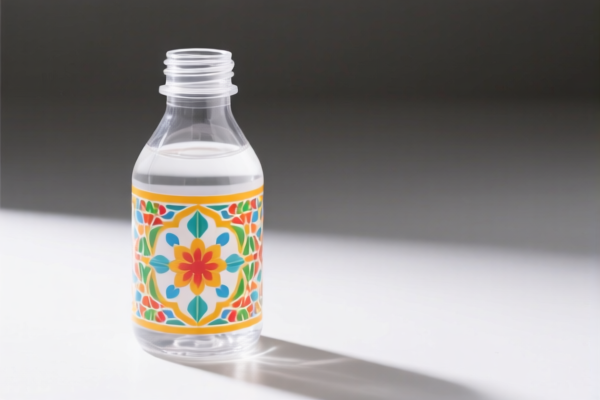
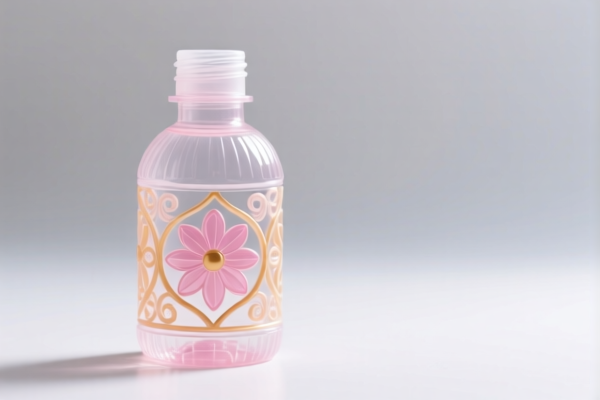
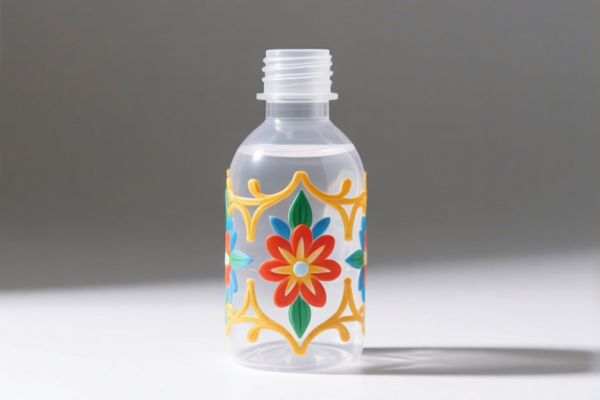
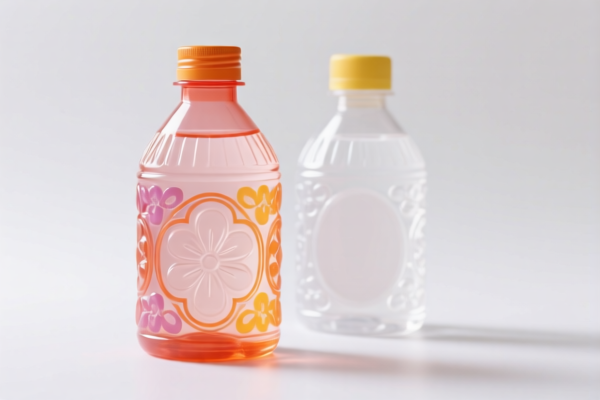
AI Analysis
🧴 Plastic Decorative Bottle (Plastic Cosmetic/Decorative Container)
🌐 HS Code Reference & Clearance Guide | 2026 Latest Tariff Analysis | Professional Customs Strategy
📌 I. Product Definition and Classification: What Exactly is a "Plastic Decorative Bottle"?
In international trade, the term "Plastic Bottle" is highly ambiguous. The correct HS Code classification depends entirely on the primary function and material composition of the item. For a "Plastic Decorative Bottle," the key distinction lies in whether it is intended for: 1. Hygiene/Sanitary Use (e.g., holding soap, lotion, cosmetic samples in bathroom settings) → Likely Chapter 39, Heading 3924. 2. General Packaging (e.g., generic storage, industrial packaging, or non-specific cosmetic containers) → Likely Chapter 39, Heading 3923. 3. Pure Decoration/Ornaments (e.g., non-functional decorative items, vases for display only) → Likely Chapter 39, Heading 3926.
⚠️ Key Distinction Point:
- If the bottle is designed to contain liquids/creams for cosmetic or sanitary use → Look at 3924.
- If the bottle is designed as general packaging material → Look at 3923.
- If the bottle is non-functional and serves only as a decorative object → Look at 3926.
📦 II. HS Code Classification Details (2026 Latest Tariff Authoritative Comparison)
Based on the provided data, here are the four possible classifications for "Plastic Decorative Bottles," ranging from low tax to high tax:
| HS Code | Product Description | Application Scenario | Tax Rate (Total) | Key Tax Components |
|---|---|---|---|---|
3924.10.40.00 |
Plastic sanitary/toilet articles | Cosmetic bottles used in hygiene settings (bathroom/toilet) | 13.4% | Base: 3.4% Add-on: 0.0% Section 301 (122): 10% |
3926.40.00.10 |
Plastic decorative ornaments | Non-functional decorative plastic items | 15.3% | Base: 5.3% Add-on: 0.0% Section 301 (122): 10% |
3924.90.56.50 |
Plastic sanitary/household articles | Plastic bottles for sanitary/household use (broad category) | 20.9% | Base: 3.4% Add-on: 7.5% Section 301 (122): 10% |
3923.30.00.10 |
Plastic bottles for packaging | General plastic bottles used as packaging containers | 38.0% | Base: 3.0% Add-on: 25.0% Section 301 (122): 10% |
3923.30.00.90 |
Other plastic bottle articles | General plastic bottles (catch-all for packaging) | 38.0% | Base: 3.0% Add-on: 25.0% Section 301 (122): 10% |
🔍 Critical Reminder:
- The difference between 13.4% and 38.0% is massive! Misclassifying a cosmetic bottle as "general packaging" can double your import duty. - Section 301 (122 Clause) 10% is applied uniformly to all these plastic goods from China. The real variable is the Base Tariff and Additional Tariff (25%) under Heading 3923.
💰 III. 2026 Latest Tariff Rate Breakdown (Including Surtaxes)
✅ Applicable Country: United States (US)
✅ Origin: China (CN)
✅ Effective Time: 2025/2026 Current Tariff Structure
🎯 1. 3924.10.40.00 —— Plastic Sanitary/Toilet Articles (Lowest Tax)
| Item | Detail |
|---|---|
| Base Tariff | 3.4% (ad valorem) |
| USITC Additional Tariff | 0.0% |
| IEEPA (Section 301) Surcharge | +10% (Against China/HK) |
| Total Tax Rate | 13.4% |
| Tax Calculation | CIF Value × 13.4% |
| De Minimis Eligibility | ❌ No (Subject to Section 301) |
| Legal Basis | HTSUS:3924.10.40.00 → FOOTNOTE:122 |
📌 Explanation:
- This code applies if the bottle is specifically designed for sanitary or toilet use (e.g., travel-sized toiletry bottles, bathroom lotion dispensers). - Lowest tax burden. If your product fits this description (cosmetic hygiene), this is the optimal classification.
🎯 2. 3926.40.00.10 —— Plastic Decorative Ornaments
| Item | Detail |
|---|---|
| Base Tariff | 5.3% (ad valorem) |
| USITC Additional Tariff | 0.0% |
| IEEPA (Section 301) Surcharge | +10% (Against China/HK) |
| Total Tax Rate | 15.3% |
| Tax Calculation | CIF Value × 15.3% |
| De Minimis Eligibility | ❌ No |
| Legal Basis | HTSUS:3926.40.00.10 → FOOTNOTE:122 |
📌 Explanation:
- Applies if the bottle is non-functional and serves primarily as a decoration (e.g., a plastic vase or display piece that does not hold consumer products for daily use). - Lowest tax among non-hygiene items. Note the higher base rate (5.3%) compared to sanitary items (3.4%), but no 25% surcharge.
🎯 3. 3924.90.56.50 —— Other Plastic Sanitary/Household Articles
| Item | Detail |
|---|---|
| Base Tariff | 3.4% (ad valorem) |
| USITC Additional Tariff | +7.5% |
| IEEPA (Section 301) Surcharge | +10% (Against China/HK) |
| Total Tax Rate | 20.9% |
| Tax Calculation | CIF Value × 20.9% |
| De Minimis Eligibility | ❌ No |
| Legal Basis | HTSUS:3924.90.56.50 → FOOTNOTE:122 |
📌 Explanation:
- A "catch-all" for plastic sanitary/household articles that don't fit the specific sub-heading3924.10. - Medium tax rate. Used if the bottle is for hygiene but not specifically "toilet articles" under the more specific code.
🎯 4. 3923.30.00.10 & 3923.30.00.90 —— Plastic Bottles for Packaging (Highest Tax)
| Item | Detail |
|---|---|
| Base Tariff | 3.0% (ad valorem) |
| USITC Additional Tariff | +25.0% (Section 301 High Tier) |
| IEEPA (Section 301) Surcharge | +10% |
| Total Tax Rate | 38.0% |
| Tax Calculation | CIF Value × 38.0% |
| De Minimis Eligibility | ❌ No |
| Legal Basis | HTSUS:3923.30.00.x0 → FOOTNOTE:122 → USITC:301 |
📌 Explanation:
- These codes classify the item as "Packaging Supplies" rather than finished sanitary goods or decorations. - HIGHEST TAX Burden. The 25% additional tariff makes this classification extremely expensive. - Risk: If you import cosmetic bottles and declare them as "generic plastic packaging," you will face a 38% tariff instead of 13.4%.
🛠️ IV. Customs Clearance Practical Advice (Avoiding Pitfalls)
✅ 1. Document Checklist (Mandatory)
| Document | Required? | Description |
|---|---|---|
| ✅ Product Specification Sheet | ✔️ | Must clearly state Material (e.g., PET, HDPE), Intended Use (Cosmetic/Hygiene/Decorative), and Capacity. |
| ✅ Product Photos | ✔️ | Show the bottle with its cap, labeling, and context (e.g., next to soap/shampoo to prove hygiene use, or on a shelf as decor). |
| ✅ Commercial Invoice | ✔️ | Use precise descriptions: "Plastic Cosmetic Bottle for Toilet Use" vs. "Plastic Packaging Bottle". Avoid vague terms like "Container". |
| ✅ Original Packaging Label | ✔️ | Shows the final consumer use. If it says "Shampoo," it supports 3924. If it says "Decorative Vase," it supports 3926. |
✅ 2. Declaration Strategy (Key Mantras)
🔥 "Use Determines Code! Hygiene is Low Tax, Packaging is High Tax!"
| Scenario | Correct Declaration | Incorrect Declaration | Consequence |
|---|---|---|---|
| Cosmetic bottles for lotion/soap | 3924.10.40.00 (Plastic Sanitary Articles) |
3923.30.00.10 (Plastic Packaging) |
Save 24.6% in taxes! |
| Decorative plastic vase/bottle | 3926.40.00.10 (Plastic Ornaments) |
3923.30.00.90 (Plastic Packaging) |
Save 22.7% in taxes! |
| Generic empty bottles for refill | 3923.30.00.10 (Packaging) |
3924.10.40.00 (Sanitary) |
Pay extra 24.6% if not actually sanitary |
⚠️ Warning:
- Do not simply declare "Plastic Bottle." Customs will likely default to3923(Packaging) with the 38% tax. - You must prove the "Sanitary" or "Decorative" nature through product design and labeling.
✅ 3. Special Case Handling
| Situation | Recommendation |
|---|---|
| OEM Cosmetic Bottles | Provide the brand’s marketing materials showing the bottle used for cosmetics. This supports 3924 classification. |
| Bottles with Pumps/Dispensers | If it’s a pump bottle for hand soap/lotion, it strongly supports 3924.10.40.00. |
| Non-Functional Decorative Bottles | Clearly state "For Decorative Purpose Only" in the invoice. Provide photos showing it is empty and sealed or used as a display item. |
| Mixed Shipments | If shipping both cosmetic bottles and generic packaging, declare them separately. Do not mix them in one line item to avoid misclassification of the entire shipment. |
🌍 V. Global Market Clearance Comparison (2026 Latest)
| Country/Region | Recommended HS Code | Tariff (China Origin) | Certification Required | Note |
|---|---|---|---|---|
| 🇺🇸 USA | 3924.10.40.00 |
13.4% | FDA (if food/contact), CPSIA | Best Rate for cosmetics. Avoid 3923 (38%). |
| 🇪🇺 EU | 3924.10.00.00 |
0% (Most) | REACH, LFGB | No Section 301 surcharge. |
| 🇨🇳 China | 3924.10.40.00 |
3.4% | CCC (if applicable) | Low base tax. |
| 🇬🇧 UK | 3924.10.00.00 |
0% | UKCA | Post-Brexit rules. |
| 🇨🇦 Canada | 3924.10.00.00 |
5% | Health Canada | No Section 301. |
📌 Conclusion:
- The US is the only major market with heavy Section 301 surcharges on plastic packaging (3923). - Misclassification is the #1 risk. Declaring a cosmetic bottle as "packaging" costs you 24.6% more.
📌 VI. Common Mistakes & Pitfalls (Lessons Learned)
❌ Mistake 1: Declaring "Plastic Bottle" without specifying use.
👉 Consequence: Customs assumes "Packaging" (3923) → 38% Tax.
❌ Mistake 2: Using "Cosmetic Container" in the invoice but shipping generic empty bottles.
👉 Consequence: Audits, delays, potential fraud allegations. Ensure product matches description.
❌ Mistake 3: Mixing sanitary items and decorative items in one HS Code.
👉 Consequence: If one item is misclassified, the entire shipment may be held for examination.
✅ Correct Action:
"Plastic Sanitary Bottle, PE Material, for Cosmetic/Lotion Use, Model XYZ, Certified for Personal Care"
vs.
"Plastic Decorative Ornament, Non-Functional, Model ABC"
🎯 VII. Conclusion: Precise Classification Saves Money!
🎯 Remember the Mantra:
🔹 "Sanitary = 13.4% | Decorative = 15.3% | Packaging = 38.0%"
🔹 "Describe the Use, Not Just the Material!"
🔹 "Cosmetic Bottles are Sanitary, Not Packaging!"
📌 Pro Tip:
- If your product is dual-use (can be cosmetic or decorative), choose the lower tax code (3924 or 3926) if you can legally justify it with product design (e.g., attractive packaging that implies cosmetic use).
- Always provide clear product photos to Customs brokers to support the 3924 classification.
📣 Immediate Action:
📞 Contact your customs broker with product photos and intended use.
🚀 Apply for an Advance Ruling if unsure about the classification.
💼 Save 24.6% on every container by choosing the right HS Code!
✨ Professional clearance starts with precise classification!
💼 Every percentage point counts in your profit margin!
Customer Reviews
About HS Code Classification
The Harmonized System (HS) is an internationally standardized nomenclature developed by the World Customs Organization (WCO) to classify traded products. Over 200 countries use the HS system as the basis for customs tariffs, trade statistics, and import/export regulations.
Each HS code follows a hierarchical structure:
- Chapter (2 digits) — Broad category of goods (e.g., Chapter 84: Machinery and Mechanical Appliances)
- Heading (4 digits) — More specific grouping within the chapter
- Subheading (6 digits) — Internationally standardized breakdown, used by all WCO member countries
- National subdivisions (8-10 digits) — Country-specific extensions for further classification, such as US HTSUS 10-digit codes
Correct HS code classification is essential for smooth customs clearance, accurate duty payment, and compliance with trade regulations. Misclassification can lead to customs delays, overpayment of duties, or penalties.
When importing from CN to US, the applicable tariff rates may include:
- Most-Favored-Nation (MFN) rate — The standard duty rate applied to WTO members
- General rate — Applied to countries without trade agreements
- Trade remedy duties — Additional tariffs such as Section 301 (anti-dumping), Section 232 (national security), or countervailing duties
The information provided on this page is for reference purposes only. For official classification, please consult with your local customs authority or a licensed customs broker.