Plastic Dental Face Shields
CN → US| HS Code | Tariff Rate | Origin | Destination | Doc |
|---|---|---|---|---|
| 9004900010 | 20.0% | CN | US | Official Doc |
| 3926909989 | 22.8% | CN | US | Official Doc |
| 3926909950 | 22.8% | CN | US | Official Doc |
| 9004900090 | 20.0% | CN | US | Official Doc |
| 3920511000 | 41.0% | CN | US | Official Doc |
| 3920991000 | 41.0% | CN | US | Official Doc |
Product Images
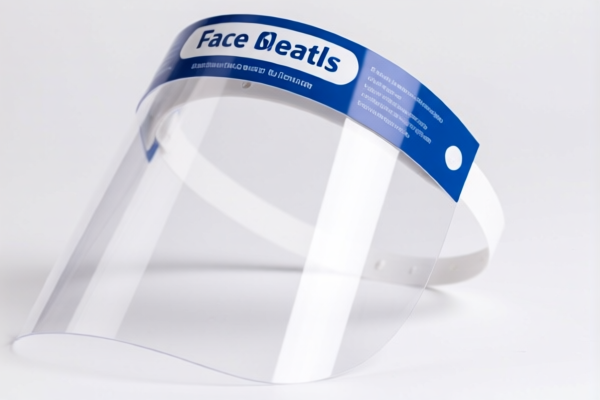
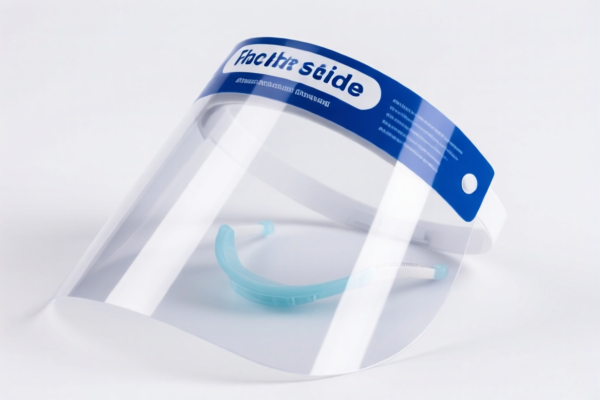
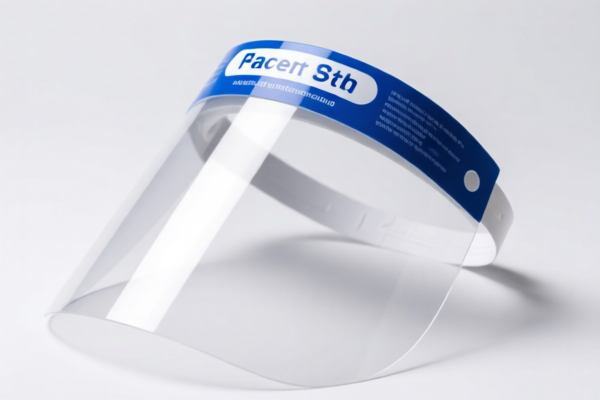
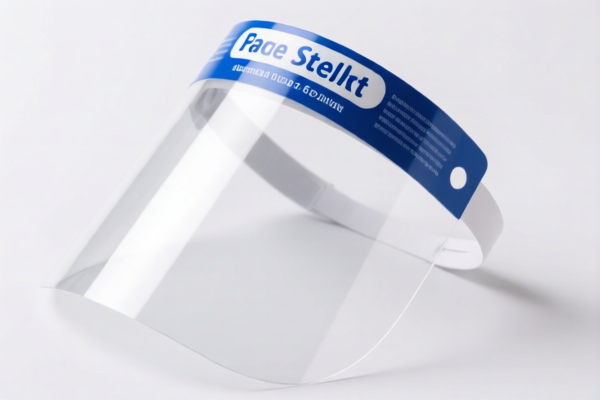
AI Analysis
🦷 Plastic Dental Face Shields (Protective Goggles/Face Masks)
🌐 HS Code Reference & Customs Clearance Guide | 2026 Latest Tariff Analysis | Professional Clearance Strategy
📌 I. Product Definition & Classification: Do You Really Understand "Plastic Dental Face Shields"?
Plastic Dental Face Shields are essential Personal Protective Equipment (PPE) used in medical and dental procedures to protect the eyes, nose, and face from splashes, sprays, and aerosols. In international trade, they are often confused with general plastic articles or specific optical devices, leading to significant tariff discrepancies.
Key Classification Distinction: * Medical/Optical Device (HS 9004): If the item is specifically designed as "protective glasses" or "goggles" with a structural form similar to eyewear, even if it includes a visor. * General Plastic Article (HS 3926/3920): If the item is considered a generic plastic sheet, membrane, or "other article" without specific optical medical device characteristics.
⚠️ Critical Distinction Point:
- HS 9004.90.00: Applies if classified as "Sunglasses, protective goggles, or similar articles." This is often the preferred route for structured face shields that mimic goggles/eyewear.
- HS 3926.90.99 / 3920.99: Applies if classified as a "Plastic article" or "Plastic plate/sheet." This is often applied to flat visors or simple plastic covers.
📦 II. HS Code Classification Details (2026 Latest Tariff Authority Comparison)
Based on the provided data, here are the matched HS Codes, their matching logic, and the corresponding tax rates.
| HS Code | Product Description & Matching Logic | Total Tax Rate | Tax Breakdown |
|---|---|---|---|
9004.90.00.10 |
Match Logic: Form (Mask/Goggles) & Purpose (Protective) align. Material is plastic, consistent with safety glasses. No conflict with "safety goggles" category. | 20.0% | Base: 2.5% Section 301: 7.5% Section 122: 10% |
9004.90.00.90 |
Match Logic: Classified under "Glasses, Goggles." Infers plastic material and mask form. Fits the "Other" category of protective goggles, no conflict with standard safety goggles. | 20.0% | Base: 2.5% Section 301: 7.5% Section 122: 10% |
3926.90.99.50 |
Match Logic: Material is "Plastic" (Confirmed). Purpose is "Mask" (Confirmed). Successfully matches this plastic article category. | 22.8% | Base: 5.3% Section 301: 7.5% Section 122: 10% |
3926.90.99.89 |
Match Logic: Material "Plastic" fits Chapters 3901-3914. Form is an article, fitting the "Other articles of plastics" residual category. | 22.8% | Base: 5.3% Section 301: 7.5% Section 122: 10% |
3920.51.10.00 |
Match Logic: Material "Plastic" matches directly. Form inferred as thin sheet/film application. Matches non-foam, un-reinforced plate/sheet/film characteristics. | 41.0% | Base: 6.0% Section 301: 25.0% Section 122: 10% |
3920.99.10.00 |
Match Logic: Material "Plastic" matches. Form inferred as plastic plate/sheet composite protective item. Matches "Other plastic plates, sheets, film, foil and strip." | 41.0% | Base: 6.0% Section 301: 25.0% Section 122: 10% |
🔍 Key Insight:
- The Lowest Tax (20.0%) is found under HS 9004, treating the face shield as a form of protective eyewear/goggles.
- The Highest Tax (41.0%) is found under HS 3920, treating it as a raw plastic sheet/film product, which attracts the highest Section 301 penalty (25%).
- The Mid-Range Tax (22.8%) is found under HS 3926, treating it as a general plastic article.
💰 III. 2026 Latest Tariff Rate Details (Including Surtaxes & Policy Add-ons)
✅ Applicable Country: United States (US)
✅ Origin: China (CN)
✅ Effective Date: November 10, 2025 (Including subsequent imports)
🎯 1. 9004.90.00.10 & 9004.90.00.90 —— Protective Goggles/Face Shields (Optical/Medical Device Category)
| Item | Content |
|---|---|
| Base Tariff | 2.5% (Ad Valorem) |
| Section 301 Tariff | +7.5% (List 3/4 items) |
| Section 122 Tariff | +10% (Specific medical/PPE provisions) |
| Total Rate | 20.0% |
| Calculation | CIF Value × 20.0% |
| De Minimis Eligibility | ❌ No (Generally denied for Section 301 items) |
| Legal Path | HTSUS:9004.90.00 → Section 301: 7.5% → Section 122: 10% |
📌 Explanation:
- Classifying as 9004 significantly reduces the Section 301 rate from 25% to 7.5%.
- This classification relies on the argument that the item is a "protective goggle" variant, leveraging the "Other" subheading.
- Savings: Compared to the 41% rate, this saves 21% on the CIF value.
🎯 2. 3926.90.99.50 & 3926.90.99.89 —— Other Plastic Articles (General Plastic Category)
| Item | Content |
|---|---|
| Base Tariff | 5.3% (Ad Valorem) |
| Section 301 Tariff | +7.5% (List 3/4 items) |
| Section 122 Tariff | +10% (Specific medical/PPE provisions) |
| Total Rate | 22.8% |
| Calculation | CIF Value × 22.8% |
| De Minimis Eligibility | ❌ No |
| Legal Path | HTSUS:3926.90.99 → Section 301: 7.5% → Section 122: 10% |
📌 Note:
- Higher base rate (5.3% vs 2.5%) but same surtaxes as 9004.
- Suitable if the product is deemed too generic to be an "optical device."
🎯 3. 3920.51.10.00 & 3920.99.10.00 —— Plastic Plates, Sheets, Film (Raw Material Category)
| Item | Content |
|---|---|
| Base Tariff | 6.0% (Ad Valorem) |
| Section 301 Tariff | +25.0% (List 1 items) |
| Section 122 Tariff | +10% (Specific medical/PPE provisions) |
| Total Rate | 41.0% |
| Calculation | CIF Value × 41.0% |
| De Minimis Eligibility | ❌ No |
| Legal Path | HTSUS:3920.51/99 → Section 301: 25.0% → Section 122: 10% |
📌 Warning:
- This is the most expensive classification.
- It treats the face shield as a simple plastic sheet, attracting the maximum 25% Section 301 duty.
- Avoid this unless the product is literally a flat sheet without structural shaping into a visor/goggle form.
🛠️ IV. Customs Clearance Practical Advice (Battle-Tested Pitfall Guide)
✅ 1. Required Documentation Checklist (None Missing)
| Document | Mandatory | Explanation |
|---|---|---|
| ✅ Product Specification Sheet | ✔️ | Must detail: Material (e.g., PVC, PP), Thickness, Coverage Area, Strap Type. |
| ✅ Product Photos | ✔️ | Clear images showing the structural form (e.g., curved visor, eye-piece structure) to argue for 9004 (goggles) vs. 3920 (sheet). |
| ✅ Commercial Invoice | ✔️ | Description should be precise: "Plastic Dental Face Shield, Protective Goggle Style." Avoid vague terms like "Plastic Sheet." |
| ✅ Material Declaration | ✔️ | Confirm non-foamed, non-reinforced if claiming 3920. Confirm optical/protective function if claiming 9004. |
| ✅ Origin Certificate (CO) | ✔️ | If not Chinese origin, to avoid Section 301/122 surtaxes. |
| ✅ Customs Ruling (Optional) | ✔️ | Pre-classification ruling from CBP to lock in the 20% or 22.8% rate. |
✅ 2. Declaration Strategy (Key Mnemonic)
🔥 "Structure Matters: Goggle Style = 20%; Flat Sheet = 41%! Choose Wisely!"
| Scenario | Correct HS Code | Wrong Approach | Consequence |
|---|---|---|---|
| Curved Visor with Eye Coverage | 9004.90.00.10/90 |
Misdeclare as "Plastic Sheet" → 41% | Overpay by 21% |
| Simple Flat Plastic Cover | 3926.90.99 or 3920.99 |
Misdeclare as "Goggles" → Risk of Audit | Potential Penalty & Back Taxes |
| Combined Pack (Shields + Gloves) | Split Declaration | Bundle all into one HS | Complex Valuation Issues |
| Non-Chinese Origin | Apply for Exclusion | Declare as CN Origin → Pay Full Tax | Pay 41% instead of 0-10% |
✅ 3. Special Case Handling
| Scenario | Handling Advice |
|---|---|
| OEM Custom Face Shields | Provide design blueprints showing the "goggle" structure to support 9004 classification. |
| Face Shields with Headbands | Still classified under 9004 or 3926 as a complete article, not split into "headband" and "shield." |
| Transparent vs. Tinted | Tinted may still fall under 9004 if primarily for protection, not fashion. |
| Bulk Rolls of Plastic | If sold as "rolls for cutting," classify under 3920. If sold as "finished shields," classify under 3926 or 9004. |
🌍 V. Global Market Comparison for Dental Face Shields (2026 Latest)
| Country/Region | Recommended HS Code | Tariff (China Origin) | Certification Requirements | Remarks |
|---|---|---|---|---|
| 🇺🇸 USA | 9004.90.00.10 |
20.0% (Best Case) | FDA (Class I/II), CE (if applicable) | 41% if misclassified as plastic sheet. |
| 🇨🇳 China | 9004.90.00 |
5% - 10% | NMPA | No Section 301 surtaxes. |
| 🇪🇺 EU | 9019.20 (Therapeutic) |
0% (if certified) | CE Mark, MD Regulation | Often treated as medical device. |
| 🇦🇺 Australia | 9004.90 |
5% | TGA (if medical claim) | Lower base tariff than US. |
| 🇯🇵 Japan | 9004.90 |
0% - 3% | PMDA | Favorable for medical PPE. |
📌 Conclusion:
- USA is the most challenging market due to Section 301 and Section 122 surtaxes.
- Strategic Classification: Arguing for HS 9004 (Protective Goggles) is the most cost-effective strategy for the US, reducing the total tax from 41% to 20%.
- Documentation is Key: Photos showing the "goggle" structure (curved, eye coverage) are essential to support the 9004 classification.
📌 VI. Common Mistakes & Pitfall Guide (Lessons Learned)
❌ Mistake 1: Describing the item as "Plastic Sheet for Dental Use"
👉 Consequence: CBP classifies as 3920.99 → 41% Tax.
✅ Fix: Describe as "Dental Face Shield / Protective Goggle" with structural photos.
❌ Mistake 2: Bundling Face Shields with Masks in One HS Code
👉 Consequence: Complex valuation, potential audit for misclassification.
✅ Fix: Separate line items with distinct HS Codes if possible, or ensure the primary item's HS Code covers the accessory.
❌ Mistake 3: Ignoring Section 122 (Biden Admin PPE Tariffs)
👉 Consequence: Even with 9004, the 10% Section 122 tax still applies.
✅ Fix: Factor this 10% into cost calculations. It is unavoidable for CN-origin PPE.
❌ Mistake 4: Assuming All Plastic PPE is 22.8%
👉 Consequence: Missing the opportunity to save 2.8% by using 9004 (20%).
✅ Fix: Evaluate if the product fits "Protective Goggles" definition more accurately than "Other Plastic Article."
🎯 VII. Conclusion: Professional Classification Saves Money!
🎯 Key Takeaway Mnemonic:
🔹 "Goggle Shape = 20%, Flat Sheet = 41%. Structure Decides the Rate!"
🔹 "Section 301 is the Killer: 7.5% vs 25% is a Huge Gap!"
🔹 "Always Include Section 122: +10% for All PPE from CN!"
📌 Pro Tip:
If your face shields are not made in China (e.g., Vietnam, Thailand, India), you may exempt from Section 301 (7.5% or 25%) and Section 122 (10%), reducing the total tax to just the Base Rate (2.5% - 6.0%).
Action: Verify Origin Certificates. For CN-origin, apply for CBP Pre-Ruling to lock in HS 9004 classification.
📣 Immediate Action Required:
📞 Contact your Customs Broker + Provide Structural Photos + Request CBP Pre-Ruling
🚀 Minimize Duties, Maximize Profits, Clear Customs Efficiently!
✨ Professional Clearance Starts with Accurate Classification!
💼 Every Percentage Point Counts in International Trade!
Customer Reviews
About HS Code Classification
The Harmonized System (HS) is an internationally standardized nomenclature developed by the World Customs Organization (WCO) to classify traded products. Over 200 countries use the HS system as the basis for customs tariffs, trade statistics, and import/export regulations.
Each HS code follows a hierarchical structure:
- Chapter (2 digits) — Broad category of goods (e.g., Chapter 84: Machinery and Mechanical Appliances)
- Heading (4 digits) — More specific grouping within the chapter
- Subheading (6 digits) — Internationally standardized breakdown, used by all WCO member countries
- National subdivisions (8-10 digits) — Country-specific extensions for further classification, such as US HTSUS 10-digit codes
Correct HS code classification is essential for smooth customs clearance, accurate duty payment, and compliance with trade regulations. Misclassification can lead to customs delays, overpayment of duties, or penalties.
When importing from CN to US, the applicable tariff rates may include:
- Most-Favored-Nation (MFN) rate — The standard duty rate applied to WTO members
- General rate — Applied to countries without trade agreements
- Trade remedy duties — Additional tariffs such as Section 301 (anti-dumping), Section 232 (national security), or countervailing duties
The information provided on this page is for reference purposes only. For official classification, please consult with your local customs authority or a licensed customs broker.