Plastic Dental Mask
CN → US| HS Code | Tariff Rate | Origin | Destination | Doc |
|---|---|---|---|---|
| 9004900010 | 20.0% | CN | US | Official Doc |
| 3926909989 | 22.8% | CN | US | Official Doc |
| 3926909950 | 22.8% | CN | US | Official Doc |
| 9004900090 | 20.0% | CN | US | Official Doc |
| 3920511000 | 41.0% | CN | US | Official Doc |
| 3920991000 | 41.0% | CN | US | Official Doc |
Product Images
AI Analysis
🦷 Plastic Dental Mask (Protective Face Shields)
🌐 HS Code Reference & Customs Clearance Guide | 2026 Latest Tariff Breakdown | Professional Entry Strategy
📌 I. Product Definition & Classification: What Exactly is a "Plastic Dental Mask"?
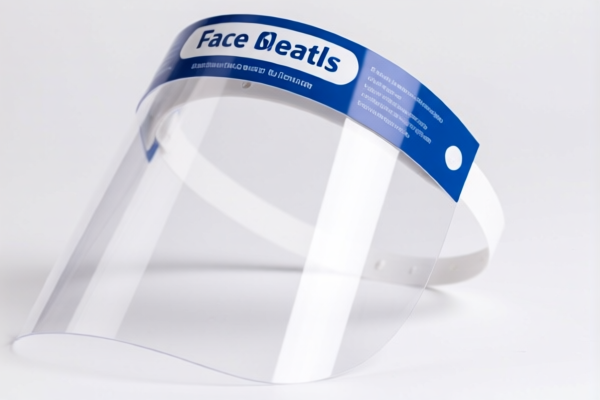
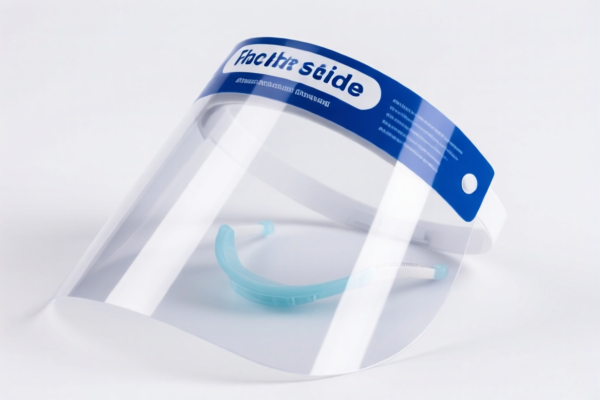
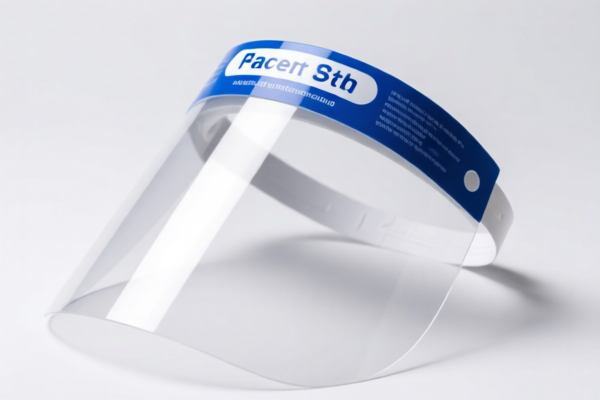
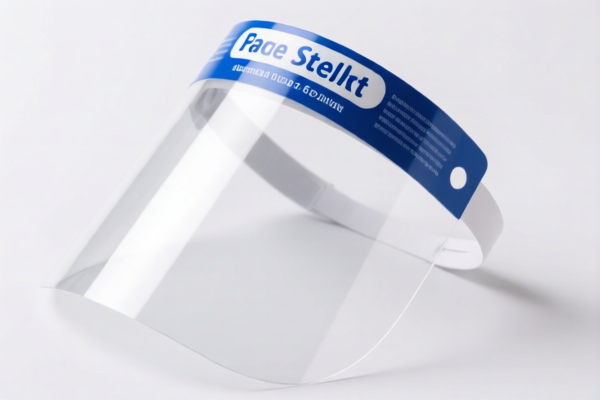
In the context of international trade and customs classification, a "Plastic Dental Mask" usually refers to a protective face shield or visor used by dental professionals and patients. It is distinct from a surgical face mask (which covers the nose and mouth and is often classified under medical textiles or plastics).
This product is typically a rigid or semi-rigid plastic face guard designed to protect the face, eyes, and clothing from splashes, sprays, and aerosols during dental procedures.
⚠️ Key Classification Dilemma:
- If the item is a face shield/goggles (protecting eyes/face) → It falls under Chapter 90 (Optical/Medical Appliances).
- If the item is considered a general plastic article (e.g., a simple visor not specifically optical) → It falls under Chapter 39 (Plastics).Note: Customs often scrutinizes the "primary function." If it protects vision/face, Ch. 90 is preferred. If it’s just a barrier material, Ch. 39 is used.
📦 II. HS Code Classification Details (2026 Latest Tariff Authority)
Based on the product description "Plastic Dental Mask," here are the most likely HS Code candidates and their logical matching criteria:
| HS Code | Product Description | Matching Logic & Summary |
|---|---|---|
| 9004.90.00.10 | Spectacles, goggles and similar articles, protective – Other | High Match. The item is a "mask/shield" used for protection. If viewed as a protective goggle/visor for the eyes/face, it fits here. Material (plastic) matches common goggle materials. No conflict with "protective use." |
| 9004.90.00.90 | Spectacles, goggles and similar articles, protective – Other (Other) | High Match. Similar to above. Inferred as a "mask" made of plastic, falling under the "other" category of protective goggles/shields. |
| 3926.90.99.89 | Other articles of plastics – Other (Other) | Medium Match. The item is a "plastic product." If Customs deems it not primarily an optical/protective appliance but a general plastic accessory/visor, it falls here as a "catch-all" for plastic articles. |
| 3926.90.99.50 | Other articles of plastics – Other (Other) | Medium Match. Explicitly states "Material: Plastic (Match), Use: Mask (Match)." A strong candidate if the item is considered a non-optical plastic mask/visor. |
| 3920.51.10.00 | Other plates, sheets, film, foil and strip, of polymers of ethylene – Other, non-foamed, non-reinforced | Low Match (High Risk). Only matches if the "mask" is essentially a sheet/film of plastic, not a formed 3D shield. Unlikely for a functional dental mask. |
| 3920.99.10.00 | Other plates, sheets, film, foil and strip – Other | Low Match (High Risk). Similar to above. Matches "plastic material" and "sheet-like form" if misinterpreted. High tariff risk. |
🔍 Critical Distinction:
- Ch. 90 (9004) is for protective eyewear/face shields.
- Ch. 39 (3926/3920) is for general plastic goods.
- Recommendation: If the item has ear loops/headbands and forms a shield over the face, 9004 is the most accurate functional classification. If it is a loose plastic film, 3920 might apply, but is risky.
💰 III. 2026 Latest Tariff Rate Breakdown (Including Additional Duties)
✅ Applicable Country: United States (US)
✅ Origin: China (CN)
✅ Effective Date: From November 10, 2025 (for subsequent imports)
🎯 1. 9004.90.00.10 & 9004.90.00.90 — Protective Goggles/Face Shields
Best fit for functional dental face shields.
| Item | Content |
|---|---|
| Base Rate | 2.5% (ad valorem) |
| Section 301 Tariff | 7.5% |
| IEEPA Tariff (122 Clause) | 10% |
| Total Tariff Rate | 20.0% |
| Tax Calculation | CIF Value × 20% |
| De Minimis Exemption? | ❌ NO (deny_de_minimis) |
| Legal Basis Path | Base: 9004 → USITC: 9004.90.00 → SECTION_301: 7.5% → IEEPA: 10% |
📌 Explanation:
- These codes benefit from a lower base rate (2.5%) compared to general plastics.
- However, they are subject to both Section 301 (7.5%) and IEEPA (10%).
- Total Duty: 20%. This is significantly lower than the 41% rate for some plastic sheet codes.
🎯 2. 3926.90.99.89 & 3926.90.99.50 — Other Plastic Articles
Alternative if Customs rejects the "goggle/visor" classification.
| Item | Content |
|---|---|
| Base Rate | 5.3% (ad valorem) |
| Section 301 Tariff | 7.5% |
| IEEPA Tariff (122 Clause) | 10% |
| Total Tariff Rate | 22.8% |
| Tax Calculation | CIF Value × 22.8% |
| De Minimis Exemption? | ❌ NO (deny_de_minimis) |
| Legal Basis Path | Base: 3926 → USITC: 3926.90.99 → SECTION_301: 7.5% → IEEPA: 10% |
📌 Explanation:
- Base rate is higher (5.3%).
- Same additional taxes apply.
- Total Duty: 22.8%. This is 2.8% higher than the 9004 classification.
- Why the difference? Chapter 90 items are often viewed as specialized medical/optical appliances, sometimes qualifying for lower base duties, whereas Chapter 39 is general manufacturing.
🎯 3. 3920.51.10.00 & 3920.99.10.00 — Plastic Plates/Sheets/Films
Risky classification if misapplied to a formed shield.
| Item | Content |
|---|---|
| Base Rate | 6.0% |
| Section 301 Tariff | 25.0% (Critical Increase) |
| IEEPA Tariff (122 Clause) | 10% |
| Total Tariff Rate | 41.0% |
| Tax Calculation | CIF Value × 41.0% |
| De Minimis Exemption? | ❌ NO (deny_de_minimis) |
| Legal Basis Path | Base: 3920 → USITC: 3920.51/99 → SECTION_301: 25% → IEEPA: 10% |
⚠️ Warning:
- If Customs determines the item is a "plastic sheet" (not a formed article), the Section 301 rate jumps to 25% instead of 7.5%.
- Total Duty: 41%. This is more than double the correct classification.
- Do not use this code unless the item is truly a flat plastic sheet/film.
🛠️ IV. Customs Clearance Operational Advice (Real-World Pitfall Guide)
✅ 1. Documentation Checklist (Must-Have)
| Document | Required? | Explanation |
|---|---|---|
| ✅ Product Photos | ✔️ | Show the 3D shape (visor/shield) to prove it’s not a flat sheet. |
| ✅ Product Specifications | ✔️ | Include material (e.g., PET, PVC, Polycarbonate), dimensions, and usage (dental protection). |
| ✅ Commercial Invoice | ✔️ | Clearly state: "Plastic Dental Face Shield/Visor for Dental Protection" – avoid vague terms like "Plastic Mask." |
| ✅ Packing List | ✔️ | Detail quantity and weight. |
| ✅ Origin Certificate | ✔️ | Required for IEEPA/301 duty assessment. |
✅ 2. Classification Strategy (Key Mantra)
🔥 "Shield = Goggle (Ch. 90), Sheet = Plastic (Ch. 39), Avoid 41%!"
| Scenario | Correct HS Code | Tariff | Wrong Action | Consequence |
|---|---|---|---|---|
| 3D Face Shield with Headband | 9004.90.00.10 or .90 |
20% | Classify as 3926 |
Pay 22.8% (Unnecessary cost) |
| 3D Face Shield | 9004.90.00.10 or .90 |
20% | Classify as 3920 |
Pay 41% (Severe penalty risk) |
| Flat Plastic Sheet/Film | 3920.51.10.00 or .99 |
41% | Classify as 9004 |
Risk of misclassification audit |
| Surgical Face Mask (Fabric/Non-woven) | Not listed here | Varies | Classify as 9004 |
Incorrect (Medical Textile vs. Plastic) |
✅ 3. Special Considerations for "Dental" Items
| Issue | Advice |
|---|---|
| "Mask" Ambiguity | Avoid the word "Mask" alone if it implies a fabric surgical mask. Use "Face Shield" or "Visor" to align with 9004. |
| Medical Device Status | If classified as a medical device, ensure FDA registration is handled separately (US import). |
| Bundle Sales | If sold with a box, gloves, or gowns, declare the main item (the shield) accurately. Do not split components to lower duty. |
| Pre-Ruling | Given the 20% vs. 41% risk, consider applying for a Customs Ruling if shipping large volumes. |
🌍 V. Global Market Comparison (2026 Snapshot)
| Region | Recommended HS Code | Estimated Duty (CN Origin) | Key Certification |
|---|---|---|---|
| 🇺🇸 USA | 9004.90.00.10 |
20% (Base 2.5% + 301 7.5% + IEEPA 10%) | FDA (if medical), CE (if EU export) |
| 🇺🇸 USA (Risk) | 3920.xxxx |
41% (Base 6% + 301 25% + IEEPA 10%) | — |
| 🇪🇺 EU | 9019.10 or 3926.90 |
0-6.5% (Check Free Trade Agreements) | CE Marking |
| 🇨🇳 China | 9004.90 or 3926.90 |
0-5% | CCC (if applicable) |
📌 Note: The US market is the most sensitive to Section 301 and IEEPA duties. The difference between 20% and 41% is significant for high-volume imports.
📌 VI. Common Mistakes & Pitfalls (Lessons Learned)
❌ Mistake 1: Using the term "Plastic Mask" without clarification.
👉 Risk: Customs may interpret it as a surgical mask (textile) or a plastic sheet.
👉 Solution: Use "Plastic Face Shield" or "Dental Visor."
❌ Mistake 2: Classifying a 3D shield as 3920 (Plastic Sheet).
👉 Risk: Duty jumps from 20% to 41%.
👉 Solution: Provide photos showing the curved/formed shape.
❌ Mistake 3: Ignoring the IEEPA 10% tariff.
👉 Risk: Underpayment.
👉 Solution: Always add 10% for Chinese-origin goods in 2026/2027.
✅ Best Practice:
Description:
"Plastic Dental Protective Face Shield, Polycarbonate, Transparent, with Headband, for Dental/Medical Use, Model XYZ."
HS Code:9004.90.00.10
Duty: 20%
🎯 VII. Conclusion: Precision in Classification Saves Money!
🎯 Remember:
🔹 "Shield = 9004 (20%)"
🔹 "Sheet = 3920 (41%)"
🔹 "Ambiguity = Risk & Cost!"
📌 Pro Tip:
If your product is a simple plastic visor without earpieces or straps, Customs might challenge the 9004 classification. In that case, 3926.90.99.50 (22.8%) is the safer, middle-ground option, still far better than the 41% sheet rate.
📣 Immediate Action:
📞 Confirm Product Shape: Is it a formed shield or a flat sheet?
📄 Update Invoice Description: Use "Face Shield" or "Visor."
🚀 Calculate Cost: Use 20% for 9004, 22.8% for 3926, and avoid 3920.
✨ Smart Classification, Smarter Profits!
💼 Don't let a 21% tariff difference eat your margin!
Customer Reviews
About HS Code Classification
The Harmonized System (HS) is an internationally standardized nomenclature developed by the World Customs Organization (WCO) to classify traded products. Over 200 countries use the HS system as the basis for customs tariffs, trade statistics, and import/export regulations.
Each HS code follows a hierarchical structure:
- Chapter (2 digits) — Broad category of goods (e.g., Chapter 84: Machinery and Mechanical Appliances)
- Heading (4 digits) — More specific grouping within the chapter
- Subheading (6 digits) — Internationally standardized breakdown, used by all WCO member countries
- National subdivisions (8-10 digits) — Country-specific extensions for further classification, such as US HTSUS 10-digit codes
Correct HS code classification is essential for smooth customs clearance, accurate duty payment, and compliance with trade regulations. Misclassification can lead to customs delays, overpayment of duties, or penalties.
When importing from CN to US, the applicable tariff rates may include:
- Most-Favored-Nation (MFN) rate — The standard duty rate applied to WTO members
- General rate — Applied to countries without trade agreements
- Trade remedy duties — Additional tariffs such as Section 301 (anti-dumping), Section 232 (national security), or countervailing duties
The information provided on this page is for reference purposes only. For official classification, please consult with your local customs authority or a licensed customs broker.