Plastic Desulfurization Compound
CN → US| HS Code | Tariff Rate | Origin | Destination | Doc |
|---|---|---|---|---|
| 3824999386 | 40.0% | CN | US | Official Doc |
| 3824999397 | 40.0% | CN | US | Official Doc |
| 3824999397 | 40.0% | CN | US | Official Doc |
| 3824999386 | 40.0% | CN | US | Official Doc |
| 3824999397 | 40.0% | CN | US | Official Doc |
Product Images
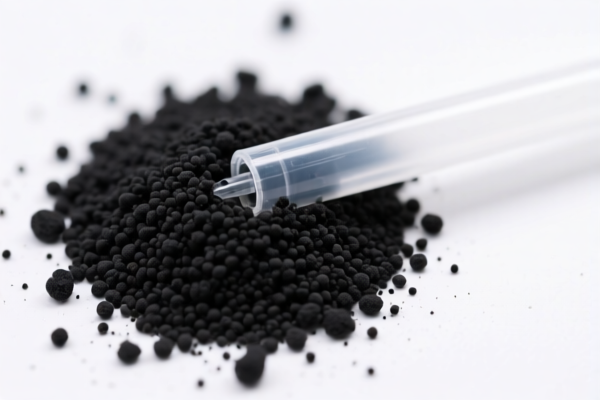
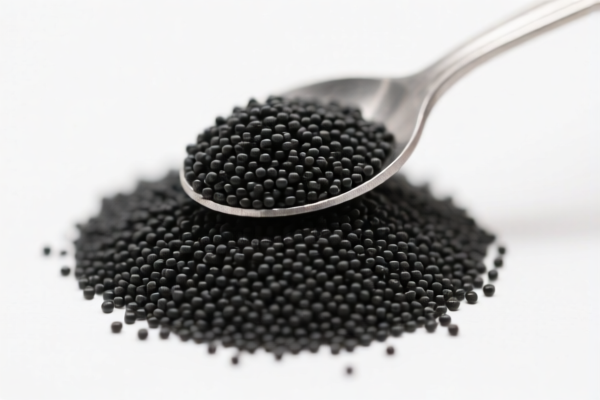
AI Analysis
🧪 Plastic Desulfurization Compound (塑料脱硫剂化合物)
🌐 HS Code Reference & Customs Clearance Guide | 2024-2025 Latest Tariff Analysis | Professional Customs Strategy
📌 I. Product Definition & Classification: What is "Plastic Desulfurization Compound"?
Plastic Desulfurization Compounds are specialized chemical additives used in the plastics industry to remove sulfur-containing impurities or byproducts during polymer processing. These compounds are typically mixtures or composites designed to improve the quality, stability, and environmental compliance of plastic materials.
In international trade, classification depends on: - Primary Function: Desulfurization (chemical purification). - Chemical Nature: Mixture, compound, or composite. - Application Context: Plastic processing additives.
⚠️ Key Distinction:
- If the product is a pure chemical compound with a specific desulfurizing function → May fall under 3824.99.93.86.
- If the product is a general chemical mixture/composite without a more specific heading → Falls under 3824.99.93.97.
📦 II. HS Code Classification Details (Latest Tariff Schedule)
| HS Code | Product Description | Applicable Scenario | Chemical Nature |
|---|---|---|---|
3824.99.93.86 |
Plastic desulfurization compound, classified based on functional use and chemical制剂属性 | Core function is desulfurization; aligns with chemical mixture attributes | ✅ Specific chemical compound for desulfurization |
3824.99.93.97 |
Plastic desulfurization compound, matches the catch-all category for chemical industry products and制剂 | General chemical mixture/composite; plastic as a reasonable component | ✅ General chemical mixture/composite |
3824.99.93.97 |
Plastic desulfurization composite agent, conforms to characteristics of chemical products and制剂 | Composite agent with desulfurization function; plastic component is reasonable | ✅ Composite chemical agent |
3824.99.93.86 |
Plastic desulfurization composite agent, core function is desulfurization, no conflict with chemical mixture attributes | Core function remains desulfurization; classified as specific chemical compound | ✅ Specific chemical compound |
3824.99.93.97 |
Plastic desulfurization compound, form is compound, purpose is desulfurization, fits "other non-specific mixtures" | General compound for desulfurization; fits broader chemical category | ✅ General chemical compound |
🔍 Important Note:
- Both3824.99.93.86and3824.99.93.97carry the same total tax rate of 40% under current US-China trade conditions.
- The distinction is legal/classification precision, not cost-driven. However, accurate classification is critical for customs compliance, audits, and potential disputes.
💰 III. Detailed Tariff Rate Breakdown (Including Additional Taxes & Policies)
✅ Applicable Country: United States (US)
✅ Country of Origin: China (CN)
✅ Effective Date: Ongoing (Subject to trade policy changes)
🎯 1. HS Code 3824.99.93.86 —— Plastic Desulfurization Compound (Specific Chemical Compound)
| Item | Content |
|---|---|
| Base Tariff | 5.0% (ad valorem) |
| Section 301 Additional Tariff | +25% |
| Section 122 Tariff | +10% |
| Total Tariff Rate | 40.0% |
| Tax Calculation | CIF Value × 40% |
| De Minimis Exemption | ❌ Not Applicable (High tariff items are excluded) |
| Legal Basis Path | USITC:3824.99.93.86 → Section 301: Footnote 9903.88.01 → Section 122: IEPEA |
📌 Explanation:
- Base Tariff (5%): Standard Most Favored Nation (MFN) rate for chemical preparations not elsewhere specified.
- Section 301 (25%): Imposed on Chinese goods under the Trade Facilitation and Trade Enforcement Act.
- Section 122 (10%): Additional tariff under the International Emergency Economic Powers Act (IEEPA) or related trade remedy measures.
- Total: 40% is a very high tariff, requiring careful cost planning.
🎯 2. HS Code 3824.99.93.97 —— Plastic Desulfurization Compound (General Chemical Mixture/Catch-All)
| Item | Content |
|---|---|
| Base Tariff | 5.0% (ad valorem) |
| Section 301 Additional Tariff | +25% |
| Section 122 Tariff | +10% |
| Total Tariff Rate | 40.0% |
| Tax Calculation | CIF Value × 40% |
| De Minimis Exemption | ❌ Not Applicable |
| Legal Basis Path | USITC:3824.99.93.97 → Section 301: Footnote 9903.88.01 → Section 122: IEPEA |
📌 Note:
- Identical tax rate to3824.99.93.86.
- The difference lies in classification logic:
-86implies a specific chemical function (desulfurization compound).
-97implies a general chemical mixture (catch-all for chemical products).
- Recommendation: Use3824.99.93.86if the product is a specific desulfurizing compound; use3824.99.93.97if it is a general composite with desulfurization as one of several functions.
🛠️ IV. Customs Clearance Practical Advice (Best Practices & Pitfalls to Avoid)
✅ 1. Documentation Checklist (Mandatory)
| Document | Required | Notes |
|---|---|---|
| ✅ Product Specification Sheet | ✔️ | Must include chemical composition, function (desulfurization), application (plastic processing) |
| ✅ Technical Data Sheet (TDS) | ✔️ | Details molecular structure, purity, and chemical nature |
| ✅ Product Photos (with Label) | ✔️ | Clear view of branding, batch number, and safety warnings |
| ✅ Third-Party Test Report | ✔️ | If available, include SDS (Safety Data Sheet) and compatibility tests |
| ✅ Commercial Invoice | ✔️ | Must clearly state "Plastic Desulfurization Compound" and HS Code |
| ✅ Certificate of Origin (CO) | ✔️ | Required for origin verification; may affect tariff eligibility if from non-China origin |
| ✅ Packing List | ✔️ | Detail net/gross weight, packaging type |
✅ 2. Declaration Tips (Key Mnemonics)
🔥 “Function First, Chemistry Second, Name Precise, Tariff Clear!”
| Scenario | Correct Declaration | Wrong Practice |
|---|---|---|
| Specific desulfurizing compound | 3824.99.93.86 with precise chemical description |
Vague term "Additive" → Audit risk |
| General chemical mixture | 3824.99.93.97 with composite description |
Over-simplification → Misclassification |
| Compound + Plastic Blend | Clearly state "Composite with plastic base" | Hiding plastic component → Customs delay |
| Multi-functional chemical | Highlight primary function (desulfurization) | Listing all functions equally → Ambiguity |
✅ 3. Special Cases Handling
| Scenario | Handling Advice |
|---|---|
| OEM Custom Compound | Provide client order + formula/design to prove specific function |
| Compound with Multiple Functions | Emphasize desulfurization as primary function; justify under 3824.99.93.86 if possible |
| Non-China Origin | If sourced from Vietnam, Thailand, etc., apply for origin preference (if applicable) to reduce tariff |
| Small Sample/Research Use | Still subject to 40% tariff; no de minimis exemption |
🌍 V. Global Market Clearance Comparison (2024-2025)
| Country/Region | Recommended HS Code | Tariff Rate | Certification Requirements | Notes |
|---|---|---|---|---|
| 🇺🇸 USA | 3824.99.93.86 / .97 |
40% (China Origin) | SDS, TDS, FCC (if electronic component) | High tariff; pre-clearance recommended |
| 🇨🇳 China | 3824.99.93.86 / .97 |
5-13% | CCC (if applicable), GB Standards | No additional trade tariffs |
| 🇪🇺 EU | 3824.99.99 |
6.5% | REACH, TSCA Compliance | Lower tariff; strict chemical registration |
| 🇦🇺 Australia | 3824.99.93 |
5% | NICNAS, GHS Labeling | Moderate tariff; chemical safety focus |
| 🇯🇵 Japan | 3824.99.93 |
6% | CSCL, JIS Standards | Moderate tariff; safety data critical |
📌 Conclusion:
- USA imposes the highest tariff (40%) due to Section 301 and Section 122 measures.
- EU, Australia, and Japan have significantly lower tariffs but stricter chemical registration requirements (REACH, CSCL, etc.).
- China-origin goods face significant trade barriers in the US; consider supply chain diversification if volume is large.
📌 VI. Common Mistakes & Pitfalls to Avoid (Lessons Learned)
❌ Mistake 1: Declaring as "Plastic Additive" without specifying "Desulfurization"
👉 Consequence: Customs may reclassify under a different HS Code with higher tariffs or delay shipment.
❌ Mistake 2: Using "3824.99.93.97" when the product is a specific chemical compound
👉 Consequence: Audit risk; potential penalties for misclassification, even if tax rate is the same.
❌ Mistake 3: Omitting SDS (Safety Data Sheet)
👉 Consequence: Shipment held at port; customs requires safety compliance proof.
❌ Mistake 4: Assuming "De Minimis" exemption applies
👉 Consequence: 40% tariff applies regardless of value; no small-quantity exemption.
✅ Correct Approach:
"Plastic Desulfurization Compound, Chemical Mixture, HS Code: 3824.99.93.86, SDS Attached, TDS Provided"
🎯 VII. Conclusion: Precise Classification Saves Time, Money, and Risk
🎯 Key Takeaways:
🔹 "Function Defines Code, Chemistry Confirms It, Tax is 40%, Preparation is Key!"
🔹 "HS Code 3824.99.93.86 for Specific Compound, 97 for General Mixture, Both at 40%!"
🔹 "No De Minimis, No Excuses, Plan Ahead for US Imports!"
📌 Pro Tip:
If your Plastic Desulfurization Compound is produced in Vietnam, Thailand, or Malaysia, apply for non-China origin certification to potentially avoid Section 301 and 122 tariffs.
Recommend applying for Pre-Ruling (Advance Ruling) from US CBP to lock in classification and tariff rate before shipment.
📣 Immediate Action:
📞 Contact a Licensed Customs Broker + Provide TDS/SDS + Apply for HS Code Pre-Ruling
🚀 Ensure Smooth Clearance, Cost Control, and Compliance for your Plastic Desulfurization Compounds!
✨ Professional Customs Clearance Starts with Accurate Classification!
💼 Every Percent of Tariff Counts – Optimize Your Supply Chain Today!
Customer Reviews
About HS Code Classification
The Harmonized System (HS) is an internationally standardized nomenclature developed by the World Customs Organization (WCO) to classify traded products. Over 200 countries use the HS system as the basis for customs tariffs, trade statistics, and import/export regulations.
Each HS code follows a hierarchical structure:
- Chapter (2 digits) — Broad category of goods (e.g., Chapter 84: Machinery and Mechanical Appliances)
- Heading (4 digits) — More specific grouping within the chapter
- Subheading (6 digits) — Internationally standardized breakdown, used by all WCO member countries
- National subdivisions (8-10 digits) — Country-specific extensions for further classification, such as US HTSUS 10-digit codes
Correct HS code classification is essential for smooth customs clearance, accurate duty payment, and compliance with trade regulations. Misclassification can lead to customs delays, overpayment of duties, or penalties.
When importing from CN to US, the applicable tariff rates may include:
- Most-Favored-Nation (MFN) rate — The standard duty rate applied to WTO members
- General rate — Applied to countries without trade agreements
- Trade remedy duties — Additional tariffs such as Section 301 (anti-dumping), Section 232 (national security), or countervailing duties
The information provided on this page is for reference purposes only. For official classification, please consult with your local customs authority or a licensed customs broker.