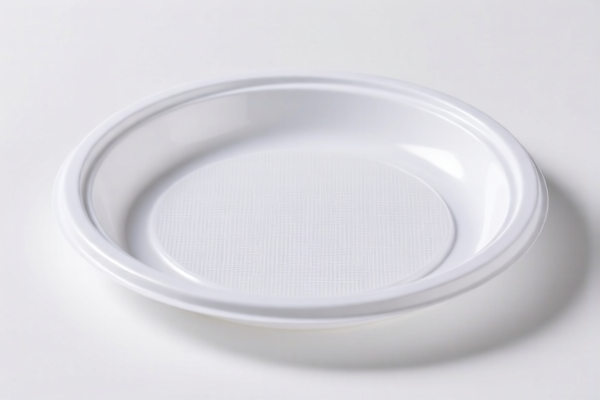
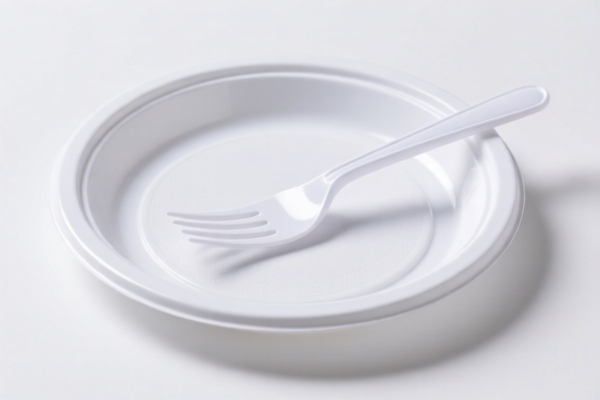
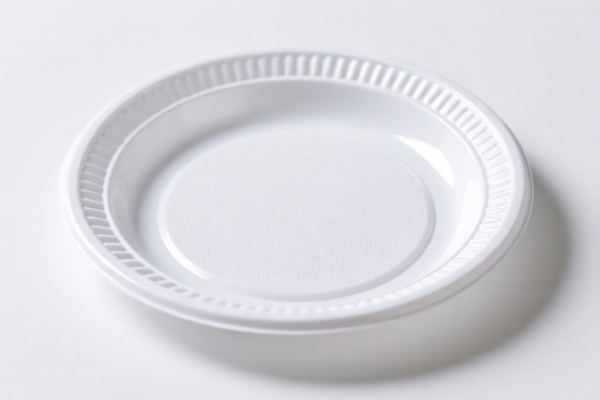
Plastic Dinner Plate
CN → US| HS Code | Tariff Rate | Origin | Destination | Doc |
|---|---|---|---|---|
| 3924102000 | 24.0% | CN | US | Official Doc |
| 3924104000 | 13.4% | CN | US | Official Doc |
| 6912003510 | 19.8% | CN | US | Official Doc |
| 6911103510 | 43.5% | CN | US | Official Doc |
| 6912003910 | 14.5% | CN | US | Official Doc |
Product Images

AI Analysis
🍽️ Plastic Dinner Plate (Plastic Dinnerware)
🌐 HS Code Reference & Customs Clearance Guide | 2024 Latest Tariff Analysis | Professional Entry Strategy
📌 Part 1: Product Definition & Classification Logic
Plastic Dinner Plates are everyday tableware items made primarily from synthetic polymers (such as Polypropylene PP, Polystyrene PS, or Melamine). In international trade, the classification hinges on the material composition and manufacturing process. Unlike ceramic or porcelain tableware (which falls under Chapter 69), plastic dinnerware is strictly classified under Chapter 39 (Plastics and Articles Thereof).
⚠️ Critical Classification Distinction:
- If the material is Plastic → Must fall under HS Code 3924.10.
- If the material is Ceramic/Porcelain (even if it looks similar) → Falls under HS Code 6911 or 6912.
- Do NOT mix materials: A "plastic-looking" ceramic plate is still ceramic. The HS code is determined by the actual material, not just appearance.
📦 Part 2: HS Code Classification Details (Based on Provided Data)
The following table details the valid HS codes for Plastic Dinner Plates derived from your dataset. Note that while all involve "plastic," slight differences in material inference or regulatory interpretation can lead to different tax brackets.
| HS Code | Product Description | Material Basis | Key Tax Logic |
|---|---|---|---|
3924.10.20.00 |
Plastic Dinner Plates | Plastic | High Tariff Scenario: Applies to plastic tableware with specific additive duties. |
3924.10.40.00 |
Plastic Dinner Plates | Plastic (Common Material Inference) | Low Tariff Scenario: Based on common material classification, resulting in lower base duty. |
🔍 Important Note:
- Codes6912...and6911...in your data refer to Ceramic/Porcelain plates.
- If your product is truly PLASTIC, do NOT use codes starting with69. Using a ceramic code for plastic goods is a major compliance error leading to penalties.
- Only3924.10.xxxxcodes are applicable for genuine plastic dinner plates.
💰 Part 3: Tariff Rate Breakdown (Detailed Analysis)
✅ Applicable Country: United States (US)
✅ Origin: China (CN)
✅ Context: Includes Base Duty, Section 301 (Additional) Tariffs, and Section 122 Tariffs.
🎯 1. 3924.10.20.00 — Plastic Dinner Plates (High Tax Bracket)
| Item | Details |
|---|---|
| Base Duty | 6.5% (Ad Valorem) |
| Section 301 Additional Duty | 7.5% (Specific to China origin) |
| Section 122 Tariff | 10% (Additional levy on certain imports) |
| Total Tax Rate | 24.0% |
| Tax Calculation | CIF Value × 24.0% |
| De Minimis Exemption | ❌ Not Eligible (Section 321 usually excludes Section 301/122 goods) |
📌 Explanation:
- This code attracts the highest total tax rate (24%) among plastic options.
- The 7.5% Section 301 duty is applied on top of the 6.5% base, plus the 10% Section 122.
- Strategy: Only use this code if regulatory authorities strictly require it based on specific product features (e.g., complex manufacturing process). Otherwise, it is cost-prohibitive.
🎯 2. 3924.10.40.00 — Plastic Dinner Plates (Low Tax Bracket)
| Item | Details |
|---|---|
| Base Duty | 3.4% (Ad Valorem) |
| Section 301 Additional Duty | 0.0% (Exempt or not applicable in this sub-category) |
| Section 122 Tariff | 10% (Applies regardless) |
| Total Tax Rate | 13.4% |
| Tax Calculation | CIF Value × 13.4% |
| De Minimis Exemption | ❌ Not Eligible (Section 122 often blocks de minimis) |
📌 Explanation:
- This is the optimal classification for standard plastic dinner plates.
- The base duty is significantly lower (3.4% vs 6.5%), and no Section 301 duty (7.5%) is applied.
- The only added cost is the 10% Section 122 tariff.
- Strategy: Justify classification under this code by providing material specifications that align with "common plastic inference" (e.g., standard PP/PS materials without special coatings).
🛠️ Part 4: Customs Clearance Practical Advice
✅ 1. Required Documentation Checklist
| Document | Mandatory? | Purpose |
|---|---|---|
| ✅ Product Specification Sheet | ✔️ | Must explicitly state: Material: 100% Plastic (e.g., Polypropylene, Melamine). DO NOT list as "Ceramic" or "Porcelain." |
| ✅ Commercial Invoice | ✔️ | Clearly describe as "Plastic Dinner Plates." Include HS Code 3924.10.40.00 if applicable. |
| ✅ Packing List | ✔️ | Detail quantity and weight. |
| ✅ Material Safety Data Sheet (MSDS) | ✔️ | Proves chemical composition and safety compliance. |
| ✅ Third-Party Lab Report | ✔️ | FDA compliance (for food contact), FCC/CE (if applicable). |
✅ 2. Declaration Tips (Key Mantras)
🔥 "Plastic is Chapter 39, Not 69! Choose 3924.10.40 to Save 10.6%!"
| Scenario | Correct Declaration | Error Consequence |
|---|---|---|
| Standard Plastic Plate | HS: 3924.10.40.00 Desc: "Plastic Dinner Plate" |
Saves $10,600 per $100k value vs. the 24% bracket. |
| Plastic Plate (Strict Interpretation) | HS: 3924.10.20.00 Desc: "Plastic Dinner Plate" |
Acceptable but costly (24%). |
| Ceramic Plate mislabeled as Plastic | HS: 6911.10.35.10 or 6912... |
FRAUD/ERROR: If customs inspects and finds plastic, severe penalties + retroactive tax. |
| Melamine Plates | HS: 3924.10.40.00 |
Melamine is a plastic polymer. Do NOT classify under ceramics. |
✅ 3. Special Handling for Plastic Dinnerware
| Situation | Recommendation |
|---|---|
| Melamine vs. PP | Both are plastics. Ensure invoice states "Plastic" to qualify for Chapter 39. |
| Food Contact | FDA clearance is mandatory. Lack of proof can cause detention. |
| Section 122 Impact | The 10% Section 122 tariff applies to both 3924.10.20 and 3924.10.40. You cannot avoid this tariff via HS code change, but you can avoid the 7.5% Section 301 duty by choosing .40.00. |
| De Minimis (Section 321) | Generally, goods subject to Section 301 or 122 tariffs lose de minimis eligibility. Plan for full customs entry. |
🌍 Part 5: Global Market Comparison (2024 Update)
| Region | Recommended HS Code | Total Tax (China Origin) | Notes |
|---|---|---|---|
| 🇺🇸 USA | 3924.10.40.00 |
13.4% | Best option. Avoids Section 301. |
| 🇺🇸 USA (Risk) | 3924.10.20.00 |
24.0% | Higher risk interpretation. |
| 🇪🇺 EU | 3924.10.00 |
3.5% + VAT | No Section 301/122. Lower overall cost. |
| 🇨🇳 China | 3924.10.00 |
5.0% - 9.0% | Import duty varies by specific sub-item. |
| 🇨🇦 Canada | 3924.10.00 |
0% (Most FTA eligible) | Check CUSMA eligibility. |
📌 Conclusion:
- The USA imposes the highest barriers due to Section 301 and Section 122.
- Selecting3924.10.40.00is the cost-saving strategy for US imports.
- For non-US markets, plastic dinnerware is generally lower-taxed.
📌 Part 6: Common Mistakes & Pitfalls
❌ Mistake 1: Classifying Plastic Plates under 6911 or 6912 (Ceramic Codes)
👉 Result: Misdeclaration. Customs may reject entry, impose fines, or reclassify at a higher rate.
❌ Mistake 2: Using 3924.10.20.00 when 3924.10.40.00 is applicable
👉 Result: Overpaying 10.6% in taxes unnecessarily.
❌ Mistake 3: Assuming "De Minimis" applies to plastic tableware from China
👉 Result: Package detained because Section 122 tariffs negate de minimis exemptions.
✅ Best Practice:
Declare as: "Plastic Dinner Plates, Material: Polypropylene, Food Grade, Model XYZ"
HS Code:3924.10.40.00
Tax Rate: 13.4% (Optimized)
🎯 Part 7: Conclusion & Action Plan
🎯 Key Takeaway:
For Plastic Dinner Plates, the single most important decision is selecting the correct 8-digit HS code under Chapter 39.
- Choose 3924.10.40.00 to save 7.5% in Section 301 duties.
- Avoid 6911/6912 unless the item is genuinely ceramic.
🔹 "Plastic in Ch39, Ceramic in Ch69. Pick .40 to Save Big!"
🔹 "13.4% vs 24%: A choice that saves your margin."
📌 Pro Tip:
If your plastic plates are made from recycled materials, check for any potential environmental tax incentives or exemptions in specific markets. Always request a Pre-Ruling from CBP if you are unsure about the classification between .20.00 and .40.00.
📣 Immediate Action:
📞 Consult Customs Broker: Confirm material specs match
3924.10.40.00.
📄 Update Invoices: Ensure "Plastic" is explicitly stated.
🚀 Optimize Costs: Target the 13.4% total tax rate for smooth US clearance.
✨ Professional Customs Clearance Starts with Accurate HS Codes!
💼 Your Profit Margin Depends on This 2-Digit Difference!
Customer Reviews
About HS Code Classification
The Harmonized System (HS) is an internationally standardized nomenclature developed by the World Customs Organization (WCO) to classify traded products. Over 200 countries use the HS system as the basis for customs tariffs, trade statistics, and import/export regulations.
Each HS code follows a hierarchical structure:
- Chapter (2 digits) — Broad category of goods (e.g., Chapter 84: Machinery and Mechanical Appliances)
- Heading (4 digits) — More specific grouping within the chapter
- Subheading (6 digits) — Internationally standardized breakdown, used by all WCO member countries
- National subdivisions (8-10 digits) — Country-specific extensions for further classification, such as US HTSUS 10-digit codes
Correct HS code classification is essential for smooth customs clearance, accurate duty payment, and compliance with trade regulations. Misclassification can lead to customs delays, overpayment of duties, or penalties.
When importing from CN to US, the applicable tariff rates may include:
- Most-Favored-Nation (MFN) rate — The standard duty rate applied to WTO members
- General rate — Applied to countries without trade agreements
- Trade remedy duties — Additional tariffs such as Section 301 (anti-dumping), Section 232 (national security), or countervailing duties
The information provided on this page is for reference purposes only. For official classification, please consult with your local customs authority or a licensed customs broker.